Why DAF Systems Are Critical for Pakistan’s Industrial Sector
Pakistan’s textile industry discharges an estimated 180–200 million cubic meters of wastewater annually, with 70% receiving no treatment before discharge according to Punjab EPA 2023 findings. This untreated effluent, loaded with suspended solids and fats, oils, and grease (FOG), directly violates the National Environmental Quality Standards (NEQS). These standards mandate that industrial discharge must have a Total Suspended Solids (TSS) concentration of less than 100 mg/L and a Biochemical Oxygen Demand (BOD) of less than 80 mg/L. A high-efficiency DAF system for textile and food industry wastewater is the most effective pre-treatment technology to achieve this compliance, reliably removing 90–95% of TSS and 85–92% of FOG. This is particularly critical for water jet loom operations in cities like Faisalabad, where high-solids effluent clogs pipelines, increases downstream treatment costs, and guarantees regulatory fines without proper primary treatment. Effective pre-treatment with DAF can drastically reduce the load on municipal treatment facilities, a significant issue in industrial zones where public infrastructure is often overwhelmed.
How DAF Technology Works in Industrial Applications
Dissolved Air Flotation (DAF) clarifies wastewater by using micro-bubbles, typically 20–50 microns in size, to float suspended solids and oils to the surface for mechanical skimming. The process begins when a portion of the treated effluent (recycle water) is saturated with air under pressure in a dedicated tank. This stream is then injected into the front of the flotation chamber, where a pressure release creates a cloud of micro-bubbles that attach to contaminants, causing them to float. Effective treatment for the colloidal matter common in textile effluent requires coagulation-flocculation pre-treatment with chemicals like alum or PAC. HydropureWater DAF systems automate this entire process, including skimming and sludge removal, and are engineered to handle flows from 4 to 300 m³/h. For optimal performance, operators should follow a complete DAF maintenance checklist to maximize uptime. The chemical dosing process is critical; for instance, the correct pH adjustment using lime or caustic soda can significantly improve coagulant effectiveness and final effluent clarity.
DAF Systems in Pakistani Textile Mills: A Real Case Study
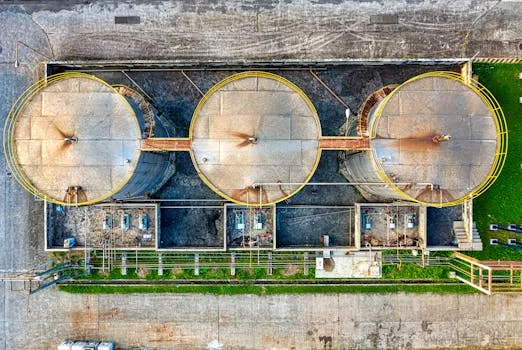
The facility installed a 15TPH (approximately 13.6 m³/h) DAF unit to address its high-strength wastewater. The influent characteristic—800–1,200 mg/L TSS and 400–600 mg/L FOG—far exceeded NEQS limits. After treatment with coagulation and the DAF system, followed by a polishing filter, the effluent consistently achieved results of less than 80 mg/L TSS and less than 70 mg/L FOG. Crucially, this pre-treatment reduced the organic load on the downstream Moving Bed Biofilm Reactor (MBBR) by 60%, which significantly cut aeration energy costs and sludge production. The system’s proven reliability in Pakistan’s demanding operational environment, including handling power fluctuations and variable influent quality, led the same customer to place a second order within 12 months, validating both its performance and ease of operation. The mill also reported a 30% reduction in fresh water consumption due to the ability to safely recycle treated water for non-critical processes.
Choosing the Right DAF System for Your Facility
Selecting a DAF system requires matching its capacity, construction material, and automation level to your facility's specific effluent volume and space constraints. For smaller operations with flows between 4–50 m³/h, a compact unit like the DAF-10D, featuring a coated carbon steel tank and basic PLC control, is often sufficient. Larger facilities processing 50–300 m³/h require a modular system like the DAF-50M, built with stainless steel components and an integrated chemical dosing system for complete automation. Power consumption is a key operational cost, typically ranging from 3–15 kW depending on the size of the recycle pump and air compressor. Equally important is the physical footprint, which averages 4–6 m² per 10 m³/h of treatment capacity—a critical consideration for space-constrained urban factories in Pakistan. When selecting a unit, also consider the chemical consumption rates, as this will be a recurring operational expense. Pilot testing with a mobile unit is highly recommended for facilities with complex or highly variable waste streams.
| Model | Flow Capacity (m³/h) | Construction | Approx. Power (kW) | Footprint (m²) |
|---|---|---|---|---|
| DAF-10D | 4-10 | Coated Carbon Steel | 3-4 | ~16 |
| DAF-20M | 15-25 | Stainless Steel Critical Parts | 5-7 | ~20 |
| DAF-50M | 40-60 | Stainless Steel Critical Parts | 10-12 | ~30 |
| DAF-100M | 80-120 | Stainless Steel Critical Parts | 12-15 | ~50 |
An automatic chemical dosing system is recommended for consistent treatment results across varying influent conditions.
Cost and ROI of DAF Systems in Pakistan (2025)
For procurement officers justifying capital expenditure, understanding the total landed cost and return on investment is essential. A baseline DAF-10D system (10 m³/h capacity) has an FOB China price of approximately $18,500. Once shipping, insurance, and Pakistani import duties (around 20-25%) are factored in, the total landed cost in Karachi rises to roughly $26,000. A larger DAF-50M unit (50 m³/h) has an FOB cost of $68,000, with a landed cost nearing $92,000 when including installation support and operator training. The ROI is compelling, typically achieved within 14–18 months through multiple channels: reduced sludge hauling fees, the avoidance of NEQS non-compliance fines (which can exceed $5,000 per incident), and extended lifespan of downstream biological systems due to lower organic loading. Investing in optional full automation (PLC with remote monitoring) adds 12–15% to the initial cost but can reduce operational labor by 40% and prevent costly treatment upsets.
| Cost Component | DAF-10D (10 m³/h) | DAF-50M (50 m³/h) |
|---|---|---|
| FOB China Price | $18,500 | $68,000 |
| Shipping & Insurance | $2,500 | $8,000 |
| Pakistani Customs & Duties | $5,000 | $16,000 |
| Total Landed Cost | ~$26,000 | ~$92,000 |
| Typical Payback Period | 14-16 months | 16-18 months |
A detailed 2025 DAF clarifier cost and ROI analysis by capacity provides further benchmarks.
Meeting Pakistan’s Environmental Compliance with DAF
The use of DAF systems enables industrial facilities to meet NEQS Part II (Industrial Effluent Standards) consistently.Installing a DAF system is the foundational step for industrial facilities to consistently meet NEQS Part II (Industrial Effluent Standards), which apply to sectors like textiles, food processing, and chemicals. A robust primary treatment technology, DAF ensures TSS and FOG are brought within permissible limits. For facilities aiming to reuse water, pairing a DAF with a secondary process like a Membrane Bioreactor (MBR) or sand filtration can achieve even stricter standards of TSS < 30 mg/L and BOD < 20 mg/L. Modern DAF systems with automated data logging provide a critical advantage by generating compliance reports for provincial environmental agencies like the Punjab EPA, simplifying audits. Provincial enforcement intensity can vary, making proactive compliance a smart strategy to mitigate legal risk. Regular self-monitoring and keeping detailed records are now considered industry best practice.
Frequently Asked Questions
What does a DAF system do?
A DAF (Dissolved Air Flotation) system removes suspended solids, oil, grease, and colloidal particles from industrial wastewater by using micro-bubble flotation to separate and skim them from the water surface. This process is highly effective for pre-treatment before biological systems.
Can DAF systems work in high-temperature textile effluent?
Yes. Standard DAF systems are designed to handle effluent temperatures up to 45°C. For temperatures exceeding this, a cooling coil or heat exchanger is recommended before the DAF unit to protect internal components and ensure consistent chemical reactions.
How much space does a 20 m³/h DAF system need?
A system of this capacity typically requires a footprint of 8–10 m², which must include space for peripheral piping, chemical storage, and safe operator access for maintenance. This area should be under cover to protect electrical components from the elements.
Is operator training required?
Yes. To ensure optimal performance and longevity, a minimum 2-day training session is provided, available either remotely or on-site, with all HydropureWater DAF system purchases. This covers chemical handling, troubleshooting, and preventive maintenance procedures.
What maintenance does a DAF system need?
Routine maintenance includes daily visual inspection of the skimmer mechanism, weekly checks of the recycle pump pressure, and monthly lubrication of valves and bearings, as outlined in our complete DAF maintenance checklist to maximize uptime. Annual maintenance should include a full internal inspection and replacement of wear parts.
Related Equipment
- high-efficiency DAF system for textile and food industry wastewater — view specifications, capacity range, and technical data
Need a customized solution? Request a free quote with your specific flow rate and pollutant parameters.