
Why Textile Wastewater Demands a Dedicated PLC Control Strategy
A PLC control system for a textile wastewater plant uses an industrial PLC (typically Siemens S7-1500 or Allen-Bradley ControlLogix) to monitor pH (4–12), temperature (40–80 °C), COD (800–3,000 mg/L), dissolved oxygen, and flow, then drives chemical dosing pumps, aeration blowers, DAF skimmers, and sludge valves in real time. Compared with manual control, PLC automation cuts polymer consumption 15–25%, reduces color-exceedance events, and enables remote SCADA monitoring across multi-shift dyeing operations.
Textile effluent variability breaks any control program lifted from a municipal sewage plant. Reactive dyeing runs the bath at pH 10–11 with 60–80 g/L salt; acid dyeing drops to pH 4–5 at 40–60 °C; disperse dyeing hits 80 °C with carrier chemicals. The composite stream entering equalization therefore swings across pH 4–12, temperature 40–80 °C, COD 800–3,000 mg/L, and a BOD/COD ratio of only 0.2–0.4 — a signature of poorly biodegradable, dye-laden liquor (HydropureWater field data, 2026). Municipal sewage, by contrast, sits at pH 6.5–8.5 and COD 250–500 mg/L with BOD/COD near 0.5; a controller tuned to that envelope cannot hold setpoint when a black-reactive batch lands.
The failure mode is specific: a pH excursion during a black-dye batch drives equalization-tank pH to 11 within minutes, the overflow pushes to the aerobic basin, and the free-ammonia/nitrite balance collapses. Nitrifiers need 3–5 days to recover at 28 °C — a loss of treated volume and a compliance event. A PLC interlock that clamps pH to 6.5–8.5 before biological contact prevents that recovery cycle entirely. The MDPI 2025 study on PLC + LSTM control in industrial wastewater documents the same pattern in electrochemical effluent and notes that traditional PLC systems benefit from an added AI/LSTM layer for shock-load prediction when influent strength is variable (MDPI Applied Sciences, 2025-08).
Core Architecture: How a PLC Control System Fits a Textile WWTP
A textile PLC architecture is a four-layer stack: field instrumentation (pH, ORP, DO, conductivity, TSS, color, flow, level, temperature) → distributed I/O modules over PROFINET or Modbus TCP → a central PLC CPU (e.g. Siemens S7-1515 or Allen-Bradley 1756-L73) → SCADA/HMI server and operator stations. The CPU executes PID loops at scan time ≤1 ms and pushes tag data upward over OPC-UA; the SCADA layer handles trending, alarm management, and batch traceability, while the PLC remains the single source of truth for interlocks and dosing interlocks.
Station-by-station, the architecture maps the unit operations like this: the bar screen reports level-switch and differential-level signals to digital inputs; equalization receives pH, temperature, and flow on analog inputs and modulates inlet diversion valves; pH correction uses dual acid/base dosing pumps driven by analog outputs under PID, with stroke feedback on a dedicated DI; coagulation/DAF takes a streaming-current signal for coagulant dose and a polymer pump stroke for flocculant dose; the biological stage cascades DO, MLSS, and ORP to a VFD on the aeration blower; the MBR — when used — adds transmembrane-pressure trending for backwash scheduling; and the sludge press reports feed pressure, cycle counter, and a torque signal to schedule cake discharge. The MDPI 2025 setup uses a Siemens S7-1214 with a KTP400 HMI as a smaller 50–100 m³/d benchmark; a 200+ m³/d dyeing plant moves up to the S7-1500 family (or ControlLogix) for additional program memory and PROFINET device density (MDPI Applied Sciences, 2025-08).
Environmental specification matters: textile halls are high-humidity, with vibration from knitting machines, looms, and dithering motor loads, and harmonic noise from VFDs. Specifying an IP54 enclosure, conformal-coated I/O modules, and 24 V DC isolated power per IEC 61131-2 protects the controls. Use a dedicated control cabinet at least 3 m from the dyeing floor and run PROFINET/EtherNet/IP on shielded twisted-pair with a managed switch — these are not optional in a dyeing mill.
Control Loops and Sensor List for a 200 m³/d Dyeing Plant
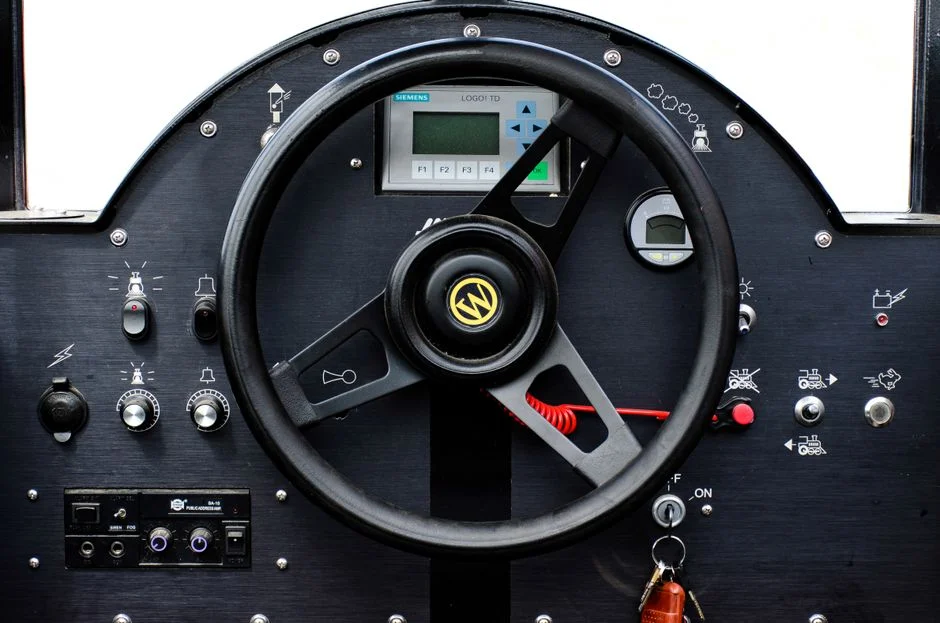
For a 200 m³/d dyeing plant, the control-loop table below is the working document the engineer hands to the system integrator. Setpoint ranges reflect the textile envelope, not municipal defaults.
| Loop | Measured Variable | Sensor | Actuator | Control Strategy | Setpoint Range |
|---|---|---|---|---|---|
| pH correction | pH | Endress+Hauser Orbisint CPS11D, retractable holder | Dual acid/base dosing pump (AO 4–20 mA) | PID with deadband and feed-forward from inlet pH | 6.5–8.5 |
| Coagulant dose | Streaming current | Chemtrac Streamer 3500 | Alum/FeCl₃ pump (AO) | PID | −200 to +200 mV (site-specific) |
| Polymer dose | Flow + TSS feed-forward | Magmeter + TSS probe | Polymer pump (AO stroke) | Ratio + trim PID | 2–8 g/kg TSS |
| Aeration DO | Dissolved O₂ | Hach LDO sc | Blower VFD (AO) | PID with ammonia load feed-forward | 1.5–2.5 mg/L |
| MLSS control | Mixed liquor TSS | Hach Solitax sc | Sludge recycle / waste pump | Ratio + clamp | 3,000–5,000 mg/L |
| Color verification | Absorbance at 436/620 nm | optek AF26 dual-wavelength | Alarm + divert | Threshold + trend | Site discharge limit (e.g. ≤50 Pt-Co) |
| Equalization level | Level | Vega VEGACAP 64 / radar | Inlet valve (DO) | On/off with hysteresis | 30–80% |
| Filter press cycle | Feed pressure, cycle count | Pressure transmitter + DI | Hydraulic pump (DO) | Sequencer with torque cut-off | 6–8 bar, 25–45 min cycle |
The I/O count for a baseline 200 m³/d plant, excluding any redundancy, is approximately 96 DI, 48 DO, 64 AI, 16 AO. Digital inputs cover motor starters, level switches, pressure switches, dosing-pump stroke feedback, and valve limit switches. Digital outputs drive pump start/stop coils, solenoid valves, and skimmer motions. Analog inputs carry pH, DO, MLSS, conductivity, ORP, color, flow, level, temperature, and pressure. Analog outputs drive VFD speed references and dosing-pump stroke. The MDPI 2025 sensor inventory (pH, level, dosing-pump feedback, aeration-device feedback) is the minimum baseline; textile plants must add color, high-temperature pH probes, and streaming-current for the full control envelope (MDPI Applied Sciences, 2025-08).
PLC Platform Comparison: Siemens, Allen-Bradley, and Schneider for Textile
The platform decision is usually driven by geography and existing infrastructure, not by published benchmark numbers — scan time, I/O density, and PROFINET/EtherNet/IP support are now close enough across the top three that integrator availability and spare-parts lead time swing the decision. The table below reflects textile-mill reality in 2026.
| Criterion | Siemens S7-1500 / ET 200SP | Allen-Bradley ControlLogix (1756-L73/L73S) | Schneider M580 |
|---|---|---|---|
| Regional dominance | Asia (Bangladesh, Vietnam, China, Türkiye) and Europe | North America, US cotton/denim mills | India, Middle East, North Africa |
| Fieldbus | PROFINET (IRT, ≤1 ms) | EtherNet/IP, integrated motion | Modbus TCP, DNP3 option |
| HMI / SCADA native | WinCC Unified, TIA Portal | FactoryTalk View, Studio 5000 | EcoStruxure, Control Expert |
| Cybersecurity | IEC 62443-4-1, signed firmware | IEC 62443-4-2, CIP Security | IEC 62443-4-1, role-based access |
| Strength for textile | Dyeing-machine VFD synchronization, high I/O density | PlantPAx DCS-style libraries, large U.S. integrator base | Redundant Ethernet backbone for dusty sheds, hot climates |
| Typical spare-parts lead time (2026) | 3–7 days regional | 5–10 days regional | 7–14 days regional |
If the dyeing floor already runs Siemens drives on PROFINET, stay with Siemens — the integration cost savings typically pay for any premium. If the mill is a U.S. cotton plant with an existing PlantPAx DCS layer, ControlLogix is the path of least resistance. For Indian and Middle-Eastern mills in hot, dusty sheds, the M580's redundant Ethernet backbone and lower spare-parts cost in local currency are decisive.
Integration with SCADA, MES, and AI-Based Color Prediction
The PLC layer is the controller, not the visibility layer. SCADA — WinCC Unified, Ignition, or FactoryTalk View — provides trending, alarm management, and 24/7 remote monitoring; for multi-shift mills with skeleton operator crews, this is the difference between a controlled response and a 2 a.m. discharge violation. The MES layer tags each dyeing batch ID to the wastewater influent quality, so the operator can trace a COD or color spike to a specific lot and quarantine it upstream — a direct write-off against non-compliant discharge risk. Both layers read from the PLC over OPC-UA; nothing bypasses the controller.
The AI/ML add-on is the 2026 differentiator. The MDPI 2025 pilot reduced shock-load excursions by predicting color and COD 15–30 minutes ahead using an LSTM network running on a PC or edge device that subscribes to PLC tags over OPC-UA (MDPI Applied Sciences, 2025-08). The LSTM output becomes a feed-forward bias to the existing PID loops — the PLC remains the safety-of-control layer, while the model handles slow trend prediction. For a dyeing plant, this is meaningful: a 15-minute warning on a reactive-black batch lets equalization pre-charge and prevents the pH excursion that would otherwise kill the nitrifiers.
Stage the rollout: PID loops and interlocks in months 1–3, SCADA dashboards and batch traceability in months 3–6, and AI forecasting after the data historian has six months of clean data (months 6–12). This sequencing keeps CAPEX staged and avoids running an ML model on a tag set that is still being commissioned.
2026 CAPEX and OPEX Benchmarks for a PLC Retrofit
For a 200 m³/d dyeing plant in 2026, a defensible CAPEX envelope is USD 75,000–180,000, broken down as follows. The lower end assumes a Siemens S7-1500 with PROFINET and local-panel HMI; the upper end reflects Allen-Bradley ControlLogix with a fully redundant CPU and a server-class SCADA node.
| Cost Line | Range (USD, 2026) | Notes |
|---|---|---|
| PLC hardware + I/O cards + cabinet | 18,000–45,000 | S7-1500 or 1756-L73; conformal coating adds ~10% |
| Instrumentation (pH, DO, MLSS, flow, level, color, pressure) | 25,000–60,000 | Self-cleaning retractable pH holders are +USD 1,200 each |
| SCADA software + HMI panels + historian | 12,000–25,000 | Ignition vs WinCC Unified licensing changes the number |
| Engineering, panel build, commissioning | 20,000–50,000 | Site-dependent; India/SEA lower, EU/US higher |
| Total CAPEX | 75,000–180,000 | Excludes civil works and tankage |
OPEX impact is where the project pays back. Polymer savings run 15–25% on tighter streaming-current/PID control, and aeration-energy savings of 10–18% are typical once the blower VFD is on a DO cascade instead of a fixed-speed contactor. Non-compliant discharge events — the single largest regulatory risk — drop 30–50% in the first year of operation (HydropureWater field data, 2026). Compared with a manual-control baseline of $0.38–$1.85/m³ (see the 2026 textile dyeing wastewater OPEX benchmark), the PLC retrofit pays back in 14–28 months for most 200+ m³/d plants. Smaller plants under 50 m³/d can use a Siemens S7-1200 with a basic HMI to keep CAPEX under USD 25,000 — a different envelope, same control philosophy. For influent conditioning specifically, integrating a PLC-controlled automatic chemical dosing system with the rest of the architecture is the single highest-ROI element of the project.
Frequently Asked Questions
What is a PLC control system for a textile wastewater plant? It is an industrial PLC — typically a Siemens S7-1500 or Allen-Bradley ControlLogix 1756-L73 — that monitors pH, temperature, COD, dissolved oxygen, and flow, then drives dosing pumps, aeration blowers, DAF skimmers, and sludge valves in real time under PID control with a SCADA layer above it.
How much does a PLC retrofit cost in 2026? For a 200 m³/d dyeing plant, CAPEX runs USD 75,000–180,000 including instrumentation and SCADA, with engineering and commissioning as the largest variable line.
Why does textile wastewater need a different control program than municipal sewage? Textile effluent swings across pH 4–12 and 40–80 °C, with COD 800–3,000 mg/L and BOD/COD of 0.2–0.4; municipal sewage at pH 6.5–8.5 and COD 250–500 mg/L does not prepare a controller for shock loads, color, or temperature transients.
How does the PLC integrate with SCADA and AI forecasting? The PLC executes interlocks and PID locally; SCADA reads PLC tags over OPC-UA for trending and alarms; an LSTM model on a PC/edge device can subscribe to the same OPC-UA tags and apply a feed-forward bias to the PID loops for 15–30 minute shock-load prediction.
Is there a compact option for small mills under 50 m³/d? Yes — a Siemens S7-1200 with a basic panel HMI holds total CAPEX under USD 25,000 and covers pH correction, polymer dose, and equalization-level control on the same platform as larger sites.
Related Equipment
- DAF system for textile wastewater — specifications, capacity range, and technical data
- MBR biological treatment stage — specifications, capacity range, and technical data