Which treatment fits the wastewater first?
For fabricated-metals wastewater in 2026, most factories should choose DAF as primary treatment when the stream contains free or emulsified oil, tramp lubricants, cutting fluids or colloidal metal fines. A lamella or gravity clarifier is better suited to heavy, readily settleable swarf and scale, or as polish after DAF. The common arrangement is DAF plus chemical conditioning, with a lamella clarifier for residual solids and a filter press for sludge dewatering. Actual selection must follow wastewater testing, discharge authorization and pilot work. For a Blacksburg facility, the applicable permit—not a generic equipment ranking—must confirm the final discharge route.
Start by separating the plant’s wastewater sources instead of treating it as one homogeneous stream:
- Characterize the contaminants. Sample free oil, emulsified coolant, drawing compounds, alkaline cleaners, phosphate-rich rinses, chrome passivation rinses, grinding swarf and colloidal metal fines. Record pH, temperature, flow variation and particle behavior.
- Identify the dominant load. Emulsified oil, tramp lubricant and low-density fines favor micro-bubble flotation. Heavy swarf and scale favor lamella settling.
- Map the discharge route. Separate sanitary, process and storm streams, then identify whether the process stream goes to a POTW, receives a direct discharge authorization or is reused.
- Check authorization before selecting equipment. The fabricated-metals research discusses 40 CFR Part 433, while the mining/metals research discusses 40 CFR Part 437. It does not establish which rule applies to a particular Blacksburg facility. Review the current fabricated-metals pretreatment limits with the receiving authority before fixing the design basis.
A properly conditioned DAF can reduce the same fabricated-metals stream below 25 mg/L oil and grease, while a conventional clarifier typically leaves 50–150 mg/L, according to HydropureWater’s 2026 fabricated-metals guidance. Use that as a screening comparison, not a guaranteed site result. Clarifier-first or clarifier-only treatment is defensible when the dominant solids are heavy and readily settleable and emulsified oil is insignificant. Otherwise, the treatment train should address both floating emulsions and settleable solids.
How DAF and clarification remove different contaminants
DAF captures low-density particles through microbubble attachment, while clarification captures particles that can settle under gravity. That distinction follows from particle behavior rather than equipment category. The mining/metals review by HydropureWater, dated 2026, cites 30–50 µm microbubbles formed when pressurized recycle is depressurized; Rodrigues and Rubio, 2007, provide the cited bubble-size basis. The bubbles attach to conditioned floc, lift it into a surface float and allow the skimmer to remove it.
This mechanism is well matched to emulsified cutting oil and tramp lubricants whose particles do not settle reliably. Chemical coagulation and flocculation are integral to that performance. The fabricated-metals review reports that skipping conditioning can reduce TSS removal from the cited 92–98% design band into the 70–80% band and cause oil-and-grease sampling failures. A chemical dosing skid should therefore be included in the treatment-train scope rather than treated as an accessory.
Clarification uses a different separation principle. A lamella pack places inclined settling surfaces close together, reducing the distance a particle must travel before reaching a plate. HydropureWater’s 2026 mining/metals source reports projected lamella surface loading of 20–40 m/h, compared with approximately 1–2 m/h for a conventional gravity basin. That makes lamella settling suitable for well-conditioned, sufficiently dense floc and readily settleable swarf. It does not make lamella clarification the preferred primary process for neutrally buoyant emulsions.
Neither DAF nor clarification removes every contaminant simply because it removes visible suspended material. The mining/metals review supports DAF capture of oil, grease, TSS and particulate metals. It does not establish DAF as a substitute for source reduction, chromium reduction, biological treatment, ion exchange or other permit-required operations. In a fabricated-metals plant, dissolved chromium, soluble drawing chemicals and alkaline cleaners can require separate treatment even after floatable and settleable material is removed.
The HydropureWater dissolved air flotation system is therefore the stronger primary stage for emulsions and colloidal fines. The HydropureWater lamella clarifier is more defensible for heavy solids, retrofitting an existing basin, or polishing DAF effluent.
Engineering comparison for fabricated-metals streams
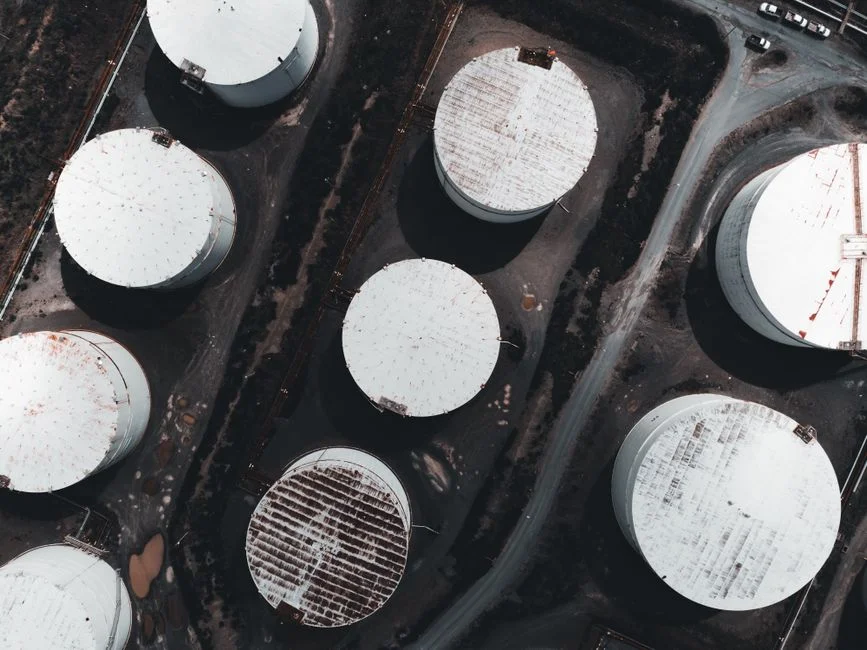
DAF and lamella systems should be compared as treatment trains, not as stand-alone tanks with a single removal percentage. The available figures describe design and operating targets; they do not replace a jar test, pilot test and site-specific proposal. HydropureWater’s 2026 fabricated-metals source reports circular DAF TSS removal of 92–98% and rectangular DAF removal of 85–90%. Its mining/metals source provides the comparison values below.
| Engineering variable | DAF | Lamella clarification | Conventional gravity clarification |
|---|---|---|---|
| Reported TSS removal | 92–98% circular; 85–90% rectangular | Depends on floc density; reported 80–90% for dense hydroxide floc | Not established for the cited fabricated-metals stream |
| Reported oil-and-grease behavior | Properly conditioned stream reported below 25 mg/L | Conventional clarifier typically reported at 50–150 mg/L | Better suited to low-oil, settleable solids |
| Footprint | 0.2–0.4 m² per m³/h | 0.3–0.6 m² per m³/h | 5–8 m² per m³/h |
| Projected surface loading | Not the controlling comparison metric | 20–40 m/h for suitable, well-conditioned floc | Approximately 1–2 m/h |
| Energy demand | 8–15 kWh/m³ | Approximately 0.1–0.3 kWh/m³ | Approximately 0.1–0.3 kWh/m³ |
| Separated-solids concentration | Float at 4–8% dry solids | Underflow at 2–5% dry solids | Underflow at 2–5% dry solids |
| Conditioning dependency | Chemical conditioning is essential | Conditioning depends on particle density and load | Lower chemical demand is possible for readily settleable solids |
| Best contaminant fit | Emulsified oil, coolant, tramp lubricant and colloidal fines | Heavy swarf, dense floc and residual TSS | Heavy, readily settleable solids where footprint is available |
| Cold-weather consideration | Insulate or heat-trace recycle and saturation equipment | Protect sludge withdrawal from freezing | Greater freeze exposure in an unheated sludge hopper |
| Maintenance focus | Conditioning control, recycle, saturation, skimming and float handling | Sludge withdrawal, plate fouling and skimmer service | Basin cleaning, sludge removal and bridge/scraper maintenance |
HydropureWater’s 2026 sources also report that sludge recirculation in some lamella designs can reduce chemical consumption by up to 30%. That is not a universal saving: it depends on sludge properties, dose control and operating practice. Conversely, DAF generally produces a thicker float than clarifier underflow, which can simplify downstream dewatering. A plate-and-frame filter press should be selected for the actual separated-solids characteristics rather than assigned automatically by flow rate.
Match the treatment train to plant conditions
A mixed fabrication stream containing emulsified cutting oil or coolant calls for DAF as the primary process, with chemical conditioning ahead of flotation. Add lamella polishing when residual TSS or heavy solids require additional separation or compliance margin. This configuration addresses the contaminant classes that a clarifier alone is least able to capture.
For grinding-intensive lines dominated by heavy swarf, start with clarification or a dedicated grit-removal stage. If oil is also present, the sequence matters: remove heavy swarf before flotation so it does not interfere with recycle, conditioning or float handling. The supplied research supports sequential treatment rather than assuming that one universal unit handles both emulsions and dense solids. An existing concrete clarifier basin can also make a lamella retrofit economically preferable because part of the civil investment has already been made.
Variable and intermittent discharges favor equipment that can restart without prolonged basin imbalance. HydropureWater’s 2026 mining/metals source describes DAF as reaching stable operation within minutes, which is relevant to batch machining, short production runs and washdown discharges. Confirm that the selected controls, chemical feed and sludge routes can handle starts, stops and dilution changes without carryover.
Cold installations require saturated recycle and saturation equipment to be insulated or heat-traced. HydropureWater’s 2026 mining/metals source recommends sizing the recycle pump and saturation vessel with a 10–15% margin because microbubble nucleation slows by 20–30% at 5°C compared with 20°C. Also protect exposed piping, sludge pumps and clarifier withdrawal points. Footprint savings do not help if winterization becomes an unplanned shutdown risk.
Hex-chrome service needs upstream chromium reduction before sludge generation. The 2025 chromium-treatment engineering guidance reports that unreduced DAF float may fail TCLP, while reduction with sulfite or ferrous sulfate can produce sludge characterized as non-hazardous F006. Reduction chemistry, local pH control and waste characterization must be verified independently of DAF performance.
Build the installed cost and compliance case
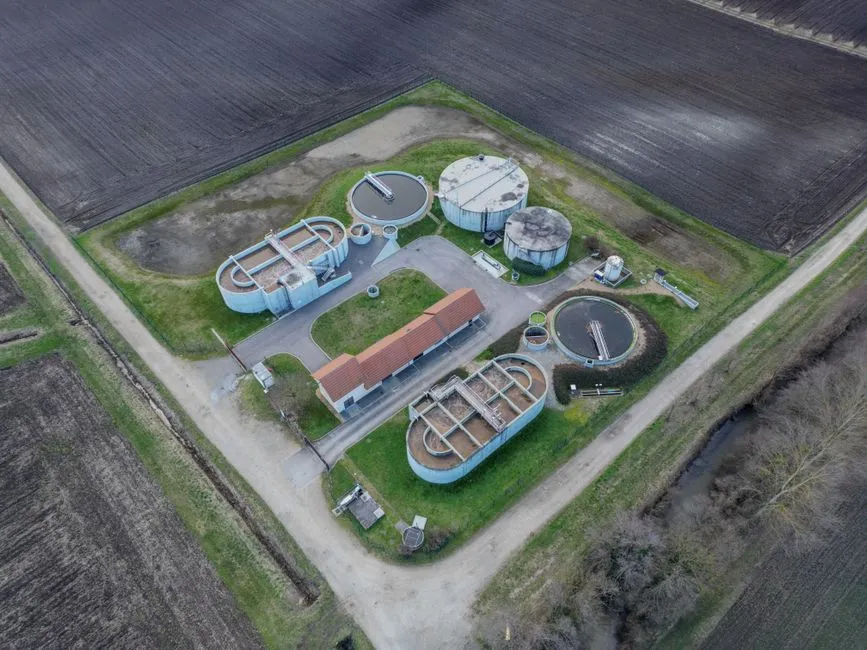
Equipment price is only one part of the installed treatment-train cost. HydropureWater’s 2026 field data report that DAF equipment CAPEX is 1.5–2.5 times comparable lamella equipment CAPEX at equal flow. That ratio cannot support a final capital conclusion until civil work, excavation, foundations, building enclosure, utilities and installation are priced consistently for both alternatives.
| Bid scope | Why it belongs in the comparison | Information required from bidders |
|---|---|---|
| Equipment and tanks | Establishes the comparable 1.5–2.5× DAF-to-lamella equipment CAPEX ratio reported for 2026 | Priced equipment list, selected configuration and excluded items |
| Civil and building work | Footprint, excavation and enclosure can change the relative installed result | Foundations, walls, access, overhead clearance, utilities and weather protection |
| Chemical conditioning | Both technologies depend on chemistry, while lamella sludge recirculation may reduce coagulant use | Complete, continuous and intermittent dose ranges, skid capacity and chemical storage |
| Energy and controls | DAF includes compressor and recycle-pump load; controls affect stable operation | Connected load, PLC scope, alarms, interlocks, remote access and utility requirements |
| Sludge handling | DAF float is reported at 4–8% dry solids versus lamella underflow at 2–5% | Sludge pump, thickener or press, cake handling, container and disposal assumptions |
| Operations and commissioning | Untrained operation can move a system outside its design window | Startup support, training, manuals, preventive maintenance and parts plan |
Request chemical consumption, energy use, labor, maintenance, sludge hauling and disposal as separate line items. The thicker DAF float may reduce dewatering demand, while lamella sludge recirculation may lower chemical consumption by up to 30% under suitable conditions. Neither metric is guaranteed, so the proposal should identify its test basis and operating assumptions.
The compliance boundary must also remain conditional. HydropureWater’s 2026 fabricated-metals source states that properly designed and chemically conditioned DAF can meet 40 CFR Part 433 daily-maximum and monthly-average limits for oil and grease, TSS and most total metals. Hexavalent chromium may require reducing-agent addition and potentially ion-exchange polishing. A 2026 mining/metals pretreatment comparison provides broader context, but it does not establish the permit applicable to a specific Blacksburg plant.
Confirm POTW or direct-discharge conditions, monitoring, whole-effluent toxicity where applicable and production variability. Treat the selected unit as part of a treatment train, not a guarantee that every categorical or site-specific requirement is satisfied.
Specify, test and procure the system
Procurement should begin with representative wastewater, not a generic nameplate comparison. Komline-Sanderson recommends pilot testing for unfamiliar waste streams, as cited in HydropureWater’s 2026 fabricated-metals guidance. Run a jar test first to establish chemical demand, then require a pilot where emulsion stability, variable flow or uncertain sludge behavior makes scale-up consequential.
Issue the same data request to every bidder:
- Representative flow and contaminant-load ranges.
- Free oil, emulsified coolant and drawing-compound properties.
- Particle-size distribution and settling behavior.
- pH, temperature and production-variability data.
- Chemical-demand and pilot-test results.
- Expected float or underflow solids characteristics.
- Applicable discharge limits and receiving-authority requirements.
Define the physical and service scope before comparing bids: materials of construction, PLC functions, chemical skid, float and sludge handling, winterization, available footprint, utilities, startup support, operator training, spare parts, warranty and service availability. Check compatibility with cutting fluids, cleaners and rinse chemistry rather than relying on a generic corrosion designation.
Require the performance guarantee to identify the representative influent, test methods, flow band, chemical assumptions and complete treatment train. A generic removal percentage does not demonstrate compliance or stable operation. The broader DAF versus clarifier comparison is useful for structuring that evaluation, but the final choice must be supported by the actual fabricated-metals stream.
Frequently Asked Questions
Is DAF or a clarifier cheaper for fabricated-metals wastewater?
Use HydropureWater’s 2026 reported equipment-CAPEX ratio of 1.5–2.5× for DAF relative to a comparable lamella at equal flow only as an initial screening figure. Ask bidders for a common installed scope that includes civil work, building or enclosure, utilities, chemical conditioning, energy connections, controls, sludge pumping, dewatering and disposal. DAF may then compare differently once its smaller footprint and generally thicker float are included.
How should a Blacksburg factory size the treatment train?
Test the real stream, then size from flow and load ranges, contaminant behavior, available footprint and the required sludge route—not flow rate alone. A mixed stream with emulsified cutting oil, coolant or colloidal fines generally points to DAF primary; heavy swarf may need clarification ahead of flotation or polishing afterward. Pilot evidence should establish chemical demand and the selected configuration.
What should buyers require from a treatment-system supplier?
Require pilot evidence on representative effluent, a guarantee tied to defined influent and operating conditions, and a complete scope covering PLC controls, materials of construction, chemical dosing, sludge handling, winterization, startup, training, service, parts and warranty. Separately verify that the bidder’s sludge handling and disposal assumptions match the plant’s waste-characterization route.
Which treatment will satisfy the applicable permit?
No unit can be promised to satisfy every requirement before the discharge route is confirmed. The supplied research discusses 40 CFR Part 433 for fabricated metals and 40 CFR Part 437 for mining and metals, but it does not establish which rule governs a particular Blacksburg facility. Obtain the current POTW or discharge authorization and confirm limits, monitoring, whole-effluent toxicity where applicable and any chromium-reduction or polishing requirements with the receiving authority.