Which System Fits a Textile Mill's Wastewater?
For a textile or dyeing mill in Alma, dissolved air flotation is generally the stronger 2026 choice when wastewater contains colloidal dye, fibre lint, PVA or starch, surfactants, and emulsified oils. DAF floats conditioned floc rather than waiting for it to settle, while a lamella clarifier remains credible for predominantly settleable solids, lower connected power, and established sedimentation systems. Neither unit reliably removes dissolved dye or soluble COD without additional chemistry and biological or membrane treatment. Selection should therefore follow equalization, chemical conditioning, primary clarification, and required downstream polishing, supported by jar tests on actual mill effluent and sizing against peak flow and solids loading.
The choice should be made stream by stream rather than from the label “textile wastewater.” DAF is generally preferable for mixed dyeing, sizing, printing, scouring, and finishing effluent because it can capture conditioned suspended, colloidal, and emulsified material in a compact primary stage. A lamella or conventional clarifier remains credible where the solids are mainly settleable, gravity-driven separation is preferred, connected power must be minimized, or the chemical program is already proven. The equipment remains a pretreatment step; HydropureWater's 2026 DAF guide states that DAF is rarely a stand-alone solution for textile duty.
For initial planning, HydropureWater's 2026 DAF guide gives hydraulic loading of 4–6 m³/m²/h, mass loading of 3–5 kg/m²/h, and a 20–50% COD-reduction envelope. These are planning values, not universal guarantees: the final design depends on actual effluent chemistry, temperature, peak load, and jar-test results. The guide places DAF after equalization and chemical conditioning and before biological or membrane polishing.
| Decision factor | DAF | Lamella or conventional clarifier |
|---|---|---|
| Best-fit separation | Conditioned colloidal material, fibre lint, PVA or starch floc, surfactants, and emulsified oils | Predominantly settleable solids and floc that can be collected from the bottom |
| Planning basis | 4–6 m³/m²/h hydraulic loading; 3–5 kg/m²/h mass loading | HydropureWater's lamella clarifier is published at 20–40 m/h surface loading |
| Primary advantage | Rapid capture of floatable floc with a comparatively compact installation | Gravity separation with no recycle-pressure requirement and potentially lower chemical use |
| Main limitation | Dissolved dye and soluble COD can pass through | Colloidal and low-density material may not separate reliably without suitable conditioning |
Equipment evaluation should cover the complete textile wastewater DAF system against a lamella clarifier for textile wastewater, including chemical conditioning, solids handling, controls, and the downstream treatment needed to meet the mill's reuse or discharge objectives.
How Textile Wastewater Changes the Clarification Decision
Dye-house effluent is not one uniform stream, so the production step that generated it determines the expected separation mechanism. Reactive-dye hydrolysate, for example, requires validation of coagulant and polymer dosing rather than selection from a generic colour-removal target.
Dyeing effluent can contain residual reactive, disperse, or vat dyes, electrolyte salts, and surfactants. Reactive-dye hydrolysate must be evaluated with a coagulant and polymer program through jar testing on actual spent liquor, as the 2026 textile DAF guide explains. Sizing and desizing streams can release PVA or starch carriers together with fibre lint; conditioned material may form a thick float or sludge blanket that affects skimming and dewatering.
Scouring and bleaching streams are generally hot and alkaline. For those duties, HydropureWater's 2026 guide identifies 316SS or polypropylene wetted parts as safer choices than default 304SS, including attention to the tank, skimmer, seals, and elastomers. Printing wash water introduces pigment, thickener, and urea residues. DAF can remove the resulting surface solids rapidly, but it is not deep color polishing.
DAF removes suspended, colloidal, and emulsified matter by converting suitable material into floatable floc. Dissolved dye may pass through unless it is oxidized upstream or converted into floatable flocs by validated chemistry. The same distinction applies to COD: suspended COD can be removed with the solids, while soluble COD generally remains for biological or membrane treatment.
| Mill stream | Principal contaminants | Likely treatment response | Design caution |
|---|---|---|---|
| Dyeing | Residual reactive, disperse, or vat dyes, salts, surfactants, and hydrolysed dye | DAF with validated pH adjustment, coagulant, and polymer dosing; downstream polishing as required | Run jar tests on actual spent liquor |
| Sizing and desizing | PVA or starch carriers and fibre lint | Chemical conditioning followed by DAF or suitable solids separation | A thick float or sludge blanket can require higher skimmer duty and a dewatering step |
| Scouring and bleaching | Hot alkaline liquor, surfactants, oils, residual peroxide, and suspended solids | Conditioned primary clarification followed by treatment for residual soluble COD | Specify wetted materials for the maximum equalized-feed temperature and chemistry |
| Printing wash water | Pigment, thickener, and urea residues | DAF for rapid surface-solids removal | Plan biological or membrane treatment rather than relying on DAF for color and soluble COD removal |
The guide's 90% TSS removal and at least 95% oil and grease removal figures are design targets under appropriate conditions, not site guarantees. A practical textile polymer dosing and flocculation guide should be used to establish the conditioning program, while textile wastewater coarse-screen design addresses removal of lint and other debris before the primary treatment stage.
DAF and Clarifier: Engineering Trade-Offs
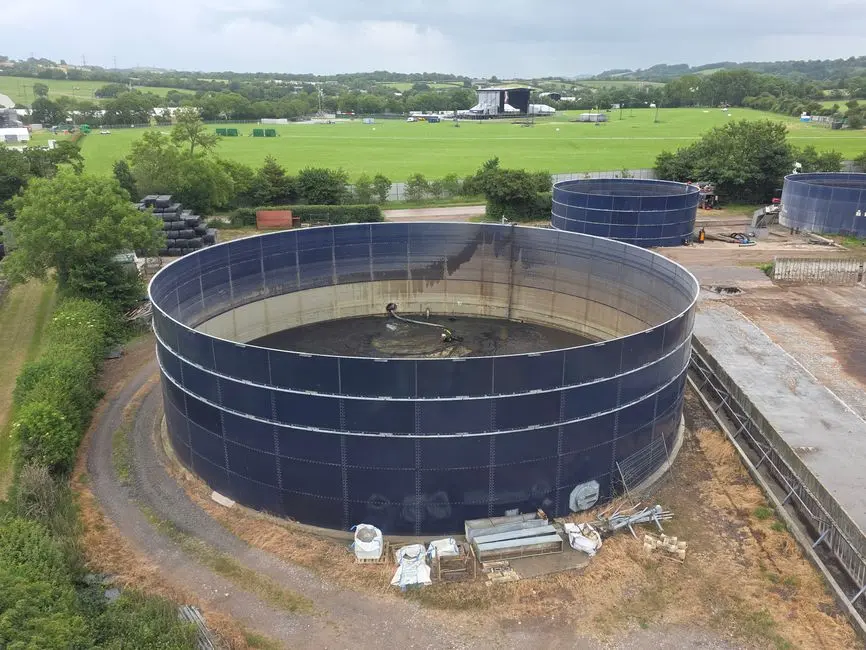
DAF and lamella clarification separate the same conditioned solids by different mechanisms, producing different hydraulic, energy, and solids-handling consequences. DAF generally wins when the mill needs rapid capture of conditioned low-density material; a clarifier generally wins when gravity separation, low connected power, and established bottom-sludge handling drive the business case.
In DAF, clarified water is pressurized and saturated with air, then released into the flotation tank. According to HydropureWater's 2026 textile guide, 30–50 micron micro-bubbles form on depressurization, attach to flocculated particles, and lift them to the surface for skimming. A clarifier relies on gravity: coagulated and flocculated solids settle to the bottom for mechanical collection. Tube or plate settlers shorten the settling distance and can improve capture of fine material.
Hydraulic criteria must be compared on the same basis. HydropureWater's 2026 DAF guide uses 4–6 m³/m²/h hydraulic loading and 3–5 kg/m²/h mass loading, while its lamella clarifier is published at 20–40 m/h surface loading. These figures describe different separation principles and should not be treated as directly interchangeable without checking the vendor's hydraulic basis, effective area, and design TSS.
Energy is the principal DAF penalty. The 2026 guide states that the recirculation pump pressurizes 10–40% of clarified flow to 4–6 bar and is the dominant energy consumer. A gravity-driven clarifier avoids that recycle-pressure demand. Its lower connected power does not automatically make it cheaper overall: chemical conditioning, sludge collection and withdrawal, dewatering, and downstream polishing must be priced with electricity.
Solids leave by different routes. HydropureWater's 2026 guide reports DAF float at 3–4% dry matter, suitable in concept for direct plate-and-frame or belt-press dewatering. A clarifier produces bottom sludge that requires collection, withdrawal, and dewatering. The purchase order should define the downstream solids line rather than treating dewatering as an unrelated item.
Chemical demand also requires careful interpretation. HydropureWater's lamella product is published as reducing chemical consumption by up to 30%, but DAF still normally needs pH adjustment, coagulant, and polymer for textile flocculation. The appropriate comparison is validated chemical consumption per unit of removed solids on the same effluent, including chemical quality, sludge production, and labor. Use a PLC-controlled textile chemical dosing skid when variable dye-batch conditions require controlled feed, and include float handling such as a plate-and-frame filter press where the selected process produces a dewaterable cake.
| Criterion | DAF | Lamella or conventional clarifier |
|---|---|---|
| Separation mechanism | 30–50 micron micro-bubbles attach to conditioned floc and lift it to the surface | Conditioned solids settle to the bottom; plates or tubes reduce settling distance |
| Hydraulic reference | 4–6 m³/m²/h; 3–5 kg/m²/h mass loading | 20–40 m/h published surface loading |
| Energy | Recirculation pump pressurizes 10–40% of clarified flow to 4–6 bar | Gravity-driven separation avoids recycle pressure |
| Removed solids | Surface float reported at 3–4% dry matter | Bottom sludge requiring collection, withdrawal, and dewatering |
| Chemical demand | pH adjustment, coagulant, and polymer normally required for textile flocculation | Lamella product published as reducing chemical consumption by up to 30% |
| Unresolved constituents | Dissolved color, soluble COD, and salts | Dissolved color, soluble COD, and salts |
Use a Stream-Specific Decision Framework
The defensible decision follows five steps: identify the source streams, characterize them, test the chemistry, define downstream treatment, and compare equipment on the resulting design basis. The objective is not the highest percentage removal; it is the lowest compliant whole-system cost for the actual effluent.
- Identify each source stream. Separate dyeing, sizing, scouring, bleaching, printing, finishing, rinsing, and cooling-water contributions where practical.
- Characterize the combined and peak flows. Test pH, temperature, TSS, COD, color, oil and grease, salinity, and settleability. Record batch peaks rather than relying only on an averaged analysis.
- Run jar tests. Compare pH adjustment, coagulant, and polymer programs on actual effluent, then measure TSS, residual COD, color, and oil and grease after separation.
- Define downstream treatment. Identify biological, membrane, filtration, or other polishing required after primary clarification.
- Compare engineering and lifecycle costs. Assess hydraulics, utilities, footprint, chemicals, sludge handling, maintenance, controls, and disposal.
Select DAF when rapid capture of conditioned colloidal dye, fibre lint, PVA, starch, surfactants, and emulsified oils is the priority, particularly where floor space is limited. Select a lamella clarifier when the solids are mainly settleable, lower connected power matters, chemical use must be minimized, or an established sedimentation train must be integrated.
Hot effluent requires additional care. HydropureWater's 2026 guide calls for pilot or jar-test confirmation for streams at 40–60 °C because increased viscosity can reduce bubble-rise velocity, while reduced air solubility can limit saturation. It also advises selecting the higher end of the recirculation range for hot effluent, subject to vendor design.
For reactive-dye batches, size for peak flow and peak TSS. Request the proposed surface loading rate and air-to-solids ratio at the actual design TSS, not just a nameplate flow. For reuse projects, DAF can serve as pretreatment ahead of ultrafiltration for textile wastewater pretreatment or industrial reverse osmosis, because removal of suspended and colloidal solids can reduce downstream membrane fouling risk. Final comparison must use the residual quality after each option against the biological, membrane, reuse, and discharge requirements.
Size, Specify and Price the Project
A comparable RFQ must contain the same influent and discharge information, the same downstream boundary, and the same material and control requirements for every bidder. For an Alma mill, provide average and peak hourly flow, TSS, COD, color, oil and grease, pH, temperature, salinity, required recycle ratio, and the intended reuse or discharge objectives.
For DAF, request the design hydraulic loading, mass loading, saturation pressure, recycle ratio, air-to-solids ratio, and effective flotation area at the actual design TSS. For a lamella clarifier, request the surface-loading basis, settling-area calculation, inlet and outlet configuration, plate angle, and sludge-withdrawal capacity. The selected design must also address the factory's batch sequence rather than only its daily average.
For an initial market check, HydropureWater's verified 2026 product catalogue lists DAF units from 4–300 m³/h across 13 models. Its COMPACT architecture uses one skid up to 66 GPM and a modular two-skid arrangement for larger flows. These are catalogue limits, not confirmation that a particular standard model will meet the mill's peak-load, temperature, and chemistry requirements.
Specify 304SS, 316SS, or polypropylene by wetted part, including the tank, skimmer, seals, elastomers, piping, and recycle pump. Selection should reflect the actual chemistry and maximum equalized-feed temperature. A common scope should include equalization interfaces, chemical conditioning, sensors, PLC controls, the flotation or settling unit, recycle system, solids collection, float or sludge dewatering, and downstream polishing. Automatic dosing is important during dye-batch transitions because pH and polymer demand can change with the wastewater profile.
| RFQ item | Buyer input | Required supplier response |
|---|---|---|
| Design basis | Average and peak flow; TSS, COD, color, oil and grease, pH, temperature, and salinity | Calculated equipment size, duty, performance assumptions, and identified derates |
| DAF-specific data | Required recycle ratio and downstream objectives | Hydraulic loading, mass loading, saturation pressure, air-to-solids ratio, and effective flotation area |
| Clarifier-specific data | Settleability results and sludge-withdrawal constraints | Surface-loading basis, settling-area calculation, plate configuration, and withdrawal rate |
| Materials and controls | Maximum equalized-feed temperature, chemical exposure, plant-control requirements | Materials declaration by wetted part and complete PLC tag list and interface schedule |
| Cost boundary | Chemical plan, operating hours, solids-disposal route, and downstream treatment | Separate equipment, installation, commissioning, chemicals, energy, labor, maintenance, and solids-disposal costs |
| Performance and compliance | Jar-test results and the current site discharge, sewer, or reuse requirements | Written performance guarantee tied to the actual effluent and a clearly defined downstream boundary |
Compare operating costs line by line rather than accepting a lump sum: recirculation electricity, coagulant, polymer, labor, float or sludge dewatering, maintenance, cleaning, and downstream polishing. Require a written performance guarantee tied to the mill's jar-test results. Neither DAF nor a lamella clarifier alone proves final discharge compliance, and the supplied research contains no Alma-specific limits; the current local discharge permit, sewer agreement, and pretreatment obligations must be verified during design.
Frequently Asked Questions
What will DAF or a clarifier cost for a textile mill in Alma?
There is no defensible price without the mill's peak flow, effluent analysis, treatment boundary, and solids-disposal route. Ask bidders to separate equipment, installation, commissioning, recirculation electricity, coagulant and polymer, labor, maintenance, float or sludge dewatering, and downstream polishing. DAF adds recycle-pump demand but may capture more low-density floc; a clarifier may have lower connected power and potentially lower chemical use. Compare total lifecycle cost against the same residual-water and solids-disposal requirements.
How should a buyer select and size a supplier?
Require textile or comparable dye-house references, jar-test data from actual mill effluent, a complete P&ID, PLC tag list, skid-boundary drawing, and written material declarations. For DAF, ask for hydraulic loading, mass loading, recycle ratio, air-to-solids ratio, and flotation area at the design TSS. For a lamella clarifier, request the surface-loading calculation, settling-area basis, and sludge-withdrawal design. A coagulant dosing system design criteria guide should support the chemical-control review.
Which operating data are needed before equipment can be sized?
DAF sizing needs influent flow, TSS, COD, color, temperature, and recycle information. Lamella sizing needs flow, TSS, settleability, the selected surface-loading criteria, and sludge-withdrawal data. Both also require pH, oil and grease, salinity, peak batch conditions, and the required downstream treatment. Jar-test results should establish the chemical program before final equipment dimensions or performance guarantees are accepted.
Can DAF or a lamella clarifier alone satisfy the mill's discharge permit?
No. Dissolved color, soluble COD, salts, and other regulated constituents are not resolved by primary clarification alone. Final compliance must be checked against the Alma site's current permit, sewer agreement, or reuse specification and against the mill's actual effluent. Size the downstream biological, membrane, or other polishing stage using residual quality after the selected primary treatment, not raw wastewater values.