
Why Textile Wastewater Fits DAF Better Than Plain Sedimentation
Textile effluent is well matched to dissolved air flotation because its contaminants—suspended solids, size residues, oils, greases, and colloidal dye particulates—either float or maintain low specific gravity (clearwaterind.com process guide, accessed 2026). DAF contrasts with sedimentation by lifting solids to the surface on micro-bubbles rather than waiting for them to settle, which shortens clarifier retention time and footprint on tight mill sites (clearwaterind.com process guide, accessed 2026).
Academic literature cites DAF as an effective treatment stage for textile and leather industry wastewater, where pollutant loads exceed the average of generic industrial streams (Industria Textila, 2018). In a textile effluent treatment plant, the unit is positioned after equalization and chemical conditioning and before biological or membrane polishing; it is rarely a stand-alone solution for textile duty. For a side-by-side of DAF against lamella and conventional clarifiers on a different high-solids stream, see the DAF vs clarifier decision logic used in the 2026 Rosebud mining/metals guide.
Textile Sub-Processes and How Each One Loads a DAF Clarifier
Dyeing and finishing baths contribute residual reactive, disperse or vat dyes, plus electrolyte salts and surfactants; DAF removes the flocculable fraction when paired with coagulant and polymer dosing upstream (clearwaterind.com process guide, accessed 2026). Sizing and desizing release PVA or starch carriers and fibre lint, which arrive at the DAF as suspended and colloidal loads that respond to coagulation and flocculation in the flash-mix stage (clearwaterind.com process guide, accessed 2026). Scouring and bleaching effluents run hot and alkaline, so the DAF tank, skimmer, and wetted elastomers must be specified in 316SS or polypropylene rather than the default 304SS (clearwaterind.com equipment catalogue, accessed 2026). Printing wash water carries pigment, thickener, and urea residues; here the DAF benefit is rapid surface sludge removal rather than deep polishing, necessitating a downstream biological or membrane step. Pairing the DAF with an automatic chemical dosing skid sized for the mill's peak TDS swing allows plants to handle that variability.
| Mill sub-process | Dominant load to DAF | DAF configuration implication |
|---|---|---|
| Desizing / sizing | PVA, starch, fibre lint, high COD | Polymer dose optimised for colloids; expect thick scum blanket |
| Scouring | Hot alkaline liquor, emulsified oils, surfactants | 316SS or PP wetted parts; check skimmer elastomer rating |
| Bleaching | H2O2 residues, alkaline pH, dissolved solids | pH trim before flotation; watch for excessive dissolved gas carryover |
| Dyeing (reactive / disperse / vat) | Residual dyes, salts (NaCl, Na2SO4), hydrolysed reactive dye | Cationic coagulant + anionic polymer; jar-test on actual spent liquor |
| Printing wash | Pigments, thickeners, urea | DAF as primary clarifier; downstream biological/membrane polish |
| Finishing | Softener, antistatic agents, oils | Skim rate tuned to FOG layer; check FOG build-up in recycle line |
DAF Process Flow and the Chemistry That Makes It Work on Textile Effluent
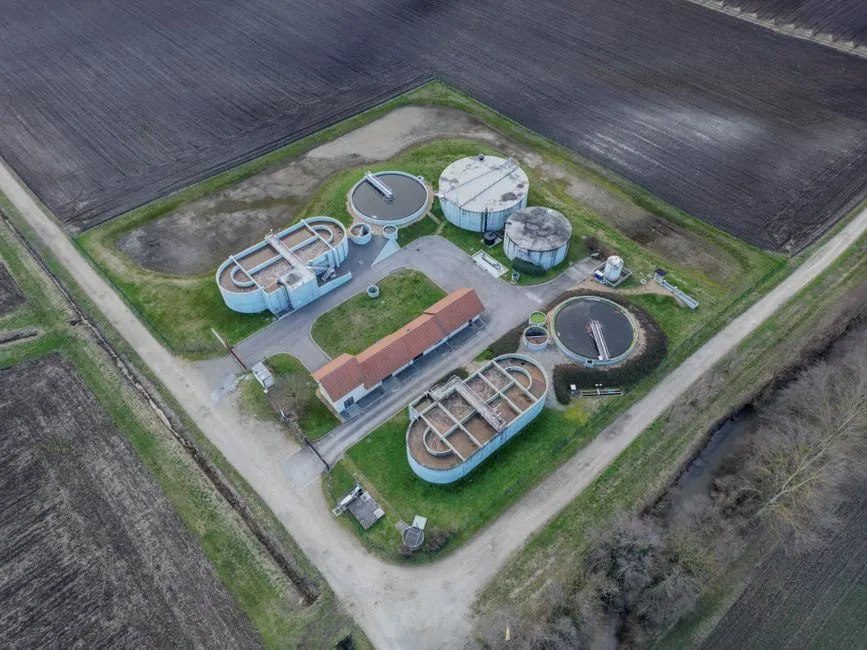
Clean clarified water is pressurised and saturated with air in a saturation vessel; on depressurisation into the flotation tank, 30–50 micron micro-bubbles nucleate and attach to flocculated particles, lifting them to the surface (clearwaterind.com process guide, accessed 2026; clearwaterind.com equipment catalogue, accessed 2026). Chemical conditioning upstream uses a coagulant, a pH adjustment stage, and a polymer flocculant dosed into serpentine flocculation tubes that provide 15–45 seconds of flash mixing, or into mix tanks with impeller agitators for longer contact time (clearwaterind.com process guide, accessed 2026). A surface skimmer removes the floating sludge blanket to a collection trough, while clarified effluent is drawn from a discharge point below the blanket and above any settled sludge (clearwaterind.com process guide, accessed 2026; clearwaterind.com equipment catalogue, accessed 2026). A recycle loop returns a portion of clarified water to the pressurisation-saturation system so the unit does not depend on a continuous supply of fresh water (clearwaterind.com process guide, accessed 2026). Heavier settled solids drop to a bottom collection zone and are removed by auger on commercial DAF units (clearwaterind.com equipment catalogue, accessed 2026). The internal logic is identical across vendors, making a textile-duty DAF clarifier P&ID straightforward to evaluate against a common reference.
Sizing a Textile DAF: Flow, Recycle Ratio and Hydraulic Loading
Nameplate throughput is the easiest number to copy from a brochure and the least useful on its own. HydropureWater DAF units cover 4–300 m³/h across 13 standard models, providing textile mills a wide selection range (HydropureWater verified product catalogue, 2026). For the COMPACT DAF architecture, flows up to 66 GPM are managed on a single skid, while larger flows use a modular two-skid layout (clearwaterind.com process guide, accessed 2026; clearwaterind.com equipment catalogue, accessed 2026). The recycle loop takes a portion of clarified water back to the saturation vessel; the hydraulic design must specify influent flow, recycle flow, and air-to-solid ratio separately (clearwaterind.com process guide, accessed 2026). Evaluate proposals by requesting the surface loading rate (m/h) and air-to-solids ratio at your design TSS rather than relying solely on peak flow; these metrics determine whether the unit will handle a reactive-dye spill.
| Hydraulic input the buyer should send to vendors | Why it matters for a textile DAF |
|---|---|
| Average and peak hourly flow (m³/h) | Sets the hydraulic envelope; reactive-dye batches cause spikes |
| Design TSS (mg/L) at peak | Drives air-to-solids ratio and skimmer torque |
| Design temperature (°C) | Determines whether 304SS is acceptable or 316SS/PP is required |
| Recycle ratio (%) at design | Defines saturator pump and air compressor sizing |
| Surface loading rate (m/h) | Vendor-calculated, must be supplied for the actual TSS |
Material, Automation and Build Options for Corrosive Dye-House Duty
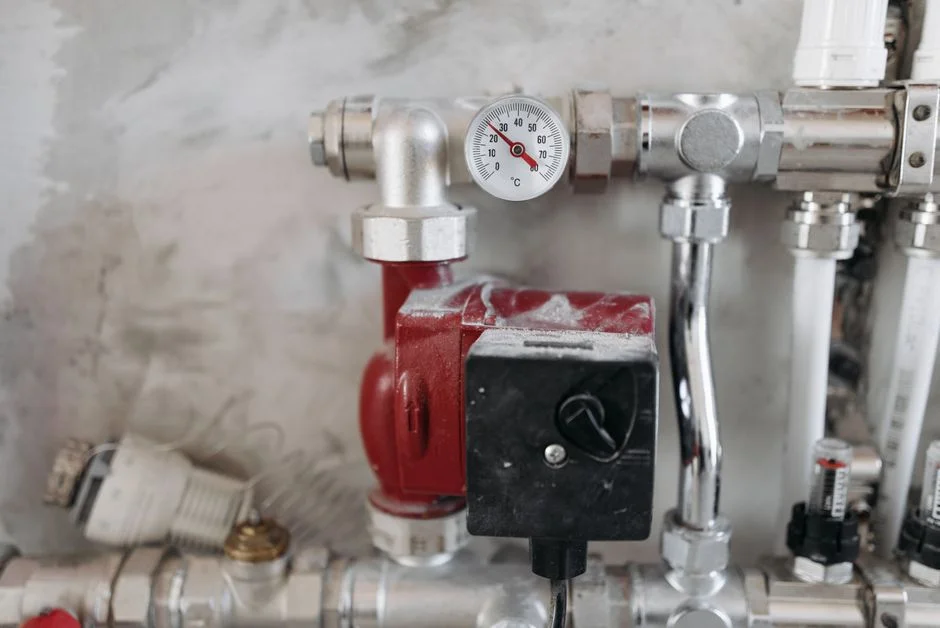
Standard DAF clarifiers are manufactured in 304SS, but 316SS and polypropylene are available for the higher chloride, acid, or alkaline exposure typical in dye-house service (clearwaterind.com equipment catalogue, accessed 2026). PLC control screens allow operators to adjust chemical dosing pumps, skimmer speed, and sludge discharge from one interface (clearwaterind.com process guide, accessed 2026; clearwaterind.com equipment catalogue, accessed 2026). A pre-assembled turnkey skid with chemical conditioning, sensors, and control panel is the standard format for textile mills to shorten installation time on sites with limited space (clearwaterind.com process guide, accessed 2026; clearwaterind.com equipment catalogue, accessed 2026). Before signing, confirm that wetted elastomers, skimmer materials, and the recycle pump are rated for the maximum temperature of the equalised feed, as hot scouring liquor is the leading cause of premature seal failure in textile DAF service. Vendors that publish their full PLC tag list and chemical-dosing skid interfaces are easier to integrate with an existing mill SCADA.
2026 Supplier Selection Checklist for a Textile DAF
Confirm that the supplier has documented textile or comparable dye-house references; Sigmadaf's 800+ project track record across 25+ countries is one published benchmark for DAF experience (clearwaterind.com equipment catalogue, accessed 2026). Ask for jar-test data on your actual effluent with the proposed coagulant/flocculant program, as reactive-dye hydrolysate behaves differently from food-industry FOG (clearwaterind.com process guide, accessed 2026). Validate the proposed flow envelope against the standard model range—HydropureWater DAF spans 4–300 m³/h across 13 models, and the COMPACT DAF splits at 66 GPM between single-skid and two-skid layouts (HydropureWater verified product catalogue, 2026; clearwaterind.com process guide, accessed 2026). Specify the build material (304SS / 316SS / PP) and skid boundaries to avoid scope creep (clearwaterind.com equipment catalogue, accessed 2026). Request the PLC tag list, chemical dosing skid interfaces, and sludge-handling downstream options before signing the PO. Use the wastewater OPEX breakdown framework to compare energy, chemical, and labour costs across bidders.
| RFQ line item | What the buyer should ask for | Why it matters in textile duty |
|---|---|---|
| Documented textile references | Site list with effluent type and flow | Confirms vendor has handled dye-house chemistry, not just food FOG |
| Jar-test on your effluent | Coagulant/polymer dose vs. TSS, COD, colour | Generic curves understate reactive-dye flocculation issues |
| Flow envelope | 4–300 m³/h across 13 standard models (HydropureWater) | Avoids custom-engineering premiums and lead-time |
| Build material | 304SS / 316SS / PP, called out per wetted part | Hot alkaline scouring effluent will pit 304SS at welds |
| Controls interface | PLC tag list, dosing skid I/O, SCADA protocol | Reduces integration cost with existing mill control room |
Frequently Asked Questions
How do I size a DAF clarifier for a textile plant without trusting a single brochure flow number?
Send vendors your average and peak hourly flow, design TSS, design temperature, and the required recycle ratio, then ask them to confirm surface loading rate (m/h) and air-to-solids ratio at your design TSS. The HydropureWater DAF range of 4–300 m³/h across 13 standard models provides a design envelope before custom pricing begins (HydropureWater verified product catalogue, 2026).
What coagulant and flocculant chemistry actually works on reactive-dye wastewater?
Jar testing on your own spent liquor is the only way to determine an effective chemical recipe. Chemical conditioning upstream—typically a coagulant, pH trim, and a polymer flocculant dosed through serpentine tubes or mix tanks—enables micro-bubble attachment, and the dosage must be validated by jar testing (clearwaterind.com process guide, accessed 2026).
What does a textile DAF cost to buy and run, and how should I budget for it?
Request a budgetary quote that separates equipment, installation, chemicals, and energy, then run each line through the OPEX framework. Energy, chemical, and labour lines are the three cost drivers to validate individually rather than accepting a turnkey lump sum.
How do I pick a DAF supplier that will not strand me with a non-textile design?
Insist on documented textile or comparable dye-house references—Sigmadaf's 800+ projects across 25+ countries is one published benchmark (clearwaterind.com equipment catalogue, accessed 2026)—and on a jar-test report run against your specific effluent (clearwaterind.com process guide, accessed 2026). Suppliers who cannot produce both should be treated as higher delivery and compliance risks for a textile ETP.