
Why Mining and Metals Wastewater in Rosebud Demands a Different Decision
Mining and metals flows combine process water, heap-leach runoff, and contact stormwater with variable metals speciation, suspended solids, oils from mobile equipment, and mill lubricants. Kemco Systems notes that industrial wastewater in this class commonly carries sand, lint, oils, greases, heavy metals, and VOCs in the same stream, which is why a single separator rarely handles every contaminant class (Source: S4, Kemco Systems). EPA groups these discharges under 40 CFR Part 437 (Ore Mining and Dressing) and adjacent subcategories, so the equipment choice has to be defensible against those effluent guidelines rather than a generic TSS or BOD target (Source: S1, EPA nepis.epa.gov mineral processing sectors document). Rosebud-area plants additionally face intermittent high-flow events from storm surges on contact-water ponds, so the chosen unit must ride hydraulic peaks without carryover of metals-bearing solids into the discharge.
The practical consequence is that a vendor's general-purpose DAF or clarifier datasheet is not the right starting point. The starting point is an influent characterization: FOG concentration, dissolved-versus-particulate metals fraction, grit and ore-fine settleability, diurnal and storm-event peaking factors, and the downstream sludge handling train. Once those numbers are in hand, the DAF-versus-clarifier question collapses to a small set of physics-driven triggers that the rest of this article works through.
DAF and Clarifier: How Each Technology Actually Works in a Metals Plant
A dissolved air flotation system saturates a sidestream or recycle with air under pressure and then releases that air at atmospheric pressure inside a flotation tank, producing 30-50 micron microbubbles that attach to suspended matter, oils, greases, and colloidal particles and lift them to the surface, where a paddle skimmer removes the float (Source: S5, SigmaDAF/Clearwater Industries). Coagulants and flocculants are dosed upstream so microfloc grows to a size the bubbles can contact; pH adjustment is typically required because metal hydrolysis and precipitation depend on the pH setpoint, and Kemco Systems calls accurate pH control vital to any wastewater treatment system serving industrial discharges (Source: S4, Kemco Systems).
Gravity clarifiers, including high-rate lamella or inclined-plate designs, rely on gravitational settling of solids against an upward-flowing or cross-flowing water column. Lamella plates increase the effective projected settling area so the unit achieves higher surface loading rates per footprint than a conventional rectangular basin, and the high-rate lamella clarifier used as a reference in this guide operates at a surface loading of 20-40 m/h (Source: high-rate lamella clarifier). DAF float is skimmed from the top and routed to sludge dewatering; clarifier underflow is drawn from the bottom and routed to the same dewatering train (Source: S4, Kemco Systems). Heavier settleable solids that fall out in a DAF collection zone are typically removed with an auger and combined with the floated stream, which is why DAF vendors describe the unit as handling both buoyancy-driven and gravity-driven separation in one vessel (Source: S5, SigmaDAF/Clearwater Industries).
Head-to-Head: DAF vs Clarifier on the Parameters That Matter
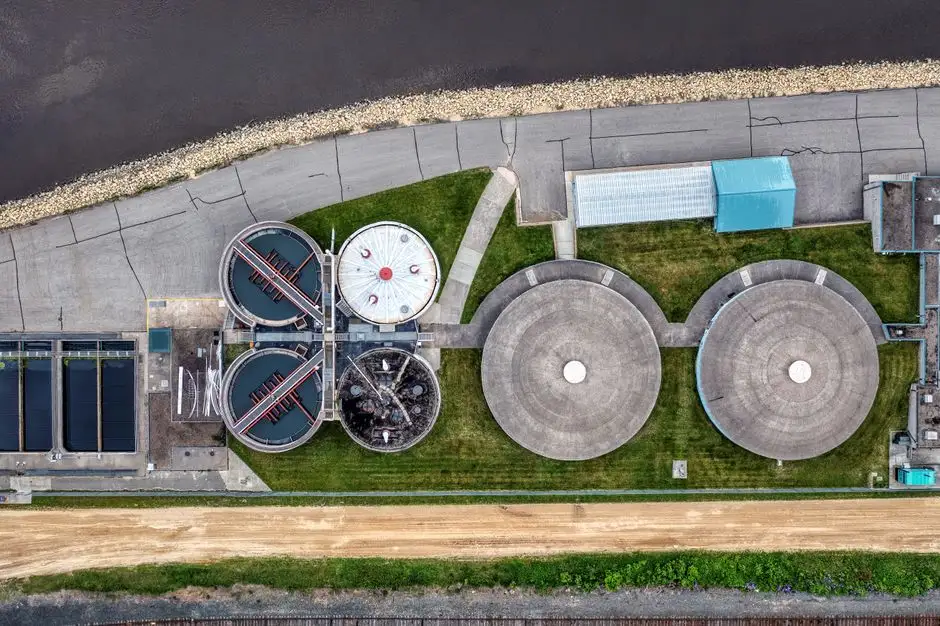
The table below compares the two technologies on the parameters that drive the decision for a Rosebud mining or metals plant. Numeric flow envelopes and surface-loading values are taken from the equipment specification sources cited; removal-target and sludge-character rows are drawn from the Kemco and SigmaDAF technical descriptions.
| Parameter | Dissolved Air Flotation (DAF) | Gravity Clarifier (Lamella) |
|---|---|---|
| Primary removal target | Oils, greases, FOG, colloidal metals, low-density TSS (S4, S5) | High-density settleable solids, grit, ore fines (S4) |
| Separation mechanism | 30-50 micron microbubbles attach to particles and float them (S5) | Stokes-law settling on inclined plates at 20-40 m/h surface loading (lamella spec) |
| Flow envelope | Standard industrial DAF systems cover 4-300 m³/h across 13 models (industrial DAF system spec) | Sized to a target surface loading rate (m/h) rather than a fixed model count |
| Footprint | Compact skid; needs upstream saturation tank and chemical mix room | Lamella plates compress footprint vs. rectangular basin; needs sludge hopper |
| Sludge character | Thinner, oil-laden float; auger-removed bottom fraction (S5) | Denser, grit-laden underflow (S4) |
| Chemical conditioning | Coagulant/flocculant + pH adjustment upstream (S4, S5) | Coagulant/flocculant + pH adjustment upstream for metals capture (S4) |
| Downstream dewatering | Skimmed float and bottom solids to a plate-and-frame filter press (S4) | Underflow to a plate-and-frame filter press (S4) |
Read this matrix column by column against your own influent data to determine the optimal anchor unit. Most Rosebud plants sit between these categories, requiring a hybrid train discussed in the scoring framework below.
Five Decision Triggers for Rosebud Mining and Metals Plants
These five triggers are sequenced so the engineer with only basic influent data — TSS, FOG, metals, flow — can work through them without further consulting.
- Oil and grease loading. If FOG is present in measurable quantities or if emulsified lubricants from crushers, mills, or haul-truck wash are in the waste stream, DAF is the stronger primary clarifier, because bubble attachment is the most efficient way to lift oil-coated and emulsified particles (Source: S4, S5).
- Solids density and settleability. If settleability testing shows rapid settling of coarse tailings, ore fines, or sand-sized grit, a lamella clarifier delivers better capture per square meter of footprint, particularly when operated at 20-40 m/h surface loading (Source: high-rate lamella clarifier spec).
- Metals speciation. Dissolved and colloidal metals require pH adjustment and coagulant dosing upstream of either technology; metal-hydroxide floc tends to be low-density and gelatinous, and DAF is typically more tolerant of this floc than a clarifier, which can crust over or channel (Source: S4, Kemco Systems).
- Flow variability. Plants with high storm-event peaking factors need a unit that rides hydraulic surges without carryover. Standard industrial DAF systems cover 4-300 m³/h, which gives the engineer flexible sizing across dry-weather and storm flows (Source: industrial DAF system spec). Lamella clarifiers should be checked for surface-loading overflow at peak before being specified as the sole primary unit.
- Sludge handling. Both technologies produce sludge that must be dewatered. Integrating a plate-and-frame filter press downstream of either unit captures solids, reduces hauling cost, and clarifies the discharge stream (Source: S4, Kemco Systems).
For an apples-to-apples view of how the same choice reads in a different metals corridor, see the Augusta mining DAF vs clarifier factory guide; for the sewer-discharge side of the same regulatory framework, the 40 CFR Part 437 mining pretreatment compliance guide walks through effluent limits and sampling.
A Practical Scoring Framework for Choosing Between DAF and Clarifier
Score each of the five triggers above from 1 to 3 against your own influent characterization, then weight the scores by local 40 CFR Part 437 enforcement priorities (Source: S1, EPA framework). The decision rules are simple enough for an engineer to defend before a plant manager or inspector.
| Trigger | Score 1 (clarifier wins) | Score 3 (DAF wins) | Weight (example) |
|---|---|---|---|
| FOG / emulsified oils | Negligible oil fraction | Persistent emulsion or lubricant carryover | High if crushers/mills on site |
| Solids density | Rapid-settling ore fines and grit dominate | Low-density, gelatinous, or colloidal floc dominates | High if heap-leach runoff dominates |
| Metals speciation | Mostly particulate-bound metals | Dissolved and colloidal metals after pH adjustment | High if downstream precipitation is the control point |
| Flow variability | Steady flow, low peaking factor | High storm-event peaking, surge loads | High if contact-water pond has short residence time |
| Sludge handling | Dense underflow, low polymer demand | Thin float, oil-laden, higher polymer demand | Medium, set by hauling-cost ceiling |
If DAF wins on three or more triggers — especially FOG, colloidal metals, and flow variability — specify a DAF with upstream chemical dosing and a downstream plate-and-frame sludge filter press. If the clarifier wins on three or more — especially grit, settleable solids, and footprint — specify a high-rate lamella clarifier with sludge recirculation and a plate-and-frame press for underflow. Many Rosebud plants benefit from a hybrid train: lamella primary for grit and settleables, DAF polishing for emulsified oils and colloidal metals, paired with shared chemical dosing and a single filter press. This mirrors the lamella-equipped FPBC and FPHF DAF models that already combine inclined plates with cross- or countercurrent flow to optimize separation (Source: S5, SigmaDAF/Clearwater Industries). For facilities pushing toward zero liquid discharge, the same scoring logic feeds the 2026 ZLD plant buyer's guide treatment-train selection.
Pairing the Clarifier or DAF With pH Control, Chemical Dosing, and Sludge Dewatering
The clarifier or DAF is one unit in a treatment train, and the buying decision must include the ancillaries to prevent underperformance. Accurate pH control is vital because metal precipitation, floc formation, and discharge limits are all pH-dependent; Kemco Systems specifies an automatic acid/caustic dosing skid with in-tank pH sensor, metering pumps, and automated drain, and recommends automatic control over manual because of the fines and environmental damage that follow an out-of-range discharge (Source: S4, Kemco Systems). The DAF vendor side adds that chemical conditioning can be carried out in serpentine floc tubes or chemical mix tanks, both of which are standard offerings alongside the DAF skid (Source: S5, SigmaDAF/Clearwater Industries).
Downstream, a plate-and-frame filter press substantially reduces sludge volume and hauling cost while producing a drier cake for disposal, and Kemco Systems describes filter presses as processing sludge from multiple wastewater treatment operations including DAF, ash handling, and ceramic membrane filtration (Source: S4, Kemco Systems). For Rosebud plants, integrating an automatic coagulant and pH dosing skid with a industrial DAF system or a high-rate lamella clarifier, then closing the loop with a plate-and-frame sludge filter press, reduces operator labor and stabilizes effluent quality against 40 CFR Part 437 excursions.
Frequently Asked Questions
How do I size a DAF or clarifier for a Rosebud mining plant under 40 CFR Part 437?
Size from a measured or pilot-characterized influent — FOG, TSS, dissolved metals, and peak wet-weather flow — rather than from a generic gpm-per-employee rule. For a DAF, the supplier's flow envelope (4-300 m³/h across 13 standard models) gives the upper and lower bound; for a lamella clarifier, the design surface loading rate (20-40 m/h) sets the plate area, so the required clarification footprint is flow divided by that rate (Source: industrial
Frequently Asked Questions
Is a DAF or a clarifier better for mining wastewater in Rosebud, US in 2026?
The selection depends primarily on the density and settling velocity of the metal precipitates. Dissolved Air Flotation (DAF) is generally superior for removing low-density particles, oil, and grease with specific gravities near or below 1.0, typically achieving 85-95% removal of suspended solids in lighter mineral slurries. Conventional or lamella clarifiers are more effective for heavy metal hydroxides with high specific gravities, often providing more robust performance for high-load influent where solids concentrations exceed 1,000 mg/L.
What influent characteristics should a Rosebud metals plant test before choosing between DAF and clarifier?
Engineers must analyze Total Suspended Solids (TSS) concentration, particle size distribution, and the specific gravity of the metal-laden sludge. Testing for oil and grease content is critical, as concentrations above 50 mg/L often favor DAF systems. Additionally, operators should conduct bench-scale jar testing to determine the settling velocity (measured in meters per hour) versus the rise velocity of air-saturated bubbles to ensure the chosen technology meets site-specific discharge limits.
How does 40 CFR Part 437 affect the choice between DAF and clarifier for a mining factory?
40 CFR Part 437 establishes strict effluent limitation guidelines for the Centralized Waste Treatment (CWT) point source category, which often applies to metal-bearing mining wastewater. These regulations mandate specific concentration limits for pollutants like lead, copper, and zinc. Because DAF systems are highly efficient at removing emulsified metals and fine precipitates that might otherwise pass through a clarifier, they are frequently selected when final polishing is required to meet the stringent numeric effluent limits set by the EPA for 2026 compliance.
What flow rate range should a DAF system be sized for in a typical Rosebud mining plant?
A typical DAF unit for a medium-scale mining operation in the Rosebud region is generally sized for flow rates between 50 and 500 gallons per minute (GPM). Sizing is dictated by the surface overflow rate, which for mining applications typically ranges from 1.5 to 3.0 GPM per square foot of surface area. Facilities exceeding 500 GPM often utilize parallel DAF trains to maintain optimal hydraulic loading and ensure consistent bubble-to-particle contact time.
Can a mining plant use both a lamella clarifier and a DAF in the same treatment train?
Yes, a dual-stage treatment train is often the most effective configuration for complex mining wastewater. A lamella clarifier is typically placed first to remove the bulk of heavy, settleable solids, reducing the influent loading to the downstream DAF. The DAF then acts as a secondary polishing step to remove fine, colloidal, or low-density particles that did not settle in the lamella unit, ensuring the final effluent consistently meets regulatory discharge criteria.