What a ZLD Plant Actually Does
A zero liquid discharge plant is an engineered train of physical, chemical, and thermal processes that converts an industrial wastewater stream into two outputs only: a reusable treated water stream and a dry solid or recoverable salt — with no liquid effluent leaving the site boundary. According to Veolia, ZLD systems are designed to take wastewater through a series of physical, chemical, and thermal technologies that produce treated water that can be reused and concentrated brine, which is further processed to separate salt crystals for disposal or beneficial use.
The word "plant" refers to the entire train — pretreatment, membrane concentration, thermal evaporation, and crystallization — not a single piece of equipment, and the train is engineered end-to-end around the chemistry of one specific effluent. Conventional wastewater treatment plants, by contrast, are designed around a liquid discharge that meets a permitted quality; a ZLD plant is designed around a closure of the water and salt balance.
The Springer 2025 introductory chapter on ZLD frames the technology as a sustainable water-management and resource-recovery approach driven by water scarcity and tightening pollution control, which is why adoption is concentrated in inland power, coal chemical, pharma, textile, and electronics sectors where receiving-water capacity is limited or discharge permits are expensive. That framing matters for an engineer scoping a project in 2026: a ZLD plant is justified primarily by water-security, regulatory, and salt-recovery drivers, not by OPEX savings. Every later section in this blueprint refers back to that fixed reference point — two outputs, no liquid waste — so a reader can map each process stage, technology choice, and contract clause to a clear purpose.
Inside the ZLD Plant: Stage-by-Stage Process Flow
A ZLD plant is built as a sequence of five stages, each protecting the next. The first three concentrate the water; the last two separate the concentrate into a reusable liquid and a dry solid. Treating them as a single integrated flow — rather than as a list of unit operations — is what distinguishes a ZLD plant from a conventional wastewater treatment system.
- Pretreatment. Screening, oil removal, softening, clarification, and filtration remove suspended solids, free oil, hardness, and silica that would otherwise foul downstream membranes and scale evaporators. Veolia lists deoiling, softening, clarification, and filtration as the standard ZLD pretreatment blocks. A rotating bar screen protects the train from ragging, a DAF unit handles oil and floatables, and a multi-media filter polishes turbidity before the membranes.
- Membrane concentration. Brackish RO, nanofiltration (NF), and ultra-high-pressure RO (UHPRO) progressively shrink the liquid volume while rejecting dissolved salts. Each step pushes the total dissolved solids (TDS) higher than the previous one and produces a permeate that becomes part of the reusable water stream.
- Thermal concentration. A falling film evaporator or a mechanical vapor recompression (MVR) evaporator drives the membrane concentrate to near saturation. Wang & Lin (ACS EST Eng. 2022) frame this as the thermodynamic bottleneck of any zero liquid discharge system: the energy required to evaporate water rises sharply as brine concentration approaches the salt solubility limit.
- Crystallization and solids handling. A brine crystallizer separates dissolved salts into a dry solid. The 2026 full-scale coal chemical ZLD study in Water Research (DOI 10.1016/j.watres.2026.126880) shows that the membrane stages produce chemically distinct concentrates: high-molecular-weight, sulfur-rich compounds accumulate in the NF concentrate, while low-molecular-weight halogenated N-heterocycles enrich the UHPRO concentrate. The practical consequence is that each concentrate stream should be engineered — and often treated — separately rather than blended into a single thermal feed. A filter press then dewaters the crystal slurry into a stackable salt cake.
- Water reuse loop. The recovered distillate is returned as boiler makeup, cooling-tower makeup, or general process water, closing the water balance against freshwater withdrawal.
| Stage | Typical equipment | Primary function | Output stream |
|---|---|---|---|
| 1. Pretreatment | Rotary bar screen, DAF, lime/soda softening, clarifier, multi-media filter | Remove oil, hardness, suspended solids, silica to protect downstream units | Clarified effluent to membrane train |
| 2. Membrane concentration | Brackish RO, nanofiltration, ultra-high-pressure RO | Reject dissolved salts and shrink liquid volume | Permeate (reuse) + brine concentrate |
| 3. Thermal concentration | Falling film evaporator (FFE), MVR evaporator | Drive brine toward saturation | Distillate (reuse) + saturated brine |
| 4. Crystallization & solids | Brine crystallizer, filter press for salt cake | Recover salt as a dry solid or recoverable product | Dry salt cake for disposal or reuse |
| 5. Water reuse loop | Storage, polishing mixed-bed, distribution | Return distillate to boiler or process | Closed-loop plant makeup water |
For engineers sizing each block, a useful rule of thumb confirmed by the 2026 coal chemical ZLD study is that the membrane and thermal stages cannot be specified independently: the brine chemistry the evaporator sees is determined by the membrane cut and operating pressure. In practice, a rotary bar screen feeds a DAF unit for oil and suspended-solids removal, which feeds a multi-media pretreatment filter ahead of an industrial RO concentrate system, with a filter press for ZLD salt cake handling downstream of the crystallizer.
Thermal vs Membrane vs Hybrid ZLD Configurations
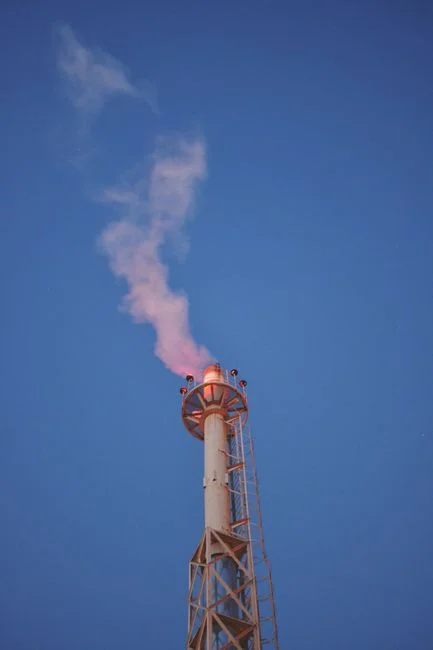
Veolia describes two general ZLD technology families — thermal and membrane — and notes that most real plants use a hybrid of both, because no single technology is universally best. The decision of which architecture to specify in an RFQ is driven by effluent strength, the value of recovered water and salt, site utilities (steam, electric power, cooling water), and the discharge limit the plant must meet.
- Thermal-only or thermal-dominant ZLD. Used when the concentrate must reach saturation or super-saturation, when salt recovery has a real offtake, or when discharge to the environment is impossible. Pearl GTL in Qatar and the West Phoenix 5 combined-cycle power plant in Arizona both rely on HPD evaporation and crystallization at the heart of the train.
- Membrane-dominant and minimal liquid discharge (MLD). Panagopoulos & Haralambous (J. Environ. Chem. Eng. 8(5):104418, 2020) show that for very high-strength streams a minimal liquid discharge design — sometimes labelled "partial ZLD" in earlier literature — may be the most thermodynamically realistic option, in which evaporator concentrate is disposed of by deep-well injection rather than crystallized. MLD reduces CAPEX and energy demand at the cost of accepting a managed liquid residue.
- Hybrid membrane-then-thermal. The working default across power, coal chemical, GTL, leather, and pharmaceutical plants, supported by Xiao et al. (Desalination 482:114387, 2020) and by the 2026 full-scale coal chemical ZLD study (Water Research, DOI 10.1016/j.watres.2026.126880). Membranes do the bulk volume reduction; thermal polish drives the remaining brine to salt.
| Configuration | Best-fit effluent | Strengths | Limitations |
|---|---|---|---|
| Thermal-only / thermal-dominant | High-strength brine, salt recovery required, zero discharge mandated | Proven at scale; reaches saturation; produces dry cake | High steam and electric power demand; high CAPEX |
| Membrane-dominant / MLD (partial ZLD) | Very high-strength streams where true ZLD is thermodynamically unrealistic | Lower energy than full thermal; smaller crystallizer | Requires a permitted liquid residue route (deep-well injection or evaporation pond) |
| Hybrid membrane + thermal | Default for most industrial effluents | Balances CAPEX, energy, and water recovery; each stage protects the next | More interfaces to integrate and operate than a single-technology train |
The 2026 Water Research study sharpens this choice for one specific stream — coal chemical wastewater — by showing that the NF and UHPRO concentrates carry different refractory dissolved organic matter (DOM) fingerprints, so they should not be blended into a single thermal feed without engineered treatment. In a hybrid plant the thermal stage sees a more consistent feed and operates closer to design point; in a thermal-only plant, any upstream variability hits the evaporator directly.
Reference Plants and What They Prove
Three documented reference plants illustrate how the same thermal-plus-membrane template is applied across very different industries. Veolia describes Pearl GTL in Qatar as the world's largest gas-to-liquid facility, where HPD evaporation and crystallization sit at the heart of a ZLD system designed to produce no aqueous discharge and to supply recovered water as a major portion of plant makeup. The West Phoenix 5 combined-cycle power plant in Arizona — close to 1,000 MW — sends cooling-tower blowdown through a single 500 gpm falling film evaporator that returns distillate as boiler feed, followed by a 15 gpm brine crystallizer that produces dry cake for landfill. Bayswater Power Station in New South Wales, a 4 × 660 MW facility, added a second falling film evaporator and a brine crystallizer to increase salt removal, reduce power consumption, and shrink the on-site brine decant basin.
What these three plants prove for an engineer writing an internal justification is that ZLD is not a single technology bet: it is a configurable train whose capacity, evaporator sizing, and crystallizer inclusion are tuned to a site's flow, salt load, and discharge constraint. The same template appears in the 2025 Springer chapter on ZLD and in the Date et al. (2022) critical review in J. Water Process Eng. 49:103129, which surveys the architecture across power, GTL, coal chemical, leather, and pharmaceutical sites.
2026 Buyer's Checklist: Sizing, Specifying, and De-Risking a ZLD Plant
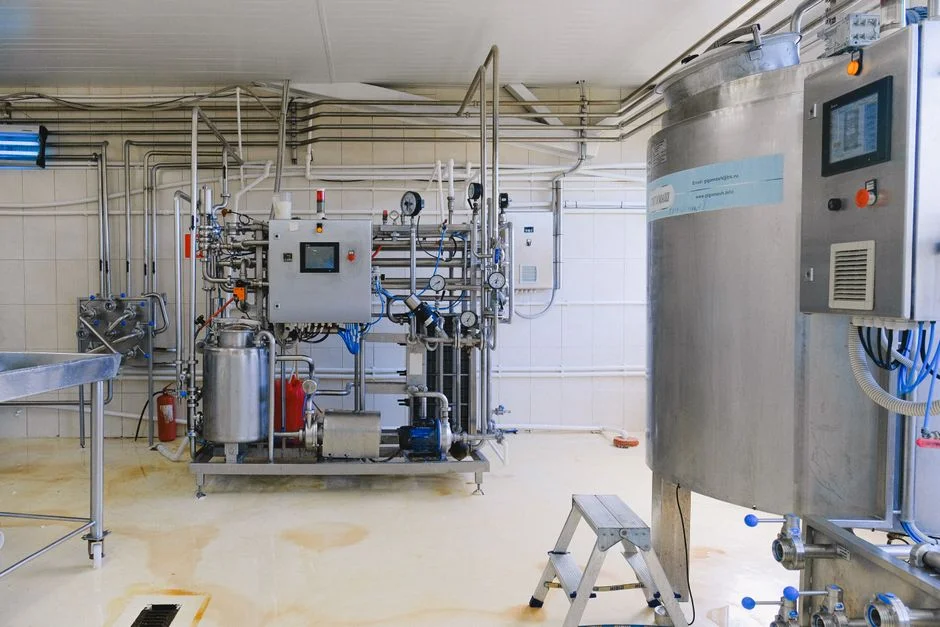
A ZLD plant is one of the more specification-sensitive capital purchases a plant will make, and the failure modes are usually upstream of the evaporator — in pretreatment gaps, undersized softeners, and concentrate chemistry that was not characterized. The checklist below is the data the buyer must collect and the decisions that must be locked before going to RFQ.
- Pre-engineering data. Full influent characterization (TDS, hardness, silica, organics, COD/BOD), diurnal flow variation, discharge limits, and site utilities (steam pressure and quality, electric power, cooling-water temperature). Veolia states explicitly that each effluent stream is unique and shapes the entire ZLD plant design, so a generic bid without this data is a risk transfer back to the buyer.
- Architecture decision. Thermal-only vs hybrid, salt disposal vs recovery, crystallizer inclusion, and whether an MLD/partial-ZLD design (Panagopoulos & Haralambous 2020) is acceptable at the site. These choices drive both CAPEX and the regulatory case.
- Pilot testing. A continuous pilot on real wastewater, not synthetic, sized to the design recovery. The 2026 Water Research coal chemical ZLD study shows that DOM behavior across the membrane stages varies by stream and cannot be predicted from influent COD alone.
- Schedule and risk items. Lump-sum turnkey delivery (Veolia offers this delivery model), fixed-term operation and maintenance, water-recovery and salt-quality guarantees, operator training, and post-commissioning support.
- Internal alignment. Build the case around the regulatory and ESG driver (no aqueous discharge, water reuse, salt recovery) rather than OPEX, because the thermodynamic energy demand of ZLD is high (Wang & Lin, ACS EST Eng. 2022) and the case usually rests on water security, not energy savings.
Buyers who skip the pre-engineering data step end up re-engineering pretreatment after commissioning, which is the most expensive change order in any ZLD project. For a deeper look at how a similar ZLD scope is structured for a different industry, see the hybrid ZLD engineering blueprint used for semiconductor arsenic wastewater and the cooling-tower-blowdown ZLD context at a data centre site. Sourcing and standards typically involve selecting valves, instruments, and media through a consolidated water treatment parts and media package rather than buying piece by piece.
Frequently Asked Questions
What is a ZLD plant and how is it different from a regular wastewater treatment plant?
A ZLD plant is an engineered train of physical, chemical, and thermal processes that produces two outputs — reusable treated water and a dry salt solid or recoverable salt — with no liquid discharge to the environment. A conventional wastewater treatment plant is designed around a liquid effluent that meets a permitted discharge quality. According to Veolia, ZLD technology is critical when the surrounding environment is fragile and cannot withstand even treated wastewater discharge, and it can avoid post-treatment entirely.
How much does a ZLD plant cost in 2026 and what drives the price?
No single price fits all ZLD plants. The buyers who get defensible numbers collect the influent characterization, target recovery, and site utilities first, then ask suppliers to price against a defined architecture. The main CAPEX drivers are the thermal-to-membrane ratio, evaporator metallurgy (especially for chloride-rich brines), crystallizer inclusion, and salt-handling equipment; the main OPEX drivers are steam and electric power, which is why the energy demand described by Wang & Lin (ACS EST Eng. 2022) sets the long-run cost floor. Request a CAPEX split by stage and an OPEX build-up per cubic metre of feed before comparing bids.
What should I ask a ZLD plant supplier before signing?
Ask for a pilot-test plan on the actual wastewater, named water-recovery and salt-quality guarantees, a clear thermal-only vs hybrid architecture recommendation with the reasoning, lump-sum turnkey scope with a single point of responsibility, a fixed-term operation and maintenance option, and a commissioning schedule with critical-path items called out. The 2026 coal chemical ZLD study (Water Research, DOI 10.1016/j.watres.2026.126880) is a useful reference when asking how the supplier will handle distinct NF and UHPRO concentrate streams.
When is ZLD mandatory versus optional, and how long does it take to build one?
ZLD becomes mandatory when the receiving environment cannot accept any liquid discharge or when post-treatment is not feasible, per Veolia's framing; in other cases it is a voluntary response to water scarcity, salt recovery economics, or ESG targets. The typical critical path runs pilot testing → detailed engineering → long-lead procurement (evaporator metallurgy, crystallizer) → construction → commissioning, and the longest item is usually the thermal equipment. Specific lead times must be requested from shortlisted vendors because they depend on metallurgy and on the supplier's manufacturing slot.