
Why Ecatepec de Morelos Forces a Different Blowdown Strategy
Ecatepec de Morelos sits inside the over-drafted Valley of Mexico aquifer, where municipal supply is rationed during dry months and industrial tariffs have risen faster than general inflation. A hyperscale site cannot size its water balance against an average hydrological year; the design case has to survive a multi-year drought when CONAGUA extraction concessions are curtailed and the Sistema de Aguas de la Ciudad de México / Edomex interceptor network restricts new industrial discharges.
In this microclimate, high-elevation solar load and dry-bulb temperatures push cooling-tower evaporation rates above the temperate baseline, so dissolved solids in the recirculating loop concentrate faster and the 4–8× TDS multiplier sits at the upper end of the 1,200–6,000 mg/L band reported for data-center blowdown (genesiswatertech.com, 2025). Discharging 2.5–3 million gallons per month of untreated blowdown from a 10 MGal/month makeup stream is no longer defensible under tightening NOM-001-SEMARNAT effluent limits. The sanitary wastewater stream from the data-center workforce — typically 80–120 L/person/day — must be segregated and sent to a parallel biological train; it cannot be co-mingled with the high-TDS cooling-tower blowdown because the contaminant profiles are incompatible and most RO membranes cannot tolerate the BOD/TSS swings of black water.
Cooling-Tower Blowdown: What You're Actually Treating
Blowdown water quality is defined by what the cooling-tower chemistry program has been doing for months. Total dissolved solids run 1,200–6,000 mg/L, which is 4–8× the makeup supply, depending on cycles of concentration and source water (genesiswatertech.com, 2025). Calcium, magnesium, silica, and alkalinity concentrate together and set the ceiling on RO recovery, because each mineral has its own saturation limit. Treatment chemicals — biocides, corrosion inhibitors, scale inhibitors, and dispersants — accumulate proportionally, and legacy chromate or high-phosphate programs are particularly hard to reuse or discharge because they introduce regulated metals and nutrients. Suspended solids from corrosion products, biofilm fragments, and airborne dust settle into the basin at 10–50 mg/L even with effective side-stream filtration. Biological content is the hidden variable: planktonic bacteria, algae, and biofilm organisms must be knocked down before any membrane step, or biofouling will dominate OPEX and force cleaning cycles that no OEM warranty will cover. At 4 cycles of concentration, blowdown equals 25–30% of makeup water (genesiswatertech.com, 2025) — a major line item at hyperscale.
| Parameter | Typical Range in Blowdown | Design Implication |
|---|---|---|
| TDS | 1,200–6,000 mg/L (4–8× makeup) | Sets RO feed pressure and concentrate disposal volume |
| Hardness (Ca, Mg) | Concentrated with cycles | Drives antiscalant dose and NF vs. RO choice |
| Silica | Concentrated with cycles | Limits RO recovery before scaling |
| Suspended solids | 10–50 mg/L despite basin filtration | Must be cut to <10–15 µm before membranes |
| Treatment chemicals | Biocides, inhibitors, dispersants | Non-phosphate, non-chromate programs required for reuse |
| Biological content | Planktonic + biofilm organisms | Biocide program and UF pretreatment mandatory |
The 2026 Treatment Train: Side-Stream Filtration, UF, NF, and RO
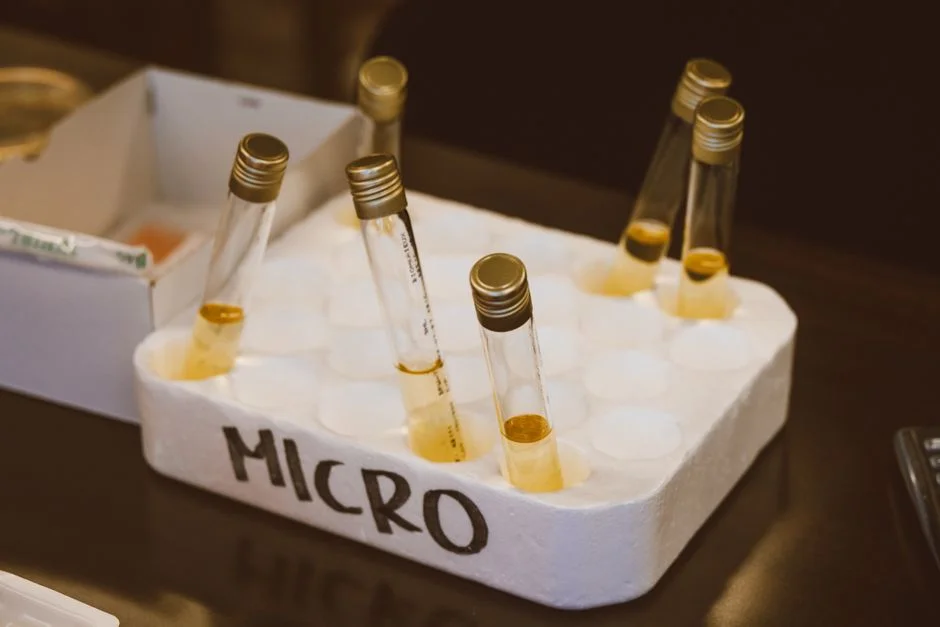
Side-stream filtration is the first guard. Treating 1–5% of the circulation flow with self-cleaning spiral or multimedia filters drops suspended solids and biological loading, which lifts cycles of concentration and protects every downstream unit. Installed cost is $50,000–$200,000 for a typical data-center installation (genesiswatertech.com, 2025). The next step is an ultrafiltration system for blowdown pretreatment at 0.01–0.1 micron pore size, which strips bacteria, viruses, and colloids at 10–30 psi with 90–95% recovery and chemical cleaning every 1–3 months (genesiswatertech.com, 2025). On hard, sulfate-rich make-up, nanofiltration at 75–150 psi can replace or precede RO, producing permeate at 30–50% of feed TDS and allowing the cooling tower to push higher cycles at lower energy. RO is the workhorse: 95–99% rejection of dissolved solids, permeate 10–50 mg/L TDS, recovery 50–85% on blowdown, operating pressure 150–400 psi, and a 50,000 GPD system installed for $250,000–$500,000 with $1.50–3.00 per thousand gallons operating cost (genesiswatertech.com, 2025). The single biggest determinant of RO recovery and membrane life is antiscalant selection plus feed pretreatment through a multi-media filter ahead of the RO membranes to cut particulates below 10–15 microns. An antiscalant and biocide dosing skid tied to the RO feed normalizes chemistry and protects membrane warranty terms. For the membrane core itself, an RO system sized for blowdown recovery is the unit the rest of the train is built around.
| Unit Operation | Function | Operating Pressure | Recovery | Installed Capex (typical) | Opex Indicator |
|---|---|---|---|---|---|
| Side-stream filtration | Drop TSS, reduce biological loading | Gravity / low | n/a (circulation slip) | $50,000–$200,000 | Solids disposal, routine maintenance |
| Ultrafiltration (UF) | RO pretreatment, bacteria/virus removal | 10–30 psi | 90–95% | Per system sizing | Cleaning 1–3 months, membrane life |
| Nanofiltration (NF) | Partial softening, sulfate removal | 75–150 psi | 70–85% | Below RO | Energy, antiscalant |
| Reverse osmosis (RO) | 95–99% rejection of dissolved solids | 150–400 psi | 50–85% on blowdown | $250,000–$500,000 (50,000 GPD) | $1.50–3.00/kgal |
When ZLD Becomes the Right Answer: MVC, Brine Concentrators, and Crystallizers
Mechanical vapor compression pushes recovery past the osmotic ceiling of membranes. MVC systems reach 95–98% recovery on concentrate streams and produce distillate with TDS below 10 mg/L at 15–25 kWh per 1,000 US gallons; a 10,000–30,000 GPD unit costs $1–3 million installed (genesiswatertech.com, 2025). A partial ZLD train — RO at 50–75% recovery feeding MVC at 95% recovery on the concentrate — delivers 85–95% overall water recovery with no crystallizer required (genesiswatertech.com, 2025), and is the most defensible answer for sites that face discharge-volume restrictions but still have a permitted sewer outfall. Full ZLD adds a crystallizer that converts the final brine to solid salt cake for disposal, with overall recovery 95–99%, capital cost $3–8 million, and operating cost $5–15 per thousand gallons treated (genesiswatertech.com, 2025). In the Valley of Mexico, where discharge permits are tightening and aquifer replenishment is a regulatory priority, the capex premium for ZLD must be weighed against avoided discharge fees in the $5–15 per thousand gallon range reported for water-stressed regions (genesiswatertech.com, 2025). The trade-off is real: every additional percent of recovery costs more than the last, and the OPEX of MVC plus crystallizer often exceeds the price of municipal makeup in non-stressed markets — but in Ecatepec, that comparison usually flips.
| ZLD Option | Overall Recovery | Distillate / Product Quality | Capex Band | Opex Band | When It Fits |
|---|---|---|---|---|---|
| Partial ZLD (RO + MVC) | 85–95% | <10 mg/L TDS distillate | MVC $1–3M (10,000–30,000 GPD) | 15–25 kWh/kgal energy | Discharge-volume limits, no crystallizer needed |
| Full ZLD (RO + MVC + crystallizer) | 95–99% | Solid salt cake + distillate | $3–8M | $5–15/kgal | No discharge permit, water-positive ESG target |
Choosing the Right Train for Ecatepec: A Decision Framework
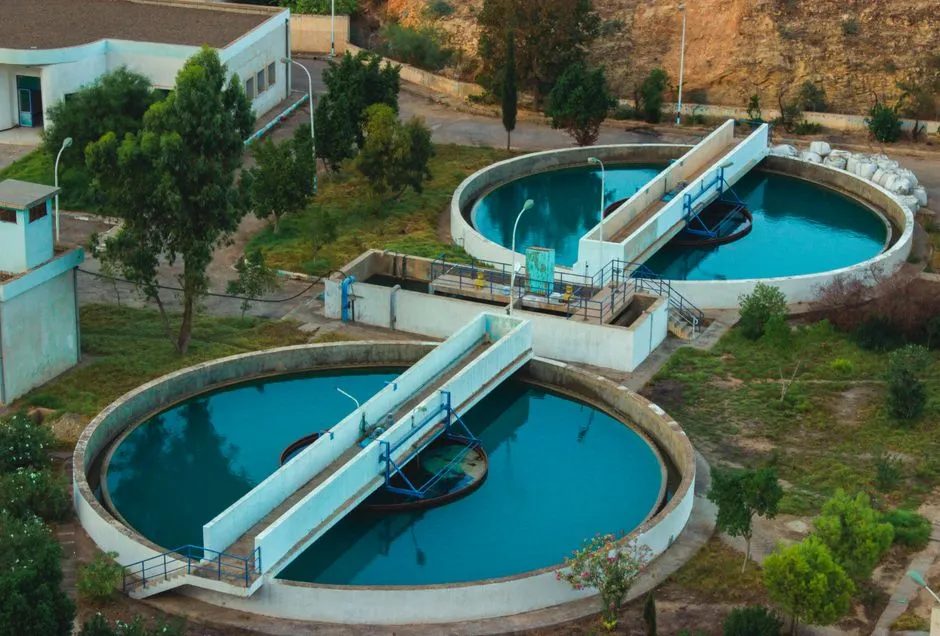
The right train depends on the water-stress tier of the specific site, not on a global template. On a low-stress site — existing industrial park, stable municipal supply, and an obtainable discharge permit — specify side-stream filtration plus RO, target 60–75% blowdown reuse, and accept sewer discharge of RO concentrate within permit limits. On a medium-stress site — new build, contested water allocation, partial sewer restrictions — add NF for partial softening, push cycles of concentration to 6, target 80% reuse, and evaluate partial ZLD via MVC on the RO concentrate. On a high-stress site — drought-restricted allocation, no discharge permit available, or an ESG-driven water-positive target — specify full ZLD with crystallizer, budget $3–8 million and $5–15 per thousand gallons OPEX (genesiswatertech.com, 2025), and recover capex through avoided water purchase and discharge fees. Sanitary wastewater must be handled on a parallel biological train — for example, an MBR for sanitary wastewater from the data center sized for 80–120 L/person/day — because the two streams have incompatible contaminant profiles and combining them forces both trains to underperform.
| Site Stress Tier | Recommended Train | Reuse Target | Discharge Path |
|---|---|---|---|
| Low | Side-stream filtration + RO | 60–75% | Sewer within permit |
| Medium | Side-stream + NF + RO + partial ZLD (MVC) | ~80% | Reduced-volume sewer; MVC distillate reused |
| High | Side-stream + RO + MVC + crystallizer (full ZLD) | 95–99% | No liquid discharge; solid cake hauled |
Buyer's Checklist: What to Confirm Before Specifying Equipment
Lock down a 12-month site water analysis before sizing anything: TDS, hardness, silica, chloride, sulfate, plus iron and manganese, because these parameters set the RO recovery ceiling and the antiscalant dose (genesiswatertech.com, 2025). Confirm the discharge path and tariff early — sewer (POTW) versus on-site irrigation versus full ZLD — because the answer drives whether MVC and crystallizer capex is justified, and a tariff change after the PO is signed can swing project economics. Verify the compliance pathway with local counsel: NOM-001-SEMARNAT effluent limits, Edomex potable reuse rules, and any CONAGUA extraction concessions tied to the cooling-tower makeup allocation. Require OEM performance guarantees, not just equipment supply: RO recovery, permeate TDS, membrane life, MVC specific energy consumption, and ZLD brine cake volume. Plan for chemical-program integration — low-phosphate, non-chromate cooling-water chemistry is mandatory for downstream membrane reuse (genesiswatertech.com, 2025). An RO and UF membrane replacement elements spares contract, paired with an on-site chlorine dioxide generator for biological control, closes the operational loop. For comparison points on a parallel location, see our data center blowdown treatment in Recife breakdown, and for capex framing our wastewater treatment plant cost in Puebla, Mexico engineering breakdown. On the sanitary side, the trade-off between biological trains is laid out in our MBR vs conventional activated sludge cost comparison.
Frequently Asked Questions
What capex band should we expect for a hyperscale blowdown treatment train in Ecatepec?
For a side-stream filtration plus RO train sized for blowdown reuse on a 5–10 MGD makeup stream, installed cost is dominated by a 50,000 GPD RO system at $250,000–$500,000 with $1.50–3.00/kgal OPEX (genesiswatertech.com, 2025). Full ZLD adds $3–8 million in capex and $5–15 per thousand gallons OPEX (genesiswatertech.com, 2025). The right input to request from bidders is a sized quote tied to a 12-month site water analysis, not a generic per-gallon estimate.
What discharge and reuse permits does an Ecatepec data center need to confirm before selecting a train?
You need to verify three things with local counsel and the relevant authorities: NOM-001-SEMARNAT effluent limits for the discharge path, Edomex potable and non-potable reuse rules, and any CONAGUA extraction concession tied to the cooling-tower makeup. The research supplied does not include specific Mexican discharge tariffs or current NOM limit values, so the buyer must obtain those inputs from the permitting authority before sizing MVC or crystallizer capacity.
Can the blowdown RO train also treat sanitary wastewater from the data center?
No. Sanitary wastewater carries BOD, TSS, and nutrient swings that no RO membrane is designed to handle, and the cross-connection would invalidate the cooling-tower chemistry program. Sanitary wastewater from the workforce should be routed to a parallel biological train such as an MBR sized for 80–120 L/person/day, with its own reuse or discharge path.
How do we decide between side-stream filtration only, RO, and full ZLD for a specific Ecatepec site?
Match the train to the site's water-stress tier. A low-stress site with a stable municipal supply and obtainable discharge permit can stop at side-stream filtration plus RO and target 60–75% reuse. A medium-stress site with contested allocation should add NF and partial ZLD via MVC, targeting 80% reuse. A high-stress site with no discharge permit or an ESG water-positive target should specify full ZLD and recover capex through avoided water purchase and discharge fees (genesiswatertech.com, 2025).