Why Wastewater Treatment Plant Costs in Puebla Are Rising in 2025
In Puebla, Mexico, the costs associated with wastewater treatment plants are experiencing a notable increase in 2025, driven by a confluence of regulatory pressures, industrial expansion, and evolving utility management. Puebla's robust industrial sector, particularly in automotive manufacturing and food processing, continues its growth trajectory, as evidenced by a 5.2% increase in industrial output in 2023 according to INEGI data. This expansion directly translates to a higher demand for effective wastewater management solutions. Simultaneously, Mexican national standards, specifically NOM-001-SEMARNAT-1996 and NOM-003-SEMARNAT-1997, are imposing stricter effluent discharge limits for parameters such as Biochemical Oxygen Demand (BOD), Total Suspended Solids (TSS), and pathogens. Meeting these elevated standards necessitates investment in more advanced treatment technologies, significantly impacting capital expenditure (CAPEX). While Agua de Puebla holds a monopoly over municipal water, drainage, and wastewater services, partnerships, such as the one with Manila Water, aim to introduce efficiencies and potentially mitigate long-term cost increases. However, operational expenditure (OPEX) remains a critical factor, with sludge disposal fees in Puebla now estimated to range from 500 to 1,500 Mexican Pesos (MXN) per ton, contributing an additional 10–20% to the OPEX of industrial wastewater treatment facilities.
Wastewater Treatment Plant Cost Breakdown: Puebla 2025
Estimating the financial commitment for a wastewater treatment plant in Puebla requires a detailed breakdown of both capital and operational expenses, which vary significantly by plant type, capacity, and chosen technology. For municipal facilities, a typical activated sludge system with a capacity of 1,000 m³/day might incur CAPEX ranging from $1,500 to $3,000 USD per cubic meter per day of capacity. In contrast, industrial facilities often require more advanced solutions; a Membrane Bioreactor (MBR) system for the same flow could range from $2,000 to $4,000 USD/m³/day, while a Dissolved Air Flotation (DAF) system, often used for industrial pretreatment, typically falls between $1,200 and $2,500 USD/m³/day. Operational costs are also substantial, with energy consumption being a major component, typically ranging from 0.3 to 0.8 kWh/m³ at an estimated cost of 1.5 to 3 MXN/kWh. Labor costs for a plant operator in Puebla are approximately 221,612 MXN annually, based on 2026 salary benchmarks. Chemical usage can account for 5–15% of OPEX, and sludge disposal fees, as mentioned, add a significant burden at 500–1,500 MXN/ton. Beyond direct equipment and operational costs, hidden expenses must be factored in. Land acquisition in Puebla's industrial zones can cost 1,500–3,000 MXN/m², permitting processes can take 6–12 months and incur fees of 50,000–200,000 MXN, and ongoing compliance testing can add another 10,000–50,000 MXN annually. For instance, a 1,000 m³/day industrial DAF plant in Puebla is estimated to have a CAPEX of approximately $1.8 million USD, with annual OPEX around $250,000 USD.
| Cost Category | Type/Capacity | Estimated Cost (USD) | Notes |
|---|---|---|---|
| CAPEX | Municipal (Activated Sludge, 1,000 m³/day) | $1,500 – $3,000 /m³/day | Includes primary, secondary treatment |
| Industrial (MBR, 1,000 m³/day) | $2,000 – $4,000 /m³/day | Higher CAPEX for advanced treatment and compact footprint | |
| CAPEX | Industrial (DAF, 1,000 m³/day) | $1,200 – $2,500 /m³/day | Cost-effective for pretreatment |
| OPEX (Annualized) | Energy | 0.3 – 0.8 kWh/m³ (1.5 – 3 MXN/kWh) | Aeration is a significant driver |
| Labor (1 Operator) | ~$221,612 MXN | 2026 estimate for Puebla | |
| Chemicals | 5 – 15% of OPEX | Varies by treatment process | |
| Sludge Disposal | 500 – 1,500 MXN/ton | Significant cost for many industrial processes | |
| Hidden Costs | Land Acquisition (Puebla Industrial Zone) | 1,500 – 3,000 MXN/m² | Can be a major factor in urban areas |
| Hidden Costs | Permitting | 50,000 – 200,000 MXN | 6-12 month process |
| Hidden Costs | Compliance Testing | 10,000 – 50,000 MXN/year | Ongoing requirement |
Engineering Parameters That Impact Cost in Puebla
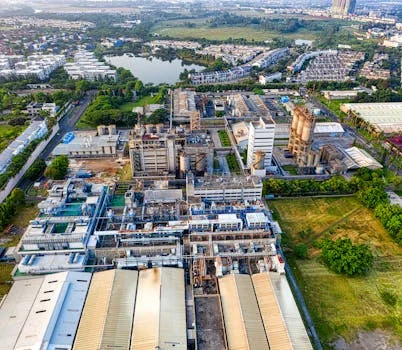
The fundamental engineering parameters of a wastewater treatment plant are direct determinants of its overall cost, and understanding these relationships is crucial for optimizing investments in Puebla. The primary factor is the flow rate; costs per cubic meter per day generally decrease with increasing scale due to economies of scale. For example, a small 50 m³/day plant might have a per-unit CAPEX of $3,500 USD/m³/day, whereas a larger 1,000 m³/day facility can reduce this to approximately $2,000 USD/m³/day. Equally critical is the required effluent quality. Compliance with NOM-001-SEMARNAT-1996, which mandates limits like BOD < 30 mg/L and TSS < 40 mg/L, typically necessitates secondary treatment processes. However, achieving much stricter discharge limits, often required for industrial discharge or water reuse, might add tertiary filtration stages, potentially increasing CAPEX by $500,000 to $1 million USD. The footprint of the plant is another significant consideration, especially in densely populated or industrially zoned areas of Puebla where land is at a premium. MBR systems, for instance, can reduce land requirements by up to 60% compared to conventional activated sludge processes, making them attractive despite a 20–30% higher CAPEX. Energy consumption is a major driver of OPEX, with aeration systems often accounting for 50–70% of the total energy demand. Investing in high-efficiency blowers, such as those in HydropureWater’s WSZ series, which consume as little as 0.2–0.4 kWh/m³, can lead to OPEX savings of up to 30%.
| Parameter | Impact on Cost | Example Cost Implications in Puebla | Technology Consideration |
|---|---|---|---|
| Flow Rate | Scale Economies | 50 m³/day: ~$3,500 USD/m³/day CAPEX 1,000 m³/day: ~$2,000 USD/m³/day CAPEX |
Larger plants offer lower unit costs. |
| Effluent Quality | Treatment Complexity | NOM-001-SEMARNAT-1996 compliance: Standard secondary treatment. Stricter limits (e.g., for reuse): Add tertiary, ~$500k–$1M CAPEX. |
MBR or advanced filtration needed for high purity. |
| Footprint | Land Cost & Availability | MBR reduces land use by 60% vs. Activated Sludge. Significant CAPEX savings on land in urban Puebla. |
MBR ideal for space-constrained sites. |
| Energy Consumption | Operational Efficiency | Aeration: 50–70% of OPEX. High-efficiency blowers (e.g., HydropureWater WSZ series) can save 30% on energy costs. |
Consider energy-efficient equipment like those in the compact WSZ series for Puebla’s urban sites. |
Technology Comparison: MBR vs. DAF vs. Activated Sludge for Puebla Projects
Selecting the appropriate wastewater treatment technology is a critical decision for projects in Puebla, balancing compliance, cost, and operational efficiency. Membrane Bioreactor (MBR) systems are exceptionally well-suited for projects with limited space and stringent effluent quality requirements, aiming for BOD < 5 mg/L and TSS < 1 mg/L. Their CAPEX is typically higher, ranging from $2,000 to $4,000 USD/m³/day, with energy consumption between 0.6–0.8 kWh/m³. MBRs are particularly beneficial for Puebla’s automotive and food processing industries, which must adhere to strict pathogen limits under NOM-003-SEMARNAT-1997 for potential water reuse. Dissolved Air Flotation (DAF) systems offer a cost-effective solution for industrial pretreatment, efficiently removing oils, grease, and suspended solids. Their CAPEX is generally between $1,200 and $2,500 USD/m³/day, with OPEX around $0.10–$0.20 USD/m³. DAF units are commonly employed in Puebla’s textile and metalworking sectors. Conventional Activated Sludge processes, while boasting the lowest CAPEX ($1,500–$3,000 USD/m³/day), require a significantly larger footprint, making them more suitable for municipal plants or industrial sites with ample available land, such as those managed by Agua de Puebla. The final technology choice in Puebla hinges on a detailed assessment of required effluent quality (for NOM compliance), available land, local energy costs, and the cost of sludge disposal, which can range from 500–1,500 MXN/ton.
| Technology | CAPEX (USD/m³/day) | OPEX (USD/m³) | Energy (kWh/m³) | Footprint | Ideal Use Case in Puebla | Compliance Relevance |
|---|---|---|---|---|---|---|
| MBR | $2,000 – $4,000 | $0.20 – $0.40 | 0.6 – 0.8 | Compact (60% smaller than AS) | Industrial (Automotive, Food Processing), High-value reuse, Limited space. Link to high-efficiency MBR systems for Puebla’s industrial reuse needs. | Achieves very low BOD/TSS, meets strict pathogen removal for NOM-003-SEMARNAT-1997. |
| DAF | $1,200 – $2,500 | $0.10 – $0.20 | 0.1 – 0.3 | Medium | Industrial Pretreatment (Textile, Metalworking), FOG/TSS removal. Link to DAF systems for Puebla’s industrial pretreatment. | Effective for initial solids and oil/grease reduction. |
| Activated Sludge | $1,500 – $3,000 | $0.15 – $0.30 | 0.3 – 0.6 | Large | Municipal (Agua de Puebla), Large industrial sites with ample land. | Meets basic NOM-001-SEMARNAT-1996 requirements. |
ROI Calculator: Is a Wastewater Treatment Plant in Puebla Worth It?
Justifying the significant investment in a wastewater treatment plant in Puebla requires a clear demonstration of return on investment (ROI). Key financial benefits include avoiding substantial fines for non-compliance, achieving savings through water reuse, and leveraging available government incentives. For instance, violations of NOM-001-SEMARNAT-1996 can result in fines from PROFEPA ranging from 50,000 to 500,000 MXN per incident. A well-functioning 500 m³/day plant can therefore prevent annual fines of $50,000 to $200,000 USD. treated effluent can replace a significant portion of freshwater consumption in industrial processes, such as cooling towers or irrigation, typically offsetting 30–50% of demand and saving 10–20 MXN/m³ based on Puebla's current water tariffs. Government support also plays a role; CONAGUA's PRODDER program can subsidize 30–50% of CAPEX for municipal plants, while industrial projects may qualify for tax deductions under SAT guidelines. The payback period for municipal plants typically ranges from 5 to 10 years, whereas industrial plants, due to higher potential savings from water reuse and avoided fines, can achieve payback in 3 to 7 years. For example, a 1,000 m³/day MBR plant in Puebla could achieve a payback period of approximately 6 years when factoring in water reuse savings.
| Benefit | Estimated Annual Savings (for 1,000 m³/day plant) | Notes |
|---|---|---|
| Avoided Fines (PROFEPA) | $50,000 – $200,000 USD | Based on potential NOM-001-SEMARNAT-1996 violations. |
| Water Reuse Savings | $100,000 – $300,000 USD | Assuming 30-50% freshwater replacement at 10-20 MXN/m³ savings. |
| Government Incentives | 30–50% CAPEX subsidy (Municipal) / Tax Deductions (Industrial) | Varies by program and project type. |
| Payback Period | Municipal: 5–10 years Industrial: 3–7 years |
Highly dependent on technology and operational savings. |
Step-by-Step Decision Framework for Puebla Projects
Navigating the complex process of investing in a wastewater treatment plant in Puebla demands a structured approach to ensure optimal outcomes. The first step is to precisely define project requirements, including the expected flow rate, the necessary effluent quality to meet relevant NOM standards (NOM-001-SEMARNAT-1996 for municipal, NOM-003-SEMARNAT-1997 for industrial applications like hospitals or food processing), and the available land area. Following this, a thorough comparison of treatment technologies—MBR, DAF, and activated sludge—should be conducted, as detailed in the previous section. For urban sites in Puebla, prioritizing footprint reduction with technologies like MBR is often advantageous. Next, solicit detailed quotes from 3–5 reputable suppliers, ensuring they have experience in Mexico. Consider HydropureWater's offerings, such as the compact WSZ series for Puebla’s urban sites or their high-efficiency MBR systems for Puebla’s industrial reuse needs, and request case studies. The fifth step involves calculating the ROI using the framework outlined above, meticulously including CAPEX, OPEX, projected savings from avoided fines, and water reuse potential, aiming for a payback period under 7 years for industrial projects. Securing the necessary permits is a critical phase that can take 6–12 months in Puebla; engaging a local engineering firm experienced with CONAGUA and municipal approval processes is highly recommended. Common pitfalls to avoid include underestimating sludge disposal costs (500–1,500 MXN/ton), overlooking ongoing energy consumption (0.3–0.8 kWh/m³), and failing to budget for essential operator training, which can range from $20,000 to $50,000 USD.
Frequently Asked Questions

What is the average cost of a wastewater treatment plant in Puebla?
For a 500 m³/day municipal plant utilizing activated sludge, the estimated CAPEX ranges from $800,000 to $1.5 million USD (approximately 13–25 million MXN). Annual OPEX for such a facility can be between $150,000 and $300,000 USD (2.5–5 million MXN). Industrial plants employing technologies like MBR often incur 20–30% higher CAPEX but offer superior effluent quality for water reuse applications.
How long does it take to build a wastewater treatment plant in Puebla?
The permitting process in Puebla typically spans 6 to 12 months, with construction for a 500–1,000 m³/day plant usually taking an additional 12 to 18 months. Delays can often arise from land acquisition challenges or the complex approval pathways with CONAGUA. Prefabricated and integrated systems, such as HydropureWater’s WSZ series, can potentially reduce construction timelines by up to 40%.
What are the compliance requirements for wastewater treatment in Puebla?
Municipal wastewater treatment plants in Puebla are primarily governed by NOM-001-SEMARNAT-1996, which sets limits for BOD (< 30 mg/L) and TSS (< 40 mg/L). Industrial facilities, particularly those in sectors like food processing or hospitals, must also comply with NOM-003-SEMARNAT-1997, which includes stringent pathogen removal standards. PROFEPA conducts regular inspections, with violations potentially incurring fines from 50,000 to 500,000 MXN.
Can treated wastewater be reused in Puebla?
Yes, treated wastewater can be reused in Puebla, but exclusively for non-potable purposes such as irrigation or industrial processes. Compliance with NOM-003-SEMARNAT-1997, often requiring tertiary treatment like MBR or UV disinfection, is mandatory for reuse. Agua de Puebla permits industrial users to offset their freshwater costs by reusing treated effluent, typically at a rate of 10–20 MXN/m³.
What government incentives are available for wastewater treatment plants in Puebla?
CONAGUA's PRODDER program provides significant financial support, offering 30–50% subsidies for municipal wastewater treatment plant projects. Industrial entities may be eligible for tax deductions through the Servicio de Administración Tributaria (SAT) or access low-interest loans from Nacional Financiera (NAFIN). Additionally, the Puebla state government sometimes offers grants specifically for water reuse projects, particularly in regions experiencing water scarcity.