Wastewater Treatment Plant Cost in Mexico City: 2025 Engineering Breakdown, ROI & Decision Framework
In 2025, wastewater treatment plant cost in Mexico City ranges from $1.2M–$5M for industrial package systems (10–500 m³/day) to $30M–$500M+ for municipal plants (5–50 MGD). CAPEX tracks technology choice, influent quality, and Conagua compliance. A 10 MGD MBR plant costs roughly $80 million including permitting and civil works and delivers 99% pathogen removal for irrigation reuse—useful where aquifers supply 60% of municipal water. This guide gives engineering cost bands, technology comparisons, and an ROI frame for project evaluation.
Why Mexico City's Wastewater Crisis Demands Immediate Investment
Mexico City's 22 million residents face escalating rationing because aquifers supply 60% of municipal water while an estimated 40% of urban waterways carry untreated discharge (Conagua, 2023). Conagua's 2025 National Water Program sets a 90% treatment coverage target for municipalities above 50,000 people, with non-compliant entities facing annual fines up to $500,000. A 2024 $33 million plant in Tijuana cut beach closures by 85% and produced $2.1 million per year in irrigation revenue, a useful reference for sizing similar investments. Industrial operators in the Valle de México currently pay $15–$30/m³ for potable water; reusing treated effluent at $0.50–$1.20/m³ directly addresses Mexico City water scarcity while staying clear of Conagua wastewater regulations.
Wastewater Treatment Plant Cost Breakdown: CAPEX and OPEX by Plant Size and Technology
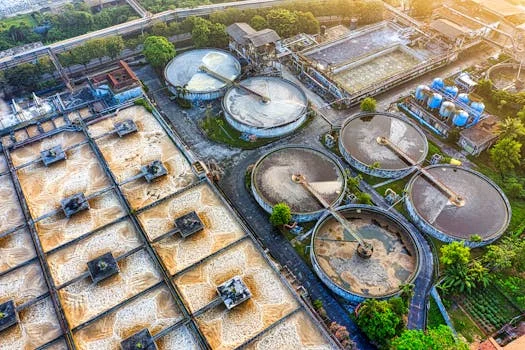
What is a wastewater treatment plant cost breakdown?
A wastewater treatment plant cost breakdown splits CAPEX (civil works, equipment, installation, permitting) from OPEX (energy, chemicals, labor) by capacity and process train. Capital expenditure for wastewater treatment plants in Mexico City in 2025 is driven by capacity, technology, and required effluent quality; OPEX varies with energy intensity and chemical use. For industrial package plants, CAPEX runs from $1.2 million to $5 million for 10–500 m³/day: DAF systems average $1.5 million, MBR systems $2.8 million, and conventional activated sludge $1.2 million at the 100 m³/day scale. Municipal plants sized 1–50 MGD (3,785–189,250 m³/day) require $30 million to $500 million or more; a 10 MGD MBR plant costs about $80 million, while a 10 MGD conventional activated sludge plant lands near $45 million. These numbers cover civil works, equipment procurement, installation, and initial permitting, which together form the bulk of wastewater treatment CAPEX Mexico.
OPEX per cubic meter treated decides long-term affordability. Energy typically runs $0.08–$0.25/m³, with MBR plants at the top of the band because of membrane aeration and filtration; DAF sits at the low end. Chemicals for pH adjustment, coagulation, and disinfection add $0.05–$0.15/m³. Labor in Mexico City runs higher than the national average at $0.03–$0.10/m³. Permitting absorbs $50,000–$200,000 for industrial plants and $200,000–$1 million for municipal ones, covering Conagua and local environmental agency fees. Land in industrial zones of the Valle de México trades at $100–$300/m², while peri-urban parcels in the Tula Valley sit at $50–$150/m². Most plants we size for food processors in the Valle de México come in near $2.5M CAPEX with OPEX around $0.30/m³ once chemicals and energy are tallied.
How do primary and secondary treatment costs compare?
Primary trains remove solids at lower unit CAPEX; secondary biological stages raise capital and energy but cut BOD far enough for discharge or reuse. In Mexico City projects facing strict limits or reuse, secondary or MBR polishing usually wins on compliance risk even when first cost is higher.
| Cost Category | Industrial Package Plants (10–500 m³/day) | Municipal Plants (1–50 MGD) | Notes |
|---|---|---|---|
| CAPEX (USD) | $1.2M–$5M | $30M–$500M+ | Includes civil works, equipment, installation. |
| DAF System | $1.5M (for ~100 m³/day) | N/A (Pretreatment focus) | Ideal for high TSS/FOG industrial streams. |
| MBR System | $2.8M (for ~100 m³/day) | $80M (for 10 MGD) | Higher quality effluent, smaller footprint. |
| Conventional AS | $1.2M (for ~100 m³/day) | $45M (for 10 MGD) | Lower initial cost, larger footprint. |
| OPEX (per m³ treated) | $0.16–$0.50 | $0.16–$0.50 | Total operational costs. |
| Energy | $0.08–$0.25 | $0.08–$0.25 | MBR highest, DAF lowest. |
| Chemicals | $0.05–$0.15 | $0.05–$0.15 | pH, coagulants, disinfection. |
| Labor | $0.03–$0.10 | $0.03–$0.10 | Higher wages in Mexico City. |
| Permitting Costs (USD) | $50K–$200K | $200K–$1M | Conagua & local environmental agencies. |
| Land Costs (per m²) | $100–$300 (industrial zones) | $50–$150 (peri-urban) | Valle de México vs. Tula Valley. |
Technology Comparison: MBR vs. DAF vs. Conventional Activated Sludge for Mexico City's Wastewater
Technology selection in Mexico City depends on influent quality, available footprint, and reuse goals. Municipal wastewater typically arrives at BOD 300–600 mg/L, TSS 400–800 mg/L, and TN 10–30 mg/L (Conagua, 2023); industrial streams from food processing can reach BOD 1,500–3,000 mg/L, TSS 500–1,200 mg/L, and FOG 50–150 mg/L. Each technology maps differently onto those loadings.
MBR systems for high-efficiency wastewater treatment deliver 99% BOD/TSS removal, 95% TN removal, and 90% TP removal (EPA, 2024 benchmarks), which is the range needed when effluent feeds cooling towers or irrigation without further polishing. MBR trains also need about 60% less land than conventional activated sludge—a real constraint in dense alcaldías. A 2023 MBR plant in Querétaro let a beverage manufacturer cut process water costs by 40% through reuse (HydropureWater case file). DAF systems work best as pretreatment for high-strength industrial streams, hitting 90% BOD, 95% TSS, and up to 80% FOG removal before biological polishing. Conventional activated sludge keeps CAPEX lowest and achieves 85% BOD and 90% TSS removal, but the larger footprint and reuse-incompatible effluent limit it to sites with cheap land and no reuse obligation.
| Parameter | MBR (Membrane Bioreactor) | DAF (Dissolved Air Flotation) | Conventional Activated Sludge |
|---|---|---|---|
| Primary Use | High-quality effluent, reuse | Industrial pretreatment (FOG/TSS) | General municipal/industrial treatment |
| BOD Removal | >99% | >90% | >85% |
| TSS Removal | >99% | >95% | >90% |
| TN Removal | >95% | N/A (Limited) | Variable (20-50%) |
| FOG Removal | Moderate (with pretreatment) | >80% (Excellent) | Poor (causes issues) |
| Footprint | Compact (60% less than conventional) | Moderate | Large |
| Effluent Quality | High (suitable for direct reuse) | Pretreated (requires further treatment) | Secondary (requires tertiary for reuse) |
| CAPEX (Relative) | High | Moderate | Low |
| OPEX (Relative) | Moderate-High (energy) | Low-Moderate (energy, chemicals) | Moderate (energy) |
Municipal vs. Industrial Wastewater Treatment: Decision Framework for Mexico City Projects
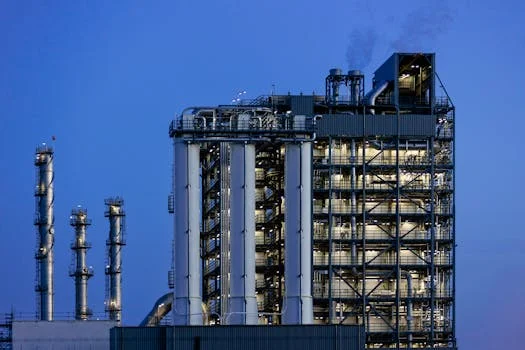
The municipal-versus-industrial decision turns on scale, compliance, funding, and reuse. Municipal plants serve 5,000 to over 500,000 residents at 1–50 MGD, while industrial plants treat 10–5,000 m³/day from a single facility, often needing tailored industrial wastewater treatment solutions for Mexico's manufacturing hubs.
Compliance paths diverge sharply. Earlier guidance under NOM-001-SEMARNAT-1996 commonly cited BOD below 30 mg/L and TSS below 40 mg/L for municipal discharge to national waters; that standard was cancelled and replaced by NOM-001-SEMARNAT-2021, published 11 March 2022 and effective 11 March 2023 (SEMARNAT). Industrial sites discharging to public sewers still face sector-specific limits—food processors, for example, usually need BOD below 150 mg/L. Funding follows the same split: municipalities lean on Conagua's $4.5 billion federal program and municipal budgets, while industrial projects draw on private capital, green bonds, and corporate sustainability lines. Reuse economics differ too. Municipal plants push 60% of treated water into agricultural irrigation, while industrial plants target cooling, boiler feed, and cleaning to displace $15–$30/m³ potable purchases. Payback reflects that gap: municipal projects recover CAPEX in 10–15 years through tariffs and irrigation revenue, while industrial projects typically hit payback in 3–7 years through water savings and avoided fines.
| Decision Factor | Municipal Wastewater Treatment | Industrial Wastewater Treatment |
|---|---|---|
| Scale | 5K–500K+ people (1–50 MGD) | Specific facility (10–5,000 m³/day) |
| Primary Goal | Public health, environmental protection, water resource recovery | Compliance, cost reduction (water/fines), sustainability |
| Compliance Focus | NOM-001-SEMARNAT-1996 (BOD <30 mg/L, TSS <40 mg/L) | Sector-specific limits (e.g., food processing BOD <150 mg/L) |
| Funding Sources | Federal grants (Conagua), municipal budgets, public-private partnerships | Private investment, green bonds, corporate budgets |
| Reuse Potential | Agricultural irrigation (60% of Mexico City's treated water), urban green spaces | Process water (cooling, cleaning, boiler feed), non-potable uses |
| Typical ROI Payback | 10–15 years (via tariffs, irrigation revenue) | 3–7 years (via water savings, avoided fines) |
Conagua Compliance Checklist: Permitting, Discharge Limits, and Monitoring for Mexico City Plants
Permitting for a Mexico City wastewater plant typically runs 6–18 months end to end. The sequence is: Environmental Impact Assessment (MIA) to SEMARNAT, a Conagua water concession title for any plant discharging more than 5 L/s, municipal construction permits from the alcaldía, and finally an operational license after a post-construction inspection.
Discharge ceilings for national receiving bodies now sit under NOM-001-SEMARNAT-2021 discharge limits, which cancelled and replaced NOM-001-SEMARNAT-1996 (SEMARNAT, published 11 March 2022; effective 11 March 2023). Earlier 1996-era design targets still cited in many bid packages used BOD below 30 mg/L and TSS below 40 mg/L for municipal plants; industrial sites commonly see BOD below 150 mg/L and TSS below 200 mg/L, with sector-specific variations. pH must stay in the 6.5–8.5 window. Fecal coliform ceilings are typically below 1,000 MPN/100 mL for municipal discharge and below 2,000 MPN/100 mL for industrial. Once running, plants face continuous flow metering, weekly BOD/TSS sampling, and quarterly Conagua reporting—operational discipline that ties directly to wastewater treatment permitting Mexico obligations.
ROI Calculator: How to Justify Your Wastewater Treatment Plant Investment in Mexico City
The core ROI formula is (Annual Savings + Revenue) / (CAPEX + Annual OPEX). Annual savings start with water cost avoidance: municipal tariffs run about $1.50/m³, industrial users up to $3.00/m³, and Conagua penalties for non-compliance range $50,000–$500,000 per year depending on the violation. Revenue lines include treated irrigation water at $0.30–$0.80/m³ in agricultural districts like the Tula Valley, plus carbon credits at $10–$20/ton CO₂e for energy-efficient plants.
Two worked examples make the math concrete. A 10 MGD municipal plant at $80 million CAPEX and $3 million annual OPEX, with $4 million annual water savings, $2 million irrigation revenue, and $200,000 in avoided fines, hits payback at roughly 12.9 years. A 500 m³/day industrial plant at $2.8 million CAPEX and $150,000 annual OPEX, with $500,000 water savings and $100,000 avoided fines, reaches breakeven near 5.7 years. These are the bands we see when proposals actually clear finance committees.
| Parameter | 10 MGD Municipal Plant Example | 500 m³/day Industrial Plant Example |
|---|---|---|
| CAPEX | $80,000,000 | $2,800,000 |
| Annual OPEX | $3,000,000 | $150,000 |
| Annual Water Savings | $4,000,000 (via reuse/avoided purchase) | $500,000 (via reuse/avoided purchase) |
| Annual Irrigation Revenue | $2,000,000 | N/A (focus on process reuse) |
| Annual Avoided Fines | $200,000 (estimated) | $100,000 (estimated) |
| Total Annual Benefit | $6,200,000 | $600,000 |
| ROI Payback Period (years) | ~12.9 years | ~5.7 years |
Who This Guide Is For, and Next Step
This breakdown fits EPC contractors, plant engineers, and procurement teams sizing municipal or industrial plants in central Mexico. If your project is outside the 10–50,000 m³/day range, or you need seawater intake or zero-liquid-discharge design, our engineers can point you to a more specialized configuration.
For a CAPEX-grade proposal tailored to your influent, footprint, and reuse target, send your flow and load data through our inquiry form and we will return a sized BOM and OPEX estimate within five business days.
Frequently Asked Questions
Does Mexico have wastewater treatment plants?
Yes. Mexico runs a growing wastewater treatment fleet, and Conagua's 2025 National Water Program targets 90% coverage for municipalities above 50,000 people. Large plants operate in Mexico City and other industrial hubs, treating both municipal and industrial effluent under NOM-001-SEMARNAT-2021 (which replaced NOM-001-SEMARNAT-1996) and enabling reuse in irrigation and process water.
Why is Mexico City having trouble getting water to its 22 million residents?
Mexico City faces scarcity from three combined pressures: over-extraction of its aquifers, a leaking distribution network that loses up to 40% of piped water, and insufficient treatment infrastructure that lets untreated wastewater contaminate local waterways. Shifting rainfall patterns reduce aquifer recharge and push demand higher, compounding the supply gap.
How much does it cost to set up a sewage treatment plant?
Industrial package plants in the 10–500 m³/day range run $1.2 million to $5 million in CAPEX, while municipal plants at 1–50 MGD run $30 million to $500 million or more. The figures include equipment, civil works, installation, and initial permitting, and align with the cost breakdown table in this article.
What are the main challenges for wastewater treatment in Mexico City?
The main challenges are aquifer over-extraction that forces reuse-grade effluent, compliance penalties up to $500,000 per year under Conagua enforcement, dense urban land that constrains plant footprints, and the funding gap for large municipal projects. Variability in industrial influent strength adds a process-control layer that operators must design around.
What are the Conagua discharge limits for treated wastewater?
NOM-001-SEMARNAT-2021 now governs discharges to national receiving bodies and cancelled NOM-001-SEMARNAT-1996 (effective 11 March 2023). Earlier 1996-era targets still cited in many packages used BOD below 30 mg/L and TSS below 40 mg/L for municipal effluent. Industrial sites typically face BOD below 150 mg/L and TSS below 200 mg/L, with pH held between 6.5 and 8.5. Fecal coliform ceilings are below 1,000 MPN/100 mL for municipal and below 2,000 MPN/100 mL for industrial discharges.
For current price water treatment plants in mexico benchmarks, our supplier checklist compiles 2025 vendor pricing across the Valle de México and northern industrial corridors.
Related Equipment
- DAF systems for industrial wastewater pretreatment — view specifications, capacity range, and technical data
Need a customized solution? Request a free quote with your specific flow rate and pollutant parameters.