Why Korean Factories Are Replacing Sedimentation with DAF Systems
South Korea's industrial sector, particularly food processing, pulp and paper, and petrochemical plants, faces persistent challenges with conventional sedimentation systems for wastewater treatment. These systems often struggle with slow treatment times, typically requiring 4-6 hours, and demand a significant physical footprint. they produce sludge with a low solids content of only 2-3%, necessitating more frequent and costly disposal. In contrast, Dissolved Air Flotation (DAF) systems, leveraging advanced micro-bubble technology, offer a transformative solution. K-Water's 2023 report highlights this shift, indicating that 68% of industrial wastewater treatment plants in the Seoul/Gyeonggi region now employ DAF for pre-treatment, a substantial increase from 42% in 2018. This adoption is driven by DAF's ability to achieve faster treatment, often within 1-2 hours, reduce footprint requirements by up to 50%, and produce significantly thicker sludge (5-8% solids). Sector-specific needs are also met: food processing plants benefit from enhanced removal of fats, oils, and grease (FOG), while pulp and paper mills can effectively recover valuable fibers. A hypothetical plant manager in the textile industry shared, "Our sedimentation tanks couldn’t handle the seasonal turbidity spikes—DAF cut our chemical costs by 30% and doubled throughput." This transition underscores the growing recognition of DAF’s efficiency and cost-effectiveness for South Korean manufacturers seeking to meet stringent environmental regulations.
How Micro-Bubble DAF Works: Korea’s 25µm Breakthrough Explained
The efficacy of modern DAF systems in South Korea stems from their sophisticated micro-bubble technology, a significant advancement over traditional aeration methods. Technologies like BKT Global's vDAF and Aquosys's HELIFLOT exemplify this innovation, utilizing bubble sizes and concentrations that dramatically enhance pollutant removal. The vDAF system, for instance, employs a spiral vortex mechanism. Raw water enters the flotation tank tangentially, where it is mixed with micro-bubbles generated by specialized air nozzles. These micro-bubbles, with an average diameter below 25µm and a concentration exceeding 100,000 particles per milliliter (verified by the Korea Institute of Machinery & Materials), attach to suspended solids, forming flocs. The resulting helical flow within the tank then centrifugally separates these buoyant flocs towards the surface for removal. This finer bubble size is crucial; compared to conventional diffusers producing bubbles larger than 100µm, 25µm bubbles offer a vastly increased surface area-to-volume ratio, leading to a 15% higher Total Suspended Solids (TSS) removal efficiency (95% for vDAF vs. 80% for conventional). This enhanced attachment efficiency also translates to reduced chemical consumption, with data from BKT Global indicating a 20-40% decrease in coagulant and flocculant usage. The HELIFLOT system, while also utilizing fine bubbles (typically 30-50µm), features a distinct conical bottom design. This design leverages centrifugal force to settle denser solids towards the bottom, allowing for periodic evacuation and preventing system clogging, while the helical flow aids in the upward separation of micro-bubble-laden pollutants. The impact of bubble size on performance is critical, as illustrated in the table below, directly influencing TSS removal rates and the required chemical dosing for optimal flocculation.
| Bubble Size (µm) | Bubble Concentration (ea/mL) | TSS Removal (%) | Chemical Reduction (%) | Attachment Efficiency |
|---|---|---|---|---|
| <25 (vDAF) | >100,000 | 95+ | 20-40 | High |
| 30-50 (HELIFLOT) | ~50,000-80,000 | 90-93 | 15-30 | Medium-High |
| 100+ (Conventional) | <10,000 | 80-85 | 5-15 | Low |
For those considering advanced DAF solutions, the DAF systems with 25µm micro-bubble technology offer a robust option for industrial applications.
HELIFLOT vs vDAF vs Conventional DAF: Performance, Costs, and Use Cases
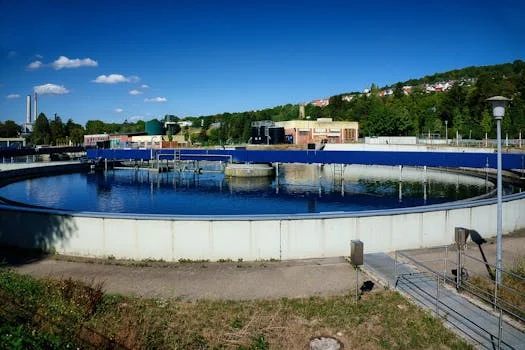
Selecting the optimal DAF technology for a specific industrial application in South Korea requires a detailed comparison of performance metrics, cost benchmarks, and suitability for different wastewater characteristics. HELIFLOT and vDAF represent leading innovations, each with distinct advantages over conventional DAF systems. The vDAF technology, with its sub-25µm micro-bubbles, typically achieves a higher TSS removal rate of 95% and boasts a smaller footprint (0.6 m³/m³/h) compared to conventional systems (80% TSS removal, 1.2 m³/m³/h). Its higher efficiency in attaching to fine solids makes it particularly well-suited for demanding applications like food processing, where FOG removal is critical. HELIFLOT, operating with slightly larger bubbles (30-50µm), still offers excellent performance (90-93% TSS removal) and a compact footprint (0.8 m³/m³/h), making it a strong contender for industries like pulp and paper, where fiber recovery is a primary objective. Conventional DAF systems, while having a lower initial CAPEX (KRW 0.9M/m³/h), incur higher OPEX due to increased chemical usage (0.25 kg/m³) and lower efficiency (80% TSS removal, 1.2 m³/m³/h). A decision tree can guide engineers: if the influent has high FOG content, vDAF is generally preferred; for high fiber loads, HELIFLOT is often the better choice; and for lower-budget municipal applications with less stringent requirements, conventional DAF might be considered. The table below summarizes these key differentiators.
| Technology | Bubble Size (µm) | TSS Removal (%) | Footprint (m²/m³/h) | CAPEX (KRW/m³/h) | OPEX (KRW/m³) | Chemical Use (kg/m³) | Ideal Applications |
|---|---|---|---|---|---|---|---|
| HELIFLOT | 30-50 | 90-93 | 0.8 | 1.1M | 230 | 0.15 | Pulp/Paper, General Industrial |
| vDAF | <25 | 95+ | 0.6 | 1.5M | 280 | 0.12 | Food Processing, High FOG, Fine Solids |
| Conventional | 100+ | 80-85 | 1.2 | 0.9M | 350 | 0.25 | Municipal, Low-Cost Pre-treatment |
K-Water and MOE Compliance: Permits, Standards, and DAF Design Requirements
Navigating the regulatory landscape for DAF systems in South Korea is paramount for industrial compliance. The Ministry of Environment's (MOE) Water Quality and Aquatic Ecosystem Conservation Act sets stringent effluent standards that DAF systems must meet. For industrial wastewater, these typically include limits for TSS below 30 mg/L, BOD below 20 mg/L, and for food processing applications, FOG below 5 mg/L. K-Water, as a key authority, provides design guidelines to ensure DAF systems are engineered for optimal performance and compliance. These guidelines often specify a hydraulic loading rate between 5-10 m/h, an air-to-solids ratio ranging from 0.02 to 0.06, and a sludge retention time of 2-4 hours. The permit process involves submitting detailed DAF design specifications to the local MOE environmental office for review, which typically has a 30-day assessment period. mandatory third-party performance testing, as outlined in K-Water's 2024 circular, is required to validate the system's operational effectiveness. The Songjeon plant, operated by K-Water since 2003, serves as a benchmark for compliance, consistently achieving 98% TSS removal and 95% BOD removal, demonstrating the long-term reliability of well-designed DAF installations.
DAF System Costs in Korea: CAPEX, OPEX, and ROI for Industrial Plants
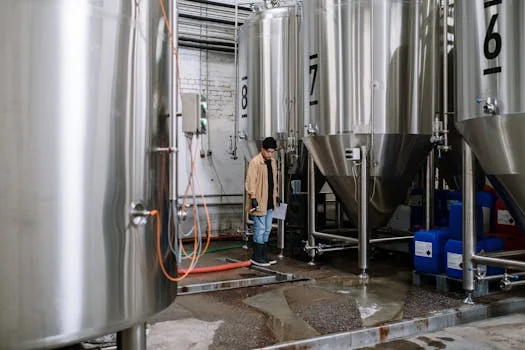
Understanding the financial implications of implementing a DAF system is crucial for procurement teams and plant managers in South Korea. Capital Expenditure (CAPEX) for a DAF system typically comprises equipment costs (around 60%), installation (20%), civil works (15%), and commissioning (5%). For a mid-sized 50 m³/h vDAF system, the equipment cost might be approximately 75 million KRW, with installation adding another 25 million KRW. Operational Expenditure (OPEX) is dominated by electricity consumption (40%), chemical costs (30%), maintenance (20%), and labor (10%). For the same 50 m³/h system, annual OPEX could range from 15 million KRW, translating to roughly 300 KRW per cubic meter treated. While DAF systems generally have a higher CAPEX (approximately 1.5 times) compared to conventional sedimentation, their significantly lower OPEX (around 0.7 times) and improved treatment efficiency lead to a better Return on Investment (ROI). For instance, a 50 m³/h DAF system in a food processing plant could yield annual savings of 12 million KRW in chemical costs and 8 million KRW in sludge disposal, achieving a payback period of approximately 3.5 years. Over a 10-year operational lifespan, this translates to a 20% improvement in overall ROI compared to sedimentation. For a more detailed comparison of DAF and oil water separator costs in Korea, consider exploring this analysis.
| Cost Component | Percentage of CAPEX | Example for 50 m³/h System (KRW) | Percentage of OPEX | Example Annual OPEX (KRW) |
|---|---|---|---|---|
| Equipment | 60% | 75,000,000 | - | - |
| Installation | 20% | 25,000,000 | - | - |
| Civil Works | 15% | 18,750,000 | - | - |
| Commissioning | 5% | 6,250,000 | - | - |
| Total CAPEX | 100% | 125,000,000 | - | - |
| Electricity | - | - | 40% | 6,000,000 |
| Chemicals | - | - | 30% | 4,500,000 |
| Maintenance | - | - | 20% | 3,000,000 |
| Labor | - | - | 10% | 1,500,000 |
| Total Annual OPEX | - | - | 100% | 15,000,000 |
For a comparative analysis of DAF and oil water separator costs in Korea, consult the engineering breakdown and ROI comparison for 2025.
Frequently Asked Questions
What is the primary advantage of micro-bubble DAF over conventional DAF?
Micro-bubble DAF systems, particularly those using bubbles under 25µm, offer a significantly higher surface area-to-volume ratio. This leads to more efficient attachment to suspended solids, resulting in higher removal rates (up to 95% TSS) and reduced chemical consumption compared to conventional DAF systems using bubbles over 100µm.
How does K-Water regulate DAF system design?
K-Water provides design guidelines that specify parameters such as hydraulic loading rates (5-10 m/h), air-to-solids ratio (0.02-0.06), and sludge retention time (2-4h). These guidelines ensure that DAF systems are engineered to meet environmental standards and operate efficiently for industrial wastewater treatment.
What are the typical effluent standards for industrial DAF in South Korea?
Under the MOE's Water Quality and Aquatic Ecosystem Conservation Act, common effluent standards for industrial DAF include TSS below 30 mg/L, BOD below 20 mg/L, and for specific industries like food processing, FOG below 5 mg/L.
How is the chemical dosing optimized in vDAF systems?
vDAF systems achieve chemical optimization through the enhanced attachment efficiency of micro-bubbles. This means less coagulant and flocculant are required to form flocs. For precise chemical management, consider the benefits of PLC-controlled chemical dosing for DAF systems.
Can DAF systems be used for drinking water treatment in South Korea?
Yes, DAF technology is employed for drinking water treatment. The Songjeon plant, operated by K-Water since 2003, is a notable example, demonstrating high removal efficiencies for turbidity and other contaminants in drinking water applications.
What is the typical payback period for a DAF system in a Korean industrial plant?
The payback period for a DAF system in a Korean industrial plant typically ranges from 3 to 5 years. This is driven by savings in chemical usage, reduced sludge disposal costs, and improved operational efficiency, despite a higher initial CAPEX compared to conventional methods.
How does DAF compare to oil water separators in terms of cost and application?
DAF systems are generally more versatile and efficient for removing a broader range of suspended solids, including fine particles and emulsions, whereas oil water separators are specifically designed for free oil separation. For a detailed cost comparison and application analysis, see the article on DAF vs. oil water separator costs in Korea.
Are there DAF system case studies available for industries outside of Korea?
Yes, DAF system performance and compliance considerations vary by region. You can explore how DAF systems perform in other markets by reviewing guides like the one for New Zealand.
Related Equipment
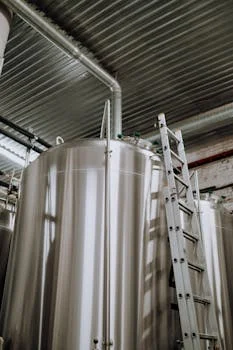
The following HydropureWater products are engineered for the wastewater challenges discussed above:
- DAF systems with 25µm micro-bubble technology — view specifications, capacity range, and technical data
- PLC-controlled chemical dosing for DAF systems — view specifications, capacity range, and technical data
Need a customized solution? Request a free quote with your specific flow rate and pollutant parameters.