Why Third-Generation Semiconductor Wastewater Arsenic Levels Exceed Silicon Fab Limits
Third-generation semiconductor fabs, specializing in Gallium Nitride (GaN) and Silicon Carbide (SiC) technologies, generate wastewater with arsenic concentrations that are significantly higher and more complex to treat than those from traditional silicon-based processes. These elevated levels, often ranging from 10–50 mg/L, are 10–100 times greater than the 0.1–1 mg/L typically found in silicon fab effluents. This escalation is primarily due to the specific chemistries employed in GaN/SiC manufacturing, particularly during etching and substrate preparation stages. These processes release arsenic not only in its elemental form but also as complex compounds like Gallium Arsenide (GaAs) or Arsenic Trioxide (As₂O₃).
A critical challenge arises from the use of high concentrations of tetramethylammonium hydroxide (TMAH) and urea in GaN/SiC fabrication. These organic compounds can form stable complexes with arsenic, such as arsenic-TMAH complexes. These complexes are highly resistant to conventional coagulation and precipitation methods that rely on standard coagulants like alum or ferric chloride, significantly complicating arsenic removal. The complexation mechanism can be broadly represented as:
As³⁺ + 4(CH₃)₄N⁺OH⁻ → [As(OH)₄]⁻ + 4(CH₃)₄N⁺
GaN/SiC wastewater often co-contains high fluoride concentrations, typically ranging from 500–2,000 mg/L. Fluoride must be addressed through sequential precipitation. The initial step involves precipitating calcium fluoride (CaF₂) by adjusting the pH to the optimal range of 8.5–9.5. This is followed by arsenic treatment, which is most effective at a slightly lower pH range of 6–7, often utilizing specific adsorbent media.
A case study from a GaN fab in Taiwan in 2024 demonstrated the effectiveness of this staged approach. By implementing pH-staged precipitation followed by iron oxide adsorption, arsenic concentrations were successfully reduced from an initial 45 mg/L to a compliant 0.08 mg/L, achieving over 99.8% removal efficiency. The iron oxide adsorption media in this instance exhibited a lifespan of approximately 12 months under continuous operation before requiring regeneration or replacement.
| Contaminant Source in GaN/SiC Wastewater | Typical Concentration Range | Comparison to Silicon Fabs | Treatment Challenge |
|---|---|---|---|
| Arsenic (As) | 10–50 mg/L | 10–100x higher | Forms stable complexes with TMAH; resists standard precipitation. |
| Fluoride (F⁻) | 500–2,000 mg/L | Significantly higher | Requires specific CaF₂ precipitation at pH 8.5–9.5. |
| TMAH & Urea | High concentrations | Higher organic load | Resistant to conventional biological treatment; requires advanced oxidation. |
| Heavy Metals (e.g., Cr, Ni, Cu) | Elevated levels | 5–10x higher | Co-precipitation challenges with arsenic and fluoride. |
Arsenic Removal Mechanisms: Precipitation, Adsorption, and Membrane Filtration Compared
Effectively treating arsenic-laden wastewater from GaN/SiC fabs requires a nuanced understanding of various removal mechanisms, each with distinct advantages and limitations in terms of efficacy, cost, and scalability. Chemical precipitation, often the first line of defense, typically achieves arsenic removal efficiencies of 60–80%. Methods like ferric chloride or lime addition precipitate arsenic as ferric arsenate or calcium arsenate, respectively. However, this process generates significant volumes of hazardous sludge that necessitate specialized stabilization and disposal, adding to operational complexity and cost. Optimal precipitation pH for arsenic removal generally falls between pH 4–7 for ferric salts and pH 9–11 for lime, depending on the arsenic species (As(III) vs. As(V)).
Adsorption media, particularly iron oxide-based materials, offer a more targeted and efficient arsenic removal pathway, achieving efficiencies of 90–99%. These media are highly effective at pH ranges of 6–7, where they exhibit strong affinity for arsenic ions. Typical adsorption capacities for high-quality iron oxide media range from 1–5 mg of As per gram of media. While highly effective, adsorption requires periodic regeneration or replacement of the media, which can impact operational continuity and cost. Activated alumina and titanium dioxide are also utilized but may have different optimal pH ranges and capacities.
Membrane filtration, specifically Nanofiltration (NF) and Reverse Osmosis (RO), can remove 95–99% of dissolved arsenic, particularly As(V). These technologies operate at a molecular level, with pore sizes typically in the range of 0.001–0.01 μm for effective arsenic rejection. A significant prerequisite for membrane filtration is robust pretreatment to prevent fouling by suspended solids, organic matter, and dissolved ions like fluoride. Without adequate pretreatment, membrane lifespan is reduced, and performance degrades rapidly.
Electrochemical methods, such as electrocoagulation (EC), offer an integrated approach by simultaneously coagulating and precipitating contaminants. EC systems can achieve arsenic removal rates of 90–95% through the in-situ generation of iron or aluminum hydroxide flocs. While they can reduce chemical dosages, EC systems are characterized by substantial energy consumption, typically ranging from 0.5–1.5 kWh/m³. Electrode replacement is also a recurring cost, with electrode lifespans generally falling between 3–6 months depending on operating conditions and electrode material.
| Treatment Technology | Typical Arsenic Removal (%) | Effective pH Range | Key Considerations | Related HydropureWater Product |
|---|---|---|---|---|
| Chemical Precipitation (Ferric/Lime) | 60–80% | pH 4–7 (Ferric); pH 9–11 (Lime) | Sludge generation, requires stabilization. | PLC-controlled chemical dosing for pH adjustment and arsenic precipitation |
| Adsorption Media (Iron Oxide) | 90–99% | pH 6–7 | Media capacity, regeneration/replacement needs. | (Integrated within treatment systems) |
| Membrane Filtration (NF/RO) | 95–99% | N/A (physical barrier) | Requires extensive pretreatment, sensitive to fouling. | RO system for arsenic polishing and 95% water recovery |
| Electrocoagulation | 90–95% | pH 5–8 (variable) | High energy consumption, electrode replacement. | (Electrochemical systems not a primary HydropureWater focus) |
2025 Hybrid ZLD System Design: Process Flow, Parameters, and Arsenic-Specific Optimizations
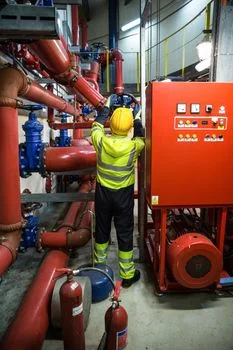
A robust Zero Liquid Discharge (ZLD) system for third-generation semiconductor wastewater, particularly concerning arsenic, necessitates a multi-stage hybrid approach. This blueprint outlines a 2025 engineering design integrating chemical treatment, biological processes, advanced oxidation, and membrane separation to achieve near-complete contaminant removal and water recovery. The system is meticulously engineered with specific parameters at each stage to optimize arsenic removal and ensure compliance.
Stage 1: Pretreatment & Primary Arsenic Removal
This stage focuses on initial contaminant reduction and bulk arsenic removal. The process begins with pH adjustment to 8.5–9.5 to facilitate the precipitation of calcium fluoride (CaF₂), a critical step due to high fluoride loads. Following CaF₂ removal, the pH is adjusted to 6–7 for optimal arsenic adsorption. High-capacity iron oxide adsorption media is employed, typically in fixed beds with a depth of 1–2 meters and a contact time of 10–30 minutes to ensure efficient arsenic capture. This stage aims to reduce arsenic concentrations by over 90%.
Stage 2: Membrane Bioreactor (MBR) for TSS/COD Reduction
An MBR system, utilizing 0.1 μm PVDF membranes, follows to remove suspended solids (TSS) and reduce chemical oxygen demand (COD). This step is vital for protecting downstream membrane processes and meeting stringent effluent standards. The MBR is operated with a mixed liquor suspended solids (MLSS) concentration typically between 8,000–12,000 mg/L. Membrane flux is maintained at 15–25 LMH (Liters per square meter per hour) to balance throughput and membrane longevity. The target effluent quality from this stage is COD ≤50 mg/L and TSS ≤5 mg/L.
Stage 3: Advanced Oxidation Process (AOP) for Complex Mineralization
To address recalcitrant organic compounds and particularly the arsenic-TMAH complexes that resist conventional treatment, an AOP is integrated. UV/H₂O₂ or ozonation are common choices. The AOP is designed to mineralize these complex organic molecules, breaking them down into simpler, more manageable substances. For UV/H₂O₂, a hydrogen peroxide dosage of 10–50 mg/L and UV intensity of 500–1,000 mJ/cm² are typically employed. This stage significantly enhances the treatability of the water for subsequent polishing.
Stage 4: Reverse Osmosis (RO) for Arsenic Polishing and Water Recovery
A final polishing step using RO is implemented to achieve ultra-pure water and ensure minimal residual arsenic. Polyamide thin-film composite membranes are selected for their high rejection rates. The RO system is designed for a water recovery rate of 95%, with the permeate arsenic concentration targeted to be ≤0.01 mg/L. Operating pressures typically range from 15–30 bar, depending on the feed water quality and desired recovery.
Stage 5: Evaporative Crystallization for ZLD
To achieve true ZLD, the concentrated brine from the RO system is fed into an evaporative crystallizer. This stage significantly reduces the brine volume, concentrating dissolved solids into a manageable solid waste. The system is designed for a brine volume reduction to approximately 5% of the initial influent volume. Heat exchanger efficiency is critical, typically 85–90%, to minimize energy consumption. Crystallizer retention time is maintained between 2–4 hours to ensure complete salt crystallization.
| Treatment Stage | Key Technology | Primary Objective | Arsenic Specific Parameters | Associated HydropureWater Products |
|---|---|---|---|---|
| Stage 1: Pretreatment | pH Adjustment, Chemical Precipitation, Adsorption | CaF₂ removal, Bulk Arsenic Removal | pH: 8.5–9.5 (CaF₂), 6–7 (As); Media: Iron Oxide; Contact Time: 10–30 min | PLC-controlled chemical dosing for pH adjustment and arsenic precipitation |
| Stage 2: Biological Treatment | MBR | TSS & COD Removal | Membrane Pore Size: 0.1 μm; MLSS: 8,000–12,000 mg/L; Flux: 15–25 LMH | MBR system for semiconductor wastewater with 0.1 μm PVDF membranes |
| Stage 3: Advanced Oxidation | AOP (UV/H₂O₂ or Ozone) | Mineralization of Organics & As-TMAH complexes | H₂O₂ Dosage: 10–50 mg/L; UV Intensity: 500–1,000 mJ/cm² | (AOP integrated within system design) |
| Stage 4: Polishing | RO | Arsenic Polishing, Water Recovery | Recovery: 95%; Permeate As: ≤0.01 mg/L; Membrane Type: Polyamide | RO system for arsenic polishing and 95% water recovery |
| Stage 5: ZLD Finalization | Evaporative Crystallization | Brine Volume Reduction, Solid Waste Generation | Volume Reduction: 5% of influent; Heat Exchanger Efficiency: 85–90% | (Evaporative crystallization not a primary HydropureWater focus) |
Technology Comparison: MBR + AOP + RO vs. Electrochemical vs. Membrane Distillation for Arsenic ZLD
Procurement teams evaluating wastewater treatment solutions for GaN/SiC fabs must consider the trade-offs between various technologies, particularly for achieving Zero Liquid Discharge (ZLD) and high arsenic removal. The hybrid MBR + AOP + RO system, detailed previously, represents a comprehensive approach with a proven track record for high-purity applications and stringent compliance. This system typically offers 99.9% arsenic removal and 95% water recovery. However, its Capital Expenditure (CAPEX) can be substantial, ranging from $5M–$20M, with Operational Expenditure (OPEX) falling between $0.85–$1.20 per cubic meter treated, largely driven by energy and membrane replacement costs.
Electrochemical systems, such as electrocoagulation, present an alternative with a lower CAPEX, typically between $1M–$5M. These systems can achieve 90–95% arsenic removal. However, their OPEX is generally higher, estimated at $1.50–$2.50 per cubic meter, primarily due to significant energy consumption and the recurring cost of electrode replacement. While effective for bulk contaminant removal, they may require downstream polishing for ultra-low arsenic levels.
Membrane Distillation (MD) offers a compelling option for arsenic ZLD, achieving 99% arsenic removal and 90% water recovery. A key advantage of MD is its ability to operate at lower pressures than RO, potentially reducing energy costs if a suitable thermal energy source is available. However, MD is highly dependent on thermal energy, requiring temperatures between 60–80°C. This makes it an ideal choice only for fabs that can leverage waste heat from their manufacturing processes. Without readily available waste heat, the thermal energy costs can make MD economically unviable.
The selection of the most appropriate technology is therefore a use-case matching exercise. For large-scale GaN/SiC fabs processing over 500 m³/day, the comprehensive hybrid ZLD system (MBR + AOP + RO) is often the most reliable and compliant solution, despite its higher initial investment. For smaller fabs with lower flow rates (under 200 m³/day) and a moderate need for arsenic removal, electrochemical systems might offer a more cost-effective entry point. Finally, fabs with significant waste heat streams should seriously consider Membrane Distillation for its energy efficiency potential in arsenic ZLD applications.
| Technology | Arsenic Removal (%) | Water Recovery (%) | Typical CAPEX | Typical OPEX ($/m³) | Suitability |
|---|---|---|---|---|---|
| Hybrid ZLD (MBR+AOP+RO) | 99.9% | 95% | $5M–$20M | $0.85–$1.20 | Large fabs (>500 m³/day), stringent compliance needs. |
| Electrochemical Systems | 90–95% | Variable (depends on configuration) | $1M–$5M | $1.50–$2.50 | Small fabs (<200 m³/day), bulk contaminant removal. |
| Membrane Distillation (MD) | 99% | 90% | Variable (depends on thermal integration) | Low thermal energy cost if waste heat available; high otherwise. | Fabs with available waste heat. |
Regulatory Compliance: EPA, EU, and China Standards for Arsenic in Semiconductor Wastewater
Ensuring regulatory compliance for arsenic discharge from semiconductor fabs is paramount, with global standards becoming increasingly stringent. For facilities operating in the United States, the Environmental Protection Agency (EPA) sets the benchmark under 40 CFR Part 469, which mandates a maximum arsenic discharge limit of ≤0.1 mg/L for semiconductor manufacturing wastewater. Compliance monitoring typically requires daily composite sampling to verify adherence to this limit.
In the European Union, the Industrial Emissions Directive (IED) 2010/75/EU also enforces a strict arsenic discharge limit of ≤0.1 mg/L. The directive emphasizes the use of Best Available Techniques (BAT) for pollution prevention and control, often requiring continuous monitoring systems to ensure real-time compliance and immediate response to any deviations.
China's national standard, GB 21900-2008, similarly specifies a maximum arsenic concentration of ≤0.1 mg/L in industrial wastewater. However, enforcement can vary by region, with provinces like Jiangsu and Guangdong often implementing stricter local regulations and more rigorous inspection regimes. Facilities must be aware of and comply with both national and provincial requirements.
Beyond these major regulatory bodies, California's Proposition 65 also imposes strict standards, requiring "no detectable arsenic" in discharge. This translates to a detection limit of ≤0.001 mg/L, necessitating highly sensitive analytical methods and advanced treatment technologies to meet this standard.
To achieve and maintain compliance, semiconductor fabs can leverage advanced compliance tools. Real-time arsenic analyzers, such as the Hach AS950, provide continuous monitoring of arsenic levels, allowing for immediate process adjustments. automated pH and ORP control systems, integrated with supervisory control and data acquisition (SCADA) systems, ensure that treatment processes remain within optimal parameters for arsenic removal and discharge compliance. These integrated systems provide auditable data trails and enhance operational efficiency.
| Regulatory Body/Standard | Arsenic Discharge Limit (mg/L) | Monitoring Frequency/Requirements | Key Considerations |
|---|---|---|---|
| EPA (40 CFR Part 469) | ≤0.1 | Daily composite samples | National standard for US semiconductor wastewater. |
| EU Industrial Emissions Directive (IED) | ≤0.1 | Continuous monitoring, BAT implementation | Focus on Best Available Techniques and real-time data. |
| China GB 21900-2008 | ≤0.1 | Varies by province; strict enforcement in key regions | Consider local regulatory variations (e.g., Jiangsu, Guangdong). |
| California Proposition 65 | No detectable (≤0.001) | Highly sensitive analysis required | Strictest standard, demanding advanced analytical capabilities. |
For precise control over chemical dosing required for pH adjustment and arsenic precipitation to meet these stringent limits, robust automation is essential. A PLC-controlled chemical dosing system ensures accurate and consistent application of treatment chemicals, a cornerstone of reliable compliance.
Cost Analysis: CAPEX, OPEX, and ROI for Arsenic ZLD Systems in 2025
Investing in a Zero Liquid Discharge (ZLD) system for arsenic-laden wastewater from GaN/SiC semiconductor fabs involves significant capital and operational expenditures, but also promises substantial long-term financial benefits. For a comprehensive hybrid ZLD system, which typically includes pretreatment, MBR, AOP, RO, and evaporative crystallization, the estimated Capital Expenditure (CAPEX) ranges from $5 million to $20 million. This cost is directly correlated with the fab's daily water treatment capacity, often translating to approximately $10,000 to $40,000 per m³/day of installed capacity.
Operational Expenditure (OPEX) for such systems typically falls within the range of $0.85 to $1.20 per cubic meter of wastewater treated. The primary cost drivers for OPEX include energy consumption (accounting for approximately 40% of OPEX), chemical consumables (around 30%), membrane replacement (20%), and labor (10%). Optimizing energy efficiency and extending membrane lifespan through effective pretreatment are key strategies for managing OPEX.
The Return on Investment (ROI) for these advanced ZLD systems is compelling, particularly for fabs with high water consumption and discharge volumes. A typical ROI period for systems treating over 500 m³/day is between 3 to 5 years. This rapid payback is driven by substantial savings in water procurement and reduced wastewater discharge fees. For instance, a 1,000 m³/day fab achieving 95% water recovery can realize annual savings of approximately $1.5 million from water reuse alone, assuming an average water cost of $3.00/m³.
Comparing a hybrid ZLD system to conventional treatment methods highlights the economic advantages. While conventional treatment might have a lower CAPEX, its OPEX is often higher when considering the total cost of ownership, including sludge disposal and the ongoing cost of freshwater. ZLD systems can offer savings of $0.50 to $1.00 per m³ through water reuse and the elimination of costly sludge disposal, alongside the significant benefit of environmental compliance and risk mitigation.
| Cost Component | Estimated Range for Hybrid ZLD (2025) | Key Factors Influencing Cost | ROI Drivers |
|---|---|---|---|
| CAPEX | $5M–$20M ($10K–$40K/m³/day) | Fab size, required recovery rate, complexity of contaminants | Long-term water security, reduced discharge fees. |
| OPEX | $0.85–$1.20/m³ | Energy costs, chemical usage, membrane lifespan, labor | Water reuse savings, optimized chemical dosing. |
| ROI Period | 3–5 years (for >500 m³/day) | Water costs, discharge regulations, system efficiency | Annual water savings ($1.5M+ for 1,000 m³/day fab). |
| Cost Savings vs. Conventional | $0.50–$1.00/m³ | Water reuse, reduced sludge disposal, avoided fines | Total cost of ownership reduction. |
Frequently Asked Questions
What is the most effective arsenic removal technology for GaN/SiC wastewater?
The most effective solution for GaN/SiC wastewater, particularly for achieving high purity and zero liquid discharge, is a hybrid ZLD system. This typically combines pH-staged chemical precipitation and adsorption (e.g., iron oxide media) for bulk arsenic removal, followed by an MBR, advanced oxidation processes (AOP) to break down complex organic-arsenic compounds, and finally reverse osmosis (RO) for arsenic polishing. This multi-barrier approach can achieve 99.9% arsenic removal.
How does TMAH in GaN/SiC wastewater affect arsenic treatment?
TMAH (tetramethylammonium hydroxide) in GaN/SiC wastewater forms stable complexes with arsenic, such as arsenic-TMAH complexes. These complexes are highly resistant to conventional chemical precipitation methods. Therefore, specialized treatment like advanced oxidation processes (AOP) is necessary to mineralize these complexes and liberate the arsenic for subsequent removal.
What are the EPA discharge limits for arsenic in semiconductor wastewater?
Under EPA regulations, specifically 40 CFR Part 469, the discharge limit for arsenic in semiconductor wastewater is ≤0.1 mg/L. Compliance monitoring requires daily composite sampling to ensure adherence to this limit.
What is the typical CAPEX for a 500 m³/day arsenic ZLD system?
The typical CAPEX for a 500 m³/day arsenic ZLD system, encompassing pretreatment, MBR, AOP, RO, and crystallization, can range from approximately $8 million to $12 million. This cost is influenced by the specific technology choices, the complexity of the wastewater matrix, and the required water recovery rate.
Can membrane distillation replace RO for arsenic ZLD?
Membrane Distillation (MD) can be a viable alternative to RO for arsenic ZLD, capable of achieving 99% arsenic removal and 90% water recovery. However, its application is primarily limited to semiconductor fabs that have access to a consistent source of waste heat (60–80°C) to power the distillation process. Without available waste heat, the thermal energy costs can make MD less economically attractive than RO.