
DAF or Clarifier: Which One Wins for Whitesburg Fabricated Metals in 2026?
Whitesburg fabricated-metals plants should choose a DAF in 2026 when the wastewater carries free oils, tramp lubricants, or colloidal metal fines — DAF systems with 30-50 micron micro-bubbles routinely achieve 92-98% TSS removal and float FOG to the surface for skimming. A conventional lamella or gravity clarifier remains appropriate only as a polishing step for heavy settleable grit after DAF or for low-oil, high-solids grinding swarf flows.
The verdict for 2026 is DAF primary plus lamella clarifier polishing, which is the standard architecture for Whitesburg metal-finishing and stamping plants discharging to a POTW under 40 CFR Part 433. A circular DAF like the HydropureWater DAF system in the FC Maximizer class targets 92-98% TSS removal at 10-11,000 GPM, while rectangular units in the RC UniMax class deliver 85-90% TSS removal at 10-1,000 GPM (DAF Corp, 2025). A typical Whitesburg job shop sits in the 5-150 GPM band with 200-2,000 mg/L TSS and visible free and emulsified oils, exactly the envelope where micro-bubble flotation outperforms gravity settling.
Three decision criteria drive the choice. First, oil and FOG content — any continuous emulsified oil or coolant pushes the answer toward DAF. Second, particle density — settleable swarf and scale favor a clarifier; colloidal fines and neutrally buoyant particles favor DAF. Third, flow rate — below 10 GPM a small batch clarifier can be more cost-effective, but above that threshold a DAF skid typically wins on footprint and compliance margin. The non-negotiable compliance driver is 40 CFR Part 433 metal-finishing categorical standards, which set oil and grease, total suspended solids, and total metals limits that drive the Whitesburg POTW's local limits. Kentucky Division of Water KPDES pretreatment requirements sit on top of those federal categorical standards, and equipment choice directly affects compliance sampling risk on oil and grease and TSS, the two parameters most often cited in POTW violation letters.
How Fabricated Metals Wastewater Is Different from Food or Pulp Streams
Fabricated-metals wastewater is a mixed stream of tramp oils, soluble and semi-synthetic cutting fluids, drawing compounds, alkaline cleaners, phosphate-rich rinses, hexavalent chromium passivation rinses, and grinding swarf — not the simple oil-and-water or fiber-and-water envelope that food or pulp DAF guidance is written around. Tramp oil removal via DAF depends on destabilizing the emulsion first with a coagulant or emulsion-breaker, then attaching 30-50 micron micro-bubbles to the floc (Clearwater/SigmaDAF, 2026). Gravity settling alone cannot lift emulsified oil droplets with specific gravity near 1.0, which is why a clarifier on this stream typically leaves 50-150 mg/L of oil and grease in the overflow while a properly conditioned DAF drops the same stream below 25 mg/L.
The chemistry matters because metal-bearing sludge is hazardous under RCRA when it exceeds Toxicity Characteristic Leaching Procedure (TCLP) thresholds for lead, cadmium, or hexavalent chromium. The choice of clarifier affects downstream waste classification, not just pretreatment compliance. A DAF float from a hex-chrome line that has not been pre-reduced will fail TCLP and route as a hazardous waste; the same line with proper sulfite or ferrous-sulfate reduction followed by DAF clarification produces a non-hazardous F006 metal-finishing wastewater treatment sludge that can be sent to a Subtitle D landfill at a fraction of the cost. The treatment train — not just the device — drives the disposal bill.
Rectangular lamella DAFs in the FPBC class suit low-to-medium solids streams with low-buoyancy particles typical of rinsewater from Whitesburg plating and coating lines, where hydraulic surges are common and footprint is tight. The lamella pack reduces vertical flow velocity so micro-bubbles have longer contact time with flocculated particles, which is the same principle a stand-alone lamella clarifier uses, but applied to a flotation cell instead of a settling tank. This is the architectural sweet spot for a small Whitesburg plating shop running 30-80 GPM of mixed rinsewater.
Inside a Dissolved Air Flotation System: How the Microbubbles Do the Work
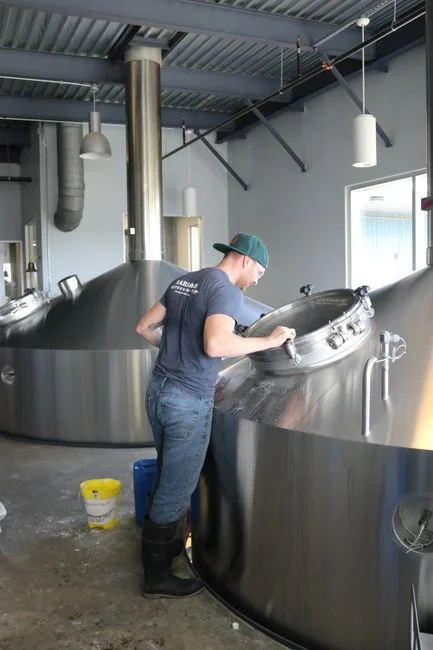
A DAF clarifier separates suspended matter by attaching micro-bubbles to flocculated particles so their bulk density drops below water and they rise to the surface. The recycle-and-pressurize cycle works like this: clarified effluent is pressurized with air in a saturation vessel to roughly 60-80 psig, then released through a pressure-relief valve near the center of the unit, generating 30-50 micron bubbles that nucleate on the conditioned floc (ClearStream, 2025). The DAF Corp micro-bubble generator produces consistent 20-40 micron bubbles with no coarse air, which is the operating window that gives the highest particle-to-bubble attachment efficiency on colloidal metal fines (DAF Corp, 2025).
Chemical coagulation and flocculation are not optional in fabricated-metals duty. Without proper conditioning, even a high-quality DAF vessel underperforms because emulsified oil droplets and sub-100 micron metal particles do not have enough surface area or hydrophobic character for raw bubbles to attach (Clearwater/SigmaDAF, 2026). A typical polymer-and-coagulant conditioning train uses ferric chloride or aluminum chlorohydrate at 50-150 mg/L followed by a low-charge cationic flocculant at 0.5-2.0 mg/L, dosed through a serpentine floc tube or mix tank. Whitesburg shops that try to skip this step and run a DAF on straight emulsion typically see TSS removal drop from the 92-98% nameplate range into the 70-80% band and fail oil and grease sampling. The HydropureWater automatic chemical dosing system is the matched skid for this conditioning train.
Material selection is the other non-obvious decision. Standard vessels ship in 304SS, with 316SS and polypropylene available for acidic rinsewater such as chromic acid etch or acidic pickling (Clearwater/SigmaDAF, 2026). Whitesburg shops handling hex chrome or strong acids should not accept a carbon-steel DAF tank, since chloride and chromate attack will perforate the shell within 18-36 months and leak contaminated process water into the floor. The SigmaDAF model families map onto the duty: FPAC handles small-to-medium flow with very high solids loads; FPBC is a high-profile lamella-pack unit for low-to-medium solids and low-buoyancy particles; FPHF is the high-flow cross-flow and countercurrent separator for large plants; and COMPACT is the pre-assembled turnkey skid with PLC control, sized at 66 GPM single-skid and modular two-skid above that threshold (Clearwater/SigmaDAF, 2026).
Conventional Clarifiers, Lamella Plates, and When They Still Win
A gravity clarifier relies on Stokes' law: heavy settleable solids drop to a sludge cone at the bottom of the tank, while floating skimmable oils are scraped off the top. A lamella clarifier adds a stack of inclined plates at 55-60 degrees, which shortens the effective settling distance and multiplies the projected surface area inside the same footprint, lifting surface loading rates from roughly 1-2 m/h for a conventional basin to 20-40 m/h for a lamella pack. The HydropureWater lamella clarifier hits the 20-40 m/h range with up to 30% lower chemical consumption than conventional settling, per the product specification, because the inclined plates concentrate settleable solids into a thin sludge blanket that responds to lower polymer doses.
There are real fabricated-metals duties where lamella or gravity clarifiers beat DAF. Low-oil swarf slurries from grinding, hot strip mill scale, and very high TSS streams with no emulsified oil all settle readily and do not benefit from micro-bubble attachment. Retrofitting a lamella pack into an existing concrete clarifier basin is also where gravity-side technology wins, because the civil work is already sunk and the operator only needs to add plates, a sludge hopper, and a skimmer drive rather than a new DAF tank, recycle pump, and saturation vessel. The Komline-Sanderson observation that chemical pretreatment, operator attention, and cleaning requirements must be sized for the chosen clarification device applies here — a hands-off DAF is not actually hands-off if the upstream emulsion is not being broken, and a "simple" gravity clarifier is not simple if the operator has to drain and hose the basin every shift (Komline-Sanderson, 2025).
For Whitesburg fabricators, the practical answer is rarely either-or. The standard 2026 architecture is a DAF as the primary oil and colloidal-solids removal step, with a lamella clarifier as a polish step for any heavy settleable grit that slips through, or as a standalone pre-DAF grit remover on flows with significant swarf. This split keeps each device in its efficient operating envelope and gives the operator redundancy if one unit is down for maintenance.
DAF vs Clarifier: 2026 Comparison for Fabricated Metals Duty
Below is the side-by-side comparison a Whitesburg engineer can paste into a capital request memo. The numbers are pulled from manufacturer data and 40 CFR Part 433 categorical standards; cost tier is qualitative because vendor pricing varies with material of construction, instrumentation, and sludge-handling scope.
| Parameter | DAF (circular, FC class) | DAF (rectangular, RC class) | Lamella / Gravity Clarifier |
|---|---|---|---|
| TSS removal efficiency | 92-98% (DAF Corp, 2025) | 85-90% (DAF Corp, 2025) | 60-85% typical; lower on colloidal fines |
| Oil and FOG removal | Excellent — float to surface, skimmed | Good to excellent | Poor on emulsified oil; OK on free oil |
| Flow range | 10-11,000 GPM (DAF Corp, 2025) | 10-1,000 GPM (DAF Corp, 2025) | 4-300 m³/h (HydropureWater DAF coverage) |
| Micro-bubble size | 20-40 micron (DAF Corp) or 30-50 micron (Clearwater) | 30-50 micron (Clearwater/SigmaDAF, 2026) | N/A — settling-based |
| Hydraulic footprint | Compact for the flow | Compact, narrow sites, retrofit-friendly (ClearStream) | Larger basin area at high surface loading |
| Sludge consistency | 2-4% dry solids float (DAF Corp, 2025) | 2-4% dry solids float | 1-3% underflow; higher volume |
| Capital cost tier | Moderate to high (skid + chem + PLC) | Moderate | Low to moderate (civil-friendly retrofit) |
| Chemical conditioning | Required — coagulant + flocculant via automatic chemical dosing | Required | Optional at lower dose for grit only |
| Sensitivity to flow surges | Moderate — equalization basin recommended | Moderate | Low to moderate; large basins buffer surges |
| 40 CFR 433 compliance margin (oil & grease, TSS) | Wide margin | Good margin | Narrow margin on emulsified streams |
| Best-fit Whitesburg sub-industry | Stamping, machining, parts-wash with coolant | Plating rinsewater, coating line, low-to-medium solids | Grinding swarf, scale, retrofit into existing basin |
| RCRA sludge classification risk | F006 if non-hazardous; lower volume, easier to manage | F006 if non-hazardous | F006; higher sludge volume to haul |
Both devices can meet 40 CFR Part 433 daily-maximum and monthly-average limits when properly designed, but a DAF gives a wider compliance margin on oil and grease, which is the parameter most often cited in POTW enforcement actions against metal finishers.
Sizing and Flow-Rate Rules of Thumb for a Whitesburg Shop
A Whitesburg job shop running one or two stamping presses and a small parts washer typically generates 5-25 GPM of combined wastewater. A mid-size stamping and machining plant with 5-20 CNC machines, a coolant sump, and a parts washer sits in the 25-150 GPM band. A plating or coating line with multiple rinse tanks, drag-out, and a hood scrubber discharge lands at 150-500+ GPM and may exceed 1,000 GPM if a large anodizing or e-coat line is on site. SigmaDAF COMPACT DAF plug-and-play skids handle 66 GPM or less on a single skid, with a modular two-skid arrangement above 66 GPM (Clearwater/SigmaDAF, 2026), which is directly applicable to a single-line Whitesburg shop in the small-to-mid range.
The most reliable sizing input is a jar test or on-site pilot, not vendor catalog curves. Komline-Sanderson explicitly recommends pilot testing for unfamiliar waste streams, and the DAF Corp pilot fleet gives a useful benchmark: the FC-60 pilot at 48 GPM and 2,000 ppm loading, and the RC UniMax pilot at 80-100 GPM and 2,000 ppm loading (DAF Corp, 2025). For a Whitesburg feasibility study, a one-week on-site pilot with the actual plant effluent — not a simulated mix — captures the real swings in oil concentration, pH, and flow that a jar test misses. The pilot also gives the operator a feel for polymer dose response and float yield before capital is committed.
For new construction or a major retrofit, the HydropureWater DAF family covers 4-300 m³/h (roughly 18-1,320 GPM), which spans the mid-size stamping plant through the large plating line with a single-vessel selection. Below 10 GPM, a small batch clarifier or a packaged DAF with a 50-100 gallon holding tank is usually more cost-effective than a continuous DAF skid, because the recycle pump and saturation vessel do not amortize at very low continuous flow.
Compliance, Sludge Handling, and 2026 Procurement Checklist
The 40 CFR Part 433 pollutant list is the spec sheet a Whitesburg fabricator's DAF is actually being judged against. Categorical limits cover oil and grease, total suspended solids, total metals (cadmium, chromium, copper, lead, nickel, silver, zinc), and hexavalent chromium, with both daily-maximum and monthly-average values. A properly designed DAF reduces sampling risk on oil and grease and total suspended solids — the two parameters most often cited in POTW violation letters against metal finishers — by lifting floatable and colloidal solids before they hit the discharge sampling point. Hexavalent chromium still needs reducing agents (sulfite or ferrous sulfate at low pH) and often ion-exchange polishing to hit 0.06 mg/L daily-max and 0.04 mg/L monthly-average under the categorical standard, and that is covered separately in the chemical precipitation for chromium removal guide.
DAF float is typically 2-4% dry solids (DAF Corp, 2025) and is classified as F006 — wastewater treatment sludge from metal finishing — under RCRA when it passes TCLP. A HydropureWater plate and frame filter press downstream of the DAF thickens the float to a handleable cake in the 25-35% dry-solids range, cutting haul volume by roughly 6-10x and making the disposal route predictable for Whitesburg shops without a belt-press budget. For shops running stamping and machining only with no plating or chrome passivation, the float typically passes TCLP and ships as Subtitle D non-hazardous; once hex chrome or strong acids enter the stream, the operator must characterize the sludge on a periodic basis and route it accordingly.
The 7-point procurement checklist for a 2026 Whitesburg DAF or clarifier bid: (1) jar test on actual plant effluent, not simulated; (2) material of construction — 304SS minimum, 316SS or polypropylene for chrome or acid service; (3) PLC scope — chemical dosing pumps, skimmer speed, sludge discharge, and remote telemetry; (4) chemical conditioning skid sized with the DAF, not added later; (5) sludge handling — float pump, plate and frame press or belt press, and a roll-off container; (6) footprint match — confirm the skid or basin fits the available slab and overhead clearance; (7) 2026 service and parts availability from the manufacturer or a regional representative, with startup support and a one-year warranty. The procurement checklist and the compliance margin drive the same answer for most Whitesburg shops: DAF primary, lamella clarifier polish, chemical conditioning, and a downstream dewatering press to control the F006 disposal cost.
| Checklist item | Spec / acceptance criterion |
|---|---|
| Jar test | On actual effluent; >90% TSS removal achievable at proposed dose |
| Material of construction | 316SS or PP for chrome/acid; 304SS minimum for oil/coolant |
| PLC scope | Dosing, skimmer, sludge, remote telemetry |
| Chemical conditioning | Skid integrated, sized for 1.5x design dose |
| Sludge handling | Float pump + plate and frame filter press to 25-35% cake |
| Footprint | Skid fits slab; overhead clearance for bridge and catwalk |
| Service and parts | 2026 regional support; one-year warranty; startup included |
Frequently Asked Questions
Can a DAF meet 40 CFR 433 metal-finishing limits on its own?
For oil and grease, TSS, and most total metals, a properly designed and chemically conditioned DAF can meet 40 CFR Part 433 daily-maximum and monthly-average categorical limits on its own. Hexavalent chromium typically requires a reducing agent (sulfite or ferrous sulfate) at low pH ahead of the DAF, and may need ion-exchange polishing to consistently hit the 0.06 mg/L daily-max / 0.04 mg/L monthly-average categorical standard. The DAF is the suspended-solids and oil-removal workhorse, not the chromium-removal workhorse.
When is a lamella clarifier the better 2026 choice over a DAF in a fabricated-metals plant?
A lamella or gravity clarifier is the right primary device when the stream has no emulsified oil, no coolant, and no colloidal fines — for example, grinding swarf slurry, hot strip mill scale, or heavy settleable grit from a shot-blast wet separator. In those duties the inclined plates or sludge cone settle the solids faster and cheaper than a DAF can float them. The moment emulsified oil or coolant enters the stream, the lamella clarifier stops being the right primary device and becomes a polish step downstream of a DAF.
What flow rate should trigger a DAF over a clarifier in a Whitesburg shop?
Any plant with continuous emulsified oil or coolant in the stream should run a DAF regardless of GPM. As a practical cutoff, below 10 GPM a small batch clarifier or packaged treatment system can be more cost-effective because the DAF recycle pump and saturation vessel do not amortize at very low continuous flow. Above 10 GPM with oil or coolant present, the DAF is the default choice.
Do DAFs require a licensed operator in Kentucky?
Kentucky does not impose a general operator license specifically for a DAF unit, but the pretreatment system as a whole may trigger a KPDES general or individual permit requirement depending on discharge volume and pollutant loading. Whitesburg fabricators should confirm their permit status with the Kentucky Division of Water and the local POTW before procurement, not after startup.
How long does installation take for a skid-mounted DAF?
A skid-mounted COMPACT-class DAF including chemical dosing and PLC typically installs in 1-3 weeks once the slab, influent piping, and electrical service are ready. A poured-concrete clarifier basin with lamella pack, sludge pumps, and a separate chemical room runs months from excavation to startup. The skid is the faster path for any Whitesburg shop trying to get into compliance on a 2026 deadline set by a POTW enforcement letter.