The Anchorage Fabricated Metals Wastewater Profile
Fabricated metals wastewater is a distinct stream from electroplating or mining discharges, and the EPA recognizes it under a specific categorical code with its own target-pollutant list. The waste profile at an Anchorage-area welding, stamping, machining, or light-plating shop is dominated by water-based cutting fluids, stamping lubricants, quench oils, alkaline cleaning rinses, and rinse waters from incidental zinc, copper, nickel, and chrome plating — the same taxonomy the getchemready metal-fabrication application guide uses when classifying shops that shape and join metal components. Cutting fluids alone are problematic: they enter the sewer as stable oil-in-water emulsions stabilized by surfactants, with BOD often in the 1,000–5,000 mg/L range and free oil that can spike FOG above 200 mg/L if a sump is dumped at the wrong time.
Under the federal categorical standards, the target pollutants for this sector are TSS, FOG, total metals (zinc, copper, nickel, chrome), and pH. Anchorage adds three local stress factors that lower-48 guides rarely flag. First, closed-loop coolant concentrates dumped at the end of a cold snap carry glycol and tramp oil simultaneously. Second, shop-floor wash water from steam cleaning picks up metal fines, floor grit, and antifreeze residue. Third, the diurnal swing in a heated Anchorage shop can move influent pH by 2–3 S.U. between day and night shift, which an undersized equalization tank will pass straight downstream. Typical fab-shop discharges run 5–50 gpm per shift from parts washing and rinse water; the ALAR Modern Plating retrofit processed 75–100 gpm on a similar stream, and that plant reduced operating cost by roughly $6,000 per month after switching to on-site precipitation and dewatering (ALAR case study, accessed 2025-08).
Regulatory Envelope: 40 CFR Part 433 and AWWU Local Limits
The federal floor for any U.S. metal-fabrication or finishing facility discharging to a POTW is 40 CFR Part 433 — the Metal Finishing categorical standard. It sets daily-maximum ceilings that any treatment train must beat on a daily composite basis, and Anchorage plants cannot discharge above them regardless of what their local utility allows. The table below captures the parameters that govern equipment sizing; the AWWU industrial waste discharge permit typically tightens one or more of these with site-specific mass limits, monitoring frequency, and prohibited-pass-through provisions. Before any equipment is specified, the plant engineer should request the current AWWU permit and design against the strictest applicable number — federal or local.
| Parameter | 40 CFR 433 daily max (METI) | Typical AWWU local limit (verify with permit) | Engineering implication |
|---|---|---|---|
| pH | 6.0–10.0 S.U. | 6.0–10.0 S.U., sometimes 7.0–9.0 S.U. | Caustic + acid dosing on PLC-controlled skid |
| Oil & Grease (HEM) | 52 mg/L | 50 mg/L, sometimes 25 mg/L | DAF preferred when FOG > 50 mg/L |
| Total Suspended Solids | 60 mg/L | 50 mg/L typical | Coag/floc + DAF or lamella + polish |
| Zinc, total | 2.61 mg/L (1-day) | 1.0–2.0 mg/L common | pH 8.5–9.0 precipitation as Zn(OH)₂ |
| Copper, total | 3.38 mg/L (1-day) | 1.0–2.0 mg/L common | pH 8.5–9.0, sulfide optional for tight limits |
| Nickel, total | 3.98 mg/L (1-day) | 1.0–2.0 mg/L common | pH 9.0–9.5, ferric coagulant assists |
| Chromium, total | 2.77 mg/L (1-day) | 1.0–2.0 mg/L common | Hexavalent reduction step if chrome plating present |
| Cadmium, total | 0.69 mg/L (1-day) | 0.5 mg/L or lower | Rare in fab shops, but check alloy stock |
The Alaska Department of Environmental Conservation retains oversight authority for industrial waste streams that may reach surface water via a non-POTW pathway, and AWWU's pretreatment program runs on an annual renewal cycle aligning with the calendar year. A comparable jurisdictional pattern — federal categorical floor plus a tight local mass-limit overlay — is documented in the Phillipsburg mining and metals 40 CFR 437/433 compliance guide and the Green Bay fabricated metals pretreatment guide; both are useful cross-references even though their climate envelopes differ.
The Four-Stage Pretreatment Train That Actually Works
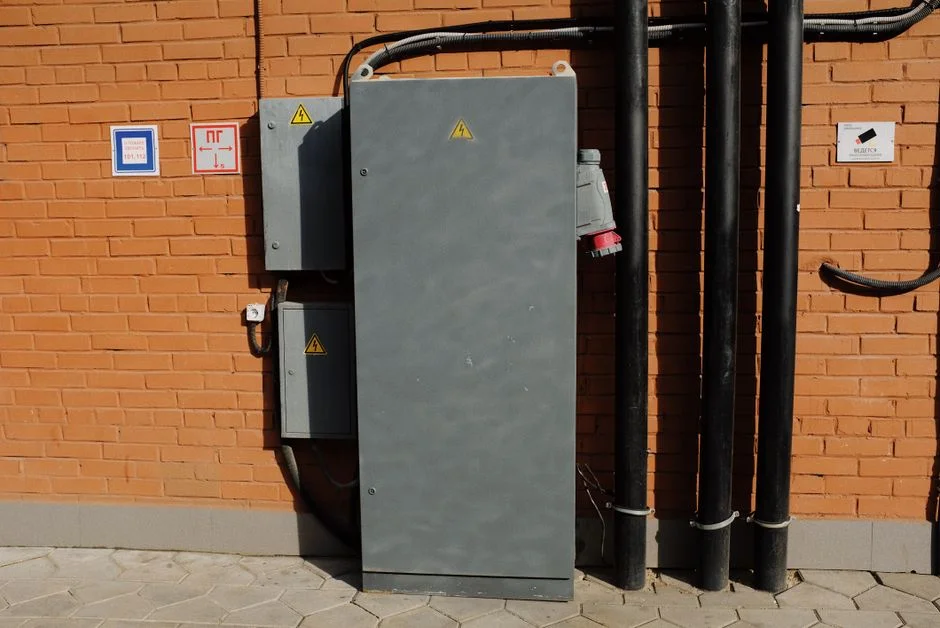
A working pretreatment train for an Anchorage fabricated-metals plant is a four-stage sequence: equalize, neutralize, precipitate, then separate. Each stage has a measurable design parameter, and skipping one is the most common reason the next one fails. ALAR's own commercial reference, the Flex-O-Star®, packages this as a two-step chemical-and-mechanical logic — chemical to break emulsions and drop metals out of solution, mechanical to physically remove the resulting solids (ALAR product literature, accessed 2025-08) — which maps onto a continuous-flow train at 5–50 gpm.
- Stage 1 — Equalization. A 4–8 hour buffer tank with coarse bar screening dampens pH and flow swings before chemistry sees the stream. The getchemready guide identifies stainless and carbon steel as standard materials for this service; for Anchorage, specify stainless internals wetted by the stream and carbon steel for the shell to keep fabrication costs down.
- Stage 2 — pH adjustment. Per ALAR, the majority of metal-finishing systems are pH-driven: acid first to break emulsions, then caustic to raise pH into a 7–9 S.U. operating band where dissolved zinc, copper, nickel, and chrome precipitate as hydroxides. Use a PLC-controlled pH and polymer dosing skid with redundant probes so a probe failure cannot let untreated slug reach the separator.
- Stage 3 — Coagulation and flocculation. Dose ferric chloride (typical 50–150 mg/L) or alum, plus an anionic polymer (1–5 mg/L) for floc building. Flash mixing at 100–200 rpm for 30–60 seconds, then slow mixing at 20–40 rpm for 3–5 minutes — visible floc growth is the acceptance criterion before the stream moves to separation.
- Stage 4 — Solids separation. Either a dissolved air flotation unit or a lamella clarifier, followed by a 1-micron polishing filter to capture the fines the separator misses. The 1-micron target matches the precoat filter performance that ALAR documents as sufficient for capturing metals after pH adjustment.
DAF vs Lamella Clarifier: The Anchorage Decision
For Anchorage fab shops, the separator choice is driven by FOG content, footprint, and indoor enclosure requirements. A DAF unit operates at 4–20 m/h hydraulic surface loading and excels at free and emulsified oil removal, making it the default for plants running quench oils, stamping lubricants, or any stream with FOG above 50 mg/L. A lamella clarifier runs at 20–40 m/h, demands less chemistry, and stacks into a smaller footprint, but it is weaker on emulsified FOG because it relies on gravity settling rather than buoyant attachment to micro-bubbles.
| Criterion | DAF | Lamella clarifier |
|---|---|---|
| Surface loading rate | 4–20 m/h | 20–40 m/h |
| Best feed | Free & emulsified oil, FOG > 50 mg/L | Mostly dissolved metals, FOG < 50 mg/L |
| Capacity range | 4–300 m³/h (getchemready DAF spec) | 20–40 m/h loading (compact modules) |
| Footprint | Larger, taller vessel | ~1/3 the footprint of an equivalent clarifier |
| Chemical demand | Higher polymer for fragile floc | Lower; relies on settling |
| Cold-climate placement | Harder to heat-trace, taller ceiling needed | Easier to fit in heated indoor modules |
| Effluent polish needed | 1-micron polish recommended | 1-micron polish recommended |
| Typical role | Primary separator in fab shops | Pre-separator or low-FOG retrofit |
The decision rule is simple: if FOG is above 50 mg/L or you are running emulsions from cutting fluids, default to DAF; if the stream is dominated by dissolved metals with low FOG, a lamella clarifier for low-FOG fabricated metals streams is the lower-OPEX choice and the easier indoor fit. Many Anchorage plants run a lamella pre-thickener ahead of a DAF polish, but that hybrid doubles the equipment footprint and is rarely justified below 50 gpm.
Anchorage-Specific Engineering Adjustments
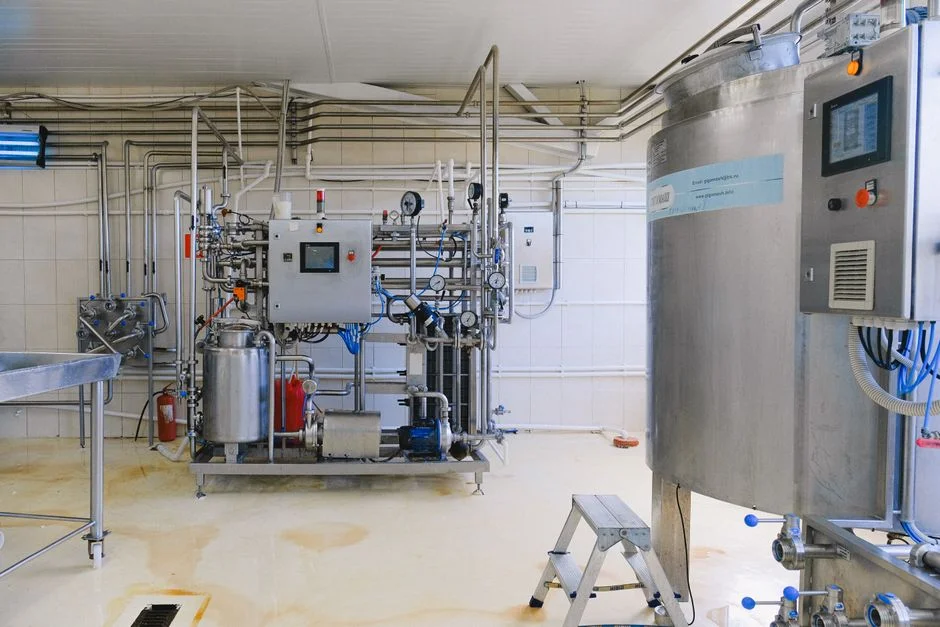
Generic pretreatment guides assume a benign climate, which is the single biggest gap when applying them in Southcentral Alaska. Three adjustments are non-negotiable for a workable Anchorage installation. First, all chemical tanks, DAF vessels, and lamella modules should be placed inside or in a heat-traced, insulated enclosure — outdoor installations risk freezing from November through April, and a frozen polymer feed line will silently shut a coagulant skid down without triggering an alarm. Second, the distance from Anchorage to lower-48 hazardous-waste receivers makes recurring liquid-waste hauling expensive; on-site chemical precipitation and dewatering is the economic default, with hauled waste reserved for concentrates and filter cake. Third, dewatered solids are typically managed with a sludge dewatering filter press for Anchorage metal-finishing solids, producing a cake that can be containerized and shipped south on a less-frequent cadence. AWWU pretreatment permit renewals and Alaska DEC inspections generally align with the calendar year, so engineering submittals should be in by Q3 of the prior year to keep a renewal from slipping into a finding-of-violation cycle.
Capex and Opex Ranges for a 20–50 gpm Anchorage System
Budgeting for a turnkey 20–50 gpm pretreatment system — equalization, chemical dosing, separator, polishing filter, and sludge press — lands in the low-to-mid six figures USD before the cold-climate premium. The ALAR Modern Plating case at 75–100 gpm generated roughly $6,000 per month in measurable savings versus the prior haul-off program, and that payback logic scales down to Anchorage fab-shop flows with proportionally smaller savings. Add 10–20% on top of base equipment cost for an insulated, heat-traced enclosure and any building modifications needed to house the train. Dominant opex line items are caustic (or acid for emulsion breaking), polymer, filter media, and sludge disposal; PLC-controlled dosing typically cuts polymer use by 20–30% versus manual trim, and an automatic pH control system overview for 2026 walks through the tuning logic. Any defensible budget should be paired with a one-year influent sampling program to lock in chemical dosing rates before final equipment selection.
Frequently Asked Questions
What pH range does Anchorage require for sewer discharge?
The federal categorical floor under 40 CFR Part 433 is 6.0–10.0 S.U. as a daily maximum, and AWWU typically issues a local limit inside that band, often 7.0–9.0 S.U. for the metals parameters listed on the permit. The plant must meet the stricter of the two; the design should target pH 8.5–9.0 in the precipitation stage to drop zinc, copper,
Frequently Asked Questions
What are the sewer discharge limits for fabricated metals plants in Anchorage in 2026?
Under the Anchorage Water and Wastewater Utility (AWWU) industrial pretreatment program and federal categorical standards (40 CFR Part 433), metal finishing facilities must comply with strict daily maximums and monthly averages. As of 2026, typical discharge limits for total toxic organics (TTO) are capped at 2.13 mg/L, while specific heavy metals are strictly regulated: Total Chromium at 2.77 mg/L, Total Copper at 3.38 mg/L, Total Nickel at 3.98 mg/L, and Total Zinc at 2.61 mg/L.
Do Anchorage metal fabrication shops need a DAF or a clarifier to meet pretreatment limits?
The selection depends on the specific waste stream volume and contaminant load. A Dissolved Air Flotation (DAF) unit is generally required if the facility produces high volumes of emulsified oils, greases, or suspended solids that exceed 300 mg/L. Conversely, a conventional inclined plate clarifier is often sufficient for shops performing basic metal stamping or CNC machining where the primary goal is the sedimentation of metal fines and heavy metal hydroxides following chemical precipitation.
How do you remove dissolved zinc and chrome from a fab-shop rinse water before sewer discharge?
Removing dissolved metals requires a multi-stage chemical precipitation process. First, the pH must be adjusted to the 8.5 to 9.5 range using caustic soda or lime to convert dissolved metal ions into insoluble metal hydroxides. A coagulant, such as ferric chloride, and a high-molecular-weight anionic polymer are then added to facilitate flocculation, allowing the particles to settle out as sludge in a clarifier or be removed via a filter press before the treated effluent is discharged.
Can a small Anchorage welding and stamping shop install a packaged pretreatment system indoors for winter operation?
Yes, packaged pretreatment systems are frequently installed indoors in Anchorage to prevent freezing and ensure consistent chemical reaction kinetics. Systems are typically modular, skid-mounted units featuring integrated batch reactors, pH sensors, and automated metering pumps. Indoor installation requires proper ventilation for chemical storage and floor drainage that complies with AWWU secondary containment requirements to prevent accidental spills from entering the municipal sewer system.
How often does AWWU test industrial discharge from metal fabricators?
AWWU conducts compliance monitoring through a combination of self-monitoring reports submitted by the facility and unannounced inspections. For most metal fabrication shops categorized as Significant Industrial Users (SIUs), AWWU typically performs formal sampling and facility inspections at least twice per year. Facilities may be subject to more frequent testing if previous sampling results indicate a pattern of non-compliance or if the facility undergoes significant process changes.