The Regulatory Stack Fabricated Metals Plants Must Clear
Fabricated metals plants discharging to the Green Bay sewer system must clear three nested regulatory layers: federal categorical pretreatment standards under the Clean Water Act, Wisconsin's NR 211 incorporation of those standards, and the local discharge limits and surcharges administered by NEW Water (the Green Bay Metropolitan Sewerage District). The two federal standards most often applied are 40 CFR Part 413 (Metal Finishing) and 40 CFR Part 433 (Metal Products and Machinery). Part 413 governs operations that perform electrodeposition of metals, anodizing, chromating, and chemical or electrochemical milling; Part 433 covers facilities manufacturing metal products, fasteners, machinery, and transportation equipment. A plant with a captive plating line on site typically falls under Part 413; a job shop doing only cutting, forming, and assembly usually falls under Part 433 unless the local control authority has made a written determination otherwise.
Both standards set daily maximum limits, but the values diverge sharply. Under 40 CFR 413.02, daily maximums are 52 mg/L oil and grease, 86 mg/L TSS, and 2.13 mg/L total toxic organics, with individual metal ceilings that include copper 3.38 mg/L, nickel 3.98 mg/L, total chromium 2.77 mg/L, lead 0.69 mg/L, zinc 2.61 mg/L, and cadmium 0.69 mg/L. Under 40 CFR Part 433, daily maximums tighten to 50 mg/L oil and grease, 50 mg/L TSS, cadmium 0.69 mg/L, total chromium 2.77 mg/L, copper 3.38 mg/L, lead 0.69 mg/L, and nickel 3.98 mg/L. The 50 mg/L TSS ceiling under Part 433 is the most common trigger that drives a fabricated metals shop to install a lamella clarifier and a polishing filter rather than relying on a DAF alone.
Wisconsin Admin Code NR 211 incorporates the federal categorical standards by reference and authorizes the Wisconsin Department of Natural Resources (DNR) to administer the WPDES pretreatment program through POTWs that have been delegated pretreatment authority. NEW Water holds that delegation for the Green Bay service area, which includes much of Brown County and parts of adjacent counties. NEW Water issues industrial user permits, sets local limits (sometimes tighter than the federal floor), conducts compliance sampling, applies pollutant surcharges, and can recommend permit revocation to the DNR for chronic non-compliance. EPA Region 5 retains independent enforcement authority over categorical standards even in delegated states, which is why pretreatment equipment sizing must satisfy the federal limits first and the local limits second.
| Parameter | 40 CFR 413 daily max | 40 CFR 433 daily max | Notes |
|---|---|---|---|
| Oil & grease | 52 mg/L | 50 mg/L | Both standards; 433 is tighter |
| TSS | 86 mg/L | 50 mg/L | 433 typically drives clarifier + filter design |
| Copper | 3.38 mg/L | 3.38 mg/L | Same numeric ceiling |
| Nickel | 3.98 mg/L | 3.98 mg/L | Same numeric ceiling |
| Total chromium | 2.77 mg/L | 2.77 mg/L | Cr(VI) reduction required for either |
| Lead | 0.69 mg/L | 0.69 mg/L | Same numeric ceiling |
| Zinc | 2.61 mg/L | 1.48 mg/L | 433 is significantly tighter |
| Cadmium | 0.69 mg/L | 0.69 mg/L | Same numeric ceiling |
| Total toxic organics | 2.13 mg/L | — | 413 only |
What Fabricated Metals Wastewater Actually Looks Like
Wastewater from a fabricated metals plant is a blend of three streams that arrive at the headworks at different flow rates, pH values, and metal concentrations. Process rinse water carries drag-out from cleaning baths, acidic pickle rinses, alkaline cleaners, plating rinses (where plating is in scope), and conversion-coating rinses. Cutting and machining fluids add emulsified oils, tramp hydraulic oil, and metal fines from grinding. Batch dumps from surface treatment baths — spent pickle acid, spent alkaline cleaner, dumped coolants — arrive as slug loads that can swing pH from 2 to 12 and spike metals into the hundreds of mg/L over a few minutes. Without equalization, these slug loads break a downstream clarifier in a single shift.
Typical characterization values for the combined plant effluent before treatment fall in the following ranges: TSS 50–500 mg/L, total oil and grease 100–1,000 mg/L, free oil 50–500 mg/L, dissolved copper 1–50 mg/L, dissolved nickel 1–50 mg/L, dissolved zinc 1–50 mg/L, hexavalent chromium 0.1–10 mg/L (where chromating or hard chrome is performed), total cyanide 0.1–5 mg/L (where cyanide-bearing plating or heat treatment is performed), and pH 2–12. Flow varies by facility type: a small job shop doing mostly forming and welding may discharge 5–20 m³/day, while an integrated fab with paint line, plating, machining, and assembly can exceed 200 m³/day. These ranges are the operating envelope used to size equalization volume, pump curves, and chemical feed rates; they are not a single number because every shop's mix is different.
| Parameter | Typical range (untreated) | Driver |
|---|---|---|
| TSS | 50–500 mg/L | Grinding fines, metal chips, sludge |
| Oil & grease | 100–1,000 mg/L | Machining fluids, hydraulics, tramp oil |
| Free oil | 50–500 mg/L | Leaks, floor wash, coolant dumps |
| Copper / Nickel / Zinc (each) | 1–50 mg/L | Plating rinse, pickle drag-out |
| Hexavalent chromium | 0.1–10 mg/L | Chromating, hard chrome, conversion coating |
| Total cyanide | 0.1–5 mg/L | Cyanide plating, heat treat quench |
| pH | 2–12 | Acid pickling, alkaline cleaners, batch dumps |
The Pretreatment Train: Stage by Stage
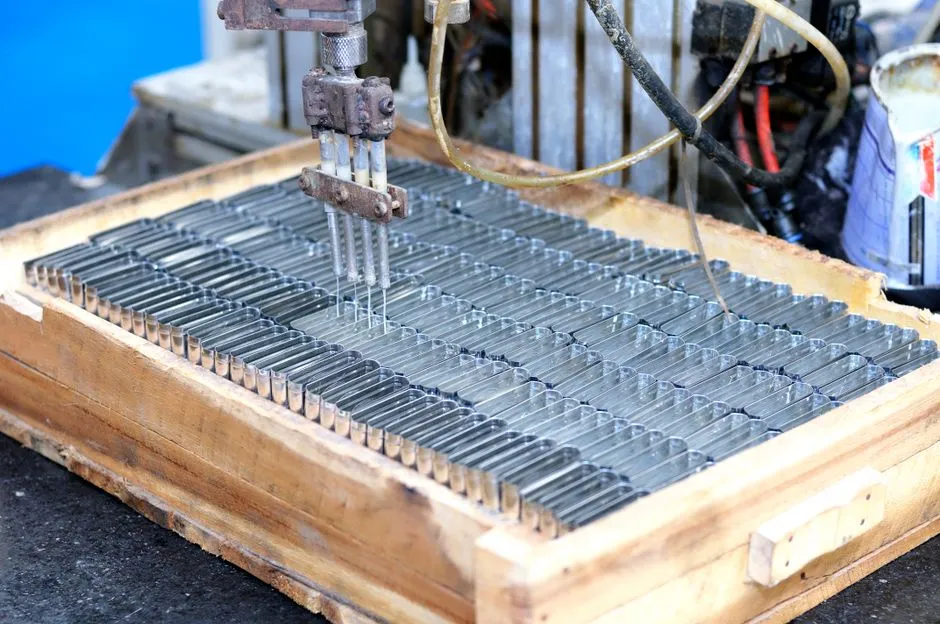
The treatment train for a fabricated metals plant runs in a fixed order because each stage conditions the wastewater for the next. Skipping a stage or reordering them causes the downstream unit to operate outside its design envelope and produces a discharge that fails sampling.
- Mechanical bar screening. A rotary bar screen headworks with 6–10 mm bar spacing removes rags, wipes, plastic strapping, and weld rod stubs before they reach the pumps. Bar screens protect downstream DAF equipment, which has small orifices in the micro-bubble generator that plug on debris.
- Oil and grease removal. An industrial DAF system floats free and emulsified oil to the surface with a micro-bubble cloud, typically achieving 90–95% oil and grease removal and 70–90% TSS removal. Coagulant (alum or polyaluminum chloride at 50–150 mg/L) destabilizes the emulsion; a polymer flocculant (cationic or anionic polyacrylamide at 1–5 mg/L) bonds the destabilized droplets to the bubbles. Skimmed sludge reports to the sludge holding tank.
- Flow and pH equalization. An 8–24 hour equalization tank with mechanical mixing dampens hydraulic and chemical slug loads. pH is adjusted toward 7.0–8.5 ahead of metals precipitation using NaOH or lime dosing; the equalization tank itself is the practical location for a pH probe and PID loop.
- Hexavalent chromium reduction. Cr(VI) is reduced to Cr(III) in a dedicated reactor using sulfur dioxide/air or ferrous sulfate (FeSO₄) at pH below 3, with ORP controlled below 250 mV. The reactor effluent is re-neutralized to pH 8.5–9 before hydroxide precipitation so the chromium drops out as Cr(OH)₃. Skipping this stage on a wastewater containing Cr(VI) guarantees a discharge that fails total chromium limits, because hydroxide precipitation alone does not remove Cr(VI).
- Cyanide destruction (where applicable). Free and weak-acid-dissociable cyanide is destroyed by alkaline chlorination at pH above 10 and ORP above 600 mV. The reaction runs in two stages — CN⁻ to CNO⁻ at moderate ORP, then CNO⁻ to CO₂ and N₂ at high ORP — and is controlled by ORP probes. This stage is only present when the facility uses cyanide-bearing plating solutions or cyanide-based heat treatment.
- Heavy metals precipitation. Cu, Ni, Zn, and the reduced Cr(III) are precipitated as metal hydroxides at pH 8.5–10.5 with NaOH or lime, achieving >99% removal for copper, nickel, and zinc under steady-state conditions. Sulfide precipitation with NaHS or FeS is used as a polishing step on a side stream when the discharge must meet low ppb targets for a reuse loop or for a particularly tight local limit.
- Lamella clarification. A lamella clarifier for metals precipitation operates at surface loading 20–40 m/h — roughly 20× a conventional clarifier — and produces clarified effluent typically below 30 mg/L TSS. A multi-media filter polishes the clarifier overflow down to 5–10 mg/L TSS and protects against spikes that could trip a compliance sample.
- Sludge dewatering. A plate and frame filter press dewaters the combined DAF float, clarifier underflow, and filter backwash into a 25–35% dry solids cake. When the cake fails TCLP for any listed metal, it carries the F006 hazardous waste code under 40 CFR 261.31 and is shipped off-site as hazardous wastewater treatment sludge.
Chemical feed between stages is handled by a PLC-controlled chemical dosing skid with separate metering pumps for coagulant, flocculant, NaOH/lime, and reducing agent. The skid is factory-tested with the flow and concentration setpoints the process engineer has already verified in jar tests.
| Stage | Unit operation | Key operating parameter | Typical performance |
|---|---|---|---|
| 1 | Bar screen | 6–10 mm spacing | Debris removal for pump protection |
| 2 | DAF | Air-to-solids 0.02–0.06 | 90–95% O&G, 70–90% TSS |
| 3 | Equalization | 8–24 h HRT | Slug damping, pH 7.0–8.5 |
| 4 | Cr(VI) reduction | pH <3, ORP <250 mV | Cr(VI) → Cr(III), >99% |
| 5 | Cyanide destruction | pH >10, ORP >600 mV | CN⁻ → CO₂ + N₂ |
| 6 | Hydroxide precipitation | pH 8.5–10.5 | >99% Cu/Ni/Zn |
| 7 | Lamella + multimedia | 20–40 m/h surface loading | <10 mg/L TSS effluent |
| 8 | Filter press | 7–15 bar | 25–35% DS cake |
How NEW Green Bay Enforces These Limits in Practice
NEW Water administers the pretreatment program for industrial users discharging to the Green Bay system. The path to compliance starts with an industrial user permit application that includes a wastewater profile (flow, pH, pollutants, peak hourly discharge), the categorical standard the facility falls under, and a slug control plan. NEW Water reviews the profile, issues a discharge limits letter with site-specific ceilings, and sets a self-monitoring schedule. Routine compliance sampling is typically quarterly, with self-monitoring by the facility on a monthly cadence and random compliance inspections triggered by upsets or threshold exceedances. The program is administered under WPDES industrial permit authority, with the Wisconsin DNR retaining oversight.
Surcharge thresholds at NEW Water sit at 250 mg/L BOD, 250 mg/L TSS, and 100 mg/L oil and grease — exceeding any of these triggers a per-pound pollutant charge that compounds over a quarter. The pH window of 5.0–10.0 from 40 CFR 403 applies at the point of discharge, and excursions caused by slug loads can trigger a Notice of Violation, an enforcement action, or a halt order that halts production discharge until the upstream cause is fixed. The Wisconsin DNR can revoke or deny WPDES permits for chronic non-compliance, and EPA Region 5 can independently enforce 40 CFR 413 or 433 even when a delegated POTW is the day-to-day regulator.
Two 2026 enforcement trends are tightening the local picture. PFAS scrutiny in industrial wastewater has increased, and several Wisconsin POTWs are pushing back on industries whose discharges contribute to PFAS loading at the treatment plant. Zinc and copper limits in local discharge letters have also moved lower, in part because those metals pass through secondary treatment at the POTW and end up in biosolids, where they trigger ceiling concentration rules for land application. A pretreatment train that hit 2.61 mg/L zinc in 2020 may be required to hit 1.0 mg/L zinc in 2026 local limits.
Pretreatment Equipment Selection for 2026
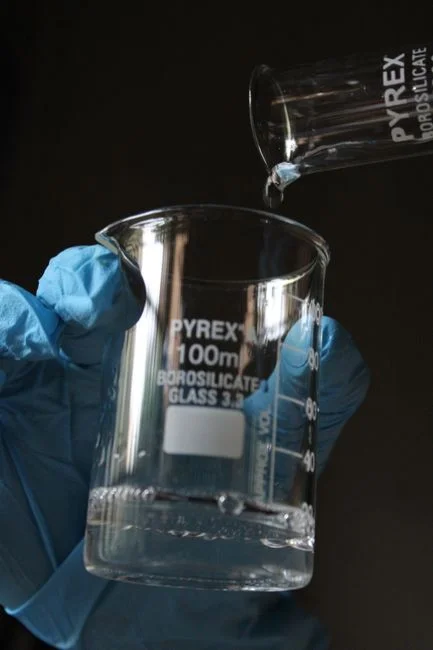
Equipment selection in 2026 is driven by the tighter local limits and by lifecycle cost, not just the federal ceiling. The selection matrix below maps the unit operation to a defensible specification a Green Bay-area plant engineer can take into a vendor RFQ.
- DAF sizing. Match design flow to oil and grease loading. The industrial DAF system covers 4–300 m³/h per unit. A 4 m³/h unit is the practical minimum for amortizing the micro-bubble generator, recycle pump, and skimmer mechanism over the expected equipment life; below that, the per-cubic-meter capex climbs sharply.
- Chemical dosing skid. Specify a PLC-controlled chemical dosing skid with separate pumps for coagulant (alum or PACl), flocculant (polyacrylamide), NaOH/lime, and reducing agent (FeSO₄ or SO₂). Factory-tested and pre-wired cuts installation days on a tight 2026 outage window.
- Lamella clarifier. A lamella clarifier for metals precipitation at 20–40 m/h surface loading versus 1–2 m/h for a conventional clarifier reduces footprint by 80% and cuts polymer consumption by up to 30% (HydropureWater field data, 2026). The footprint reduction matters in an existing fab where headroom and slab space are already constrained.
- Sludge dewatering. A plate and frame filter press from 1 m² to 500 m² plate area covers job-shop to large integrated fab. Choose manual, hydraulic, or PLC operation by dry solids target and cake disposal route. A 25–35% DS cake passes the paint filter test and goes to a lined landfill or hazardous waste facility depending on TCLP.
- Multi-media polishing filter. Install between clarifier and discharge to catch the 5–10% of days when clarifier overflow spikes above 30 mg/L TSS. A multi-media filter at 5–15 m/h holds effluent to 5–10 mg/L TSS and protects against the kind of TSS spike that turns into a compliance excursion during a routine sample.
For readers comparing this train to other industries, the mining and metals pretreatment guide for Trapper Creek covers higher flow rates and lower metal ceilings, while the petroleum plant pretreatment guide for Wilmerding addresses higher oil and grease loadings than a metals plant typically sees. The DAF unit selection guide and the coagulant dosing system engineering primer go deeper on the unit operations referenced in the matrix above.
| Unit operation | Selection criterion | 2026 spec range |
|---|---|---|
| DAF | Design flow vs O&G loading | 4–300 m³/h; recycle 20–40% |
| Equalization | Slug damping | 8–24 h HRT |
| Cr(VI) reduction | ORP <250 mV at pH <3 | FeSO₄ at 2–4× stoichiometric |
| Cyanide destruction | ORP >600 mV at pH >10 | Two-stage chlorination |
| Lamella clarifier | Surface loading | 20–40 m/h |
| Multi-media filter | Polishing | 5–15 m/h, 5–10 mg/L TSS effluent |
| Filter press | Cake dryness | 25–35% DS, 7–15 bar |
Frequently Asked Questions
What EPA categorical standard applies to my fabricated metals plant — 413 or 433?
Part 413 (Metal Finishing) applies to operations that perform electrodeposition, anodizing, chromating, or chemical/electrochemical milling as a service or as an in-house finishing step. Part 433 (Metal Products and Machinery) applies to facilities that manufacture metal products, fasteners, machinery, and transportation equipment but do not perform the finishing operations covered by 413. The 50 mg/L TSS daily maximum under 433 is the more common trigger that drives a clarifier plus polishing filter design, because most job shops do not run a captive plating line.
How often does NEW Water sample industrial users?
Routine compliance sampling is typically quarterly, with self-monitoring by the facility on a monthly cadence. NEW Water also performs random compliance inspections triggered by upsets, threshold exceedances, or permit renewal milestones. The facility's own self-monitoring data is the first line of defense — a missed monthly sample or a missed parameter can become a permit violation even before NEW Water shows up.
Do I need a slug load containment plan?
Yes. 40 CFR 403.8(b) requires POTW industrial users to develop slug control plans for batch discharges that could disrupt the POTW. For a fabricated metals plant, the slug load plan addresses batch dumps of spent pickle acid, alkaline cleaners, and plating baths, and ties into the equalization tank sizing and the pH/ORP control loops on the pretreatment train.
Is my wastewater treatment sludge hazardous?
When the combined sludge from DAF float, clarifier underflow, and filter backwash fails TCLP for any listed metal, it carries the F006 hazardous waste code under 40 CFR 261.31 as listed wastewater treatment sludge from electroplating operations. The cake is shipped off-site as hazardous waste with a uniform hazardous waste manifest. A facility that runs only forming and assembly with no plating operations typically generates non-hazardous sludge, but this must be verified by TCLP testing on the actual cake.
What is the smallest cost-effective DAF unit for a job shop under 20 m³/day?
A 4 m³/h industrial DAF system paired with a PLC-controlled chemical dosing skid and a sludge pumpout is the practical minimum for a job shop in the 5–20 m³/day range. Smaller package units are available but the micro-bubble generator, recycle pump, and skimmer drive a fixed capex that does not scale linearly below 4 m³/h.