Why Phillipsburg Mining and Metals Plants Run on Pretreatment, Not NPDES
Mining and metals plants near Phillipsburg meet pretreatment limits by operating under the federal categorical standards — 40 CFR Part 437 for ore mining and dressing, or 40 CFR Part 433 for metal finishing — enforced locally by the Phillipsburg Sewer Department through its sewer-use ordinance under NJAC 7:14A. A typical 2026 train runs equalization (8–24 h), pH correction to 6.5–9.0 with NaOH or lime on a PLC-controlled chemical dosing skid, hydroxide precipitation (with sulfide polish where local Zn is below 0.3 mg/L), DAF or lamella clarification, multimedia filtration, and plate-and-frame sludge dewatering.
The distinction matters because the two pathways write different numerical limits and trigger different enforcement teeth. NPDES permits under Clean Water Act §402 govern direct discharge to surface water; sewer discharge to a POTW is regulated under CWA §307(b) and 40 CFR Part 403, with categorical standards in 40 CFR Part 437 (Ore Mining and Dressing, NAICS 2122) for mills and 40 CFR Part 433 (Metal Finishing, NAICS 331/332) for plating, pickling, or anodizing lines (per EPA industrial wastewater page, 19january2017snapshot.epa.gov). NPDES surface-water limits are written around receiving-stream assimilation; pretreatment limits are written around protection of the POTW's biological process, its sludge, and its workers. Conflating the two is the most common 2025–2026 compliance miss at Warren County operations.
The local control authority is the Phillipsburg Sewer Department, operating under NJPDES delegation and NJAC 7:14A, with enforcement via sewer-use ordinance, Significant Noncompliance (SNUR) notices, and permit revocation. Most Warren County operations carry both an NJPDES permit (for stormwater outfalls) and a local pretreatment authorization (for the sewer path). Federal categorical limits are the floor; the local ordinance is the binding ceiling for Zn, Cu, Pb, and ammonia.
The 2026 Numerical Targets a Phillipsburg Plant Must Hit
40 CFR Part 437 caps zinc at 1.0 mg/L daily maximum and 0.5 mg/L monthly average for the headline ore-mining subcategories (per 40 CFR 437.40–437.47). Plants with plating, pickling, or anodizing lines must additionally meet 40 CFR Part 433.15: copper 3.38 mg/L daily max / 2.07 mg/L monthly average, and total chromium 2.77 mg/L daily max / 1.71 mg/L monthly average. These are the federal floor.
Local sewer-use ordinances in the Phillipsburg area run tighter. The 2026 typical local range is zinc 0.3–1.0 mg/L monthly average and copper 0.3–0.5 mg/L monthly average. Lead is tightening toward the LCRR action level of 10 µg/L as POTWs re-derive local limits to match EPA's 2024 Lead and Copper Rule Revisions. Three EPA actions in the last 24 months are the specific drivers behind that trajectory: LCRR (2024), the 2024 Multi-Sector General Permit (finalized 2024-09) adding PFAS monitoring (PFOS, PFOA, PFHxS, PFNA) for metal mining, and the 2025 ore-mining BAT revisions (2025-03) tightening the cost-benefit envelope on total recoverable metals.
| Parameter | 40 CFR Part 437 Daily Max (mg/L) | 40 CFR Part 437 Monthly Avg (mg/L) | Typical 2026 Local SUO Limit (mg/L) |
|---|---|---|---|
| Zinc | 1.0 | 0.5 | 0.3–1.0 |
| Copper | 1.0 | 0.5 | 0.3–0.5 |
| Lead | 0.4 | 0.2 | 0.005–0.05 (LCRR-driven) |
| TSS | 50 | 30 | 30 |
The practical spec implication: design the train to deliver a number 20–30% below the current local limit. Pretreatment limits tighten in steps; the equipment footprint is the part you cannot change cheaply after start-up.
Raw Influent Character at a Typical Warren County Operation
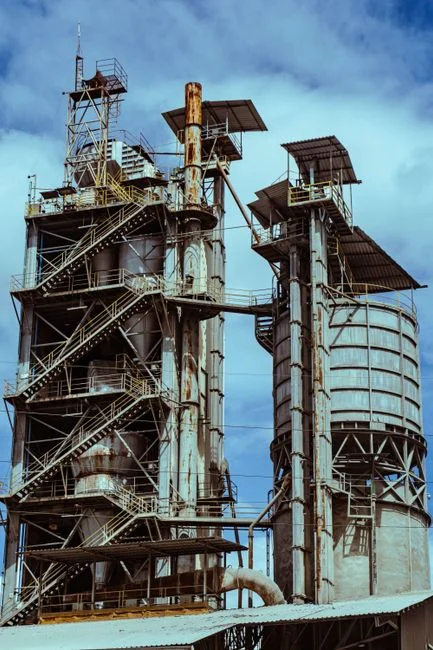
Raw acid mine drainage and spent process solutions at a typical Warren County operation arrive at pH 2–4 with TSS in the hundreds to several thousand mg/L (per Fluence, 2024-11). The dissolved-metal fraction is dominated by Pb, Cu, Zn, and Cd, with Ni and As as secondary targets. Chelants — EDTA, citric acid, and ammonia from heap-leach operations — can bind metals and defeat hydroxide precipitation if the jar test does not catch them.
Leach-pad runoff and brine streams add elevated sulfate and TDS, which drive any downstream RO or reuse decision but not the sewer-path baseline. Process-specific spikes complicate the design: heap-leach operations periodically discharge ammonia, gold circuits carry cyanide and chloramines, and residual flotation reagents (xanthates, dithiophosphates) can pass through a clarifier and poison a downstream biological stage if one is later added. These spikes are why the equalization basin is the highest-ROI compliance move at the head of the train.
Stage-by-Stage Train Design With a Worked Example
Assume a 100 m³/h Phillipsburg-scale plant with raw pH 2.5, TSS 1,800 mg/L, and a target zinc of 0.4 mg/L monthly average. The eight stages chain together as follows.
Equalization. EQ basin sized at 16–24 hours of average daily flow gives 1,600–2,400 m³ of working volume. Under 4 hours, every shift change, dump-leach cycle, or mill clean-out passes straight to the clarifier and overwhelms it. The basin is the most undersized and most expensive-to-retrofit piece of equipment in most 2026 trains.
pH correction. Two-stage reactor with NaOH on a PLC chemical dosing skid; pH 6.5–9.0 instantaneous, ±0.2 band. NaOH is preferred for high-TDS mining streams; lime is cheaper per ton but generates 3–5× more sludge. Each 1 pH unit away from the metals-precipitation optimum can cut removal efficiency by an order of magnitude.
Precipitation. Hydroxide at pH 9–11 for Cu/Zn/Cd. Sulfide polish (NaHS) in a sealed reactor with H₂S scrub for residual <0.1 mg/L where local Zn is below 0.3 mg/L. Sulfide residuals run 0.01–0.05 mg/L for Cu, Zn, Cd, and Ni — an order of magnitude lower than hydroxide — but reagent cost runs 2–4× higher. Polymer coagulant aid at 0.5–3 mg/L floccs the metal hydroxide particles for the clarifier.
Clarification. DAF at 5–25 m/h for streams with oil or colloidal fines; lamella at 20–40 m/h for metal-hydroxide sludge at flow >100 m³/h or footprint-constrained sites. Properly controlled precipitation routinely delivers 85–95% total metals removal (per Fluence, 2024-11).
Multimedia filtration. Anthracite/sand/garnet at 1–2 m/h, backwash on differential pressure, TSS to <10 mg/L. Acts as the safety net for clarifier upsets. A multimedia filter sized for the backwash cycle, not the average flow, is the correct spec.
Disinfection. ClO₂ generator at 1–5 mg/L where the local ordinance demands a residual. No regulated THMs.
Sludge dewatering. A plate and frame filter press dewateres sludge to 25–35% dry solids for haul to a RCRA Subtitle-D landfill or, for recoverable metals, a smelter.
| Stage | Design Parameter | Stage-Outlet Target | Binding Standard |
|---|---|---|---|
| EQ basin | 16–24 h retention | Flow variation ≤2:1; pH swing ≤1.5 | 40 CFR Part 403; local SUO |
| pH correction | pH 6.5–9.0, ±0.2 band | — | Local SUO |
| Precipitation | pH 9–11 hydroxide; sulfide polish pH 7–8 | Zn <0.5 mg/L; <0.05 after polish | 40 CFR 437.40–437.47 |
| Clarification | DAF 5–25 m/h or lamella 20–40 m/h | TSS <30 mg/L; oil/grease <15 mg/L | 40 CFR Part 437 TSS cap |
| Multimedia filter | 1–2 m/h filtration rate | TSS <10 mg/L | Local SUO TSS cap |
| Disinfection | ClO₂ 1–5 mg/L | Residual per local SUO | Local SUO bacterial cap |
| Sludge | 25–35% dry solids | Stackable cake | RCRA Subtitle-D |
DAF or Lamella: The Warren County Decision Matrix
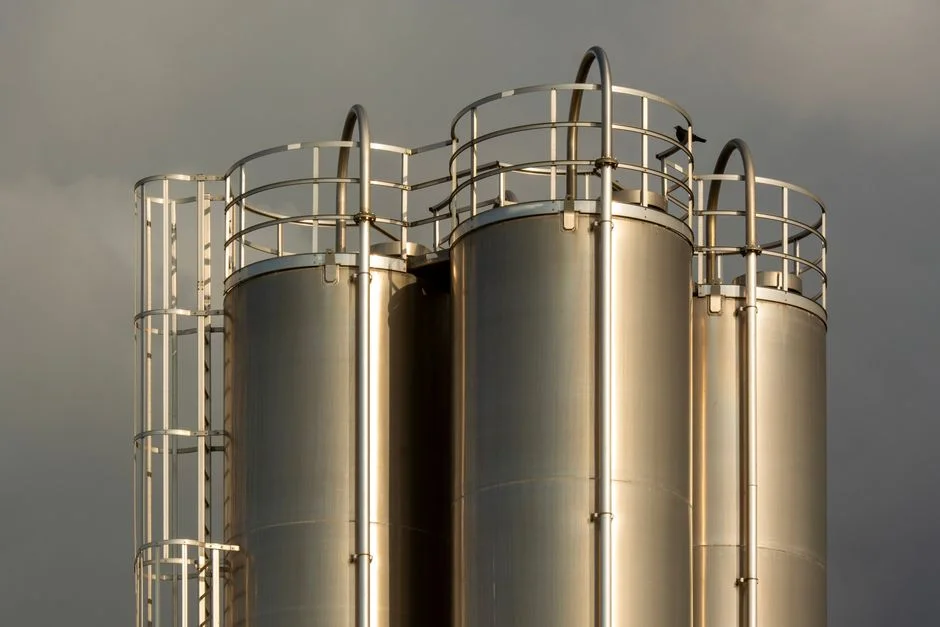
The decision most engineers face in a real project is DAF or lamella, and the right answer is set by stream character, not by preference. A DAF system covers 4–300 m³/h across 13 standard models, operates at 5–25 m/h hydraulic loading, and achieves 90–98% TSS removal with 85–95% oil/grease removal — the right pick for oil-coated and colloidal particles. A lamella clarifier operates at 20–40 m/h surface loading in roughly one-third the footprint of a conventional clarifier, has lower chemical consumption, and handles heavy metal-hydroxide flocs very well. It does not remove free oil or colloidal fines as effectively as DAF.
Use the heuristic: DAF when the stream carries oil, grease, or fine colloidal metals at <200 m³/h; lamella when the stream is primarily a metal-hydroxide sludge at >100 m³/h or where footprint is constrained. For Phillipsburg-scale plants — typically under 200 m³/h with mixed AMD and process water — a packaged DAF skid is usually the lowest-risk first install; lamella wins on sludge dryness and footprint at higher flow. For a deeper side-by-side at adjacent sites, see the York DAF vs clarifier guide and the Fort Worth fabricated metals DAF vs clarifier guide.
| Parameter | DAF System | Lamella Clarifier |
|---|---|---|
| Hydraulic loading | 5–25 m/h | 20–40 m/h |
| TSS removal | 90–98% | 80–90% |
| Oil/grease removal | 85–95% | Limited |
| Footprint | Larger; needs floc tank + float cell | ~1/3 of conventional clarifier |
| Sludge character | Thinner float; higher water content | Denser sludge blanket; drier cake |
| Flow range | 4–300 m³/h (13 DAF models) | Best >100 m³/h; civil redesign below |
| Best fit | Oil, grease, colloidal fines, <200 m³/h | Metal-hydroxide sludge, >100 m³/h |
Capex vs Penalty: The 2026 Breakeven for Phillipsburg Plants
The penalty exposure should be in the capex calculus. Civil penalties run up to $25,000/day per violation under CWA §309, plus SNURs and permit revocation. A single Zn monthly-average excursion from 0.4 mg/L to 0.6 mg/L on a 100 m³/h discharge can trigger six-figure annual penalty exposure plus the cost of a corrective-action order. The capex delta to oversize the clarifier, add sulfide polishing, or install multimedia filtration typically runs 15–25% of the train cost — orders of magnitude below the penalty tail.
Design margin of 20–30% below the current local limit also absorbs the next LCRR/PFAS/BAT tightening cycle without a retrofit. For a parallel sector blueprint, see the Velma pretreatment compliance guide. The cheapest compliance move on the page is to design tighter than today's number.
Frequently Asked Questions
Does a Phillipsburg mining or metals plant need an NPDES permit or a pretreatment permit to discharge to the sewer?
The sewer path is governed by CWA §307(b) and 40 CFR Part 403, with categorical standards in 40 CFR Part 437 (Ore Mining and Dressing) and 40 CFR Part 433 (Metal Finishing). Most plants carry both an NJPDES permit (for stormwater outfalls) and a local pretreatment authorization (for the sewer path) because they have separate discharge points.
What zinc limit should a Phillipsburg plant design against in 2026?
Local sewer-use ordinances typically set zinc at 0.3–1.0 mg/L monthly average versus the 40 CFR Part 437 categorical floor of 1.0 mg/L daily max / 0.5 mg/L monthly average. Design 20–30% below the local number to absorb the next LCRR or BAT tightening cycle.
When is sulfide precipitation worth the 2–4× reagent cost premium?
Sulfide precipitation (NaHS, FeS) achieves residual metals of 0.01–0.05 mg/L versus 0.5–2.0 mg/L for hydroxide, which matters when the local limit is below 0.3 mg/L for zinc or copper. The system requires sealed reactors with H₂S scrubbing; for most mining flows, hydroxide precipitation with sulfide polishing on a slipstream is the cost-effective compromise.
What flow range does a standard DAF system cover for a Phillipsburg-scale plant?
Standard DAF units cover 4–300 m³/h across the typical product range (13 models), with hydraulic loading of 5–25 m/h. Below 10 m³/h, packaged skid systems are common; above 100 m³/h, multiple DAF trains in parallel or a lamella clarifier typically becomes more economical.
What is the most undersized piece of equipment in a 2026 mining pretreatment train?
The equalization basin. A 4-hour basin passes every surge from shift change or dump-leach straight into the clarifier; an 8–24-hour basin is the cheapest insurance on the spec and the single most expensive civil retrofit if undersized at start-up.