Which Federal Rules Apply to a Mining or Metals Plant Discharging to a Bland-Area Sewer
A facility discharging to a US sewer is not governed by an NPDES permit — it is governed by the Clean Water Act §307(b) pretreatment program at 40 CFR Part 403, which delegates enforcement to the local POTW through its sewer-use ordinance. Mining and metals operations near Bland typically qualify as Categorical Industrial Users under 40 CFR Part 437 (Ore Mining and Dressing) or 40 CFR Part 433 (Metal Finishing), and that classification — not the existence of an NPDES permit — defines the numerical limits the plant must hit before its effluent reaches the municipal manhole.
The first move is to categorize the operation. A site that mills ore (extraction, crushing, grinding, flotation, leaching) lives under Part 437, typically carrying NAICS 2122. A site that runs plating, pickling, or anodizing lines lives under Part 433, typically carrying NAICS 331 or 332. Many Bland-area operations carry both classifications because the same site mills ore and runs a finishing line, and that dual status means the plant must meet whichever categorical standard is tighter for every shared parameter — not the looser one. The Part 437 numbers a typical mine-mill is sized against are zinc 1.0 mg/L daily max / 0.5 mg/L monthly average, with copper, lead, and TSS set by subpart (per EPA 40 CFR 437.40–437.47). The Part 433 numbers that bind a site with finishing lines are copper 3.38 mg/L daily max / 2.07 mg/L monthly average, and total chromium 2.77 mg/L daily max / 1.71 mg/L monthly average (per 40 CFR 433.15).
Small-town POTWs at the Bland scale typically adopt local limits tighter than the federal categorical — often 0.3–1.0 mg/L monthly average for zinc and 0.3–0.5 mg/L monthly average for copper — because the limits are written to protect the receiving biological process, the digester, the sludge, and the collection-system workers, not to match receiving-stream assimilation. The enforcement teeth are real: civil penalties up to $25,000/day per violation under CWA §309, plus SNURs and permit revocation. For the parallel sector blueprint, see the Benton pulp & paper pretreatment compliance guide.
The 2024–2026 Regulatory Trends Tightening Local Limits Right Now
The number a plant commits to in 2026 will be lower than the number it committed to in 2023, and the spec must carry headroom for that trajectory. Three EPA actions in the last 24 months are the specific drivers.
First, the Lead and Copper Rule Revisions (LCRR) are pushing lead action levels toward 10 µg/L and forcing POTWs to re-derive local lead and copper limits downward (per EPA 2024). For a Bland-area plant, that means the local lead cap on the sewer-use ordinance is likely to drop below the Part 437 categorical before the next permit renewal. Second, EPA's 2024 Multi-Sector General Permit, finalized 2024-09, added PFAS monitoring — PFOS, PFOA, PFHxS, PFNA — for the metal mining and metal-finishing sectors. Control authorities are adopting the same analytical suite for sewer discharges, and the practical effect is that PFAS will appear on the local IU monitoring parameter list within two permit cycles. Third, the 2025 ore-mining BAT revisions (2025-03) tightened the cost-benefit envelope on total recoverable metals, which signals that the next round of categorical adjustments will move the federal floor down, not up.
The practical spec implication is straightforward: design the train to deliver a number 20–30% below the current local limit so a one-cycle tightening of the ordinance does not push the plant into non-compliance on the day the new permit arrives. Pretreatment limits tighten in steps; the equipment footprint is the part you cannot change cheaply after start-up.
Pollutant Profile That Drives the 2026 Train Near Bland
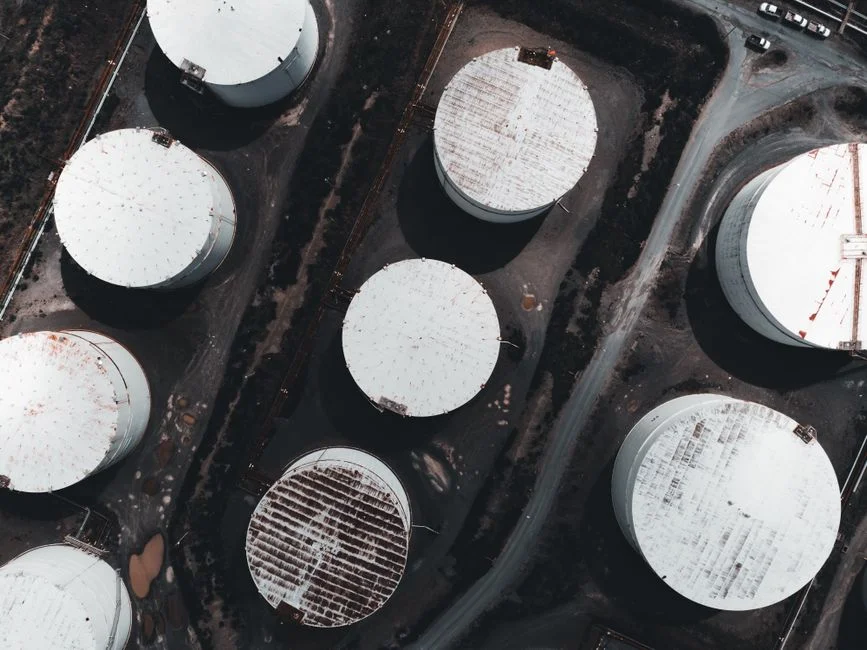
Raw acid mine drainage and spent process solutions at a typical Bland-area operation arrive at the treatment train at pH 2–4 with TSS in the hundreds to several thousand mg/L (per Fluence 2024-11). The dissolved-metal fraction carries the four parameters that drive precipitation stage design: lead, copper, zinc, and cadmium, with nickel and arsenic as secondary targets at most sites. Leach-pad runoff and brine streams add elevated sulfate and TDS — the parameters that drive any reuse or RO decision downstream of the discharge-permitted baseline.
Process-specific spikes complicate the design. Heap-leach operations periodically discharge ammonia, gold circuits carry cyanide and chloramines, and residual flotation reagents (xanthates, dithiophosphates) can pass through a clarifier and poison a downstream biological stage if one is later added. These spikes are why the equalization basin is the single highest-ROI compliance move at the head of the train — it damps the batch events that would otherwise push every downstream stage outside its design window.
Stage-by-Stage Numeric Design Targets for 2026 Compliance
The table below pairs the binding regulatory number with the stage-outlet target and the equipment that hits it. Every number is the design value a vendor should be asked to guarantee, not the worst-case operating point.
| Stage | Equipment | Design Outlet Target | Binding Limit Reference |
|---|---|---|---|
| 1. Equalization | Basin sized 8–24 h of ADF | Flow variation ≤2:1; pH swing ≤1.5 units | 40 CFR Part 403 general; local SUO |
| 2. pH correction | Two-stage reactor, lime or NaOH on PLC-controlled chemical dosing skid | pH 6.5–9.0 instantaneous; ±0.2 band | Local SUO pH range |
| 3. Precipitation | Hydroxide (pH 9–11) + sulfide polish (pH 7–8) for residual <0.1 mg/L | Cu, Pb, Zn, Cd <0.5 mg/L each; <0.05 mg/L after sulfide polish | 40 CFR 437.40–437.47; 40 CFR 433.15 |
| 4. Clarification | Dissolved Air Flotation (DAF) system at 5–25 m/h or lamella clarifier at 20–40 m/h | TSS <30 mg/L; oil/grease <15 mg/L | 40 CFR Part 437 TSS subpart cap; local SUO |
| 5. Multimedia polishing | Multimedia filter, anthracite/sand/garnet at 1–2 m/h | TSS <10 mg/L; safety net for clarifier upsets | Local SUO TSS cap (often 30 mg/L) |
| 6. Disinfection (if required) | ClO₂ at 1–5 mg/L, or UV | Residual per local SUO; no regulated THMs | Local SUO pathogen/bacterial cap |
| 7. Sludge dewatering | Plate and frame filter press | 25–35% dry solids, stackable cake | RCRA subtitle-D landfill; smelter recovery |
Three operating points from the table deserve emphasis. First, the equalization basin is the most undersized and most expensive-to-retrofit piece of equipment in most 2026 trains — a 4-hour basin will pass every surge from shift change or dump-leach straight into the clarifier, and a properly sized 8–24-hour basin is the cheapest insurance on the spec. Second, pH control is the difference between meeting and missing a 0.3 mg/L zinc monthly average; each 1 pH unit away from the metals optimum can cut removal by an order of magnitude. Third, properly controlled precipitation in operating mining/metals installations routinely achieves 85–95% total metals removal (per Fluence 2024-11) — but jar-test every site, do not trust vendor curves, because competing chelants (EDTA, citric acid, ammonia) bind metals and defeat hydroxide precipitation.
DAF vs Lamella: Which Clarifier Fits a Bland-Scale Mining Stream
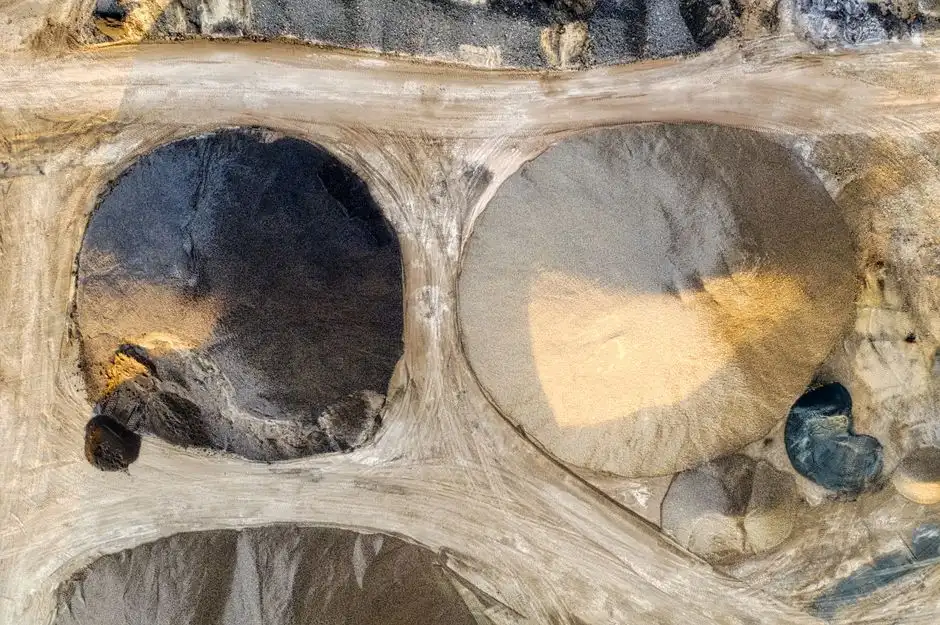
The decision most engineers face in a real project is DAF or lamella, and the right answer is set by the stream character, not by preference. The comparison below is the heuristic to use in a vendor meeting.
| Parameter | DAF | Lamella Clarifier |
|---|---|---|
| Hydraulic / surface loading | 5–25 m/h | 20–40 m/h |
| TSS removal | 90–98% | 80–95% |
| Oil/grease removal | 85–95% | Limited; not the design strength |
| Footprint | Larger; needs floc tank + float cell | ~1/3 of conventional clarifier |
| Sludge density | Thinner float; higher water content | Denser sludge blanket; drier cake downstream |
| Flow range (Bland scale) | 4–300 m³/h across 13 standard DAF models | Best >100 m³/h; civil redesign often needed below that |
| Best fit | Oil, grease, colloidal fines, flow <200 m³/h | Metal-hydroxide sludge, flow >100 m³/h, footprint-constrained site |
Use the heuristic: DAF when the stream carries oil, grease, or fine colloidal metals; lamella when the stream is primarily a metal-hydroxide sludge at high flow and footprint is constrained. For Bland-scale flows — typically under 200 m³/h with mixed AMD and process water — a Dissolved Air Flotation (DAF) system packaged skid is usually the lowest-risk first install; lamella wins on footprint at higher flow or where sludge dryness is the OPEX driver. For a deeper side-by-side, see the DAF machine engineering and selection guide.
Sizing and OPEX Calls That Decide the 2026 Spec
Three numbers decide whether a 2026 spec holds up. First, design for the peak 2-hour flow with 20–30% turndown capacity — undersizing the equalization basin is the most common 2026 retrofit cost, and it cannot be fixed without civil work. Second, chemical OPEX is dominated by pH-adjustment reagent: lime is cheaper per ton but generates 3–5× more sludge, so high-TDS mining streams often justify the higher per-ton cost of NaOH. A PLC-controlled chemical dosing skid that holds pH inside a ±0.2 band is the difference between meeting and missing a 0.3 mg/L zinc monthly average. Third, sludge handling is a real OPEX line, not a footnote — a plate and frame filter press turning hazardous sludge to 25–35% dry solids is the standard downstream of any precipitation stage and turns a hauling-volume problem into a stackable-cake disposal problem.
The penalty exposure should be in the capex calculus: civil penalties up to $25,000/day per violation under CWA §309, plus SNURs and permit revocation, make a 20–30% design margin on the local limit the cheapest insurance on the page. For a parallel sector cost reference, see the DAF system engineering and cost guide.
Frequently Asked Questions
Does a mining or metals plant near Bland need an NPDES permit if it discharges to a sewer?
No, the sewer path is governed by the Clean Water Act §307(b) pretreatment program at 40 CFR Part 403, with categorical standards in 40 CFR Part 437 (Ore Mining and Dressing) and 40 CFR Part 433 (Metal Finishing) where applicable. Most plants carry both authorizations because they have separate stormwater outfalls to surface water, which is the NPDES path. For a packaged skid sized to the pretreatment path, see the Dissolved Air Flotation (DAF) system.
What local sewer limits should a Bland-area plant plan around in 2026?
Local sewer-use ordinances in 2026 typically set zinc at 0.3–1.0 mg/L monthly average and copper at 0.3–0.5 mg/L monthly average, which is tighter than the 40 CFR Part 437 categorical standard of 1.0 mg/L daily max / 0.5 mg/L monthly average. Always confirm against the specific POTW ordinance before sizing equipment, because the local number is the binding one.
When is sulfide precipitation worth the higher reagent cost over hydroxide?
Sulfide precipitation (NaHS, FeS) achieves residual metals of 0.01–0.05 mg/L versus 0.5–2.0 mg/L for hydroxide, which matters when the local limit is below 0.3 mg/L for zinc or copper. Reagent cost runs 2–4× higher and the system requires sealed reactors with H₂S scrubbing; for most mining flows, hydroxide precipitation with sulfide polishing on a slipstream is the cost-effective compromise. Sludge from either path is dewatered with a plate and frame filter press to 25–35% dry solids before disposal.
What flow range does a standard DAF system cover for a Bland-scale operation?
Standard DAF units cover 4–300 m³/h across the typical product range, with hydraulic loading of 5–25 m/h. Below 10 m³/h, packaged skid systems are common; above 100 m³/h, multiple DAF trains in parallel or a lamella clarifier typically becomes more economical.