What is confirmed—and what still needs verification
No supplied source verifies a Heineken acquisition of an Arizona plant, so the applicable wastewater requirements cannot be assigned from the buyer’s identity alone. They depend on each stream’s discharge route, permit conditions, treatment assets, sludge obligations and proposed post-closing operation. For an Arizona brewery, the buyer should investigate ADEQ direct-discharge permits, sewer pretreatment requirements, groundwater controls, on-site-system transfer duties and any reuse approval. HEINEKEN reports that 97% of its wastewater volume was treated before discharge at the end of 2020, but that company-level result does not establish compliance at an unidentified Arizona site.
The confirmed Heineken information comes from Water Action Hub’s project account, which says brewery processes generate wastewater containing organic materials and cleaning agents. That profile makes influent characterization essential: a permit, nominal treatment capacity or buyer reputation cannot replace site-specific data on flow and pollutant loading.
Water Action Hub also reports that 97% of HEINEKEN’s wastewater volume was treated before discharge at the end of 2020, unchanged from 2019. It says 10 sites had no wastewater treatment plant and represented 2.5% of beverage production. These are company-level figures reported by Water Action Hub, not evidence that the unidentified Arizona plant has treatment, lacks treatment or complies with any Arizona requirement.
The diligence implication is straightforward. Review the plant’s actual treatment arrangement rather than infer it from HEINEKEN’s reported performance. The same site-specific approach used for a brewery plant acquisition wastewater guide can be adapted here, while international brewery acquisition requirements reinforce the need to separate verified buyer practices from site-specific legal obligations.
Map every wastewater route before assigning compliance duties
A wastewater obligation follows the route of each stream, not the identity of the purchaser. The buyer should classify every discharge before assigning an authority or drafting a closing condition.
| Wastewater route | Primary diligence question | Evidence to obtain |
|---|---|---|
| Direct discharge | Does the current ADEQ permit cover the activity, owner and post-closing operation? | Permit, limits, monitoring records, discharge monitoring reports and ADEQ’s filing determination |
| Municipal or industrial sewer | Do the existing pretreatment authorization and sewer capacity cover the plant? | Industrial pretreatment permit, local limits, prohibited discharges, surcharge calculation and sewer authority’s written position |
| On-site treatment | Which county transfer inspection and notice requirements apply? | System plans, inspection report, ownership-transfer filing and residual-management records |
| Groundwater or land disposal | Are containment, monitoring and closure duties satisfied? | Authorization, drainage map, groundwater data, liner or containment evidence and corrective-action records |
| Reuse | Is the proposed reuse conventional, non-potable or within the direct-potable-reuse pathway? | Water balance, intended use, ADEQ classification and any reuse approval |
| No ongoing discharge | Did the transaction change process use, treatment obligations or residual exposure? | Closing-date process description, treatment agreement and authority confirmation |
ADEQ, the sewer authority, county rules and reuse authorization can all apply to one property. Approval by one authority does not establish compliance with another. ADEQ may govern a permitted discharge or groundwater activity, while a sewer authority may impose pretreatment conditions; the county may separately regulate an on-site system.
Separate legal ownership from operating responsibility. An asset or stock transfer may require an amendment, transfer, notice or responsible-party update even if the process, flow and discharge point do not change. Conversely, changed chemistry, increased flow or a new treatment train can require substantive review even when ownership does not change.
Confirm with ADEQ and the relevant sewer authority whether the filing is an amendment, transfer, notice or new authorization. Where an approval can be cured before operations begin, make it a closing condition. Keep on-site-system transfer duties on a separate checklist because they are not replaced by ADEQ or sewer approval. Useful request structures are available in the analysis of fabricated-metals sewer limits and chemical-plant pretreatment limits.
Build a brewery-specific wastewater mass balance
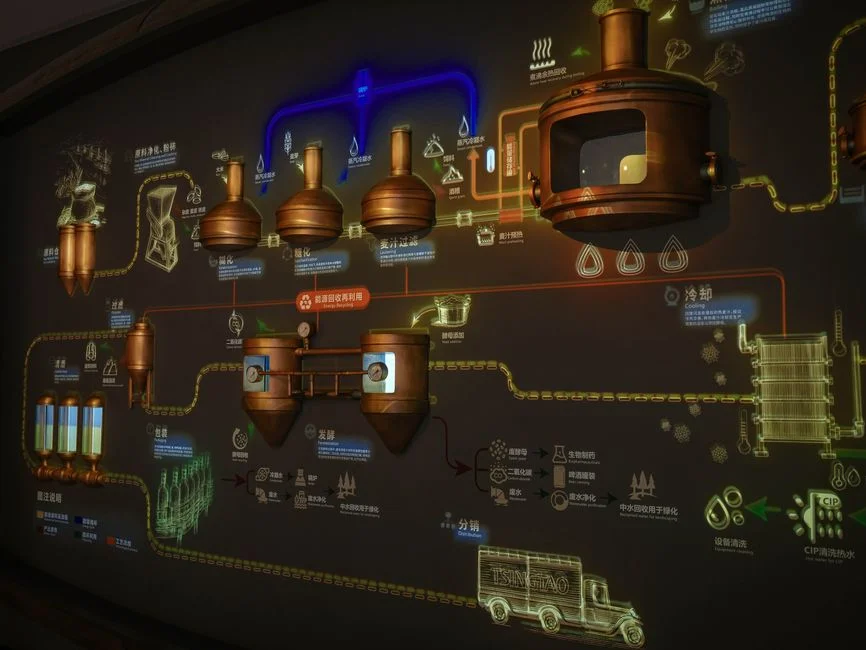
A brewery wastewater mass balance must connect source operations to final disposal before treatment is selected. Nominal plant capacity does not establish either hydraulic loading or contaminant loading.
| Diligence input | Required information | Decision supported |
|---|---|---|
| Process and source equipment | Unit operations, source equipment, chemicals, operating flow, sampling points and proposed post-acquisition changes | Defines what enters each stream and whether an existing permit remains adequate |
| Water balance | Freshwater make-up, process use, wastewater generation, cleaning chemicals, reuse, final discharge and separate cooling or blowdown streams | Establishes flow and pollutant mass loading |
| Representative analysis | Flow, pH, temperature, BOD, TSS, TDS, conductivity, oil and grease, metals, ammonia and process-specific constituents | Supports treatment selection and acceptance criteria |
| Data quality | Sampling locations, analytical methods, chain of custody and operating-representative conditions | Shows whether results can support design and treatment performance testing |
| Operational reliability | Utility consumption, automation architecture, alarms, operator workload and outage history | Tests whether the installed treatment system can reliably meet its duty |
Start with the process description, source equipment, chemical inventory, operating flow, known pollutants, sampling points, discharge route and intended operational changes. Then reconcile those inputs against the wastewater mass balance. Cleaning chemicals require particular attention because their type and dosage can change pH, toxicity, residual solids and biological compatibility.
Request representative influent and effluent data for flow, pH, temperature, BOD, TSS, TDS, conductivity, oil and grease, metals, ammonia and process-specific regulated constituents. Require the sampling location, analytical method, chain of custody and operating conditions represented. A laboratory report without those controls is not enough to size or accept treatment.
Keep legacy brewery streams separate from any proposed cooling or process stream until representative sampling and compatibility testing establish that they can be combined. This separation matters because a change in water chemistry can inhibit biological treatment, damage equipment or create a discharge exceedance. The request structure is consistent with food and beverage wastewater pretreatment limits.
Do not treat treatment capacity as proof of operational reliability. Review utility consumption, automation architecture, alarm history, operator workload and outage records. The COD and BOD removal engineering guide provides a useful technical reference for understanding why pollutant loading and biological treatment performance must be evaluated together.
Review permits, compliance history and residual liabilities
A permit’s existence does not prove compliance, ownership transfer or fitness for post-closing operation. The buyer needs both the authorization and its compliance record.
| Review area | Documents or questions | Required outcome |
|---|---|---|
| Direct discharge | Effluent limits, averaging periods, monitoring points, sampling frequency, analytical methods, reporting deadlines, discharge monitoring reports, whole effluent toxicity requirements where applicable, and thermal or chemical constraints | ADEQ confirms the required amendment, transfer, notice or new authorization |
| Sewer discharge | Current pretreatment permit, local limits, prohibited discharges, monitoring, surcharge calculation, sampling authority, enforcement history and written sewer capacity position | Sewer authority confirms transfer requirements, capacity and continuing authorization |
| On-site treatment | Qualified inspection within six months before transfer, Notice of Transfer within 15 calendar days after closing, and the $60 per-parcel fee | Maricopa County requirements are completed where applicable |
| Sludge and residuals | Characterization, storage, manifests, disposal history, closure financial assurance and groundwater or land-disposal obligations | Legacy and post-closing residual liabilities are allocated |
| Missing records | Any permit, report, notice, correspondence or monitoring record not located | Item is treated as unresolved rather than presumed unnecessary |
For a direct discharger, reconcile laboratory results with discharge monitoring reports. Identify missed samples, late reports, exceedances, corrective actions and outstanding capital work, then test the current permit against the intended post-closing process. The supplied Arizona acquisition analysis states that the applicable permit defines the operating envelope and that ownership filings should be confirmed with ADEQ.
For sewer discharge, the current pretreatment permit, local limits, monitoring duties, surcharges, enforcement history and sewer capacity position are separate acquisition questions. Do not assume that a sewer connection remains adequate because the plant’s production is unchanged; a changed chemical stream or expanded flow can alter the burden placed on the treatment system.
For an on-site system in Maricopa County, the supplied 2026-accessed research identifies three transaction requirements: a qualified inspection within six months before transfer, a Notice of Transfer within 15 calendar days after closing and a $60 fee per parcel. These are county requirements, not statewide fees or ADEQ permit-transfer substitutes.
Review sludge and treatment residuals separately from the liquid discharge. Obtain characterization, storage records, manifests, disposal history and closure financial assurance. Missing permit documents are unresolved liabilities—not evidence that no authorization exists. The document-request logic follows the brewery plant acquisition wastewater guide and international acquisition requirements analysis.
Determine whether reuse rules apply to the acquisition
Arizona’s advanced water purification rules do not apply automatically to every brewery reuse project. The supplied 2025 research identifies Arizona’s advanced water purification pathway as applying to qualifying drinking-water augmentation and other approved direct potable reuse applications, rather than to conventional industrial wastewater treatment.
The US EPA’s October 2025 REUSExplorer summary identifies advance permitting, source-water characterization, continuous treatment, monitoring and validated pathogen barriers for the applicable pathway. It also identifies application materials and pilot requirements under Arizona’s cited rules.
That summary is informational, not a substitute for governing law or ADEQ approval. The buyer should ask ADEQ to classify the proposed reuse directly. If the project involves drinking-water augmentation or another approved direct potable reuse application, obtain the required application, source-water characterization, pilot work, monitoring program and reporting obligations before relying on the pathway.
Do not apply drinking-water criteria to an ordinary brewery discharge or non-potable reuse without that determination. The correct benchmark remains the actual permit, sewer requirement or approved reuse condition. Background on reuse classification and approval status is covered in reclaimed-water capacity and reuse guidance.
Select treatment only after the compliance path is defined
Treatment selection follows a fixed sequence: establish the discharge route, complete the wastewater mass balance, define required effluent quality, and then select the treatment train. Starting with a product before those steps creates equipment that may satisfy a catalog benchmark but fail the site’s permit or sewer conditions.
| Screening option | Catalog-stated benchmark | Required site check |
|---|---|---|
| DAF pretreatment for brewery wastewater | 4–300 m³/h across 13 models | Oil, grease, solids and colloid removal; chemical use; recovered-sludge volume; flow and loading peaks |
| Integrated MBR wastewater treatment | 10–2,000 m³/day and near-reuse-quality effluent below 1 μm filtration | Organic and solids removal, membrane condition, cleaning demand, downtime, effluent stability and reuse compatibility |
| Ultrafiltration | 2,000–40,000 L/h, 0.03 μm PVDF membranes, automatic backwash and air scour | Fine solids, colloids and bacteria; membrane integrity, recovery, backwash frequency and pretreatment |
Those figures come from the HydropureWater catalog and are screening benchmarks, not quotations or proof of suitability for the unidentified Arizona plant. Evaluate DAF where oil, grease, suspended solids or colloids interfere with downstream treatment. Evaluate integrated MBR where biological treatment and solids separation are required and reuse potential must be assessed. Evaluate ultrafiltration where fine solids, colloids, bacteria or membrane pretreatment are relevant.
Require supplier performance testing with acquired-site wastewater against the actual permit or sewer conditions. The test should define effluent acceptance criteria and measure chemical consumption, sludge generation, staffing, utilities, redundancy and residual disposal. Also examine upset conditions, future operating changes and treatment compatibility with cleaning agents.
Size for flow and pollutant peaks, not nominal throughput alone. The treatment comparison should also address integration with existing tanks, pumps, controls and utilities. Related screening discussions include DAF versus clarifier selection and integrated treatment approaches.
Convert unresolved findings into transaction protections
Wastewater findings should become enforceable transaction terms, not disappear into a general representation that the plant is compliant.
Expressly allocate responsibility for pre-closing violations, legacy sludge, unpermitted discharges, outstanding monitoring and capital remediation. State who owns each historical obligation, who must perform remediation and how long that responsibility survives closing. A permit transfer does not extinguish liability for conduct that occurred before the transfer.
Make unresolved permit transfers, pretreatment approvals and other required agency approvals closing conditions when they can be cured before operations begin. The closing condition should identify the approving authority, required evidence and responsible party. If the buyer must operate before approval, the agreement should address interim treatment, disposal and noncompliance exposure rather than assume temporary operation is lawful.
Rate findings red, amber or green by permit validity, contamination history, sewer capacity, reuse classification, treatment performance, sludge liabilities and monitoring gaps. Red items require resolution or explicit contractual treatment before closing. Amber items need a funded plan, named owner and decision date. Green items remain subject to ordinary post-closing compliance.
Price or reserve for identified remediation, capital work and permit conditions. Permit transfer is not the end of acquisition environmental due diligence. Secure regulator and sewer-authority confirmation that responsibility has transferred, and document every notice or amendment. The allocation approach described in the international brewery acquisition requirements provides a useful transaction framework, but Arizona counsel must tailor enforceability and security to the identified liabilities.
Move from closing to compliant commissioning
Restart should follow a documented close-to-commissioning sequence, not begin when ownership changes. Every wastewater requirement needs an authority, owner, evidence requirement, deadline and residual-risk disposition.
| Sequence | Action | Release evidence |
|---|---|---|
| Deliver the compliance file | Permit copies, monitoring data, chemical inventories, waste manifests, sludge records, as-built drawings, equipment-condition reports, training records and emergency-response procedures | Document register marked complete or assigned an exception |
| Verify the treatment train | Commission equipment, validate final effluent and test representative acquired-site wastewater | Accepted test report, calibrated instruments and exception list |
| Prepare operators and reporting | Rehearse sampling, chain of custody, monitoring, reporting and alarm response | Training records and completed reporting rehearsal |
| Authorize restart or expansion | Release only after required approvals, performance and compliance controls are verified | Written authorization against the responsibility register |
| Control ongoing compliance | Track each requirement, authority, evidence, deadline, capital cost and residual risk | Monthly management review and escalation log |
Before closing, test the acquired system against the actual permit or sewer conditions. Calibrate online monitoring, rehearse sampling and reporting, and verify chemical storage, containment, automatic dosing and operator response. For solids dewatering, verify performance with the acquired sludge’s characteristics and confirm cake handling and disposal.
Escalate overdue approvals, failed performance tests and unresolved liabilities before production resumes. The treatment control-system buyer guide provides relevant context for reviewing alarms, automatic controls and operator response.
The final sign-off should answer three questions for each discharge route: Is the activity legally authorized? Has the acquired treatment system demonstrated compliance under applicable conditions? Is every outstanding liability assigned? If any answer remains unresolved, retain it as an explicit transaction risk and do not treat permit transfer as the end of due diligence.
Frequently Asked Questions
Does HEINEKEN’s reported 97% treatment rate automatically apply to a plant acquired in Arizona?
No. Water Action Hub reports that 97% of HEINEKEN’s wastewater volume was treated before discharge at the end of 2020 and in 2019, but this is a company-level result. Site-specific authorization, treatment performance and compliance require the Arizona plant’s permit, monitoring records and mass balance.
Can the buyer size treatment from the previous plant’s nominal capacity?
No. Size the train using acquired-site flow, pollutant mass balance, permit or sewer limits, cleaning-chemical inputs, future operating changes and representative performance-test results. Nominal capacity does not establish hydraulic loading, contaminant removal or operational reliability.
What should the buyer request from an equipment supplier?
Request a written, site-specific scope covering the treatment train, controls, installation, utilities, chemical use, residual handling, commissioning and exclusions. Require the performance-test protocol, acceptance criteria tied to the actual permit or sewer conditions, and information needed to price the supplied equipment rather than a catalog comparison alone.
Should permit transfer or pretreatment approval be a closing condition?
Yes, when the approval can be cured before operations begin. Confirm the filing and approval path directly with ADEQ or the relevant sewer authority, specify the evidence required in the purchase agreement, and price or reserve for any capital work needed to obtain or maintain compliance.