Which Treatment Principle Fits the Wastewater?
Dissolved air flotation (DAF) is the initial screening choice when the target load is oil, FOG, colloidal material, flocculable particles, or other material that can be floated after conditioning. Conventional or lamella clarification is the initial choice when dense mineral solids settle readily under gravity. DAF separates particles by flotation, while a clarifier separates them by sedimentation; chemical conditioning changes what each mechanism can capture. Calling a DAF a “flotation clarifier” does not make it technically equivalent to a gravity-settling clarifier.
That distinction matters because a Henderson mining wastewater treatment decision should begin with the physical composition of each source stream, not with a preference for a particular vessel. Equipment suppliers describe an industrial DAF system for Henderson mining wastewater and a lamella clarifier for readily settleable mining solids, but those mechanisms address different fractions.
The Henderson design basis must characterize TSS, particle size, pH, metals, oils, peak and batch flows, and sludge behavior. The supplied research establishes a screening rule, not a Henderson-specific winner. Confirm that rule against representative source wastewater before sizing equipment or writing performance guarantees into an RFQ.
Characterize the Henderson Wastewater Before Comparing Equipment
A valid equipment comparison requires source-specific samples and a confirmed regulatory route; generic mining wastewater assumptions are not an adequate design basis. The supplied research identifies mining and metals discharges as mixtures that may include dense mineral fines, colloidal clay, equipment oils, residual flotation reagents, and metal-bearing precipitates. Each fraction can respond differently to flotation, settling, and chemical conditioning.
Build the sampling plan around operating variability. Characterize representative samples for TSS, particle size, pH, metals, oils, peak flow, batch flow, and sludge behavior. Batch peaks and chemistry changes must be reflected in both the hydraulic and solids-loading basis; otherwise, neither bid can be checked against the same real duty.
| Required input | Why it affects selection | Evidence needed before RFQ |
|---|---|---|
| Wastewater sources and flow profile | Determines which fractions are co-treated and whether batch storage or equalization is required. | Representative source samples, peak flow, batch flow, and operating sequence. |
| TSS and particle-size distribution | Separates readily settleable solids from fine, buoyant, or colloidal material. | Source-specific analytical results across representative operating conditions. |
| pH, metals, oils, and residual reagents | Defines conditioning needs, possible precipitation reactions, and downstream contamination risks. | Wastewater analysis and identification of process chemicals in use. |
| Sludge behavior | Influences float or underflow capture, thickening, dewatering, and handling cost. | Laboratory or pilot characterization of the collected solids. |
| Discharge route and permit | Defines the applicable receiving authority and acceptance requirements. | Confirmed permit, receiving POTW or other destination, and governing authority. |
Confirm the actual discharge route, permit, and governing authority before assuming that mining rules or metal-finishing rules apply. Guidance on mining and metals pretreatment requirements before sewer discharge illustrates the need to identify the receiving POTW and applicable permit rather than import another jurisdiction’s assumptions.
Do not import the 30 mg/L aluminum sulfate optimum reported by Utah State University in 2011 into a Henderson mining RFQ. That value concerned algae and phosphorus removal from lagoon effluent, not mining wastewater, so it is not a valid design dose for this application.
DAF and Clarifier Performance Under the Same Wastewater
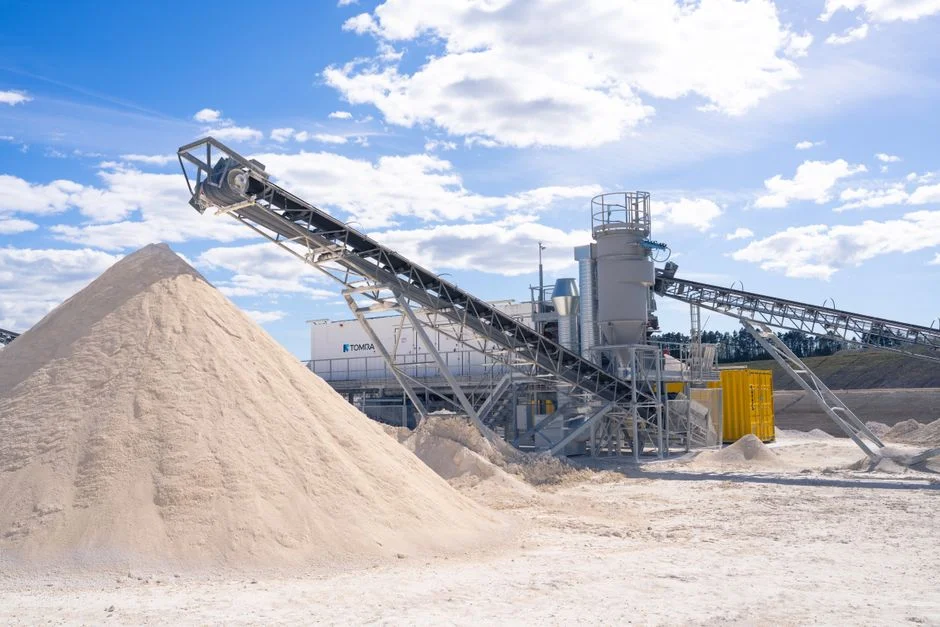
The only defensible performance comparison uses the same Henderson wastewater, chemistry, hydraulic profile, and acceptance criteria; the supplied research contains no Henderson DAF-versus-clarifier pilot comparison on that basis. In a DAF unit, wastewater is chemically conditioned, fine bubbles are released, bubbles attach to flocs or floatable material, the float rises, and a surface mechanism removes it while clarified water is collected. Clearwater’s April 27, 2026 publication describes 30–50 micron microbubbles for this process, but that is a published process description—not a Henderson performance guarantee.
A conventional clarifier uses coagulation and flocculation where applicable, followed by gravity settling and bottom sludge collection. A lamella unit adds inclined-plate separation to increase the effective settling area within the vessel footprint. The buyer must verify whether each proposed mechanism actually captures the dominant Henderson fraction.
| Comparison input | DAF proposal | Clarifier proposal |
|---|---|---|
| Separation mechanism | Fine bubbles attach to conditioned or naturally floatable material, which is collected from the surface. | Settleable solids settle by gravity; a lamella unit uses inclined plates before bottom collection. |
| Published design reference | HydropureWater reports 2–6 gpm/ft² hydraulic loading and a common operating range of 80%–110% of nominal design flow. | HydropureWater’s lamella catalog states 20–40 m/h surface loading. |
| Chemical claim to verify | Conditioning demand must be calculated for Henderson wastewater and tested. | HydropureWater reports chemical-consumption reductions of up to 30%; bidder calculation and wastewater testing are required. |
| Acceptance evidence | Results from the same wastewater and criteria as the clarifier alternative. | Results from the same wastewater and criteria as the DAF alternative. |
HydropureWater’s DAF loading range is a catalog basis, not proof of suitability for Henderson mining wastewater solids loading. Likewise, the lamella surface-loading range and chemical-consumption claim are screening inputs, not acceptance results. For conditioning scope, require the bidder to define the proposed automatic chemical dosing system, including duty, controls, reagent assumptions, and how reagent demand was established.
Compare the Consequences, Not Just the Equipment Price?
A DAF-versus-clarifier award should include the consequences of the recovered solids, not only the vessel price. DAF creates a surface float; a clarifier creates bottom underflow. Both streams require characterization and an approved handling route. Do not treat a thick DAF float as automatically dewaterable without testing, and do not price clarifier underflow as though downstream handling were cost-free.
The residuals also affect operating strategy. DAF requires attention to chemical conditioning, bubble generation, recirculation, float removal, controls, maintenance, and eventual float handling. A clarifier requires attention to distribution, settling performance, sludge collection, conditioning where used, underflow withdrawal, maintenance, and underflow handling. Footprint depends on the selected configuration and site constraints; the supplied research provides no Henderson-specific footprint comparison.
Material selection must follow the wastewater and site conditions. Clearwater’s April 27, 2026 publication states that its standard DAF clarifiers use 304SS, with 316SS, polypropylene, and other materials available by request. That information is a supplier-specific description, not evidence that one material is adequate for every Henderson stream.
Include solids-handling consequences in the commercial comparison before evaluating a plate-and-frame filter press or another dewatering route. The supplied research contains conflicting DAF and clarifier cost ranges without a common dated methodology, so neither generic range is decision-grade. Request site-specific prices using one scope, one wastewater basis, one flow and solids-loading basis, and one acceptance standard.
Use a Same-Basis RFQ and Acceptance Test
A comparable RFQ must require both alternatives to answer the same Henderson design questions; otherwise, differing assumptions will make the bids appear more different than the equipment. The RFQ package should contain the same wastewater characterization, peak and batch flow basis, solids loading, discharge route, permit, and acceptance criteria for each alternative.
Ask bidders to show the DAF design calculations or equivalent industrial clarifier design criteria. This should show how hydraulic loading, distribution, and sludge collection were applied. Request materials of construction, controls, chemical consumption, installed utilities, available footprint, maintenance assumptions, and solids-disposal costs under one defined scope.
| RFQ package element | Required bidder response | Procurement check |
|---|---|---|
| Shared Henderson design basis | One wastewater, flow, loading, discharge, and acceptance basis for both alternatives. | Reject bids that substitute generic wastewater or different peak-flow assumptions. |
| Design calculations | DAF calculations or equivalent clarifier criteria, including distribution and solids collection. | Check that selected operating points are supported by the stated basis. |
| Chemical conditioning | Reagents, estimated demand, application method, controls, and supporting wastewater or pilot evidence. | Do not accept an unsupported dose or percentage saving. |
| Mechanical and operating scope | Materials, utilities, footprint, controls, maintenance assumptions, and available utilities. | Normalize exclusions before comparing prices. |
| Solids consequences | Expected float or underflow characteristics, collection method, handling route, and test basis. | Include handling in lifecycle scope rather than treating it as free. |
| Acceptance test | Identical wastewater, chemistry, hydraulic profile, sampling basis, and acceptance criteria. | Reject results derived from unrelated tests as comparative evidence. |
Require each proposal to state whether DAF and gravity clarification were technically screened under the same wastewater, chemistry, hydraulic profile, and acceptance criteria. Where the choice is close or the stream contains mixed fractions, add comparative testing. A DAF result and a clarifier result from different tests cannot serve as decision-grade evidence.
Finally, request a site-specific budgetary quotation using the same wastewater, flow, solids-loading, and acceptance assumptions for both alternatives. This is the practical use of a same-basis RFQ: it exposes unsupported process claims before commercial evaluation rather than after award.
When a Clarifier Followed by DAF Is Justified
A clarifier–DAF train is justified only when the stream contains distinct, substantial settleable and floatable or colloidal fractions, and comparative testing shows that one unit cannot meet the treatment objective economically. The sequence should not be selected merely because both technologies are available.
In that configuration, the clarifier removes the readily settleable bulk solids first. DAF then polishes residual buoyant, precipitated, or conditioned material. This division of work can reduce the load presented to the flotation step, but the benefit must be demonstrated using the actual Henderson wastewater rather than assumed from process descriptions.
- Test the source streams and identify the dominant settleable, buoyant, colloidal, and precipitable fractions.
- Screen one-unit DAF and one-unit clarification alternatives against the same treatment objective.
- Identify the residual requirement left by the more suitable single process.
- Test the clarifier–DAF train against the same acceptance criteria used for the single-unit alternatives.
- Compare total operating and solids-handling consequences before accepting the added equipment scope.
The downstream review is part of that decision. A surface float and a clarifier underflow are different waste streams, and their behavior must be established before either equipment arrangement is economically accepted. The DAF versus clarifier buyer’s guide for mining and metals wastewater and the regional mining-wastewater DAF and clarifier comparison provide additional process-selection context, but they do not replace Henderson-specific testing.
Frequently Asked Questions
What will a DAF or clarifier cost for Henderson mining wastewater?
The supplied research contains conflicting DAF and clarifier cost ranges and no common dated methodology, so it does not support a defensible price for a Henderson plant. Request a site-specific budgetary quotation for both alternatives using the same wastewater characterization, flow profile, solids loading, discharge route, utilities, controls, and solids-handling scope. Require each bidder to identify exclusions so that a lower equipment price is not merely transferring costs to chemical conditioning, maintenance, or waste disposal.
What information is needed to size DAF or a lamella clarifier?
Require source-specific TSS and particle-size data, pH, metals, oils, representative peak and batch flows, solids loading, sludge behavior, the confirmed discharge route, and the applicable acceptance criteria. The bidder should then show its DAF hydraulic calculations or equivalent industrial clarifier design criteria, including distribution and solids collection. A catalog range can support initial screening, but it cannot establish the selected size without Henderson wastewater data and the confirmed operating basis.
What compliance risk should Henderson buyers address before ordering equipment?
Confirm the receiving authority, permit, actual discharge route, and any applicable local sewer limits before fixing the treatment objective. Do not assume that rules from a mining or metal-finishing jurisdiction in another location apply to a Henderson discharge. If the equipment is intended for industrial wastewater pretreatment, the RFQ should state the confirmed regulatory route and acceptance basis explicitly, with all permit-dependent exclusions and interfaces identified.
How should suppliers be qualified when DAF and clarifier bids are close?
Require evidence generated under the same wastewater, chemistry, hydraulic profile, and acceptance criteria. For a close decision or mixed-fraction wastewater, ask for comparative pilot evidence rather than accepting separate case histories with different inputs. Also require a clear scope for chemical conditioning, controls, materials of construction, utilities, maintenance, and float or underflow handling. A selected process without traceable calculations and site-relevant performance evidence should remain unselected.
Related Equipment
- industrial DAF system for Henderson mining wastewater — specifications, capacity range, and technical data