What determines compliance at the Spring Park sewer connection
Chemical plants near Spring Park meet pretreatment limits by designing treatment around the requirements of the POTW that receives their wastewater and the applicable categorical standard. At the industrial user's sewer connection, the discharge must not cause pass-through or interference with the POTW. EPA identifies local limits as site-specific numeric or narrative requirements, while categorical standards apply by industry. In practice, plants use equalization and pH control, DAF for oil, grease and solids, chemical precipitation with clarification for metals, and biological treatment where required. The final equipment train should be selected only after reviewing the POTW permit, local limits, control mechanism, discharge monitoring and slug-load requirements.
The legal starting point is the point of connection. EPA states that POTWs impose local limits at the end of an industrial user's pipe, where that pipe enters the POTW collection system (EPA, “Pretreatment Standards and Requirements—Local Limits,” current 2026). For procurement purposes, compliance is not established by treating wastewater in isolation; it must be demonstrated at the connection using the monitoring basis stated by the POTW control authority.
An Industrial User is a nondomestic discharger to a POTW. The discharge may be governed by more than one layer:
- General prohibitions: 40 CFR 403.5(a) and (b) prohibit discharges that cause pass-through or interference and address specific prohibited discharges.
- Categorical pretreatment standards: 40 CFR Parts 405–471 impose requirements for particular industrial categories. The engineer must confirm the actual chemical-manufacturing category rather than assume that another chemical facility's standard applies.
- Local limits: These are site-specific numeric or narrative effluent limits, including best management practices, established under 40 CFR 403.5(c). They address the receiving POTW's operational and sludge needs and may control when more restrictive than a categorical limit.
- Control mechanism: The POTW permit or equivalent document operationalizes monitoring, reporting, sampling and discharge conditions.
Pass-through means that a discharge exits the POTW and contributes to a violation of the POTW's NPDES permit. Interference means that a discharge inhibits or disrupts POTW treatment or sludge processes and causes a permit or sludge-use violation. EPA's definitions make clear why a discharge can create a compliance problem even when no single numeric concentration is exceeded (EPA, current 2026).
Before buying equipment, obtain four documents from the receiving POTW: its current pretreatment program, local limits, control mechanism and applicable permit. Confirm which version is effective in 2026, identify any narrative requirements, and ask how the authority expects compliance to be demonstrated at the point of connection.
Build a Spring Park compliance decision sequence
EPA's local-limit methodology provides a defensible sequence: identify pollutants of concern, collect and analyze data, calculate maximum allowable loadings, design and implement local limits, and conduct annual reviews and periodic reevaluations (EPA, “Pretreatment Standards and Requirements—Local Limits,” current 2026). Applying this sequence ensures the plant design aligns with the POTW's regulatory expectations.
- Establish the legal baseline. Request the current local limits and control mechanism. Identify the applicable chemical-manufacturing subpart under 40 CFR Parts 405–471, then list every monitoring, reporting, prohibited-discharge, narrative and BMP condition.
- Determine SIU status. The national framework identifies three triggers: categorical-standard coverage; discharge averaging 25,000 gpd or more of process wastewater; or a process waste stream constituting 5% or more of the POTW's average dry-weather hydraulic or organic capacity (HydropureWater, 2026).
- Find the controlling pollutant. Compare permit conditions with production and batch-release data. Identify the parameter most likely to constrain the discharge and the condition most likely to cause pass-through or interference.
- Develop the treatment train. Match the first stage to the expected risk, then verify that downstream equipment can handle the resulting flow, solids and concentration.
- Size from validated inputs. Obtain worst-case flow, concentration, pH, temperature and constituent data before finalizing specifications. Do not size from an annual average when a batch can create the controlling discharge condition.
| Decision question | Evidence to obtain | Equipment implication |
|---|---|---|
| Which legal requirement controls? | POTW pretreatment program, local limits, control mechanism, applicable permit and categorical subpart | Translate each applicable condition into a measurable acceptance criterion |
| Is the plant an SIU? | Categorical coverage, process-wastewater flow and contribution to POTW capacity | Apply the applicable monitoring, reporting and slug-control obligations |
| Which discharge condition is worst case? | Production schedule, batch-release records, constituent analyses and flow history | Size equalization and treatment around the validated peak and composition |
| Which unit operation addresses the controlling pollutant? | pH, flow, oil and grease, suspended solids, dissolved metals and biodegradability data | Define the treatment sequence before requesting vendor proposals |
| How will performance be demonstrated? | POTW monitoring requirements and accepted sampling or validation methods | Specify alarms, diversion or hold capability at the connection |
Equipment selection should follow from those decisions. Review DAF versus clarifier selection for chemical wastewater when deciding which solids-removal mechanism fits the validated waste stream.
Match each compliance risk to a treatment step
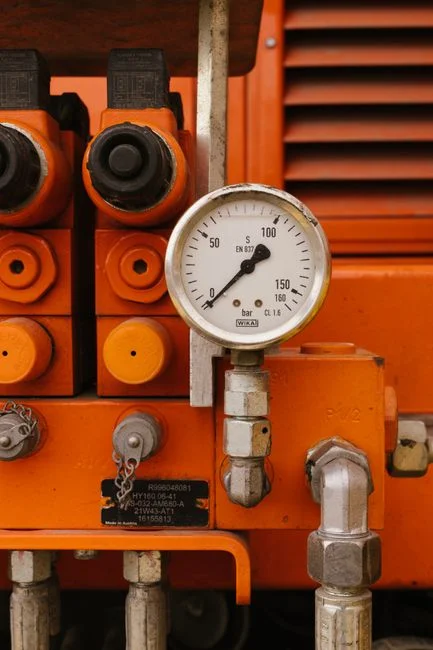
Equalization and controlled pH adjustment address batch variability, but they do not replace treatment for the pollutants that determine the applicable limit. EPA's local-limit framework is performance-based: the treatment train must meet the approved local limits while preventing pass-through and interference (EPA, current 2026). The following table outlines how to map specific risks to technical solutions.
| Compliance risk | Treatment response to evaluate | Verification required |
|---|---|---|
| Batch swings in pH, flow, temperature or concentration | Equalization with PLC-controlled pH adjustment | Flow-paced dosing, alarm response and off-specification diversion or hold |
| Oil, grease, suspended solids or colloidal material | DAF | Representative solids and oil removal testing at the connection |
| Dissolved metals | Chemical precipitation followed by clarification | Metal-specific residual testing and documented reagent dosing |
| Soluble biodegradable pollution required by controlling standards | Biological treatment | Organics performance under representative loading |
| Batch releases or hydraulic surges | Equalization plus written slug-load control procedures | Release simulation, monitoring review and permit-condition check |
| PFAS-sensitive operations | No generic treatment selection without current requirements | Confirmation of controlling federal, state and POTW obligations in 2026 |
For batch pH, flow, temperature and concentration swings, specify equalization and PLC-controlled pH adjustment. Undersized equalization or dosing is a common root cause of chemical-plant compliance excursions (HydropureWater, 2026). Where metals require precipitation, lamella clarifiers operate at surface loading rates of 20–40 m/h and can reduce chemical consumption by up to 30%; however, these are equipment claims, not proof that a particular plant will meet its POTW limit (HydropureWater, 2026).
For oil, grease, suspended solids and colloidal material, evaluate an industrial DAF system for chemical wastewater. HydropureWater's DAF range is 4–300 m³/h across 13 standard models (HydropureWater, 2026). The purchaser's hydraulic selection must be checked against the plant's measured peak flow and batch-release profile; the published range does not establish treatment performance at the connection.
Where soluble biodegradable pollution must be controlled under the applicable requirements, evaluate biological treatment. HydropureWater's MBR systems cover 10–2,000 m³/day and provide filtration below 1 μm (HydropureWater, 2026). These specifications describe equipment scope, not a categorical limit or POTW approval.
For batch discharges, require a slug-load control plan under 40 CFR 403.8(f), combining sufficient equalization, flow and pH monitoring, and written release procedures (HydropureWater, 2026). For PFAS-sensitive operations, confirm the legal status of legislation against current federal, state and POTW requirements (C&EN, 2022).
Design the monitoring and control system
Treatment equipment becomes a compliance system only when operating variables, sampling results and release controls are connected to documented decisions. The monitoring plan should begin with the parameters and frequencies named in the POTW control mechanism, then add the variables needed to operate the treatment train safely.
- Use automatic chemical dosing for pH adjustment and coagulant or flocculant feed. HydropureWater's dosing systems are PLC-controlled, skid-mounted and factory-tested (HydropureWater, 2026). Factory testing is not a substitute for site acceptance testing.
- Specify continuous or validated sampling for parameters named in the control mechanism. Add alarms and diversion or hold capability so off-specification wastewater cannot continue to the sewer connection.
- Integrate flow, pH and batch-release controls with the equalization strategy. EPA identifies data collection and analysis, maximum allowable loadings, local-limit implementation, annual review and periodic reevaluation as linked elements of the local-limit process (EPA, current 2026).
- Establish the required baseline monitoring report and compliance-reporting schedule when the plant meets SIU criteria.
- Retain production records, batch-release entries, instrument readings, laboratory results and corrective-action logs. These records help distinguish treatment failure from an uncontrolled slug.
The operating logic should be explicit: a high influent pH triggers controlled acid addition; an excessive flow condition diverts wastewater to equalization or hold; and a failed analyzer initiates an operator review without automatically discharging an off-specification batch. Automated process control for industrial wastewater provides a broader control-system framework, while the controlling POTW documents remain the compliance authority.
For inspection and reporting, preserve the link between each laboratory result, operating condition, production event and corrective action. That chain supports POTW inspections, monitoring and reporting. The industrial wastewater plant operation and maintenance guide can support the maintenance program, but permit obligations should be translated directly into the site's procedures.
Validate the treatment train before sewer discharge
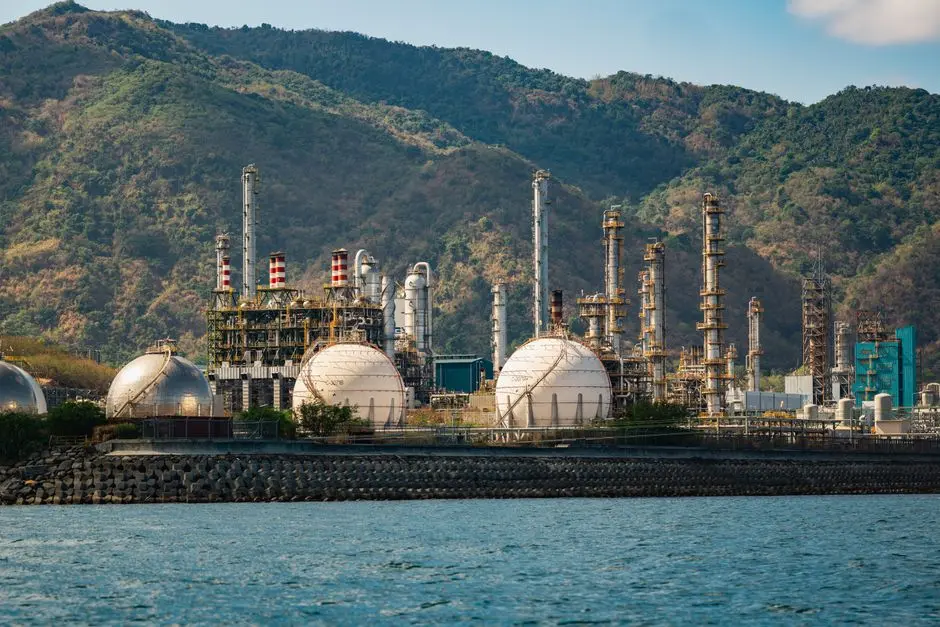
Acceptance testing should demonstrate that the installed train meets every applicable categorical limit, local limit, narrative requirement, BMP and prohibited-discharge condition. A low result during one favorable sample is not sufficient evidence for a batch facility with variable concentrations.
Use representative influent testing and worst-case production scenarios to verify hydraulic capacity, treatment performance and the point-of-connection discharge condition. Test pH correction, flow-paced automatic dosing, alarm response, diversion or hold, and the written batch-release sequence. Where treatment performance depends on residence time, solids loading or reagent demand, confirm those conditions during testing rather than inferring them from nameplate capacity.
Document operating procedures for normal production, startups, shutdowns, chemical deliveries, spills and off-specification batches. Specify who may authorize a release, what data must be reviewed beforehand, and where wastewater must be held if the treatment train is unavailable or a monitoring result is invalid.
Retain analytical results, calibration records, instrument trends, acceptance-test reports and corrective-action logs for POTW review and recurring compliance reviews. An acceptance package should let a reviewer trace each permit condition to a test, operating control and retained record. This documentation differentiates a commissioning success from a defensible pretreatment system.
Frequently Asked Questions
What treatment equipment is the right choice for a chemical plant near Spring Park?
Select the smallest train that reliably satisfies the controlling POTW and categorical requirements across representative and worst-case batches. Begin with the pollutants and narrative conditions in the current control mechanism; use equalization, pH control, DAF, precipitation and clarification, biological treatment or filtration only where the validated wastewater and applicable requirements justify them.
How should equalization and treatment capacity be sized?
Base sizing on documented peak flow, the batch-release profile, hydraulic and organic load, equalization need and pretreatment objectives. Obtain worst-case flow, concentration, pH, temperature and constituent data from the plant. Do not apply a universal retention time, as research does not establish one for this application.
What should buyers request in a supplier proposal?
Ask for compliance documentation, relevant industrial references, the proposed control-system scope, guarantees tied to stated