Determine the limits that apply to the Milbank-area plant
Food and beverage plants near Milbank meet pretreatment limits by first identifying their actual product category, discharge route, receiving sewer authority, permit conditions, and local limits. They then characterize wastewater by source and design an integrated train: screening, equalization, fats, oils and grease separation, biological treatment, pH control, and polishing where required. The EPA National Pretreatment Program is codified at 40 CFR 403, with applicable categorical rules in 40 CFR Parts 405–409. However, no city-wide BOD, TSS, FOG, or pH ceiling should be assumed: the written POTW permit and current sewer-use requirements control the design basis.
The receiving publicly owned treatment works (POTW) is the control authority for an indirect discharger. Before buying equipment, obtain the current pretreatment permit, sewer-use ordinance, applicable categorical determination, surcharge rules, monitoring conditions, and enforcement provisions. These documents establish which parameters apply, their units and averaging periods, sampling points, and whether off-spec water must be stopped or rerouted.
The National Pretreatment Program supplies the federal framework, while 40 CFR Parts 405–409 address specified dairy, grain-mill, canned and preserved fruit and vegetable, canned and preserved seafood, and meat-product categories (HydropureWater, “How US Food & Beverage Plants Meet Pretreatment Limits Before Sewer,” undated commercial guidance). A city name, industry label, or another facility’s permit does not establish this plant’s numeric BOD, TSS, FOG, pH, or other limits (HydropureWater, “How Food & Bev Plants Near Sidney, US Meet 2026 Pretreatment Limits,” undated commercial guidance).
Do not treat EPA’s withdrawn 2024 proposal for revised and new pretreatment standards as an enacted universal table. EPA withdrew that proposal in a final action published September 3, 2025 (HydropureWater, “How Food & Bev Plants Near Sidney, US Meet 2026 Pretreatment Limits,” undated commercial guidance). Also distinguish sewer discharge from direct discharge: a POTW route invokes pretreatment requirements, while direct discharge requires the applicable NPDES authorization and permit conditions (HydropureWater, same source).
| Decision gate | Document or confirmation required | What it controls |
|---|---|---|
| Discharge route | Written confirmation of POTW or direct discharge | Whether pretreatment or NPDES requirements apply |
| Regulatory category | Process and product description | Applicable categorical subpart and source-specific conditions |
| Enforceable limits | POTW permit, sewer-use ordinance, state program requirements | Permit ceilings, monitoring, reporting, and enforcement |
| Commercial obligations | Surcharge schedule and control mechanisms | Treatment objectives beyond the permit ceiling |
The same sequence applies elsewhere in the United States: the food and beverage pretreatment limits framework near Sidney illustrates why source and route must be resolved before equipment selection.
Split the wastewater into streams that need different treatment
Food-plant wastewater should be separated before the design average is calculated because production water, CIP chemistry, sanitation flow, and cooling blowdown impose different treatment requirements. Characterize each stream separately for flow, production schedule, BOD/COD loading, TSS, FOG, phosphorus, pH, temperature, and cleaning chemistry. Obtain representative samples across normal production, product changeovers, and cleaning cycles; a facility-wide daily average can conceal the slug loads that control equalization, aeration, and storage requirements.
Process water generally carries the principal biodegradable organic and solids load. CIP acid and caustic rinses create pH and chemical-compatibility risks that require controlled neutralization and segregation. Sanitation and floor-wash flows may contain concentrated FOG and wash-water solids. Cooling-water blowdown may have acceptable bulk organics but carry heat, lubricants, or trace metals, so it should remain separate until its compatibility with the selected treatment train is established.
HydropureWater reports typical raw BOD of 1,000–10,000 mg/L for dairy and meat processing and notes that FOG can reach several thousand mg/L in fryer, rendering, and stickwater streams (“How US Food & Beverage Plants Meet Pretreatment Limits Before Sewer,” undated commercial guidance). Equalization can blend cleaning and process flows, buffer organic spikes, and control pH before biological treatment. The same source reports that CIP and cooking operations can exceed 40 °C and interrupt downstream nitrification if not equalized.
Do not route every flow into one basin simply because discharge eventually converges. Segregate cooling blowdown where temperature, heat, lubricants, or trace metals make it unsuitable for direct combination with food-contact process wastewater. Define representative sampling points before sizing an equalization basin, DAF unit, biological reactor, or chemical system. For sugar- and starch-dominated beverage wastewater, the stream-separation logic is developed further in the DAF design for sugar- and starch-dominated beverage wastewater.
| Stream | Characterization focus | Treatment implication |
|---|---|---|
| Process water | Flow schedule, BOD/COD, TSS, FOG, temperature | Organic and solids load; biological and primary treatment capacity |
| CIP rinses | Acid/caustic identity, pH, temperature, residual oxidant | Segregation, equalization, controlled pH adjustment |
| Sanitation and floor wash | FOG, suspended food solids, surfactants | FOG and solids separation before biological treatment |
| Cooling blowdown | Heat, lubricants, trace metals, flow variability | Separate approval and routing decision |
Build a pretreatment train around the discharge risks
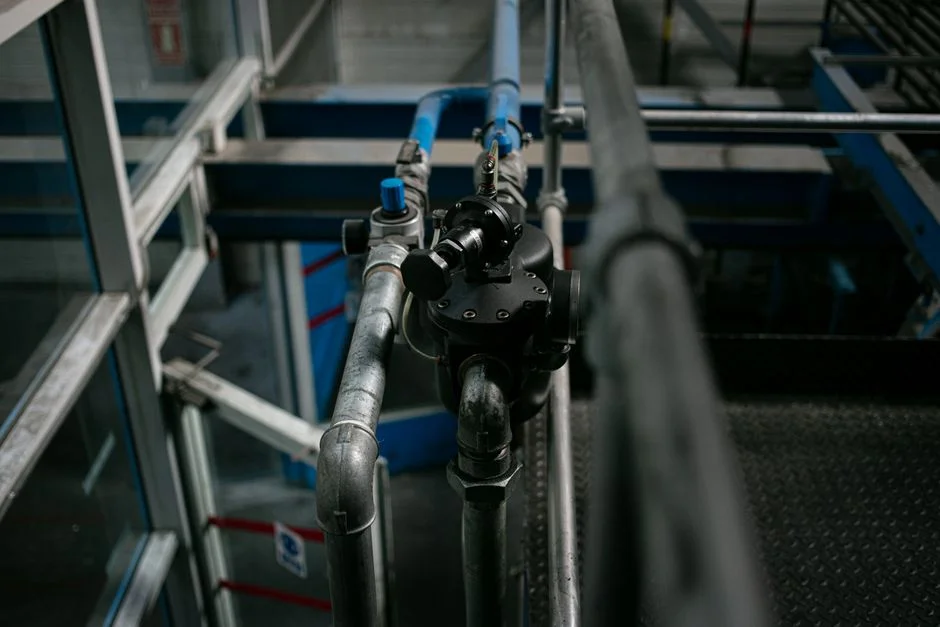
Each treatment stage should answer a defined pollutant or failure mode. Screening protects pumps and downstream equipment from debris and solids. Equalization stabilizes flow, pH, temperature, and organic loading. The selected primary-separation process then removes recoverable FOG, oil, emulsions, and solids before biological treatment, with polishing added only where the permit or measured wastewater profile requires it.
Automatic chemical dosing can track flow and a control setpoint where pH or coagulation chemistry varies. A PLC-controlled chemical dosing and pH adjustment system should be evaluated against the measured demand, storage and handling requirements, fail-safe controls, and the permit—not selected simply because manual dosing is inconvenient.
DAF is appropriate where FOG or emulsified oils dominate; settling or lamella clarification is more defensible where TSS is the principal separation problem and representative tests show an advantage. HydropureWater gives food and beverage DAF sizing ranges of 4–25 m/h surface loading, a 0.005–0.02 air-to-solids ratio, and 20–40% recycle (“How US Food & Beverage Plants Meet Pretreatment Limits Before Sewer,” undated commercial guidance). These are commercial design references, not permit limits or guaranteed site performance. An industrial DAF system for food-processing FOG removal should therefore be selected only after flotation testing and peak-flow review.
Biological treatment follows equalization and primary FOG removal. The same HydropureWater guidance reports hydraulic retention times of 8–24 hours for conventional activated sludge and 4–10 hours for MBR, with dissolved oxygen of 1.5–2.5 mg/L where nitrification is required. Those values require confirmation against the selected process, reactor temperature, biomass condition, and enforceable permit condition.
Chemical precipitation or further solids polishing is justified only by phosphorus, residual solids, or another contaminant identified in the permit or wastewater profile. HydropureWater reports alum doses of 50–250 mg/L and ferric chloride doses of 30–150 mg/L, while stating that PLC-controlled dosing can reduce chemical consumption by 10–20% compared with manual feed. Treat those figures as commercial process references, not universal requirements.
Residuals belong in the design. The source identifies plate-and-frame presses from 1 to 500 m² and reports combined-cake dry matter of 22–28%. A plate-and-frame filter press for DAF float and biological sludge must be checked for cake properties, polymer demand, filtrate quality, cleaning access, and the facility’s residual-disposal route.
| Stage | Primary risk addressed | Evidence needed before sizing |
|---|---|---|
| Screening | Debris and solids damage | Particle size, material, flow, maintenance access |
| Equalization | Flow, pH, heat, and organic slug loads | Peak flow, production schedule, cleaning chemistry |
| DAF or clarification | FOG, emulsified oils, suspended solids | Representative separation test and chemical demand |
| Biological treatment | Biodegradable BOD/COD | Load, temperature, treatability, nitrogen requirement |
| Chemical precipitation and polishing | Phosphorus or residual solids | Permit requirement, chemical demand, residual fate |
| Sludge handling | Residual volume and handling cost | Solids characterization, dewatering test, disposal route |
Match equipment selection to the dominant wastewater risk
Equipment selection should follow the measured dominant risk, not the product category. Use DAF when FOG or emulsified oils control the design. Consider settling or lamella clarification when TSS is the main challenge and jar or pilot testing demonstrates a process and operating-cost advantage. The DAF versus clarifier equipment comparison provides a useful selection framework, but the Milbank decision must be based on food-plant wastewater and the actual permit.
HydropureWater’s DAF catalog covers 4–300 m³/h across 13 standard models and markets the equipment for suspended-solids, FOG, oil and grease, and colloidal-matter removal (HydropureWater product catalog, undated). Its lamella clarifier is specified for 20–40 m/h surface loading and up to 30% lower chemical consumption than conventional clarifiers. These are product specifications, not guaranteed outcomes for every Milbank stream; feed composition, coagulation, hydraulic loading, and operator control determine actual performance.
Treat MBR as an option where compact biological treatment and membrane solids separation are justified by the written acceptance criteria. HydropureWater describes an MBR range of 10–2,000 m³/day and filtration below 1 μm (HydropureWater product catalog, undated). That capability does not establish BOD removal, nutrient removal, disinfection, or permit compliance without site-specific performance evidence.
Procurement should compare an integrated train rather than award isolated equipment. The technical package should state peak flow, load basis, footprint, chemical and energy use, sludge generation, maintenance access, controls, residual handling, and guaranteed performance against the site’s acceptance criteria. A supplier that cannot tie its guarantee to the permit condition, representative wastewater, and agreed sampling protocol has not supplied a defensible performance commitment.
| Dominant condition | Preferred starting point | Required confirmation |
|---|---|---|
| FOG or emulsified oils dominate | DAF | Flotation test, peak FOG load, float handling |
| TSS dominates and flocculation performs well | Settling or lamella clarification | Settling test, chemical demand, downstream polishing |
| Biodegradable organics dominate after primary treatment | Activated sludge or MBR | Treatability, temperature, nitrogen requirement, footprint |
| Permit requires phosphorus or residual-solids control | Chemical precipitation and polishing | Permit parameter, dose testing, residual analysis |
For a direct equipment comparison, review the high-efficiency sedimentation tank for TSS separation and the integrated MBR treatment option against the same site-specific design basis.
Prove compliance through monitoring, controls, and residual management
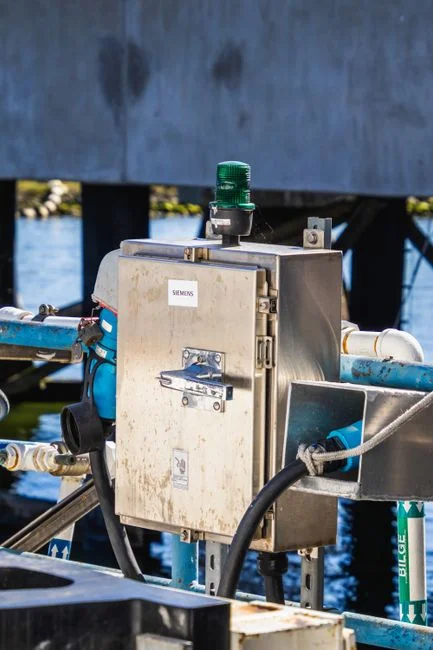
Compliance evidence must match the sampling and reporting procedure in the actual POTW permit and state program. Confirm sampling frequency, sample type, analytical methods, averaging period, flow measurement, pH monitoring, reporting route, and enforcement mechanism before finalizing the controls architecture. A passing grab sample does not demonstrate compliance if the permit requires another sampling method or statistical basis.
Configure PLC controls, alarms, flow-proportional chemical feed, event logging, and a documented response for off-spec water. The response should identify when a stream must be isolated, when discharge must stop, and who authorizes resumption. Startup and acceptance testing should examine hydraulic stability, organic removal, FOG capture, pH control, and residual handling under production and cleaning conditions.
Track chemicals, aeration energy, float or sludge volume, polymer use, and hauled residuals. These records show whether the selected train remains practical and support the operating-cost case. The permitted requirement remains the compliance baseline; treatment performance, monitoring, and residual records become the evidence that the facility can repeat compliant performance rather than demonstrate one isolated result.
Frequently Asked Questions
Is there one BOD, TSS, FOG, or pH limit for all food and beverage plants near Milbank?
No. Use the receiving POTW’s written permit, sewer-use requirements, and applicable federal and state provisions after resolving the discharge route and process category. A city name or another plant’s permit cannot supply this site’s numeric ceiling.
What should a buyer request before sizing treatment equipment?
Request representative stream-by-stream flow and pollutant data, production and cleaning schedules, treatability results, peak loads, the permit’s averaging and monitoring requirements, and residual-disposal constraints. Size from those inputs rather than a generic gallons-per-day estimate.
How should a supplier demonstrate that the proposed treatment train is adequate?
Require an integrated proposal that maps each treatment stage to a permit parameter, states peak-flow and load assumptions, identifies chemical and energy use, and guarantees performance against the site’s written acceptance criteria using an agreed sampling and test protocol.
What should the budget request include?
Ask for separate pricing for treatment equipment, installation, controls, chemicals, aeration power, sludge handling, monitoring, maintenance, hauling or disposal, and contingency capacity. The supplied research does not establish a reliable Milbank price range, so request a site-specific quotation with the design basis and exclusions stated.
What information reduces supplier-selection and commissioning risk?
Provide the written permit, current state reporting requirements, wastewater characterization, process schedules, utility constraints, and residual route before purchasing. These inputs let suppliers test the proposed process and acceptance plan rather than assume another jurisdiction’s limits.
Related Equipment
- industrial DAF system for food-processing FOG removal — specifications, capacity range, and technical data