What Changes When AB InBev Acquires a Malaysian Brewery?
An AB InBev acquisition in Malaysia does not create one universal wastewater permit or discharge standard. The acquired operator must first confirm whether the existing environmental approval transfers with the business or must be amended or reissued for the new legal entity, then verify the site’s permit, receiving sewer or drain, monitoring, pretreatment and sludge obligations. AB InBev’s disclosed operating model expects controlled discharges, regular monitoring and predominantly biological treatment. Its 2022 CDP response reports monitoring at 100% of covered beverage operations, while its 2021 response says more than 97% of effluent was treated biologically. The critical acquisition task is to verify that Malaysia’s site-specific conditions, flow, effluent characteristics and reuse objectives fit that model.
Separate three questions during diligence: which approval is legally effective, who controls the discharge, and who operates the monitoring and treatment system. The environmental approval may sit with the seller’s legal entity, while sewer acceptance, pretreatment charges and enforcement correspondence may sit with another entity or public authority. The buyer should therefore obtain the approval itself, not merely a representation that the plant is “permitted.”
AB InBev’s 2022 CDP Water Security response includes all brewing and beverage operations within its operational-control reporting boundary and reports discharge monitoring at 100% of covered beverage operations. That supports an expectation that the acquired brewery will eventually enter AB InBev’s water-monitoring framework, provided the site satisfies the applicable system requirements. It does not establish that the Malaysian permit automatically transfers.
No supplied source establishes a universal Malaysian rule for AB InBev acquisitions, identifies a specific acquired plant’s permit, or gives a site-specific numeric discharge limit. Those matters must be confirmed from the target’s legal and regulatory documents. AB InBev’s 2021 CDP response also says recently acquired facilities may not yet be included in VPO reporting and that qualification takes approximately six to nine months, supporting a phased post-closing integration plan.
| Diligence question | Required evidence | Transaction consequence |
|---|---|---|
| Does approval continuity remain valid? | Exact approval, holder, authorised outlet, conditions, correspondence and authority confirmation | Closing condition or residual risk until resolved |
| Which entity controls operations? | Operating-company details, utility accounts, sewer agreement and assignment status | Correct contracting entity and enforcement exposure |
| Will AB InBev reporting begin immediately? | Site readiness, meter validation, sampling controls and VPO integration plan | Interim controls during qualification |
| Which obligations remain unresolved? | Site flows, loads, permit limits, sludge route and reuse plan | Open technical items rather than assumed compliance |
Build the Permit and Change-of-Control Due-Diligence File
Permit continuity must be established from the approval’s own terms and confirmed with the competent authority; “no change of control” clauses do not establish whether a Malaysian regulator will require an amendment, notification or new application. The seller should identify every consent triggered by the transaction, including environmental approval, discharge authorization, sewer connection, trade-waste pretreatment and sludge disposal.
- Obtain the exact environmental approval and discharge conditions, including authorized outlet, permitted flow and characteristic limits.
- Confirm the legal holder, purchaser, operating entity and every change-of-control or assignment requirement.
- Review sewer and drainage agreements for acceptance criteria, pretreatment obligations, sampling, charges and termination rights.
- Compile compliance history, including results, exceedances, inspections, notices, corrective actions and outstanding capital works.
- Reconcile the approval with the physical discharge route, meters and designated sampling points.
Do not substitute AB InBev corporate statistics for Malaysian permit values. Instead, use the 2022 CDP response as a benchmark for the evidence requested: it identifies pH, phosphorus and nitrogen, organic load and settleable solids among quality indicators, generally measured at least daily. Those parameters are not Malaysian limits and must be replaced with the values stated in the site’s approval or sewer agreement.
Also request the sludge route, not only the liquid discharge. Include generation records, handling contracts, transport documents, disposal-site information and any hazardous-characteristic assessment. A compliant outlet does not establish lawful sludge disposal.
| File component | Minimum content to request | Decision use |
|---|---|---|
| Environmental approval | Holder, term, outlet, limits, monitoring, reporting and change-of-control provisions | Continuity and amendment risk |
| Authority correspondence | Inspections, approvals, conditions, notices and outstanding submissions | Compliance history |
| Sewer or drainage agreement | Acceptance criteria, pretreatment, sampling, charges, duration and termination rights | Receiving-infrastructure exposure |
| Monitoring file | Raw results, calibration records, sample locations, laboratory accreditation and exceedances | Data integrity and performance |
| Sludge evidence | Source, quantity, characterization, contracts and disposal records | Off-site liability and continuity |
Permit continuity, evidence of compliance and closure of enforcement items should appear explicitly in environmental, operational and capital-expenditure due diligence. A price adjustment is not an adequate substitute for a missing legal right to continue discharging.
Map Brewery Wastewater from Source to Final Discharge
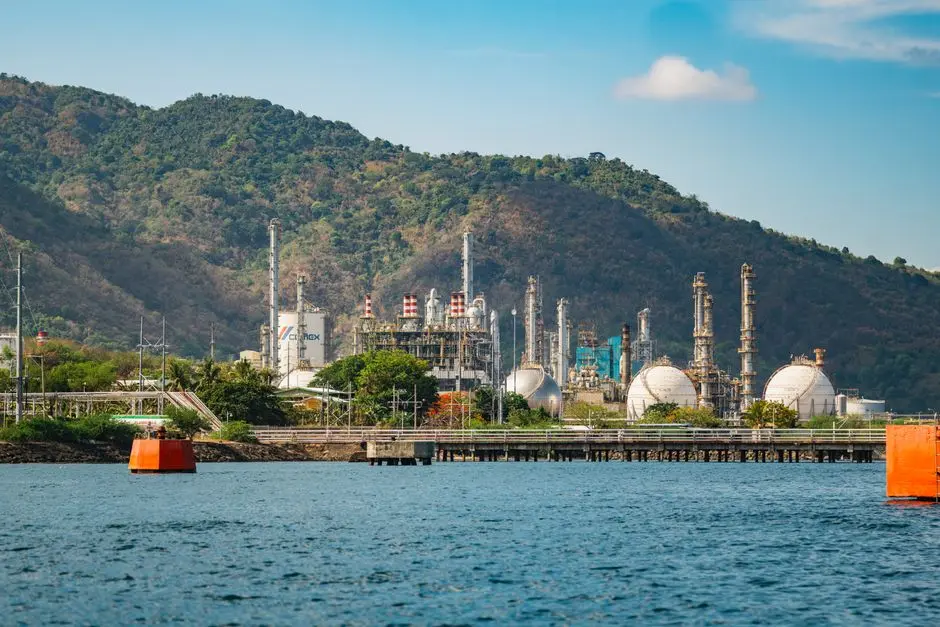
A source-to-discharge balance is required because brewing, packaging, cleaning, utilities and sanitary streams do not have the same contamination profile or hydraulic behavior. Request actual flow records and process knowledge for brewing and packaging operations, cleaning-in-place, laboratory analysis, utilities, cooling or washwater, brewing by-products, floor drainage and sanitary sewage.
Obtain at least one representative operating campaign that captures normal production, cleaning cycles, variable flow and identified upset conditions. The supplied research provides no Malaysian brewery flow profile or sampling frequency, so no generic hydraulic estimate can support a transaction decision.
Map the physical route from collection through screening or solids separation, biological treatment, disinfection or tertiary treatment, reuse points and the final sewer, drain or surface-water outlet. Reconcile that map with the permit and the physical plant. A rotary mechanical bar screen may protect downstream equipment from solids, while dissolved air flotation may be relevant where solids separation is required; neither should be selected without the site’s wastewater characteristics.
AB InBev’s 2022 CDP response states that covered plants maintain discharge maps, designated sampling points and sampling frequencies, and that most discharge measurements are taken daily in three eight-hour shifts. Its 2021 response describes primary treatment for solids segregation, followed by anaerobic reactors for 80% of the organic load and an aerobic system for the remaining 20%; some operations also use reverse osmosis. These are disclosed AB InBev practices, not universal Malaysian design rules.
| Process boundary | Evidence requested | Engineering question |
|---|---|---|
| Source generation | Flow records, production and cleaning schedules, by-product losses, drain map | What drives peak hydraulic and organic loading? |
| Collection and pretreatment | Screening, equalisation, solids separation, dosing and flow-meter records | Will the receiving authority require higher-quality pretreatment? |
| Biological treatment | Reactor configuration, operating data, bypass history and redundancy | Is biological capacity adequate for actual load? |
| Reuse and final discharge | Reuse destinations, water-quality controls, outlet mapping and sample results | What discharge quality and redundancy are required? |
At Samlesbury, designs were updated to pretreat wastewater before discharge through biological processes because of the local sewer arrangement, according to Ekopak Water’s 2025 account. Use that precedent to ask whether the Malaysian discharge route requires pretreatment or a new solids-removal stage, not to infer a Malaysian obligation.
Validate Treatment Capacity and Reuse Priorities
Treatment capacity must be calculated from the acquired plant’s documented peak and average flow, organic loading, solids, nutrients, pH, discharge destination and reuse demand. The supplied research contains no Malaysian AB InBev site flows or loads, so equipment capacity and expansion scope remain unresolved until site data are obtained.
Assess anaerobic and aerobic treatment against actual organic load and seasonal operating patterns. AB InBev’s 2021 CDP response reports its disclosed 80% anaerobic and 20% aerobic organic-load split; it is not a Malaysian design prescription. Evaluate nutrient removal, solids separation, disinfection and tertiary treatment only against confirmed permit conditions, sewer rules and the buyer’s reuse objectives.
AB InBev’s 2022 CDP response reports that 41.6% of withdrawals came from municipal sources, 41% from groundwater and 17.4% from surface water. Discharge destinations were 66.5% fresh surface water, 29.8% municipal and approximately 3.7% other destinations. This context supports examining both source dependency and receiving-drain dependency, but it cannot determine the Malaysian site’s permit route.
AB InBev states that recycled water is used in cooling, heating and cleaning, and that treated wastewater is reused at many breweries through anaerobic treatment with biogas recovery. Its 2021 and 2022 responses do not treat treated wastewater as directly used in beer products. Any Malaysian reuse proposal therefore needs a separate fitness-for-purpose assessment covering product-contact risk, food safety, public health and local approval.
| Validation item | Required site input | Permitted conclusion |
|---|---|---|
| Hydraulic capacity | Measured flow range, equalisation and production/cleaning schedule | Whether existing equipment has defensible operating margin |
| Organic capacity | Brewing by-products, COD/BOD evidence and loading variation | Anaerobic/aerobic balance and redundancy requirement |
| Discharge quality | Permit and sewer limits, nutrients, pH, solids and monitoring history | Whether tertiary or pretreatment stages are justified |
| Reuse | Demand, intended use, water quality and health-control requirements | Reuse concept and treatment specification |
Where the inherited train lacks solids separation or biological capacity, evaluate an integrated lamella clarifier for brewery solids separation or an integrated MBR wastewater treatment system only after confirming the required outlet quality, footprint, operating objective and life-cycle constraints. Reverse osmosis may be justified for a defined reuse application; AB InBev’s disclosure that some operations use it does not establish a site requirement.
Compare Retrofit, Replacement and Third-Party Treatment
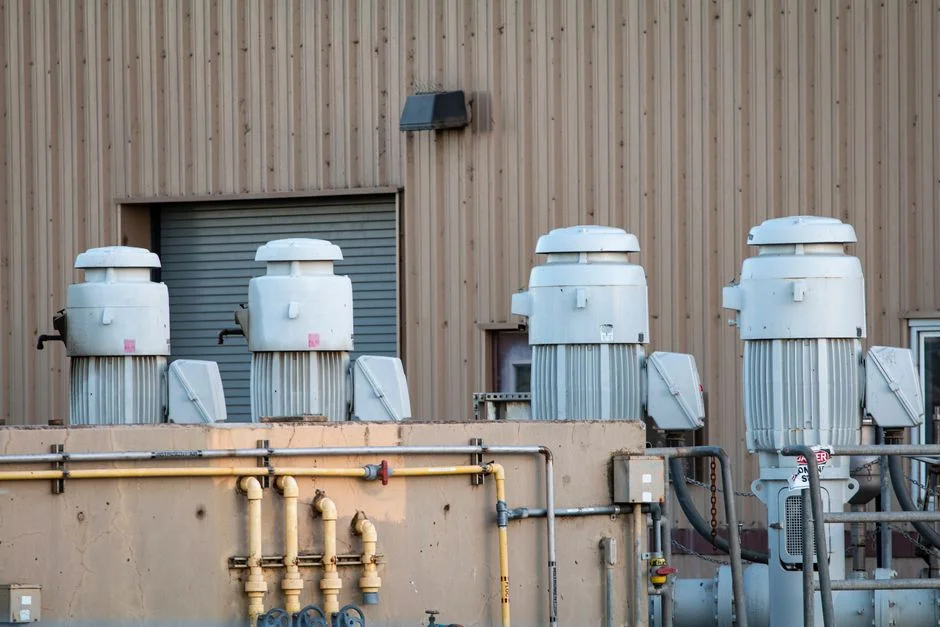
No upgrade should be presumed from the transaction alone. Choose inherited-plant optimization when documented hydraulic and organic capacity, equipment condition, permit compliance and monitoring records demonstrate adequate margin.
Choose retrofit when the receiving authority requires better pretreatment, biological capacity is constrained, reuse is expanding, or monitoring and automation need improvement. Choose replacement when redundancy, maintainability, footprint, energy performance or inherited equipment condition cannot meet the required operating basis. A third-party or municipal route is viable only where the sewer authority accepts the plant’s flow and characteristics and treatment remains available under a durable agreement. AB InBev’s 2021 CDP response says some effluent was treated by municipalities under agreements with relevant authorities.
| Strategy | Select when | Principal diligence risk |
|---|---|---|
| Optimize inherited plant | Capacity and compliance margin are demonstrated; condition and control systems are adequate | Hidden degradation or incomplete monitoring |
| Retrofit | A defined pretreatment, biological, reuse or automation gap must be closed | Compatibility, downtime and construction phasing |
| Replace | Redundancy, maintainability, footprint or energy requirements cannot be met | Interface risk and long-term operating burden |
| Third-party or municipal treatment | Written sewer acceptance and durable service capacity are confirmed | Tariff, surcharge, availability and termination exposure |
Do not select equipment from catalog flow ranges alone. Obtain design flow, actual load, operating hours, receiving limits, treatment objectives and the expansion plan first. Where solids handling remains on the seller’s scope or involves dewatering, assess the associated equipment separately; a plate-frame filter press and automatic chemical dosing system are options to evaluate against the confirmed sludge and pretreatment requirements, not substitutes for that engineering basis.
Turn Wastewater Findings into a Close-Readiness Decision
Each wastewater finding should be converted into a transaction instrument with a named owner and release condition. Classify it as a closing condition, priced capex item, operating-cost allowance, post-closing integration task or residual compliance risk.
AB InBev’s 2022 CDP response reports withdrawal, water-quality and discharge monitoring at 100% of covered beverage operations. Use this as the acquired site’s integration target: validate flow meters, control sampling points, confirm laboratory arrangements and maintain an accurate discharge map. These controls should function from closing, even before VPO qualification is complete.
Allocate responsibility for VPO qualification. AB InBev’s 2021 response states that the process takes approximately six to nine months. The interim plan must preserve compliant sampling, reporting, alarms and corrective action; a reporting delay is not permission to operate without controls.
Verify reuse and energy opportunities against local operating needs. Ekopak Water’s 2025 Samlesbury account reports a 5–8% reduction in gas consumption and lower Scope 1 carbon dioxide emissions after installation of on-site wastewater treatment with biogas recovery. That result cannot be transferred to Malaysia without validation of feedstock, energy balance, equipment performance and local operating conditions.
| Gate | Pass evidence | Failure treatment |
|---|---|---|
| Legal and permit | Valid approval for the relevant entity and outlet; authority position documented | Closing condition or retained liability with enforceable protection |
| Compliance | Representative monitoring record with deviations and corrective actions resolved | Quantified capex, operating allowance or risk allocation |
| Capacity | Peak-flow and load review with redundancy and receiving limits | Retrofit, replacement or third-party treatment scope |
| Integration | Meter, laboratory, sampling and VPO responsibilities assigned | Post-closing milestone with interim compliant controls |
| Residual risk | Legal entity, permit status, destination, flows, limits, sludge route, reuse and condition explicitly closed | Unresolved item remains visible in the investment decision |
The legal entity, permit status, receiving destination, site flows and loads, permit limits, sludge route, reuse plans and inherited equipment condition must remain open until documentary evidence is obtained. For transaction diligence, the correct conclusion is not “compliant” or “upgrade required,” but a controlled list of gates, evidence and financial consequences.
Frequently Asked Questions
Does an existing Malaysian wastewater permit automatically follow the plant after AB InBev acquires it?
Not necessarily. The answer depends on the approval’s terms, the legal purchaser and the competent authority’s change-of-control requirements. Obtain the exact approval, identify every consent triggered by the transaction and obtain documentary confirmation of whether transfer, amendment, notification or a new application is required.
What treatment capacity should be specified for an acquired Malaysian brewery?
Specify capacity from documented peak and average flows, actual organic and solids loads, permit or sewer limits, reuse objectives, operating hours and the required redundancy. Do not use a generic estimate or catalog range because no supplied source provides Malaysian plant flows or loads.
How much should the buyer budget for wastewater compliance and treatment?
The supplied research provides no Malaysian acquisition-cost figure. Request an itemized budget based on the permit gap analysis, equipment condition assessment, capacity calculation, treatment-option comparison, sludge route, installation scope and post-closing controls. A supplier quotation should identify exclusions, commissioning obligations and assumptions against which the site data can be checked.
Should the buyer choose MBR, anaerobic treatment or municipal discharge?
The choice depends on organic load, hydraulic variability, solids separation, nutrients, receiving limits, land availability, energy goals and confirmed sewer acceptance. Compare MBR, anaerobic treatment and third-party treatment against the same site-specific design and operating basis. Also examine MBR versus conventional activated sludge and food-manufacturer plant acquisition wastewater due diligence as supporting decision references.
How quickly should the acquired plant be integrated into AB InBev’s wastewater monitoring system?
Plan for the approximately six to nine months VPO qualification period disclosed in AB InBev’s 2021 CDP response. Maintain interim compliant monitoring, sampling, reporting and corrective-action controls throughout integration; do not wait for qualification before validating meters, sample points, laboratory arrangements and discharge responsibilities.