What the Volkswagen acquisition does—and does not—change
Wastewater obligations after a Volkswagen acquisition depend on the Indian plant’s existing consents, permit holder, production plan, wastewater profile and receiving sewer requirements. No supplied source identifies a Volkswagen transaction involving an Indian plant, so no universal fresh-consent rule can be assumed. The buyer should classify each authorization as unchanged, subject to a change-of-control filing or modification, requiring a new authorization, or needing written sewer-authority confirmation. Volkswagen’s 2024 Annual Report provides a corporate benchmark: nearly all sites have pretreatment, untreated wastewater is not discharged, treated wastewater is reused where suitable, and business partners must minimize water withdrawals and effectively treat wastewater.
The acquisition identity alone does not determine the legal outcome. The supplied research identifies no acquired Indian plant, transaction structure, existing consent holder, State Pollution Control Board (SPCB), sewer authority or post-closing production plan. The minimum fact set is therefore the buyer and seller legal entities; whether the deal transfers shares or assets; the site address; consent holder and number; SPCB; receiving sewer authority; production plan; chemical changes; and wastewater destinations.
Volkswagen’s corporate water policy is a strategic benchmark, not an Indian authorization. The Volkswagen Group Annual Report 2024 states that the Group aims to reduce water withdrawal at passenger-car and light-commercial-vehicle production sites by 30% on average by 2035 against 2018, and by as much as 40% at relevant hot-spot locations. It also reports that nearly all sites have pretreatment, untreated wastewater is not released into receiving waters, and treated wastewater is being reused for production, cooling towers, sanitary facilities or irrigation where suitable.
Those statements should shape acquisition questions, not replace the plant’s consent conditions, industrial-user agreement or waste authorizations. The India plant-acquisition wastewater diligence guide provides a comparable transaction structure without establishing a Volkswagen-specific transaction.
The acquisition decision framework
A wastewater consent is only one element of the authorization set. The acquisition team should create one register row for every consent, sewer approval, monitoring duty, waste authorization and disposal obligation, then assign a legal action and dated evidence requirement to each row.
| Transaction fact | Decision test | Required evidence |
|---|---|---|
| Same holder, site, permitted activity and operating basis | Classify as unchanged with confirmation | Current authorization, confirmed reporting continuity and compliance calendar |
| Legal holder changes | Test for a change-of-control filing or transfer | Filed documents and agency acknowledgment or approval |
| Production, chemicals, streams, treatment or discharge route change | Test for consent modification | Issued modification and revised operating conditions |
| Proposed activity is not covered | Determine whether new authorization is required before activity begins | Issued authorization and associated monitoring plan |
| Industrial-user classification or acceptance may change | Seek separate sewer-authority confirmation | Executed agreement, modification or written authority decision |
| Sludge, oil, chemicals or contaminated residues leave site | Verify waste classification, approved route and chain of custody | Characterization, manifests, contracts and disposal records |
For each row, counsel should record the authorization type, issuing authority, holder, site, conditions, current status, transfer mechanism, reporting party, sampling responsibility, reporting deadlines, financial assurance and evidence of approval. The analysis must test the legal holder, site identity, asset-or-share structure and proposed operating change against current site-specific rules. Where the result depends on interpretation, obtain written confirmation from the competent SPCB and receiving municipal authority.
The output should be filed approvals, issued modifications, written authority decisions and a verified compliance calendar—not purchase-agreement assumptions or acquisition forecasts. The authorization-by-authorization method described in the related Malaysia acquisition requirements analysis and Vietnam acquisition requirements analysis remains a diligence framework, not a universal Indian rule.
Environmental consent, sewer approval and waste disposal

The current environmental consent should be read against the post-closing operating plan, not merely checked for expiry. Review permitted activities and capacity, discharge routes, restricted or prohibited substances, monitoring, reporting, recordkeeping, emergency controls, residual disposal and financial assurance. A change in production, chemical substitution, wastewater characteristics, added waste, treatment capacity or discharge route may affect the existing conditions even if ownership remains unchanged.
The receiving sewer authority remains a separate decision-maker. Obtain the plant’s industrial-user classification and applicable local limits, including pretreatment monitoring, sampling duties, reporting periods and slug-loading controls. A sewer agreement can impose obligations not captured in an environmental consent, while approval to discharge does not establish that the municipal system will accept a changed flow or contaminant profile.
| Authorization layer | Core question | What it does not prove |
|---|---|---|
| Environmental consent | Are the permitted activities, capacity, discharges and controls valid for the planned operation? | It does not establish municipal acceptance or waste-disposal authorization. |
| Industrial-user agreement or confirmation | Will the sewer authority accept the flow and quality, and what pretreatment controls apply? | It does not replace the environmental consent. |
| Waste authorization and disposal chain | Is each residue legally classified, routed to an authorized destination and supported by custody records? | It does not authorize discharge of that residue to a sewer. |
| Post-closing modification | Does the consent condition itself require revision for the changed operation? | A transaction announcement or corporate policy does not revise it. |
Sludge disposal liability should be separated by stream. Verify the approved route and contractual chain of custody for sludge, sludge oil, spent chemicals, contaminated residues and other off-site waste. Historical generator records, manifests and treatment-facility receipts may reveal legacy liabilities that need to be addressed in the transaction documents.
Do not import Volkswagen’s corporate targets or examples from other jurisdictions into an Indian consent, municipal limit or hazardous-waste classification. The current Indian approvals and regulator correspondence must remain the controlling evidence. Where an existing site’s compliance history needs structured review, the fabricated-metals sewer-limit guide and chemical-plant pretreatment guide provide useful process questions, not Indian legal thresholds.
Characterize the wastewater before selecting treatment
Treatment selection should follow verified stream characterization, not the asset name or an assumption that all automotive wastewater can be combined. Build a source register for every generation point, destination, treatment unit, chemical use, flow, representative analysis, peak or batch flow and pollutant mass loading.
Keep streams with different treatment effects separate until their interactions are understood. Automotive manufacturing can include process rinses, painting or surface-treatment waste, machining and floor-wash water, cooling or sanitary flows, and contaminated runoff. A plant-wide average cannot represent batch dumps, campaign variability or chemical substitutions reliably.
| Design input | Evidence required | Why it controls treatment selection |
|---|---|---|
| Flow regime | Average flow, peak flow, batch dumps and production-campaign data | Defines hydraulic capacity, equalization and off-spec storage needs. |
| Source profile | Representative samples linked to source, date, laboratory method and product mix | Shows whether streams can be segregated and which unit operations are justified. |
| Contaminant profile | Suspended solids, colloids, oil and grease, FOG, pH, metals, dissolved salts, VOC behavior, nutrients, biodegradability and toxicity | Determines physical, biological, membrane and polishing requirements. |
| Residual profile | Sludge characteristics, oil content and anticipated disposal route | Links treatment selection to off-site waste risk and operating cost. |
| Post-closing demand | Production forecast, expansion or contraction, chemical substitutions and reuse target | Prevents equipment from being sized for the seller's historical plant rather than the buyer's plan. |
Representative samples should cover relevant production campaigns and operating conditions. Reconcile the baseline with the post-closing product mix, expansion or contraction, chemical changes, peak flows and discharge destinations. Assess whether treated water can meet the intended process, cooling, sanitary or irrigation specification; sewer compliance alone does not establish reuse suitability.
Volkswagen’s targets make reuse part of acquisition diligence. The Volkswagen Group Annual Report 2024 states a 30% average water-withdrawal reduction target by 2035 against 2018 for passenger-car and light-commercial-vehicle production sites, with reductions of as much as 40% at hot-spot locations. These are Group targets, not conditions attached to the unidentified plant’s consent.
The engineering structure in the DAF selection analysis for fabricated-metals wastewater and DAF versus clarifier comparison can help structure source-specific testing, but neither establishes a design for an unnamed plant.
Match installed treatment to the post-closing plant
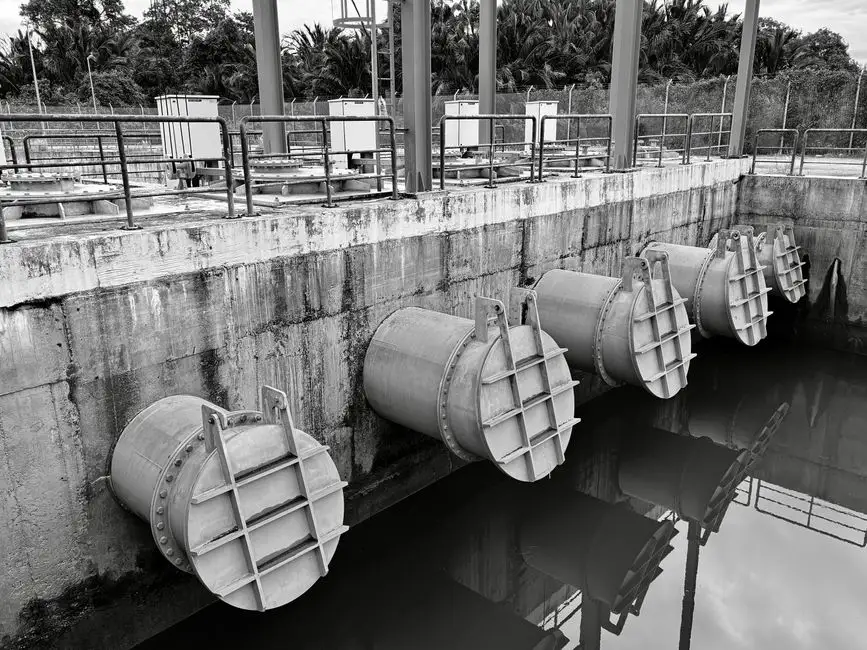
Installed treatment should be compared against verified contaminant loading, peak and batch flows, consent conditions, production forecasts and reuse targets. The asset audit must cover condition, hydraulic capacity, redundancy, controls integration, utilities, operator capability, maintenance history and compatibility with the future wastewater profile.
Every gap needs a trigger, responsible owner, decision date and treatment in the purchase agreement or capital plan. Candidate roles should be tied to the contaminant objective. A DAF system for suspended solids, oil and grease removal addresses oil, grease, FOG, suspended solids and colloidal material. An MBR membrane bioreactor for industrial wastewater provides biological treatment and membrane separation. Reverse osmosis would need to meet the specified permeate quality and recovery objective, subject to feed chemistry and pretreatment.
| Equipment option | Catalog boundary in supplied research | Evidence required before selection |
|---|---|---|
| DAF | 4–300 m³/h across 13 standard models | Verified flow, batch variation, oil and solids loading, pilot evidence and guaranteed site performance |
| MBR | 10–2,000 m³/day; filtration below 1 μm | Biodegradability, toxicity, nutrients, solids, effluent specification, reuse requirement and controls integration |
| RO | Stated recovery up to 95% | Feed chemistry, required permeate specification, recovery target, pretreatment needs and integration with the wastewater train |
These catalog figures are selection boundaries, not approved designs or guaranteed site performance. Require feed-specific pilot or treatability evidence, permit-compatible performance guarantees, residual-disposal routes, controls scope, utility demand, footprint, operator requirements and lifecycle-cost disclosure. If variable waste falls outside demonstrated operating history, a pilot should precede award.
A water-reuse assessment must integrate wastewater treatment, water recovery and final discharge in one mass-and-energy balance. The high-sensitivity industrial wastewater treatment blueprint illustrates why recovery and residual treatment cannot be separated from the feed profile. For the acquired site, zero liquid discharge feasibility remains a question until the feed chemistry, reuse specification and disposal route are established.
Convert unresolved findings into transaction protections
Unresolved sampling disputes, exceedances, corrective actions, pending consent amendments, insufficient treatment capacity and uncertain waste routes can affect closing certainty, operating continuity, capital cost and valuation. These matters should be escalated before closing rather than left as data-room observations.
Assign each unresolved item to a pre-closing condition, post-closing covenant, indemnity, holdback, priced capital risk or documented post-closing action with a deadline. The decision depends on whether operation can legally continue, whether remediation is required, whether spending can wait until after closing, and whether liability is pre-closing or post-closing.
The diligence file should include current consents, sewer agreements, discharge-monitoring reports, wastewater-characterization studies, enforcement correspondence, chemical inventories, treatment logs, production forecasts, residual-waste contracts and pending capital projects. It should also document authority correspondence concerning ownership changes or operating modifications. A purchase agreement can allocate risk, but it does not replace regulatory approval.
Volkswagen’s benchmark should frame due-diligence questions: does the site measure withdrawal, discharge and reuse; can it demonstrate effective treatment and closed-loop recycling where intended; and can the operating plan align with Group water targets? The Volkswagen Group Annual Report 2024 reports approximately 3.9 million m³ reused across Group production sites in 2024. That is Group-level evidence of reuse priority—not an Indian plant obligation, available recovery volume or acquisition condition.
Where the identified plant’s waste liabilities resemble a broader acquisition issue, the plant-acquisition wastewater risk-allocation guide provides a useful structure for assigning unresolved findings to contractual protections. The transaction team should determine which items must close and which can remain post-closing commitments with objective evidence and deadlines.
Frequently Asked Questions
How much will wastewater compliance and treatment cost after the acquisition?
The supplied research contains no acquisition-specific capital estimate, so a reliable price requires a site-specific scope. Ask the bidder to price four separate drivers: changes to the wastewater profile; gaps in treatment capacity; monitoring, control and compliance upgrades; and residual-waste or reuse integration. Each quotation should identify exclusions, utility demand, civil works, commissioning, performance guarantees and lifecycle costs.
What information is needed to size the treatment system?
Require verified average flow, peak and batch flow, pollutant loading, the required effluent or reuse specification and the treatment boundary. Include representative analytical data linked to production campaigns, chemical-use changes, expected expansion or contraction, and the available site footprint. Catalog capacity ranges cannot size the plant because hydraulic flow and contaminant load may be driven by different constraints.
How should an equipment supplier be selected?
Require feed-specific pilot or treatability evidence, permit-compatible performance guarantees, controls and utility scope, residual-handling arrangements, operator requirements and lifecycle-cost disclosure. Also ask the supplier to identify every assumption in its guarantee, the site data required to validate it and what happens if the post-closing wastewater profile differs from the design basis.
What compliance risks should be resolved before closing?
Evaluate ownership change, production change and discharge-route change separately. Obtain current authorizations, verify the responsible reporting party, confirm sewer acceptance and examine pending amendments, exceedances and waste-chain records. If continued operation depends on an approval or authority interpretation that remains unresolved, make the required confirmation a pre-closing condition or allocate the risk through a specific covenant, indemnity, holdback or priced capital allowance.