Why a GM India acquisition is a consent event, not a paperwork update
Under the Water (Prevention and Control of Pollution) Act, 1974, Section 25, consent to establish (CTE) and consent to operate (CTO) are issued to a "person" or "occupier" — not to a fixed asset — so a share or asset purchase that changes the occupier invalidates the prior CTO from the closing date. India discharges approximately 13,468 MLD of industrial wastewater daily, and only about 60% of that flow receives adequate treatment, which keeps State Pollution Control Boards (SPCBs) in a punitive posture (per industry compliance reporting, 2026). The National Green Tribunal's penalty ceiling has reached Rs 25 crore for severe violations, and SPCBs now run surprise inspections, so a lapsed CTO can halt production within days. EIA Notification 2006 may also demand a fresh Environmental Clearance if the acquired unit sits in Category A or if the product mix shifts materially from the prior occupier. For context on how global manufacturers are tightening their own water use — and what investors now expect — see the global manufacturer water-reuse benchmarks reported in late 2025.
The Indian regulatory stack GM must clear in 2026
Six Indian instruments apply simultaneously when an automotive plant changes hands. The Water Act 1974 requires a fresh CTE then CTO from the relevant SPCB — MPCB in Pune, GPCB in Ahmedabad, TNPCB in Chennai — with statutory windows of 90 days for CTE and 60 days for CTO, though realistic timelines run 4–6 months once hearings and site inspections are included. The Air Act 1981 demands a parallel CTO for stack emissions from paint-shop ovens, welding fumes, and DG sets, with separate stack height and fuel sulphur limits. Hazardous and Other Wastes (Management and Transboundary Movement) Rules 2016, as amended, require authorisation for paint sludge, spent solvents, used oil, lead-acid batteries, and oily skimmings, with annual Form IV returns and a registered re-processor. EIA Notification 2006 places most auto-assembly and component plants in Category B at SEIAA level; any capacity expansion beyond thresholds lifts the file to Category A at MoEFCC. CPCB's Real-Time Online Effluent Monitoring System (ROEMS) mandate applies to 17 categories of Grossly Polluting Industries and to plants in critically polluted industrial clusters, with pH, flow, TSS, COD, and conductivity transmitted to the CPCB server every 15 minutes. The E-Waste Management Rules 2022 and Battery Waste Management Rules 2022 catch EV-platform plants and require separate registration, even if the battery pack is imported as a CKD. A plant that ignores any one of these remains prosecutable from day one of occupier change.
What effluent limits an Indian auto plant must meet (CPCB Schedule VI)
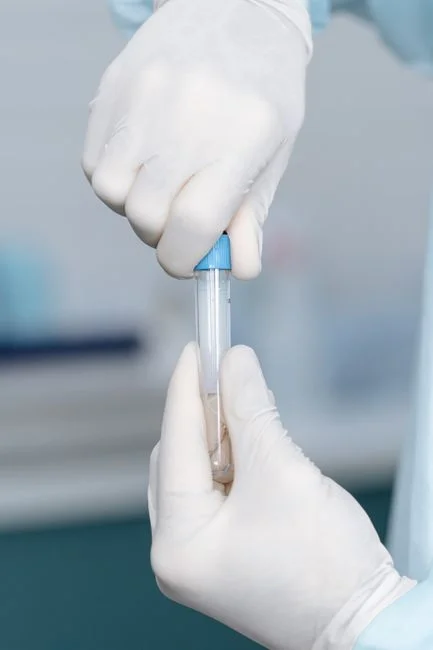
Indian auto plants must meet specific discharge limits at the point of entry to a drain, sewer, or land, with ETPs sized to handle the raw effluent characteristics shown in the table below. Sampling cadence is monthly grab plus 24-hour composite for Schedule VI parameters, which lines up with GM's 2022 CDP statement that 100% of major-facility water quality is monitored "monthly or more frequently as required by local regulations" using 40 CFR 136 analytical methods (per GM 2022 Water CDP, W1.2). Plants in a CPCB-notified critically polluted cluster do not get a Schedule VI number — the limit becomes "zero liquid discharge," requiring reuse to RO or evaporation. For a cross-jurisdiction read on how discharge compliance is being framed globally, see the EU discharge compliance framing for industrial readers.
| Parameter | Schedule VI discharge limit | Typical raw effluent at an auto plant |
|---|---|---|
| pH | 6.5–8.5 | 4–11 (varies with phosphating rinse dumps) |
| TSS | ≤100 mg/L | 300–800 mg/L (paint overspray, weld sludge) |
| Oil & grease | ≤10 mg/L | 200–500 mg/L (machining, die-cast, floor wash) |
| BOD (3-day, 27°C) | ≤30 mg/L | 250–600 mg/L (composite) |
| COD | ≤250 mg/L | 1,500–4,000 mg/L (intermittent, paint-shop campaigns) |
| Total chromium | ≤2.0 mg/L | 5–20 mg/L (conversion coating bath dumps) |
| Hexavalent Cr (Cr⁶⁺) | ≤0.1 mg/L | 0.5–2.0 mg/L (prior to Cr reduction) |
| Lead (Pb) | ≤1.0 mg/L | 1–5 mg/L (rare at auto assembly, possible at battery line) |
| Nickel (Ni) | ≤3.0 mg/L | 5–15 mg/L (electroplating rinse) |
| Zinc (Zn) | ≤5.0 mg/L | 10–30 mg/L (galvanised body handling) |
| Cyanide (CN) | ≤0.2 mg/L | 0.5–2.0 mg/L (case-hardening rinse, if present) |
| Phenol | ≤1.0 mg/L | 2–10 mg/L (paint resin wash) |
| Temperature at discharge | ≤40°C | 35–50°C at DAF outlet (quench and rinse streams) |
How GM's global water policy maps to Indian local consent
GM's 2022 Water CDP response aligns with Indian consent obligations, making the disclosure a usable baseline checklist during acquisition due diligence (per GM 2022 Water CDP, W1.1 and W1.2). GM reports 100% measurement of major-facility water withdrawal, discharge, quality, and treatment method — matching what an SPCB expects in monthly self-monitoring reports and what ROEMS transmits. GM identifies 5 water-stressed facilities (less than 3.5% of the total) that already operate Zero Liquid Discharge, which sets the internal benchmark for any brownfield near Pune, Sanand, or Sriperumbudur. The company's Global Environmental Policy and Guiding Environmental Commitments have been in place for 25+ years, so policy gaps in an acquired Indian plant can be filled with existing corporate language. GM signed the UN Global Compact CEO Water Mandate in 2021, which feeds into public-hearing submissions and CSR reporting under the Companies (CSR) Rules. The 2022 CDP also flags painting and Tier-1 supply-chain water as "vital" to operations, which supports a written request to the SPCB for adequate water allocation on a brownfield site.
Step-by-step: 30/60/90-day compliance plan after acquisition close
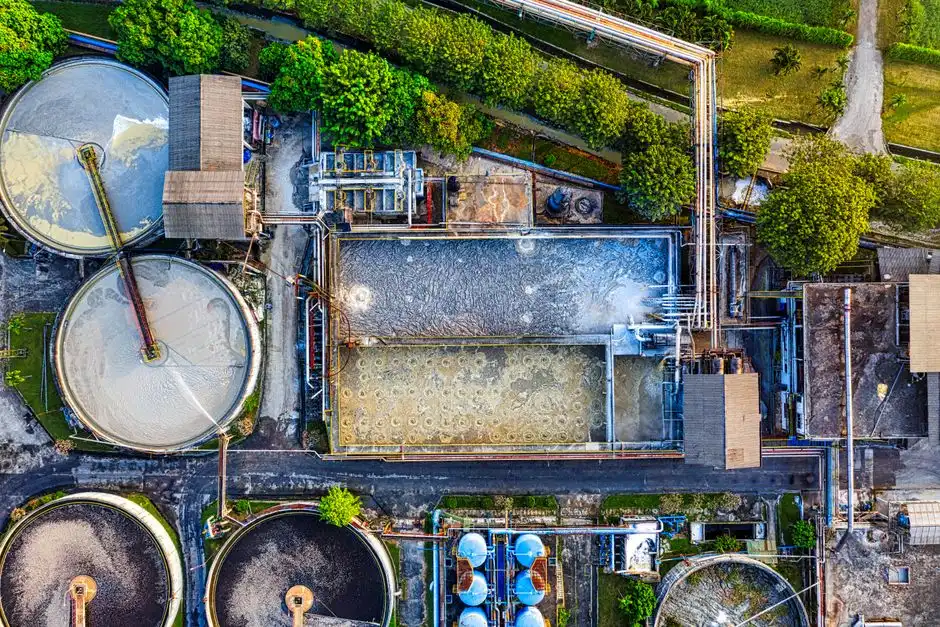
The following plan provides a timeline for maintaining regulatory standing after the acquisition closes. If the acquired plant is in a 17-category GPI list or in a CPCB-notified critically polluted cluster, the ROEMS installation must land inside day 60 — the SPCB will not entertain a CTO without a working analyser and a calibrated probe. If the plant is a stand-alone facility outside any notified industrial cluster, CETP membership renegotiation can be deferred to day 60–90. Throughout the plan, one named "Consent Holder" under Water Act Section 47 must be assigned, because SPCB prosecution is against the occupier, not the asset. For a parallel compliance pathway in the US, see the EV and auto plant pretreatment compliance guide covering Texas brownfields.
| Window | Compliance actions | Output / deliverable |
|---|---|---|
| Days 0–30 | File CTO application (Form XIII under Water Act); engage SPCB-approved environmental auditor for baseline; install temporary flow meters and grab samplers at every discharge point; file Form IV hazardous-waste return for the prior occupier's legacy waste; assign named Consent Holder under Sec 47 | CTO acknowledgement; baseline audit report; legacy waste manifest |
| Days 31–60 | Commission influent characterisation across three shifts and a full week of paint-shop campaign runs; validate whether ZLD is required by site location; submit CTO reply; install ROEMS if GPI or critically polluted; notify local CETP and renegotiate membership | Influent characterisation report; ZLD determination memo; ROEMS calibration log; CETP membership letter |
| Days 61–90 | Respond to SPCB show-cause (if any); file Environmental Statement (Form V) for the preceding financial year; align internal reporting to GM CDP-style metrics so the plant shows up correctly in the next GM water disclosure; hand over the ETP operating manual to the GM EHS platform | Form V receipt; CDP-aligned KPI dashboard; EHS platform handover sign-off |
Designing the ETP train for an Indian auto plant in 2026
The treatment train starts with a rotary bar screen for automotive plant headworks and oil skimming, then equalisation with pH correction to buffer three-shift variability. Primary treatment is a DAF system for paint shop and machining wastewater, with typical TSS removal of 85–95% and FOG removal of 90–95% (HydropureWater field data, 2026). Secondary treatment should be an MBR for secondary treatment of automotive effluent rather than conventional activated sludge where space is constrained and the plant sits in a water-stressed district near Pune, Sanand, or Chennai — MBR delivers a tighter TSS and SDI to the RO stage, which protects membrane life. The ZLD close-out uses an RO polishing for the ZLD reuse loop at 95% recovery, followed by a brine evaporator or crystalliser (MEE + ATFD for high-TDS brine) where the recovery target is above 90%. Sludge is dewatered on a filter press for paint sludge and biological sludge, with the oily fraction routed to a CPCB-registered hazardous-waste re-processor and the biological cake composted or landfilled as applicable. The polished stream is disinfected with chlorine dioxide or UV before reuse in flushing, gardening, or cooling-tower make-up, depending on the reuse target set by the SPCB and the plant's own water budget.
Frequently Asked Questions
Does a share purchase automatically transfer the existing CTO?
No. The Water Act 1974 Section 25 issues consent to a "person" or "occupier"; a change in occupier invalidates the CTO and a fresh application is required from the closing date, otherwise the plant is non-compliant and prosecutable.
When does Zero Liquid Discharge become mandatory for a GM-acquired plant in India?
ZLD is required where the plant sits in a CPCB-notified critically polluted industrial cluster, or where the SPCB has classified the unit as a Grossly Polluting Industry — a designation that carries the ROEMS mandate and a no-discharge condition (per CPCB ROEMS and ZLD guidance, 2026).
How does GM's 2022 CDP support an Indian consent hearing?
GM's 2022 CDP commits 100% measurement of major-facility withdrawal, discharge, and quality and identifies 5 water-stressed ZLD sites, providing documented corporate policy and operating precedent that an SPCB can map against the local consent conditions (per GM 2022 Water CDP, W1.1).
What lab methods are accepted for Schedule VI compliance in India?
CPCB requires APHA Standard Methods for the Examination of Water and Wastewater for the Schedule VI parameters, sampled as monthly grab plus 24-hour composite; GM's third-party laboratories use 40 CFR 136 methods, which