The Three-Layer Compliance Stack That Governs a Denton Discharge
Three regulatory layers stack on top of a single discharge from a Denton-area EV or auto plant, and the most stringent applicable layer controls. Engineering equipment to the wrong layer is the most common reason categorical plants fail parameters they thought they had covered (per EPA, 2026).
Layer 1 — General and specific prohibitions at 40 CFR 403.5(a) and 403.5(b). This floor is qualitative, not numeric, and applies to every Industrial User. It bans pass-through and interference and lists specific prohibited pollutants — ignitable waste, corrosive waste above pH 5 or below pH 10 absent POTW approval, and certain toxic gases. A slug event that disrupts the receiving POTW can trip this floor even when analytical results are compliant (per EPA, 2026).
Layer 2 — Categorical pretreatment standards at 40 CFR Parts 405–471. For an EV/auto plant, the binding subparts are 40 CFR Part 433 (metal finishing) for e-coat, electrodeposition, phosphate conversion coating, and body-in-white rinsewater; 40 CFR Part 444 (foundry) for any casting-line washwater; and 40 CFR Part 419 (petroleum refining) for petroleum-derived stamping and machining lubricants (per EPA, 2026). EPA revises subparts on a multi-year cycle, so current numeric values must be pulled from 40 CFR rather than from memory.
Layer 3 — Local limits developed by the City of Denton as the Control Authority under 40 CFR 403.5(c). Local limits are site-specific, imposed at the point of connection to the collection system, and frequently more stringent than the federal categorical floor when the receiving plant has constrained hydraulic or biological capacity (per EPA, 2026). EPA can enforce approved local limits as pretreatment standards once they are developed under 403.5(c) (per EPA, 2026).
Two definitions bind every compliance decision on a Denton EV/auto line. Pass-through at 40 CFR 403.3(p) is "a discharge which exits the POTW into waters of the United States in quantities or concentrations which, alone or in conjunction with a discharge or discharges from other sources, is a cause of a violation of any requirement of the POTW's NPDES permit" (per EPA, 2026). Interference at 40 CFR 403.3(k) is a discharge that, alone or with other sources, both inhibits or disrupts the POTW, its treatment processes or operations, or its sludge processes, and is a cause of an NPDES or sewage-sludge violation (per EPA, 2026). Both are independently enforceable and frequently trip EV/auto plants during battery-line slug events.
Why Denton Is Different: TCEQ Delegation and Ordinance 21-242a
The City of Denton operates an EPA-required pretreatment program approved by the Texas Commission on Environmental Quality (TCEQ), with the Industrial Pretreatment Division carrying permitting, inspection, and sampling authority (per City of Denton, Programs page). For any Denton-area Significant Industrial User, that delegation is the binding regulatory anchor — not the federal floor alone, and not a generic small-municipality envelope.
The operative control document is City Ordinance 21-242a, which codifies pretreatment standards and limitations, including the local numeric envelope and the prohibited-discharge language that flows down from 40 CFR 403.5 (per City of Denton, Programs page). The control mechanism any Denton SIU holds — the wastewater discharge permit — is issued under this ordinance, and the numbers printed on it are what the equipment train must hit.
Whether a plant qualifies as an SIU is set by the same federal triggers, applied locally. A facility is an SIU if it (1) is subject to categorical pretreatment standards, (2) discharges 25,000 gpd or more of process wastewater, (3) contributes a large organic loading, or (4) has reasonable potential to adversely affect the collection system or treatment plant (per City of Denton, Programs page). A Denton-area EV/auto plant with a paint shop or phosphate line almost always meets trigger (1) through 40 CFR Part 433, so SIU obligations are unavoidable — and so is Ordinance 21-242a.
Enforcement contact is the Industrial Pretreatment Division at 940-349-8619. The division issues permits, performs inspections, collects compliance samples, and is the entity a compliance engineer calls when a local-limit question or a slug event triggers a notification (per City of Denton, Programs page). Discharge ultimately flows to the Pecan Creek Water Reclamation Plant, and that receiving plant's hydraulic and biological capacity is what drives whether Denton's local limits sit tighter than the generic small-municipality envelope for sulfate, TDS, and total metals.
The Five Source Streams That Define a Denton EV/Auto Plant
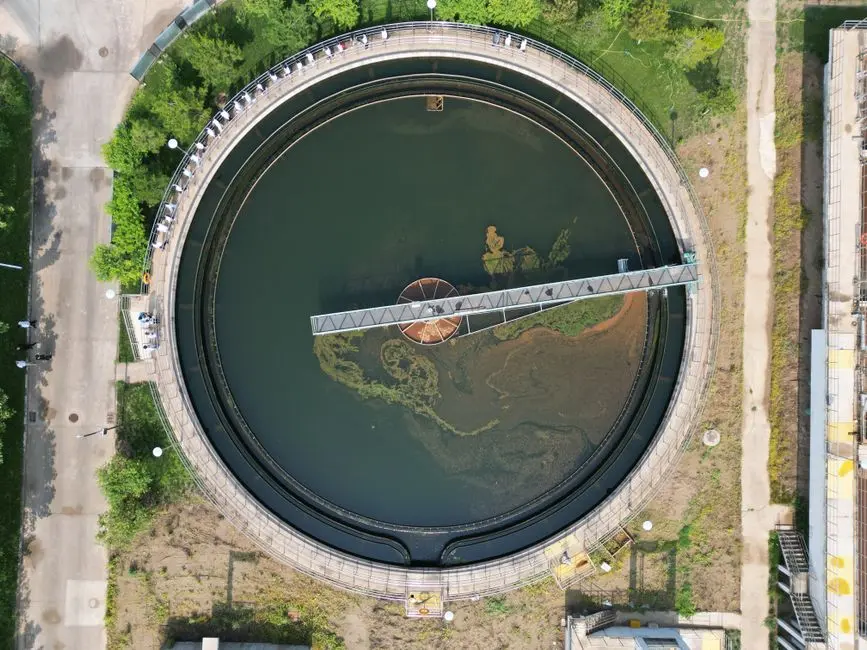
Source-by-source mapping is what turns a generic pretreatment train into one that actually hits the binding parameter. Five streams dominate the wastewater envelope at a Denton-area EV/auto plant, and each points to a different controlling unit operation.
E-coat and electrodeposition rinsewater carries dissolved Ni/Zn at 5–50 mg/L, TDS at 1,000–5,000 mg/L, and anionic paint solids. It is controlled by 40 CFR Part 433 and the local metals limit, and is why dissolved-metals precipitation is rarely optional on a paint-shop line (per HydropureWater, 2026). Phosphate conversion coating rinsewater runs total phosphorus at 20–80 mg/L with dissolved iron and zinc at 10–100 mg/L; this stream is the primary driver for the chemical precipitation stage and explains why phosphorus removal from auto plant wastewater is a recurring compliance problem (per HydropureWater, 2026).
Stamping and machining lubricant streams are the reason DAF sits at the front of nearly every auto plant train — incoming emulsified O&G at 500–5,000 mg/L will not gravity-separate cleanly, and free oil above the local 50–100 mg/L O&G limit will fail without a dedicated FOG stage (per HydropureWater, 2026). Battery cell and pack assembly effluent is the EV-specific addition: LiPF₆ electrolyte traces, Ni/Co precursor washwater, and DI blowdown push the design toward dedicated stainless collection and a separate precipitation stage, since fluoride and lithium both create downstream problems at the receiving POTW (per HydropureWater, 2026). Coolant blowdown, parts-washer effluent, and floor wash carry high COD with low metals, variable pH 4–11 swings, and TSS at 200–1,500 mg/L — frequently routed through biological polishing or offsite recycling, with equalization and PLC-controlled neutralization as non-negotiable first stages (per HydropureWater, 2026).
| Source stream | Key parameters / typical range | Controlling regulation | Controlling unit operation |
|---|---|---|---|
| E-coat / electrodeposition rinsewater | Dissolved Ni, Zn 5–50 mg/L; TDS 1,000–5,000 mg/L; paint solids | 40 CFR Part 433 + local metals limit (per EPA, 2026) | Chemical precipitation + lamella clarifier (per HydropureWater, 2026) |
| Phosphate conversion rinsewater | Total P 20–80 mg/L; Fe, Zn 10–100 mg/L | 40 CFR Part 433 (per EPA, 2026) | Chemical precipitation (per HydropureWater, 2026) |
| Stamping / machining lubricant streams | Emulsified O&G 500–5,000 mg/L; TSS 500–3,000 mg/L | 40 CFR Part 419 + local O&G (per EPA, 2026) | DAF (per HydropureWater, 2026) |
| Battery cell / pack assembly effluent (EV-specific) | LiPF₆ traces; Ni/Co precursors; DI blowdown | Local limits / Ordinance 21-242a (per City of Denton) | Dedicated stainless collection + precipitation (per HydropureWater, 2026) |
| Coolant blowdown, parts washer, floor wash | COD high; metals low; pH 4–11; TSS 200–1,500 mg/L | 40 CFR 403.5(b) + local limits (per EPA, 2026) | Equalization + neutralization (per HydropureWater, 2026) |
The Five-Stage Treatment Train That Hits Denton's Local Envelope
Five stages, in roughly this order, handle the vast majority of Denton-area EV/auto streams that go to Pecan Creek. Not every plant needs all five — the right subset is a function of the controlling pollutant from the table above.
Stage 1 — Equalization basin. Sized for 8–24 hours of batch retention with a rotary bar screen upstream for headworks protection, equalization dampens pH, flow, and concentration swings before downstream unit operations see them. It is the lowest-cost insurance against pass-through events and the most common root cause of failed compliance when it is undersized (per HydropureWater, 2026).
Stage 2 — PLC-controlled pH adjustment and emulsion breaking. A PLC-controlled chemical dosing skid brings strong acid/caustic batches into the 6–9 pH band required by 40 CFR 403.5(b) and the local limit, and conditions emulsified oils so the DAF can remove them in the next stage.
Stage 3 — Dissolved air flotation (DAF). Operating at 4–300 m³/h with micro-bubble technology and automatic skimming, a DAF system for auto plant FOG and TSS removal strips free and emulsified oil and grease plus a large fraction of TSS in a single step. It is the most common first physical separation on auto-plant trains (per HydropureWater, 2026).
Stage 4 — Chemical precipitation with lamella clarifier. Coagulant/flocculant dosing followed by a lamella clarifier for metals precipitation at 20–40 m/h surface loading cuts dissolved metals into the 1–3 mg/L local band while reducing chemical consumption up to 30% versus conventional clarifiers (per HydropureWater, 2026). The lamella is the workhorse stage for Part 433 streams.
Stage 5 (optional) — MBR polishing. PVDF membranes at 0.1 μm deliver near-reuse quality effluent at roughly 60% smaller footprint than conventional activated sludge, and are justified only when the local POTW caps BOD/COD aggressively or the plant is moving toward reuse (per HydropureWater, 2026). Otherwise this stage adds capex and operating cost without buying compliance headroom.
At the back end, a plate and frame filter press dewaters metals-bearing sludge to a disposable cake — the disposal liability most often overlooked in early scoping, and the one that determines whether RCRA/CWA §405 handling rules apply to the spent cake.
| Stage | Unit operation | Design parameter | Compliance it delivers |
|---|---|---|---|
| 1 | Equalization + rotary bar screen | 8–24 h retention (per HydropureWater, 2026) | 40 CFR 403.5(a); 403.8(f) slug prevention (per EPA, 2026) |
| 2 | PLC pH adjustment + emulsion breaking | pH 6–9 band (per EPA, 2026) | 40 CFR 403.5(b); local pH limit (per City of Denton) |
| 3 | DAF | 4–300 m³/h; micro-bubble (per HydropureWater, 2026) | Local O&G 50–100 mg/L; bulk TSS (per EPA, 2026) |
| 4 | Lamella clarifier + precipitation | 20–40 m/h surface loading (per HydropureWater, 2026) | 40 CFR Part 433; local metals 1–3 mg/L (per EPA, 2026) |
| 5 (optional) | MBR | 0.1 μm PVDF; ~60% smaller footprint (per HydropureWater, 2026) | Tight BOD/COD cap or reuse (per EPA, 2026) |
| Back end | Plate and frame filter press | Cake to disposable solids | RCRA / CWA §405 sludge handling (per EPA, 2026) |
DAF, Lamella Clarifier, or MBR: Which Stage Belongs in a Denton Train
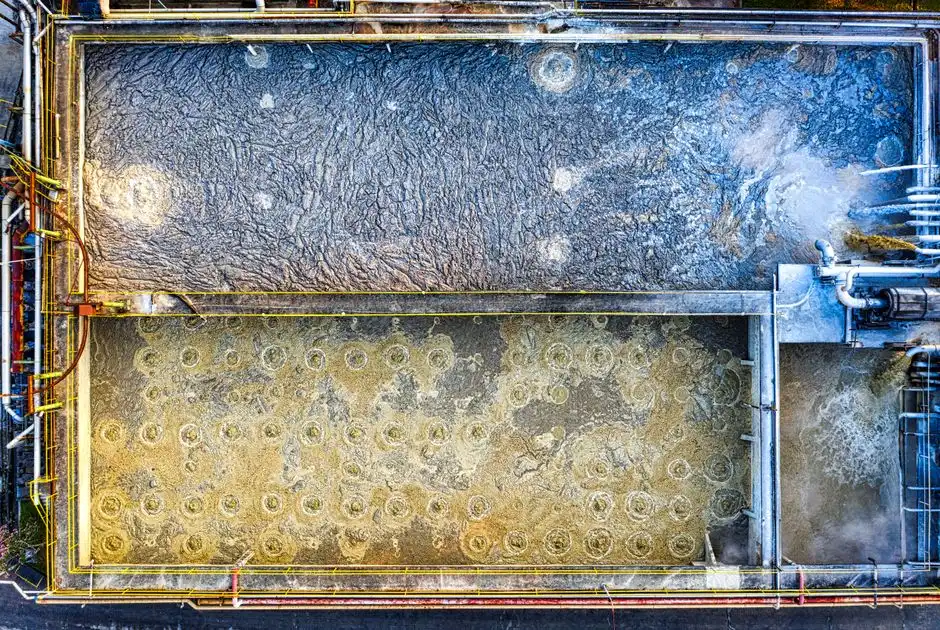
The honest framing is "how much headroom do you need, and for how many years" rather than "which is better." Three unit operations cover the choice space for most Denton-area plants, and the right answer is a function of the controlling pollutant and the local POTW envelope.
DAF is the right first physical separation when FOG exceeds 200 mg/L or TSS is above 300 mg/L — this covers most stamping, machining, and parts-washer streams. A DAF system for auto plant FOG and TSS removal is the default front end (per HydropureWater, 2026).
Lamella clarifier is the right second stage when the binding constraint is dissolved metals or post-precipitation TSS. Surface loading of 20–40 m/h and up to 30% chemical savings versus conventional clarifiers is the economic case (per HydropureWater, 2026). A lamella clarifier for metals precipitation slots in after DAF and chemical dosing.
MBR is justified only when the local POTW caps BOD/COD aggressively or when the plant is moving toward water reuse. A MBR for biological polishing of EV/auto wastewater belongs in the scope only when reuse or a tight BOD cap is in play — otherwise the activated-sludge step adds capex and operating cost without buying compliance headroom (per HydropureWater, 2026).
Build 20–30% headroom over current numeric limits. The POTW must perform annual review and periodic reevaluation under 40 CFR 403.5(c), and limits may tighten on a multi-year cycle as the receiving plant's capacity is reassessed (per EPA, 2026). Over-engineering the train by that margin is common practice rather than overspend, and is especially important for sulfate and TDS at Pecan Creek, where North Texas source water already runs high. For comparable decision logic in other delegated jurisdictions, see chemical plant pretreatment compliance in a TCEQ-delegated jurisdiction and mining and metals pretreatment compliance under the same 40 CFR Part 403 framework. For Part 419 lubricant-stream specifics, petroleum plant pretreatment compliance and 40 CFR Part 419 lubricant streams covers the same decision tree.
| If the binding constraint is… | Pick | Why | Source |
|---|---|---|---|
| FOG >200 mg/L or TSS >300 mg/L | DAF | Emulsified O&G and bulk TSS in one step | HydropureWater, 2026 |
| Dissolved metals (Part 433) or residual TSS post-precipitation | Lamella clarifier + precipitation | 20–40 m/h loading; up to 30% chemical savings; compact footprint | HydropureWater, 2026 |
| Tight BOD/COD cap or stated reuse target | MBR | 0.1 μm PVDF; near-reuse effluent; ~60% smaller footprint vs. activated sludge | HydropureWater, 2026 |
The Paperwork That Fails Inspections: BMR, Control Mechanism, and the Slug Plan
The paperwork is where the inspection actually fails, not the chemistry. Four obligations cover most of the SIU compliance surface, and the one most often missing during enforcement actions is the slug load control plan.
Baseline monitoring report (BMR). Required at categorical standard promulgation or at new-discharge startup, the BMR establishes the pollutant envelope every later compliance report measures against (per EPA, 2026). For an existing plant, the BMR is already on file; for a new line, it is the first deliverable.
90-day compliance reports and the control mechanism. SIUs report on a defined schedule, hold a written control mechanism from the POTW, and submit to routine POTW inspections and sampling under 40 CFR 403.12 (per EPA, 2026). The control mechanism is the wastewater discharge permit issued under Ordinance 21-242a, and the numbers printed on it are what the equipment train is engineered to hit.
Slug load control plan under 40 CFR 403.8(f). This is the document most often missing during enforcement actions. It combines equalization capacity, flow and pH monitoring, and written batch-release procedures (per EPA, 2026). A slug of nickel-bearing electrolyte or LiPF₆-bearing washwater from a battery line that reaches the collection system without this written control plan is a standalone violation, independent of any numeric exceedance — which is exactly the failure mode EV plants with new battery lines present to Denton.
Annual review and periodic reevaluation of local limits under 40 CFR 403.5(c). The POTW must perform an annual review and periodic reevaluation, and EPA enforces approved local limits as pretreatment standards (per EPA, 2026). Today's compliant number may tighten on a multi-year cycle as the receiving plant's capacity is reassessed, which is why the 20–30% headroom margin in the equipment train is common practice rather than overspend.
Frequently Asked Questions
Which federal categorical standard applies to a Denton-area EV/auto plant?
40 CFR Part 433 (metal finishing) governs e-coat, electrodeposition, phosphate conversion coating, and body-in-white rinsewater (per EPA, 2026). If the plant runs a foundry line, 40 CFR Part 444 applies to casting washwater; if it generates petroleum-derived stamping and machining lubricants, 40 CFR Part 419 covers those streams. Confirm current numeric values against 40 CFR itself, because EPA revises subparts on a multi-year cycle.
What is a typical local-limit envelope for a Denton discharge to Pecan Creek?
Representative small-municipality POTW envelopes run pH 6–9, O&G 50–100 mg/L, TSS 200–300 mg/L, and total metals 1–3 mg/L per parameter (per EPA, 2026). Denton's local limits are codified in Ordinance 21-242a and may sit tighter than this generic envelope, especially for sulfate and TDS, given Pecan Creek's capacity and North Texas source-water baseline. Always confirm against the actual control mechanism before scoping equipment.
When is an MBR justified on a Denton EV/auto train?
MBR is justified only when the local POTW caps BOD/COD aggressively or when the plant is moving toward water reuse; otherwise the activated-sludge step adds capex and operating cost without buying compliance headroom (per HydropureWater, 2026). A DAF-plus-lamella train is the lower-capex baseline for FOG, TSS, and dissolved metals; MBR is the lower-footprint, higher-OoR option for BOD polishing and reuse.
What is the single most common compliance failure mode for an EV/auto plant on Ordinance 21-242a?
A missing or inadequate slug load control plan under 40 CFR 403.8(f), which combines equalization capacity, flow and pH monitoring, and written batch-release procedures (per EPA, 2026). A slug of nickel-bearing electrolyte or LiPF₆-bearing washwater that reaches the collection system without this written control plan is a standalone violation, independent of any numeric exceedance — and battery-line startups are the highest-risk trigger.