Why Hospital Wastewater in France Is Treated as a Separate Compliance Problem
Hospital wastewater in France sits on top of two regulatory layers: the EU Urban Waste Water Treatment Directive 91/271/EEC sets the floor, and the French Code de la santé publique — enforced locally by the ARS (Agence Régionale de Santé) — adds site-specific discharge prescriptions that a municipal STEP cannot guarantee. ARS oversight gives regional health agencies the authority to impose additional monitoring on pharmaceutical residues, radionuclides, and antibiotic-resistant bacteria, and a non-compliance finding can suspend a hospital's operating authorisation (per Code de la santé publique articles L.1321-1 et seq., as enforced 2025-2026).
The pollutant load is qualitatively and quantitatively different from domestic sewage. Hospital effluent carries pharmaceutical residues (antibiotics 0.1–100 µg/L, iodinated contrast media up to several mg/L, cytotoxics at sub-µg/L), chemical disinfectants (glutaraldehyde 1–10 mg/L, formaldehyde), radionuclides from nuclear medicine (Tc-99m, I-131), and antibiotic-resistant bacteria (ARB) plus associated resistance genes (ARG). A 2024 Frontiers study documented that bacteria isolated from a hospital WWTP effluent survived conventional activated sludge and showed multi-drug resistance against Tetracycline, Ampicillin, Amoxicillin, Chloramphenicol, and Erythromycin at a 25 ppm screening concentration — proof that biological treatment alone is no longer defensible against ARS scrutiny.
2026 regulatory pressure is intensifying on three fronts. ANSES reports on pharmaceutical effluent are increasingly being cited in ARS prescriptions, the EU Watch List under the Water Framework Directive 2000/60/EC continues to flag diclofenac, sulfamethoxazole, and other hospital-derived molecules for member-state monitoring, and the December 2024 revision of WHO guidance on water, sanitation, and hygiene in health-care facilities tightens the expected performance envelope. The cumulative effect: a dedicated treatment train is now a procurement decision, not a research question.
Influent Characteristics and 2026 French Discharge Limits
Typical hospital wastewater in France runs 200–1,000 L/bed/day, with a BOD₅/COD ratio near 0.77 confirming biodegradability — meaning biological treatment is technically justified, not only regulation-mandated. A Bioresources and Bioprocessing study reported untreated COD of 192 ± 18 mg/L falling to 47.31 ± 5.71 mg/L after biological polishing, with TN removal of 68.6% and TP removal of 64% — numbers that define the design envelope and explain why a polishing step is non-negotiable.
| Parameter | Typical hospital WW (influent) | 2026 French/EU discharge limit | Notes |
|---|---|---|---|
| Flow | 200–1,000 L/bed/day | Site-specific (ARS prescription) | Use 200–400 L/bed/day for design |
| COD | 150–300 mg/L | ≤125 mg/L | EU 91/271/EEC Annex I |
| BOD₅ | 100–200 mg/L | ≤25 mg/L | EU 91/271/EEC |
| TSS | 100–250 mg/L | ≤35 mg/L | EU 91/271/EEC |
| Total nitrogen | 20–60 mg/L | ≤15 mg/L | Sensitive zone per MTES |
| Total phosphorus | 5–15 mg/L | ≤2 mg/L | Sensitive zone per MTES |
| Fecal coliforms | 10⁶–10⁸ CFU/100 mL | ≤100 CFU/100 mL (reuse) | ARS tightening to ≤10 in 2026 |
| pH | 6.5–8.5 | 6.5–8.5 | — |
MTES supplementary thresholds on heavy metals (Hg, Cd, Pb, Ni, Cu, Zn, Cr) apply when the total annual load triggers monitoring under the ICPE / IOTA framework, and specific pharmaceutical compounds (diclofenac, sulfamethoxazole, 17β-estradiol) fall under the EU Watch List reporting obligation. The 2026 trend in ARS prescriptions is to require demonstrated ≥5-log reduction of resistant organisms, not just total coliforms — a number that belongs in the specification, not the optional clause.
Pre-Treatment and Flow Equalization: Protecting the Downstream Train
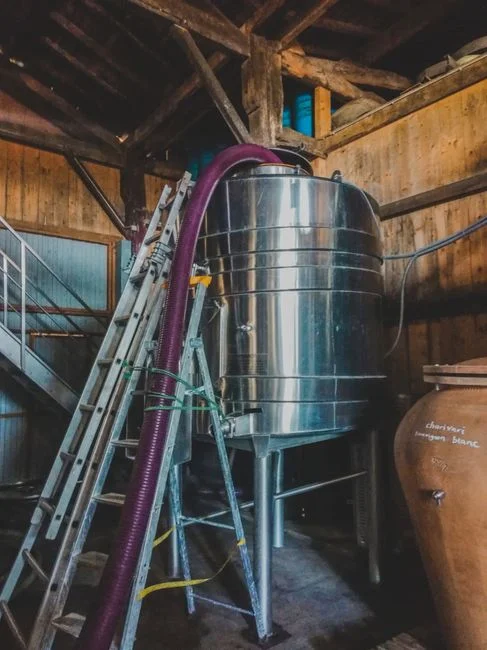
Pre-treatment is the stage that decides whether the MBR membranes and the ClO₂ generator reach their design life, and it is the most often undersized line item in French hospital tenders. A GX Series rotary mechanical bar screen at 3–5 mm aperture removes textiles, gauze, and PPE fragments that would otherwise pin, tear, or blind downstream membranes — a 1 mm stray thread can shut down an MBR cassette for a cleaning cycle that costs more than a year of screening maintenance.
Grit removal follows, then an equalization basin sized at 8–12 hours of average daily flow. The figure is not arbitrary: French surgical-block schedules produce 3–4× peaking factors between 07:00 and 14:00, and a 10-hour buffer flattens those peaks to within ±20% of the daily mean, which keeps the MBR flux and the ClO₂ dose on their design points. pH correction targets 6.5–8.0; French hospital effluent typically runs 18–25 °C, which is well inside the mesophilic range for nitrification and avoids the kinetic penalty that hits biological stages below 13 °C.
A coagulant/flocculant dosing stage (FeCl₃ at 30–80 mg/L or polyaluminium chloride at 20–50 mg/L) before primary settling typically improves TSS removal by 40–60% and reduces the load reaching the biological stage by 20–30% — directly translating into smaller membrane area, lower air-scour energy, and longer chemical-cleaning intervals. Skipping this stage is the single most common cause of MBR under-performance in retrofits of older French hospital plants.
Biological Treatment: MBR vs SBR vs Conventional Activated Sludge
For a 100–500 bed French hospital in 2026, three biological options are realistic: MBR, SBR, and — increasingly — conventional activated sludge rejected on technical grounds. An integrated MBR membrane bioreactor system using submerged PVDF flat-sheet or hollow-fibre modules at 0.1–0.4 µm pore size produces near-reuse effluent, occupies 60% less footprint than an equivalent CAS train, and runs at MLSS 8,000–12,000 mg/L — a biomass density that suppresses filamentous bulking and gives a stable F/M ratio of 0.05–0.15 kg BOD/kg MLSS·day at HRT 6–12 h and SRT 20–30 days. The reference page on how an MBR membrane bioreactor works walks through the cassette hydraulics that drive those numbers.
SBR (Sequencing Batch Reactor) is the correct choice where flows are intermittent or operator skill is constrained. A single tank runs fill/react/settle/decant in 4–6 cycles per day, no separate clarifier is needed, and the batch logic makes it easier to quarantine a non-compliant cycle. The penalty is footprint — typically 40–60% larger than an MBR at the same load — and a less polished effluent that pushes more work onto the tertiary stage.
Conventional activated sludge is increasingly rejected for hospital WW in France: poor ARB removal, higher sludge yield (0.4–0.6 kg DS/kg COD versus 0.15–0.25 kg DS/kg COD for MBR), and effluent quality that no longer meets tightened pharmaceutical thresholds. The comparison below is sized to a 200-bed CHR/CHU at 40 m³/day average flow.
| Criterion | MBR (PVDF) | SBR | Conventional AS |
|---|---|---|---|
| Effluent COD (typical) | ≤50 mg/L | 60–90 mg/L | 80–120 mg/L |
| Effluent TSS | ≤1 mg/L | 15–30 mg/L | 20–35 mg/L |
| ARB / ARG removal | 2–4 log (membrane barrier) | 1–2 log | <1 log |
| Footprint (40 m³/day) | ~25 m² | ~40 m² | ~60 m² |
| Sludge yield | 0.15–0.25 kg DS/kg COD | 0.30–0.40 | 0.40–0.60 |
| Operator skill required | Moderate (membrane care) | Low–Moderate | Moderate |
For broader context on the MBR option, the 2026 market data summarised in 2026 MBR market growth and forecast confirms sustained French hospital-sector adoption, while the Lisbon reference design in hospital wastewater treatment in Lisbon shows an adjacent regulatory case with a comparable technical envelope.
Tertiary Disinfection: ClO₂ vs Ozone vs UV for French Hospital Effluent
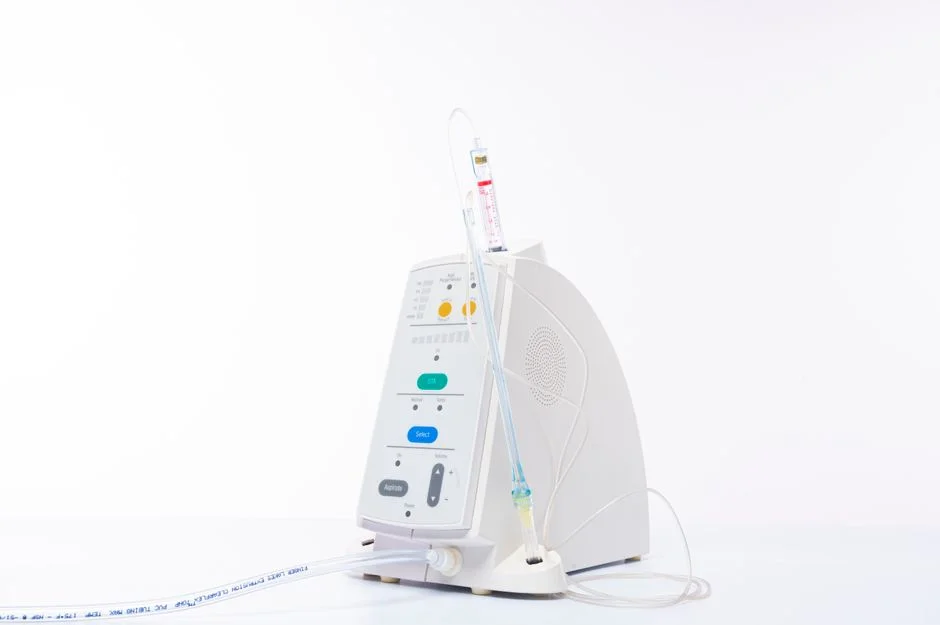
ARS in 2026 expects a demonstrated ≥5-log reduction of resistant organisms, not just total coliforms — and a tertiary stage is no longer optional. The three credible options are chlorine dioxide (ClO₂), ozone, and UV; each is positioned below for a French hospital context, with the trade-offs that procurement and infection-control will both ask about.
| Criterion | ClO₂ | Ozone | UV (polishing) |
|---|---|---|---|
| Fecal coliform log reduction | ≥5 log | ≥5 log | 3–4 log at <1 NTU |
| ARB / ARG reduction | 3–4 log | 3–5 log | 2–3 log (limited on ARG) |
| Residual effect | Yes (long-lasting) | No (decays in minutes) | None |
| DBP formation | Low THMs; no chlorate/perchlorate issues at controlled dose | Low (no halogenated DBPs) | None |
| EU compliance anchor | Drinking Water Directive 98/83/EC residual limits | — | — |
| Footprint | 1.5–3 m² (50–500 g/h) | 0.5 m² for ≤20 m³/day | 1–2 m² |
| Operating cost per m³ | €0.04–€0.09 | €0.06–€0.12 (energy) | €0.02–€0.05 (lamp replacement) |
For most French hospitals, the preferred configuration pairs a ClO₂ generator — capacity range 50 g/h to 20,000 g/h covers a 50–2,000 bed facility in a single skid — with the biological stage delivering low turbidity, and uses UV only as a polishing step when turbidity is already <1 NTU. ClO₂ is effective across pH 6–9, forms far less trihalomethane than chlorine, and leaves a measurable residual that protects the reuse network downstream. For small clinics and satellite sites below 20 m³/day, the medical wastewater system uses ozone in a packaged skid with footprint as low as 0.5 m², 99%+ kill, and no chemical dosing — the right answer where footprint and operator time are the binding constraints.
Sludge Handling and Reuse Considerations
Sludge is the line item that determines real OPEX, and it is the one most often under-scoped at specification stage. MBR hospital wastewater produces a sludge yield of 0.15–0.25 kg DS per kg COD removed — half that of conventional activated sludge — which is one of the under-appreciated drivers of the MBR business case. A plate and frame filter press is the right dewatering choice for hospitals with limited footprint: batch operation, achievable cake dryness 22–28% DS, polymer consumption 3–6 kg/t DS, and a filtrate that recycles to the head of the train.
The disposal route in France is governed by ADEME/ARS classification: landfill for high heavy-metal or pharmaceutical-content sludge, incineration with energy recovery for the default case, and composting only when the feedstock meets NF U44-051 thresholds. For a 200-bed hospital the dewatering line typically handles 8–15 kg DS/day, well within a single 1 m² plate press operated 3–4 days per week.
2026 CAPEX and OPEX Benchmarks for a 200-Bed French Hospital
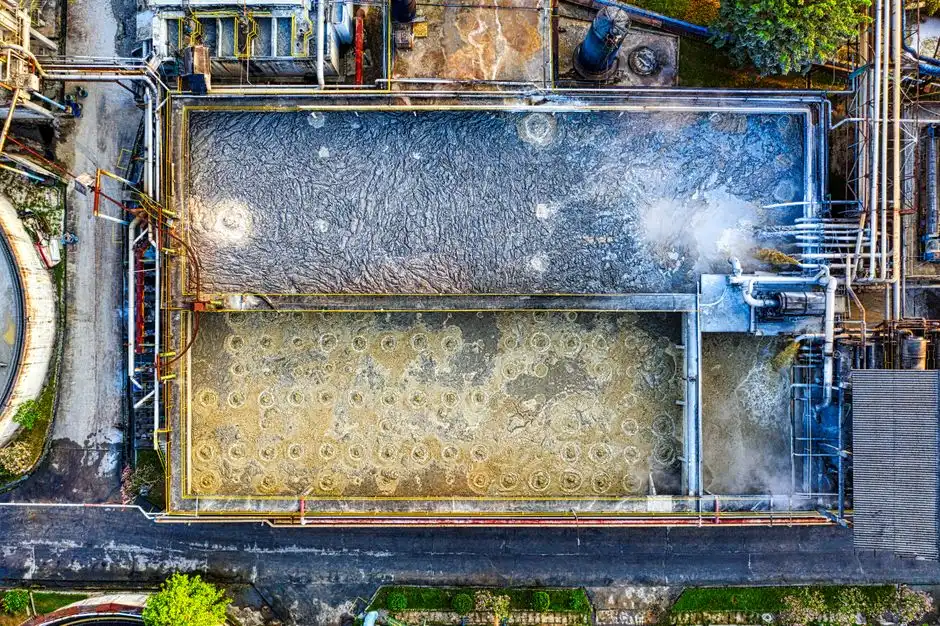
The worked example below is sized to a 200-bed CHR/CHU with a 200 L/bed/day specific flow, giving 40 m³/day design average and 60 m³/day peak. All figures are 2026 EUR for a turnkey package including civil works, equipment, instrumentation, and commissioning; site-specific conditions (soil, access, power availability) can shift these ranges by ±15%.
| Cost line | MBR + ClO₂ | SBR + ClO₂ | Packaged (≤20 m³/day) |
|---|---|---|---|
| Equipment supply | €110,000–€230,000 | €85,000–€170,000 | €22,000–€55,000 |
| Installation & civil | €45,000–€110,000 | €35,000–€80,000 | €8,000–€25,000 |
| Instrumentation & SCADA | €15,000–€40,000 | €12,000–€30,000 | €3,000–€10,000 |
| Commissioning & validation | €10,000–€40,000 | €8,000–€20,000 | €2,000–€5,000 |
| Total CAPEX | €180,000–€420,000 | €140,000–€300,000 | €35,000–€95,000 |
OPEX for the 40 m³/day MBR+ClO₂ case breaks down as: energy 35–45% (membrane air scour plus permeate pumps, typical 2.5–3.5 kWh/m³), chemical dosing 15–20% (FeCl₃, polymer, ClO₂ precursor), sludge disposal 20–25% (ADEME route), labour 10–15% (0.3–0.5 FTE). That sums to a unit OPEX of €0.85–€1.60 per m³ treated, or €12,400–€23,400 per year for 40 m³/day. Where the hospital reuses treated water for toilet flushing or site irrigation, a 4–7 year payback against metered potable water is the typical French outcome, and is increasingly cited in ARS funding files.
Equipment Selection Checklist and Vendor Evaluation Criteria
Six criteria reliably separate a defensible shortlist from a brochure in French hospital tenders. (1) CE marking plus ACS (Attestation de Conformité Sanitaire) for any component in contact with reused water. (2) A documented EU Directive 91/271/EEC compliance dossier with measured performance data, not generic curves. (3) Reference list of at least three French hospital installations, ideally with CHU or CHR sites. (4) Documented service response time ≤48 h anywhere in mainland France, with a named service engineer per region. (5) Spare parts stocked inside the EU with a published 5-year availability commitment. (6) Total cost of ownership over 15 years, not just CAPEX — membrane replacement, chemical-cleaning interval, and energy per m³ belong in the financial model.
The tender structure that works in CHU procurement is a two-stage process: a technical compliance pass against the six criteria above (typically 60% weighting), then commercial evaluation (40%). For satellite sites below 5 m³/day — isolated technical buildings, laundry facilities, outpatient clinics — the WSZ underground integrated sewage treatment series fits the footprint and avoids separate above-ground enclosures. One forward-looking note: ARS is starting to ask for IoT monitoring and digital-twin retrofits on plants above 100 m³/day, so any 2026 specification should at minimum require Modbus/TCP or OPC-UA export from day one, with the option to add a supervisory layer without replacing the controller.
Frequently Asked Questions
What is the 2026 French discharge limit for COD from a hospital? COD ≤125 mg/L and BOD₅ ≤25 mg/L are the binding values from EU Directive 91/271/EEC, applied in France by the MTES and routinely tightened at site level in ARS prescriptions; total nitrogen ≤15 mg/L and total phosphorus ≤2 mg/L apply in sensitive zones.
Which disinfection is preferred for French hospital wastewater in 2026? Chlorine dioxide is the default for plants above 20 m³/day, delivering ≥5-log fecal coliform reduction, 3–4 log on ARB, and a measurable residual — with capacity available in a single skid up to 20,000 g/h. For plants below 20 m³/day, packaged ozone gives 99%+ kill on a 0.5 m² footprint with no chemical dosing.
What is the typical CAPEX for a 200-bed French hospital WWTP in 2026? An MBR + ClO₂ turnkey package runs €180,000–€420,000, an SBR + ClO₂ package €140,000–€300,000, and a packaged ozone system for ≤20 m³/day sites €35,000–€95,000, with OPEX typically €0.85–€1.60 per m³ treated.
Does biological treatment alone remove antibiotic-resistant bacteria? No. The 2024 Frontiers study documented multi-drug resistance surviving activated sludge at 25 ppm screening for Tetracycline, Ampicillin, Amoxicillin, Chloramphenicol, and Erythromycin; a 2026 compliant train therefore requires either MBR membranes (2–4 log ARB reduction) or a dedicated tertiary disinfection step, or both, to meet the ARS expectation of ≥5-log resistant-organism reduction.
What is the legal basis for ARS oversight of hospital discharges? The Code de la santé publique (articles L.1321-1 et seq.) gives the ARS authority to set site-specific discharge prescriptions, layered on top of EU Directive 91/271/EEC and the Water Framework Directive 2000/60/EC, with ANSES opinions and WHO 2024 guidance routinely cited as the technical reference.