Why Kandy’s Hospitals Need Specialized Wastewater Treatment
Kandy National Hospital, the second-largest medical facility in Sri Lanka, generates approximately 500 m³/day of effluent with chemical oxygen demand (COD) levels reaching 1,200 mg/L and biochemical oxygen demand (BOD) peaking at 600 mg/L. Unlike municipal sewage, hospital wastewater in Kandy contains a concentrated cocktail of pathogens, radioactive isotopes, and pharmaceuticals that conventional activated sludge systems cannot effectively neutralize. The mountainous terrain of the Central Highlands and the tropical climate of Kandy further complicate treatment, as high humidity and temperature fluctuations affect the metabolic rates of biological treatment phases.
Recent research (University of Peradeniya, 2023) has identified five major Pharmaceuticals and Personal Care Products (PPCPs) in Kandy hospital influents that pose a direct threat to the Mahaweli River. These include amoxicillin at concentrations up to 500 ng/L, carbamazepine at 120 ng/L, sulfamethoxazole at 80 ng/L, ibuprofen at 200 ng/L, and diclofenac at 150 ng/L. Because the Mahaweli River is the primary source of potable water for the region, classified as Class II under SLS 614:1983, these persistent organic pollutants must be removed to prevent bioaccumulation in the local food chain and the development of antibiotic-resistant bacteria.
The Central Environmental Authority (CEA) of Sri Lanka has intensified monitoring of medical facilities, as untreated or poorly treated hospital effluents are linked to endocrine disruption in aquatic life and public health outbreaks. According to 2024 WHO guidelines on hospital effluent management, medical facilities in sensitive ecological zones like Kandy must implement tertiary treatment protocols. Currently, only 30% of Kandy’s hospitals possess on-site treatment plants that meet modern standards, leaving a significant portion of the city's medical waste to rely on the Kandy City Wastewater Treatment Plant, which has a limited capacity for specialized pharmaceutical removal.
Sri Lanka’s Hospital Wastewater Discharge Limits vs. Global Standards
Sri Lanka’s Central Environmental Authority (CEA) enforces mandatory discharge limits for hospital effluents under the SLS 614:1983 standard (amended 2022), requiring BOD levels below 50 mg/L and COD below 100 mg/L. These regulations are designed to protect the Mahaweli River watershed but are increasingly being compared to more stringent international benchmarks to justify the adoption of advanced membrane and oxidation technologies. For instance, while Sri Lanka permits 30 mg/L of Total Suspended Solids (TSS), the EU Urban Waste Water Directive often requires stricter tertiary filtration for facilities discharging into "sensitive areas," a designation that applies to Kandy’s mountainous water catchment zones.
The following table compares the current Sri Lankan regulatory framework against US EPA guidelines and EU directives to provide a benchmark for engineering design and procurement:
| Parameter | Sri Lanka (CEA/SLS 614) | US EPA (Medical Facilities) | EU Directive 91/271/EEC |
|---|---|---|---|
| BOD₅ (mg/L) | < 50 | < 30 | < 25 |
| COD (mg/L) | < 100 | < 120 | < 125 |
| TSS (mg/L) | < 30 | < 30 | < 35 (or 70-90% reduction) |
| Fecal Coliform (CFU/100mL) | < 1,000 | No specific limit (6-log path. red.) | < 500 (Sensitive areas) |
| PPCP Removal | Not explicitly regulated | Monitoring required | Mandatory tertiary treatment |
| Oil & Grease (mg/L) | < 10 | < 10 | < 10 |
Engineers evaluating how EPA standards compare to Sri Lanka’s hospital wastewater regulations will note that while local COD limits are stricter, the lack of explicit PPCP mandates in Sri Lanka creates a regulatory gap. However, the CEA has the authority to impose site-specific "stringent limits" for hospitals discharging near public water intakes. This makes the implementation of 6-log pathogen reduction and 99% PPCP removal a "future-proof" strategy for facility managers in Kandy, ensuring compliance even as local standards evolve toward global norms.
Process Flow and Engineering Specs for Hospital Wastewater Treatment in Kandy
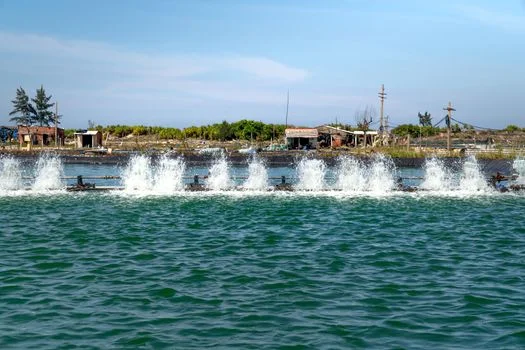
Design parameters for hospital wastewater systems in Kandy must account for high hydraulic variability and the prevalence of non-biodegradable medical plastics. A robust process flow begins with mechanical pretreatment using rotary bar screens (such as the GX Series) to remove solids larger than 3mm, which typically accounts for a 40–60% reduction in TSS. For hospitals with flow rates between 50 and 500 m³/day, these screens must be sized for peak hourly factors of 3.0 to handle sudden surges from laundry and surgical ward cleaning cycles.
Following pretreatment, the secondary and tertiary phases must be optimized for Kandy’s tropical climate, where wastewater temperatures average 24°C to 28°C. This temperature range accelerates biological activity but can also lead to rapid oxygen depletion in aeration tanks. The recommended engineering stages are as follows:
- Primary Clarification: High-efficiency lamella clarifiers are utilized to reduce TSS to <100 mg/L. In Kandy’s mountainous context, these systems are preferred due to their 90% smaller footprint compared to traditional circular clarifiers. Surface loading rates should be maintained between 20–40 m/h.
- Secondary Biological Treatment: The choice between Anoxic/Aerobic (A/O) and Membrane Bioreactors (MBR) is critical. While A/O systems achieve 85% COD removal, an MBR membrane bioreactor for 99% PPCP removal is superior for hospitals discharging near the Mahaweli. MBR systems operate at higher Mixed Liquor Suspended Solids (MLSS) concentrations (8,000–12,000 mg/L), significantly reducing the required tank volume.
- Tertiary Polishing: For high-fat effluents (e.g., from hospital kitchens), DAF systems for 95% FOG and TSS removal in hospital effluents are integrated before the final disinfection stage. DAF microbubble physics (20–50 μm bubbles) are particularly effective at removing suspended medical lipids that can foul downstream membranes.
- Advanced Disinfection: To meet the <1,000 CFU/100 mL fecal coliform limit, chlorine dioxide generators for 6-log pathogen reduction are utilized. ClO₂ is preferred over liquid chlorine because it does not produce carcinogenic trihalomethanes (THMs) and remains effective across a wider pH range (4.0–10.0), which is common in medical effluents.
Engineering specs for a 200 m³/day hospital plant in Kandy should target an influent BOD of 300 mg/L and an effluent BOD of <10 mg/L. This requires a hydraulic retention time (HRT) of 8–12 hours for biological phases and a sludge retention time (SRT) of 15–25 days to ensure the nitrification of ammonia-rich medical waste.
PPCP Removal Benchmarks: How Advanced Treatment Systems Perform in Kandy’s Hospitals
Conventional activated sludge (CAS) systems typically achieve less than 60% removal of recalcitrant pharmaceuticals like amoxicillin and carbamazepine, making them insufficient for Kandy’s environmental protection goals. Advanced treatment systems, specifically MBR and ozone-enhanced processes, provide the molecular-level filtration necessary to intercept these compounds. MBR systems utilize 0.1 μm pore size membranes, which act as a physical barrier to many large-molecule drugs, while the high SRT promotes the growth of specialized bacteria capable of degrading complex organic chains.
The efficiency of different technologies in treating Kandy’s specific pharmaceutical profile is detailed in the performance matrix below:
| Pollutant (Influent Conc.) | CAS Removal % | A/O + Sand Filter % | MBR System % | Ozone (10 mg/L) % |
|---|---|---|---|---|
| Amoxicillin (500 ng/L) | 55-60% | 85-90% | 99%+ | 98% |
| Carbamazepine (120 ng/L) | 25-30% | 65-70% | 95% | 99% |
| Sulfamethoxazole (80 ng/L) | 40-50% | 75-80% | 97% | 99% |
| Ibuprofen (200 ng/L) | 70-80% | 90-95% | 99% | 99% |
| Diclofenac (150 ng/L) | 30-40% | 60-70% | 94% | 99% |
| Overall COD Reduction | 75-80% | 85-90% | 95-98% | 90-95% |
While MBR systems offer the highest consistent removal rates, they require higher energy inputs (0.8–1.2 kWh/m³) compared to A/O systems (0.3–0.5 kWh/m³). However, for hospitals in Kandy, the reduction in sludge production (up to 50% less sludge than CAS) and the ability to produce "Class A" reusable water for landscape irrigation often offsets the higher energy costs. For facilities with extremely high organic loads, engineers may consider advanced COD removal techniques for high-organic-load wastewaters to pre-treat effluents before they reach the biological stage.
Cost Breakdown: Hospital Wastewater Treatment Plants for Kandy (2025 CAPEX/OPEX)
The total cost of ownership for a hospital wastewater treatment plant (WWTP) in Kandy is significantly influenced by the city’s mountainous topography, which can increase excavation and structural reinforcement costs by 20%. For a standard 50 m³/day system, capital expenditure (CAPEX) ranges from $120,000 for conventional systems to $250,000 for high-end MBR installations. These figures include equipment procurement, site preparation, and commissioning, but exclude long-term civil works which may vary based on soil stability near the Kandy Lake or Mahaweli banks.
Operating expenditure (OPEX) in Sri Lanka is primarily driven by electricity tariffs and the cost of imported treatment chemicals. A comprehensive cost framework for 2025 is provided below:
| Technology | CAPEX (50 m³/d) | OPEX ($/m³) | Footprint | Compliance Ease |
|---|---|---|---|---|
| Conventional (A/O + Sed.) | $120k - $180k | $0.50 - $0.70 | Large | Moderate |
| MBR Integrated | $200k - $250k | $0.90 - $1.40 | Compact | Very High |
| DAF + ClO₂ Disinfection | $150k - $220k | $0.70 - $1.10 | Medium | High |
| SBR (Batch Reactor) | $130k - $190k | $0.60 - $0.85 | Medium | Moderate |
In Kandy, the tropical climate reduces the need for insulated digestion tanks but increases the chemical demand for odor control and disinfection by approximately 15% due to higher ambient temperatures promoting rapid volatilization. Procurement officers should note that public hospitals may qualify for funding through Japan’s concessional yen loans (Kandy City Wastewater Management Project), which can cover up to 80% of the CAPEX for systems designed to meet or exceed SLS 614:1983 standards. For private facilities, selecting a hospital wastewater treatment solution for tropical climates like Kandy is essential to ensure that OPEX remains predictable over a 15-year lifecycle.
Equipment Selection Framework: Zero-Risk Hospital Wastewater Treatment for Kandy
Selecting the appropriate equipment for a Kandy-based hospital requires a multi-criteria decision-making approach that balances flow rate, space availability, and specific pharmaceutical removal requirements. For small clinics and specialized centers with flows under 50 m³/day, a compact medical wastewater treatment system for small hospitals is the most cost-effective option. These systems are often pre-assembled in containers, minimizing the need for complex civil engineering on Kandy’s sloping terrains.
The following five-step decision framework guides engineers through the selection process:
- Assess Flow and Space: If the footprint is limited (common in Kandy’s urban core), prioritize MBR or underground WSZ Series plants. For flows >500 m³/day with available land, conventional A/O with lamella clarifiers offers lower OPEX.
- Define Compliance Level: If discharging directly into the Mahaweli River (Class II water), MBR is mandatory to achieve 99% PPCP removal. If discharging into the municipal sewer, a DAF-based pretreatment system may suffice.
- Select Disinfection Method: For 6-log pathogen reduction (required for infectious disease wards), install a Chlorine Dioxide generator. If only 4-log reduction is required, UV systems are viable but require high-clarity effluent (TSS <5 mg/L).
- Evaluate Terrain Constraints: For mountainous sites, choose modular, lightweight equipment that can be transported via narrow roads. Avoid large, cast-in-place concrete tanks if soil stability is a concern.
- Budget Alignment: For low-CAPEX requirements, utilize integrated A/O systems. For low-OPEX and long-term reliability, MBR systems reduce sludge handling costs and eliminate the need for secondary clarifiers.
By following this logic, facility managers can mitigate the risk of regulatory fines and ensure that their wastewater infrastructure supports the "Clean Sri Lanka" initiative. Implementing a MBR membrane bioreactor ensures that even the most persistent medical contaminants are removed before reaching the environment.
Frequently Asked Questions
What are the primary discharge limits for hospitals in Kandy?
Under the CEA’s SLS 614:1983 standard, hospitals must maintain BOD <50 mg/L, COD <100 mg/L, and TSS <30 mg/L. Additionally, fecal coliform must be strictly kept below 1,000 CFU/100 mL. Failure to meet these benchmarks can result in heavy fines or the suspension of medical licenses, especially for facilities located near the Mahaweli River catchment area.
Which technology is best for removing pharmaceuticals from hospital waste?
Membrane Bioreactors (MBR) are the gold standard, achieving up to 99% removal of amoxicillin and 95% of carbamazepine. MBR systems combine biological degradation with 0.1 μm physical filtration, which is significantly more effective than conventional activated sludge (CAS) systems that often remove less than 60% of persistent medical compounds.
How much does a hospital wastewater treatment plant cost in Sri Lanka?
For a 50 m³/day system, CAPEX ranges from $120,000 to $250,000 depending on the technology. MBR systems are at the higher end ($200k-$250k) but offer lower sludge disposal costs. OPEX typically ranges from $0.50 to $1.40 per cubic meter of treated water, influenced by local electricity tariffs and chemical consumption.
Can hospital wastewater be reused for irrigation in Kandy?
Yes, provided it undergoes tertiary treatment and advanced disinfection. Systems utilizing MBR and chlorine dioxide can produce effluent that meets "Class A" standards for non-potable reuse, such as landscape irrigation or toilet flushing. This is an excellent strategy for Kandy hospitals to reduce their municipal water bills and improve sustainability scores.
Does the mountainous terrain of Kandy affect WWTP design?
Absolutely. The sloping terrain requires specialized civil engineering, often increasing CAPEX by 20% for excavation and retaining walls. Modular or containerized systems are preferred in Kandy because they reduce the footprint and can be installed on stepped platforms, minimizing the environmental impact on the hillside.