Pharmaceutical Contamination in Paris Hospital Wastewater: The Hidden Challenge
Hospital effluent contains a complex, potent mix of pharmaceuticals that municipal treatment plants are not designed to fully remove. The Mediflux study, conducted across three French hospitals, quantified this risk, finding consistently detectable levels of antibiotics, analgesics, and cytotoxic drugs in raw hospital wastewater. While hospital discharge constitutes less than 1% of the total sewage volume in Paris, it contributes a disproportionately high share—often over 50%—of the total micropollutant load entering the sewer system.
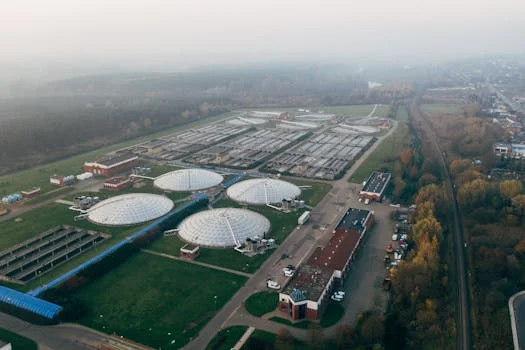
Conventional wastewater treatment plants (WWTPs), including SIAAP’s Seine Aval facility, rely on primary and secondary biological treatment processes. These are highly effective for organic matter (BOD) and suspended solids removal but achieve highly variable and often insufficient removal rates for pharmaceuticals, typically ranging from 30% to 60% depending on the compound's biodegradability. This leaves a significant residual concentration of active pharmaceutical ingredients (APIs) to be discharged into receiving waters like the Seine.
This persistent contamination presents a hidden environmental and public health challenge, driving the need for hospital-specific, source-control treatment strategies to mitigate the release of these bioactive compounds at their origin. For instance, common drugs like ibuprofen and carbamazepine often persist through conventional treatment, highlighting the specific nature of this issue.
EU Urban Waste Water Treatment Directive 2024/3019: What It Means for Paris Hospitals
The revised EU Urban Waste Water Treatment Directive (UWWTD 2024/3019) establishes a strict, enforceable regulatory framework targeting micropollutants, with direct and significant implications for healthcare facilities in Paris. The directive mandates that by 2028, member states must implement monitoring and meet reduction targets for a list of priority substances, which includes numerous pharmaceuticals.
For hospitals, this translates to three core compliance obligations. First, facilities discharging into sensitive areas—a classification that includes the Seine basin—will be required to implement advanced on-site treatment to remove a significant percentage of micropollutants before effluent is released to the municipal sewer. Second, hospitals must begin baseline monitoring of their effluent for key indicator pharmaceuticals by 2026 to establish a compliance trajectory. This monitoring should include regular sampling for antibiotics and cytostatic drugs. Third, comprehensive documentation of all treatment processes, chemical usage, and effluent quality data must be maintained and made available for audit by the regional health agency, the Agence Régionale de Santé (ARS) d'Île-de-France.
Non-compliance risks significant financial penalties and reputational damage. Proactive engineering planning is no longer optional but a necessity for operational and regulatory continuity. For a detailed breakdown of the timeline and specific substance lists, consult our complete 2025 EU wastewater compliance guide for hospitals.
On-Site vs Centralized Treatment: Engineering Options for Hospitals
The choice between relying solely on centralized municipal treatment or investing in on-site pre-treatment is a critical engineering and financial decision for hospital facility managers. SIAAP’s Seine Aval plant, one of the largest in Europe, provides robust primary and secondary treatment for over 6 million residents. However, its tertiary treatment capabilities for micropollutant removal are limited and not yet optimized for the diverse range of pharmaceuticals found in hospital effluent.
In contrast, dedicated on-site systems allow a hospital to take direct control of its discharge compliance. Modern compact systems can pre-treat effluent to achieve pharmaceutical residue concentrations below 0.1 μg/L before sewer discharge, effectively decoupling the facility’s compliance from the limitations of the municipal infrastructure. Technologies like Membrane Bioreactors (MBR) coupled with ozone disinfection achieve greater than 99% pathogen destruction and over 80% reduction in a wide spectrum of micropollutants, all within a footprint often smaller than 20 m², making them feasible for dense urban environments like Paris. This is particularly vital for large teaching hospitals with significant research and oncology wards.
| Parameter | Centralized (SIAAP) | On-Site Pre-Treatment |
|---|---|---|
| Pharmaceutical Removal Efficiency | 30-60% (variable) | >80% (consistent) |
| Footprint Requirement | N/A (off-site) | < 20 m² for 5 m³/h capacity |
| Compliance Control | Low (dependent on municipal performance) | High (direct control over effluent quality) |
| Pathogen Kill Rate | High (with tertiary treatment) | >99.9% (with integrated ozone/UV) |
| Capital Investment | None (only usage tariffs) | High upfront, lower long-term liability |
For hospitals subject to the new UWWTD, the operational security and compliance certainty offered by a high-efficiency MBR system for hospital wastewater reuse and discharge or a compact hospital wastewater treatment system with ozone disinfection often outweigh the initial capital expenditure.
Key Technologies for Hospital Wastewater Treatment in Paris
Selecting the right technology stack is paramount for meeting Paris's stringent discharge limits and space constraints. A multi-barrier approach is most effective, combining biological, physical, and advanced oxidation processes.
Membrane Bioreactors (MBR): Systems like the HydropureWater DF Series are the cornerstone of modern hospital treatment. They combine biological digestion with ultrafiltration (0.1 μm or less), producing effluent with COD reductions exceeding 95% and TSS consistently below 5 mg/L. This high-quality output is essential for protecting downstream advanced oxidation units from fouling and ensuring their efficiency.
Ozone Disinfection: Superior to chlorine for hospital applications, ozone (used in HydropureWater compact systems) achieves a 99.99% microbial kill rate without leaving toxic chemical residuals or generating halogenated disinfection by-products (DBPs). Crucially, it also oxidizes a wide range of pharmaceutical compounds, breaking them down into simpler, less bioactive molecules. This process, known as ozonation, is highly effective against many recalcitrant compounds.
Dissolved Air Flotation (DAF): As a pre-treatment step, a DAF unit is highly effective for hospitals, removing fats, oils, greases (FOG), and suspended solids at 92-97% efficiency. This protects sensitive MBR membranes from fouling and ensures stable biological process performance, significantly reducing maintenance costs and downtime.
Future-Proofing Hospital Wastewater Systems in Paris
With the UWWTD 2024/3019 mandating monitoring to begin in 2026, the most critical future-proofing step for Parisian hospitals is to initiate baseline effluent sampling immediately. This data is invaluable for right-sizing treatment systems and demonstrating a proactive compliance posture to regulators.
Beyond compliance, energy efficiency is a key consideration. Île-de-France has committed to reducing fossil fuel dependence, and selecting systems with low energy consumption, such as high-efficiency MBRs and ozone generators, aligns with these regional sustainability goals. The choice of modular, skid-mounted systems allows for phased implementation and easy capacity expansion. This design philosophy enables hospitals to meet current demands and seamlessly integrate additional treatment trains or new technologies as regulations inevitably tighten further, all without disrupting hospital operations. This foresight mitigates future financial and operational risks associated with non-compliance.
Frequently Asked Questions
How is hospital wastewater treated in Paris?
Most hospitals in Paris currently discharge their effluent directly into the sewer network, where it is conveyed to SIAAP’s centralized plants like Seine Aval for conventional treatment. However, evolving EU regulations are pushing hospitals to implement on-site advanced treatment systems using technologies like MBR, ozone, or activated carbon to specifically remove pharmaceuticals before discharge.
Does hospital wastewater in Paris go to the Seine?
Yes, after undergoing primary and secondary treatment at facilities like the Seine Aval plant, the final effluent is discharged into the Seine River. However, without advanced on-site pre-treatment at the hospital source, a significant load of micropollutants and pharmaceuticals can persist through the treatment process and enter the river, posing ecological risks.
What are the 2025 EU requirements for hospital effluent?
The UWWTD 2024/3019 mandates that by 2028, hospitals in sensitive catchment areas (like the Seine basin) must monitor and reduce micropollutants in their effluent. This effectively requires many hospitals to invest in advanced on-site treatment systems to achieve compliance with the new reduction targets.
Can hospitals in Paris use compact treatment systems?
Absolutely. Modern compact systems are engineered for urban constraints. They can handle flows from 1–10 m³/h with full pharmaceutical removal and disinfection capabilities in a footprint under 20 m², often with full automation requiring no dedicated operator.
Is ozone better than chlorine for hospital wastewater?
For EU compliance, ozone is generally the superior technology. It leaves no harmful chemical residue, avoids the formation of regulated disinfection by-products (DBPs), and is significantly more effective at degrading a wide spectrum of pharmaceutical compounds compared to chlorine, making it the preferred choice.
Further Reading
Explore these in-depth articles on related wastewater treatment topics: