EU Wastewater Treatment Regulations 2026 Compliance Under the UWWTD
EU wastewater treatment regulations 2026 compliance means planning against Directive (EU) 2024/3019, which the European Commission states entered into force on 1 January 2025. The recast covers urban areas above 1,000 inhabitants and adds quaternary treatment for micropollutants. Austria's federal water ministry states Member States have 30 months to transpose the directive.
Directive (EU) 2024/3019, the recast Urban Wastewater Treatment Directive (UWWTD), replaces Council Directive 91/271/EEC. It covers agglomerations from 1,000 population-equivalent (p.e.) upward, adds micropollutant monitoring and ≥80% removal deadlines for large plants, and strengthens polluter-pays rules for industrial dischargers into municipal sewers. Earlier project notes said Member States must transpose it into national law by 2026. The 30-month window stated by the ministry, starting from the 1 January 2025 entry into force, is the figure to lock into the basis of design.
Uniform collection, treatment, and discharge duties apply to all EU member states under the UWWTD. The original 1991 text cut organic matter and nutrients. The recast adds micropollutants, energy neutrality by 2045, and integrated urban wastewater management plans. The directive supports the EU Zero Pollution Action Plan, which targets pollution levels no longer harmful to health and ecosystems by 2050, within the European Green Deal.
Proper collection and treatment before discharge to rivers, lakes, and coastal waters reduce pathogens, chemicals, and nutrients that drive waterborne disease risk. The European Environment Agency (EEA) reports that existing water legislation already improved bathing-water quality, with over 85% of bathing waters classified as "excellent". The updated UWWTD extends that baseline to smaller agglomerations and persistent microcontaminants that secondary plants were never designed to strip. The European Commission also reports 30,354 urban wastewater treatment plants in operation in the EU, and 10 million Europeans still lack basic sanitation.
For buyers, the practical question is simple: which agglomeration band, which micropollutant deadline, and which on-site pre-treatment load will the municipal works bill back under polluter-pays. Answer those three items before freezing the process flow sheet. Most plants we review still lock the flow sheet before the p.e. band is written down.
Key Changes in the 2025 UWWTD Revision
The revised UWWTD lowers the coverage threshold to every agglomeration of 1,000 p.e. or more, bringing small towns and rural clusters into the regulatory fold. Binding micropollutant monitoring and removal for pharmaceutical residues and endocrine disruptors sit at the centre of the update. Plants must move toward energy neutrality and recover resources such as biogas and nutrients. Industrial facilities that discharge into municipal sewers now carry explicit cost responsibility for pre-treatment of their specific pollutant loads.
Member states must adopt integrated urban wastewater management plans for entire river basin districts. Those plans cover treatment capacity, stormwater overflows, flood risk, and climate impacts, not only secondary treatment trains. Public access rules require key performance data for wastewater infrastructure to be published online in an accessible form so operators and communities can track compliance progress.
According to Austria's Federal Ministry, integrated plans are due by 2033 for settlements of 100,000 p.e. and by 2039 for selected settlements of 10,000 p.e. Plans must be updated at least every 6 years. Earlier schedules in many briefs still show agglomerations above 150,000 p.e. finishing plans by the end of 2027. Keep both dates in the risk register until the national law names the date that binds the catchment.
Wastewater plants can account for up to 1% of total electricity use in some member states. By 2045, plants must produce as much renewable energy as they consume, mainly from sludge-digestion biogas. The European Commission sets energy neutrality and a greenhouse-gas cut by 2045. Austria's ministry places that neutrality at Member State level for plants from 10,000 p.e., and allows up to 35% of non-fossil energy to be purchased externally in the final stage.
Phosphorus and nitrogen recovery from sludge is encouraged so residuals can return as fertiliser under circular-economy programmes. Digester uptime and sludge quality control therefore move from "nice to have" into the compliance critical path. Most digesters we see miss the energy target when sludge volatile solids swing past the design basis. Austria's ministry also requires energy audits for sewers and plants from 10,000 p.e.
What New Treatment Requirements Does the UWWTD Set?
The UWWTD now requires tertiary and advanced polishing beyond secondary activated sludge where micropollutant and nutrient limits apply. Ozonation, granular activated carbon (GAC), and membrane bioreactors (MBRs) are the process routes most plants size when ≥80% micropollutant removal is on the capital plan. Conventional targets also tighten. Total suspended solids (TSS) removal must exceed 95%, and chemical oxygen demand (COD) reduction must be greater than 90%.
In sensitive areas, total nitrogen and phosphorus must reach ≤10 mg/L and ≤1 mg/L respectively. Austria's Federal Ministry states a tighter schedule: plants from 150,000 p.e. must reach at least 80% nitrogen removal by 2039, and plants from 10,000 p.e. by 2045. The same ministry sets phosphorus at 0.5 mg/L from 2039 for plants from 150,000 p.e., and at 0.7 mg/L from 2045 for plants from 10,000 p.e. Treat the ≤10 mg/L and ≤1 mg/L figures as the legacy sensitive-area baseline until the permit quotes the new values.
Most industrial sites we size for sewer discharge still run FOG and TSS control first, then polish soluble organics. A high-efficiency DAF system for FOG and TSS removal handles fats and floatable solids before the municipal connection. An integrated MBR membrane bioreactor system delivers sub-micron solids barrier performance when reuse or micropollutant polishing follows.
Operators comparing plant-level effluent rules can also review Industrial Effluent Limits EU 2026: Compliance Guide & Treatment Tech for sector discharge framing. Ozonation injects O3 into treated wastewater and breaks many pharmaceuticals and pesticides into simpler fragments. A sand or biological filter then removes oxidation by-products. GAC adsorbs a wide range of non-polar organics onto carbon surface area and can be regenerated when exhausted.
MBRs combine biology with ultrafiltration (UF) or microfiltration (MF), replacing secondary clarifiers and producing low-solids effluent ready for further advanced treatment. For sensitive-area nutrient limits, simultaneous nitrification-denitrification (SND) or enhanced biological phosphorus removal (EBPR) becomes standard. Iron or aluminium salt precipitation still backs up biological phosphorus removal when load swings threaten the ≤1 mg/L P target. Teams tracking the revised urban wastewater treatment directive 90% removal contaminants path for COD should lock COD and micropollutant trains into one upgrade sequence rather than separate capital cycles.
| Target Contaminant | Required Removal/Effluent Limit | Recommended Technology |
|---|---|---|
| Micropollutants (e.g., Diclofenac) | ≥80% removal | Ozonation, Activated Carbon, MBR |
| Total Suspended Solids (TSS) | >95% removal | DAF, MBR, Tertiary Filtration |
| Chemical Oxygen Demand (COD) | >90% removal | Activated Sludge, MBR, Advanced Oxidation |
| Total Nitrogen (N) | ≤10 mg/L (sensitive areas) | Nitrification/Denitrification, MBR |
| Total Phosphorus (P) | ≤1 mg/L (sensitive areas) | Chemical Precipitation, Biological P-removal |
| Fats, Oils, Grease (FOG) | Full pre-treatment required | Dissolved Air Flotation (DAF) |
uwwtd micropollutant removal deadlines for industrial sites
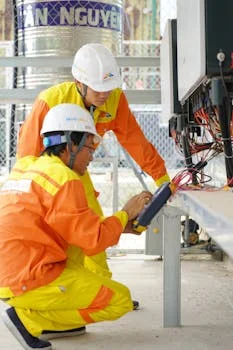
UWWTD micropollutant removal deadlines for industrial sites follow the receiving plant's size band, not a factory-only calendar. Industrial dischargers face new micropollutant data and cost duties, must supply pre-treatment data to municipal authorities, and may face surcharge fees tied to effluent volume and toxicity. By 2028, wastewater treatment plants (WWTPs) serving over 10,000 p.e. must monitor a list of 10+ priority substances, including diclofenac and carbamazepine. The European Commission states that, until 2028, Member States still report under the 1991 directive, and in 2028 reporting moves to the revised directive.
When do UWWTD micropollutant deadlines hit industrial sites?
Industrial sites feel UWWTD micropollutant deadlines when the receiving works enters quaternary treatment. Earlier briefs required WWTPs larger than 100,000 p.e. to reach a minimum of 80% removal of listed micropollutants by 2035, with plants down to 10,000 p.e. following by 2040. Austria's Federal Ministry instead requires a fourth stage by 2045 for plants from 150,000 p.e., and for selected plants from 10,000 p.e. that discharge into areas at risk from trace substances. Ask the municipality which of those calendars is already in the draft permit.
The European Commission will formally adopt the priority micropollutant list. Sector loads expected in that list include PFAS from textile and paper manufacturing, selected pesticides from agro-industrial operations, and heavy metals from metal finishing and electronics. Under the polluter-pays extension, a textile plant that discharges coloured dye wastewater can be charged for the activated carbon or advanced oxidation the municipal works must add. That surcharge structure pushes on-site pre-treatment when dye, solvent, or metal spikes dominate treatability.
The Joint Research Centre report JRC144745, published 10 December 2025, states that pharmaceuticals and cosmetics must cover at least 80% of quaternary-treatment cost through extended producer responsibility. That 80% is a cost share, not the removal percentage. The same report estimates costs by 2045 at 1.48–1.8 billion Euro/year. An earlier impact assessment used about 1.2 billion Euro/year by 2040, equal to 1.56 billion Euro/year in 2025 prices, and assumed wider treatment than the recast requires.
Self-monitoring packages should cover sector-specific micropollutants plus treatability indicators such as the BOD:COD ratio. A depressed BOD:COD ratio often flags toxic or poorly biodegradable fractions that upset municipal biology. Keep an auditable sampling log and share trend data early with the receiving authority. Most disputes we see start from missing baseline loads, not from missing hardware quotes.
For industrial numeric framing beyond this municipal lens, see Industrial Wastewater Discharge Limits Hungary. Use that note when the question is a sector concentration limit rather than the municipal quaternary calendar.
80 percent micropollutant removal eu wastewater plants
80 percent micropollutant removal at EU wastewater plants is the performance figure many capital plans still use for indicator organics such as diclofenac. Official notes separate that removal duty from a second 80% figure, which is the minimum cost share paid by producers. Ozonation, GAC, and MBR trains remain the routes named when the removal target is on the process sheet. Most plants we size for this duty see ozone dose or carbon contact time set by the peak week, not by the annual average.
What does 80 percent micropollutant removal require?
A quaternary step after stable secondary treatment is what 80 percent micropollutant removal requires, not a longer aeration time alone. Ozonation, granular activated carbon, or an MBR ahead of carbon or ozone is the usual train when ≥80% removal is the design target. Secondary activated sludge rarely holds that removal on persistent pharmaceuticals at design load. Size the dose on measured peaks from a 12-month load characterisation campaign, not on a brochure average.
The Commission reports €6.6 billion in economic benefits per year by 2045 from the revised directive as a whole. That benefit figure is not a plant budget. Quaternary cost still sits with the EPR scheme for at least 80% and with the remaining share on the operator or public budget. Industrial users should model both the removal train and the residual surcharge before they sign a connection agreement.
Health-parameter monitoring is also required, including SARS-Covid and anti-microbial resistance, according to the European Commission. That surveillance sits beside process compliance sampling. It does not replace diclofenac or carbamazepine checks at plants over 10,000 p.e. Coordinate lab methods early so one sampling programme can serve both duties.
Implementation Timeline and Phased Deadlines by Country
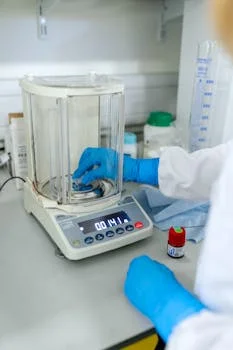
All EU countries were told in earlier guidance to transpose Directive (EU) 2024/3019 by 2026. Austria's Federal Ministry states that, after the 1 January 2025 entry into force, Member States have 30 months to transpose the new provisions. Existing plants in agglomerations of 1,000–2,000 p.e. have until 2030 to install compliant collection and treatment. Any new industrial discharge or treatment plant commissioned after 1 January 2025 must meet the full revised standards at start-up.
Micropollutant monitoring at plants over 10,000 p.e. begins in 2028. Earlier compliance ladders set binding 80% removal for plants over 100,000 p.e. in 2035, then for the 10,000–100,000 p.e. band in 2040. Germany, the Netherlands, and Austria often move first where quaternary polishing already exists. Member states still closing 1991-directive gaps may lean on EU Cohesion Fund support and longer build cycles.
National agencies set the exact enforcement calendar after transposition. Ask early for surcharge formulae, monitoring analyte lists, and stormwater overflow metrics that will appear in permits. Parallel reading on the eu new enviromental standard for sewer systems helps map sewer-connection duties against plant upgrade sequencing.
Capital programmes that wait for the 2035 removal deadline often discover civil works and power upgrades need a longer lead time than the polishing reactor itself. Start with a 12-month load characterisation campaign so ozone dose, carbon empty-bed contact time, or MBR flux can be sized on measured peaks rather than brochure averages. The Commission figure of €6.6 billion in benefits per year by 2045 does not shorten that civil lead time. Most plants we size for quaternary retrofits spend the first year on power, hydraulics, and sampling access.
How Do Saudi Compliance Regulations Relate?
Saudi compliance regulations are not set by Directive (EU) 2024/3019; this article covers EU UWWTD duties only. Gulf projects follow national environmental permits and industrial discharge licences issued under Saudi frameworks, which use their own numeric limits and monitoring schedules. Exporters and EPC teams that design for both EU sewer connections and Saudi plant permits should treat each permit pack as a separate design basis.
Shared engineering practice still helps: document FOG, TSS, COD, nutrients, and any persistent organics before selecting DAF, MBR, or carbon/ozone polishing. Do not copy UWWTD 80% micropollutant deadlines or 1,000 p.e. thresholds into a Saudi permit file unless the local licence states those values. When a dual-market client needs EU-side pre-treatment sizing, lock the municipal surcharge risk and the 2028–2040 monitoring ladder into the basis-of-design note. Most dual-permit files we review fail because one limit table was pasted into the other country's annex.
Who This Is for and the Next Step
Plant engineers, EPC contractors, and procurement managers use this page to size EU sewer pre-treatment or municipal upgrades under Directive (EU) 2024/3019. Look elsewhere if you only need a non-EU permit template or a drinking-water treatment train. EU wastewater treatment regulations 2026 compliance work starts with the p.e. band, the sensitive-area flag, and the surcharge formula.
Run this selection checklist before capital release. Confirm the p.e. band and sensitive-area status. Map the 2028 monitoring analytes, including diclofenac and carbamazepine. Decide FOG and TSS pre-treatment before ozone, GAC, or MBR.
Model surcharge exposure against the producer cost share of at least 80%. Align energy options with the 2045 target, including external purchase of up to 35% non-fossil energy. Verify stormwater overflow assumptions in the municipal connection agreement. Most teams we support stop at the reactor quote and skip the power and sampling items on that list.
Main cost drivers are quaternary polishing capacity, sludge and biogas upgrades, sewer surcharge exposure, and monitoring lab burden, not the secondary aeration tank alone. The Joint Research Centre range of 1.48–1.8 billion Euro/year by 2045 is an EU total, not your plant's capex. If you need a duty-based equipment shortlist for DAF or MBR pre-treatment under the recast UWWTD, request a process quote with your influent data.
Frequently Asked Questions
What is the population threshold for wastewater treatment under the new UWWTD?
The directive applies to all agglomerations with a population-equivalent (p.e.) of 1,000 or more from 1 January 2025. That expands coverage from the previous 2,000 p.e. threshold and brings smaller settlements into collection and treatment duties. Earlier notes put national transposition in 2026. Austria's Federal Ministry states Member States have 30 months after entry into force to write the national rules that enforce this band.
When do micropollutant removal requirements start?
Monitoring of priority micropollutants begins in 2028 at plants serving over 10,000 p.e. Earlier briefs set ≥80% removal in 2035 for plants over 100,000 p.e., then in 2040 for the 10,000–100,000 p.e. band. Austria's ministry schedules a fourth stage by 2045 for plants from 150,000 p.e. and for selected plants from 10,000 p.e. in risk areas. Diclofenac and carbamazepine stay on the illustrative set.
Are industrial facilities responsible for pre-treatment costs?
Yes. Article 18 of Directive (EU) 2024/3019 strengthens the polluter-pays principle for industrial dischargers. Operators can be charged for the incremental cost their effluent imposes on municipal collection and treatment. The Joint Research Centre states that extended producer responsibility must cover at least 80% of quaternary-treatment cost, led by pharmaceuticals and cosmetics. Related plant-level pathways appear in our notes on detailed compliance pathways for EU wastewater directive 2025 and 2025 effluent standards and compliance strategies for wastewater plants.
Does the directive address stormwater overflow?
Yes. Integrated urban wastewater management plans must address stormwater overflows to cut frequency and impact. Sustainable urban drainage systems (SuDS) and related measures reduce hydraulic peaks on treatment plants during heavy rainfall. Earlier schedules set plans for agglomerations above 150,000 p.e. by the end of 2027. Austria's ministry sets plans by 2033 for settlements of 100,000 p.e. and by 2039 for selected settlements of 10,000 p.e., with updates at least every 6 years.
Which technologies support ≥80% micropollutant removal?
Ozonation, granular activated carbon, and MBR-based trains are the usual options when plants must hit ≥80% removal of listed micropollutants. Secondary activated sludge alone rarely meets that target for persistent pharmaceuticals. Pair the chosen polish step with reliable TSS control so adsorbent or oxidant contact stays stable at design load. Most plants we size for this duty run the polish step only after FOG and peak-COD control are already stable.