Why Hospital Wastewater in Bordeaux Needs Specialized Treatment
Hospital effluent is a complex matrix of biological, chemical, and pharmaceutical hazards that standard municipal treatment processes are not designed to fully remove. A hospital in central Bordeaux can discharge wastewater containing high concentrations of pathogens, antibiotic residues, cytotoxic drugs, and chemical disinfectants. The EU Urban Wastewater Treatment Directive 91/271/EEC explicitly identifies the risk such industrial-like discharges pose to municipal biological treatment processes and receiving waters like the Garonne River.
Bordeaux’s integrated water management, led by municipal contracts, focuses on high-volume municipal flows — not the specialized, high-risk contaminants from medical facilities. Discharging this untreated medical effluent directly into the urban sewer network risks disrupting the biological activity at municipal treatment plants and allowing micropollutants to bypass treatment entirely. Consequently, urban hospitals require on-site pre-treatment to specifically address these contaminants, protecting public health and ensuring municipal infrastructure operates as designed.
This risk is not merely theoretical. Studies have shown that antibiotic residues in wastewater can contribute to the development of antimicrobial resistance (AMR) in the environment, a significant public health concern. Certain cytotoxic drugs used in chemotherapy are genotoxic, meaning they have the potential to cause genetic damage even at very low concentrations. These specific risks necessitate a treatment approach that goes far beyond standard municipal sewage processing.
EU Regulations for Hospital Effluent in Bordeaux
Compliance for healthcare facilities in Bordeaux is governed by the EU Urban Wastewater Treatment Directive 91/271/EEC, which mandates secondary treatment and disinfection for all urban agglomerations above 2,000 population equivalents (p.e.), a threshold that includes most hospitals. The directive sets strict discharge limits: Biochemical Oxygen Demand (BOD) ≤ 25 mg/L, Chemical Oxygen Demand (COD) ≤ 125 mg/L, and Total Suspended Solids (TSS) ≤ 35 mg/L. Annex I requires a significant reduction in pathogenic microorganisms, making advanced disinfection non-negotiable for medical wastewater.
France transposes this directive via the Loi sur l’Eau, and the Nouvelle-Aquitaine region enforces additional, stricter controls on micropollutant monitoring for medical facilities. This means a Bordeaux hospital must not only meet the EU’s baseline parameters but also demonstrate active management of pharmaceutical and chemical residues to regional authorities. A detailed EU Urban Wastewater Directive 2025 compliance guide is essential reading for engineers navigating these requirements.
In practice, this regulatory framework requires hospitals to conduct regular self-monitoring (auto-surveillance) of their effluent. This involves frequent sampling and analysis for not just BOD and COD, but also for specific parameters like adsorbable organically bound halogens (AOX) and targeted pharmaceutical compounds. Non-compliance can result in significant financial penalties and, in extreme cases, restrictions on operations until the treatment system is brought up to standard.
Core Treatment Stages for Medical Wastewater
A compliant hospital effluent treatment system employs a multi-barrier approach, with each stage targeting a specific contaminant group. The process begins with preliminary treatment using a rotary mechanical bar screen to remove solids like sharps, gauze, and plastics, which is critical for protecting downstream pumps and equipment. This is followed by primary treatment, where a Dissolved Air Flotation (DAF) unit efficiently removes fats, oils, greases (FOG), and suspended solids with 92–97% efficiency.
Secondary treatment typically utilizes an Anoxic/Oxic (A/O) biological process or a Membrane Bioreactor (MBR) to degrade organic matter, achieving the mandated BOD and COD reductions. The Anoxic (without oxygen) phase is particularly important for denitrification, breaking down nitrogenous compounds that could otherwise lead to eutrophication in the Garonne River. The final, critical barrier is tertiary disinfection, where technologies like ozone or chlorine dioxide inactivate remaining pathogens to meet the EU's microbial reduction requirements.
| Treatment Stage | Primary Contaminant Removed | Typical Technology | Efficiency |
|---|---|---|---|
| Preliminary | Solids, Sharps | Mechanical Bar Screen | >95% (by volume) |
| Primary | FOG, TSS | Dissolved Air Flotation (DAF) | 92-97% |
| Secondary | BOD, COD | A/O Process, MBR | BOD: < 25 mg/L |
| Tertiary | Pathogens | Ozone, ClO₂ | 99%+ microbial kill |
An emerging fourth stage, often called quaternary or advanced treatment, is being considered for the removal of persistent pharmaceutical residues. Technologies like activated carbon filtration or advanced oxidation processes (AOP) can target these specific micropollutants, offering an extra layer of environmental protection.
Ozone vs Chlorine Dioxide: Choosing the Right Disinfection
Selecting the appropriate disinfection technology is critical for ensuring compliance and operational safety. Ozone systems, such as those integrated into the compact hospital wastewater treatment system with ozone disinfection, generate O₃ on-site from ambient air. They achieve a 99%+ microbial kill rate without creating toxic disinfection by-products (DBPs) or chemical residues, making them ideal for indoor hospital installations where chemical storage is prohibited and operator safety is paramount. Ozone also has the added benefit of decolorizing the effluent and breaking down some complex organic molecules.
Conversely, an on-site chlorine dioxide generator for hospital effluent disinfection offers powerful, EPA and EU-compliant disinfection, particularly effective against resistant pathogens like Cryptosporidium. ClO₂ provides a protective residual in pipeline systems but requires the handling of precursor chemicals (chlorine and sodium chlorite), necessitating secure storage, ventilation, and strict safety protocols including personal protective equipment (PPE) for maintenance staff.
| Parameter | Ozone (O₃) | Chlorine Dioxide (ClO₂) |
|---|---|---|
| Disinfection Efficiency | >99.9% kill rate | >99.99% kill rate |
| By-Product Formation | None | Low (chlorite, chlorate) |
| Chemical Storage | None (on-site generation) | Required (precursors) |
| Residual Effect | None | Yes (protects pipelines) |
| Ideal Use Case | Indoor, safety-critical facilities | Systems requiring residual protection |
The choice often involves a trade-off between the superior safety profile of ozone and the persistent residual effect of chlorine dioxide. A more detailed ozone vs chlorine dioxide disinfection comparison provides further technical guidance. The decision should be based on a site-specific risk assessment that considers space, available operator expertise, and the specific pathogen kill requirements.
Compact, Automated Systems for Urban Hospitals
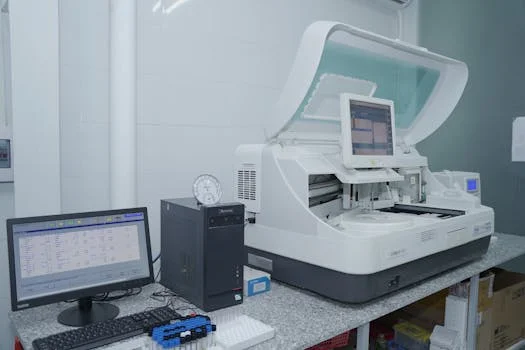
Space constraints in urban Bordeaux demand treatment solutions with a minimal footprint and full automation. Modern systems are designed for this challenge. The Medical Wastewater Treatment System, for instance, achieves full tertiary treatment in a footprint of just 0.5 m² and operates without a dedicated operator. Its control system uses programmable logic controllers (PLCs) and remote monitoring via SCADA systems, allowing facility managers to track performance and receive alerts from a central control room. For larger flow rates or new construction, a WSZ Series underground package plant combines the A/O biological process, sedimentation, and disinfection in a single, buried unit handling from 1–80 m³/h, preserving above-ground space.
These pre-fabricated, modular units can reduce installation time by up to 40% compared to traditional civil works, a critical advantage for retrofits within the historic buildings common in Bordeaux. This approach allows a hospital to achieve full regulatory compliance without sacrificing valuable real estate. The automation extends to chemical dosing for pH adjustment and disinfection, ensuring consistent treatment quality and reducing the potential for human error, which is crucial for maintaining consistent compliance with strict discharge limits.
Frequently Asked Questions
How is hospital wastewater treated?
Hospital wastewater undergoes a multi-stage process: screening to remove solids, dissolved air flotation for FOG removal, biological treatment (A/O or MBR) for organic reduction, and final disinfection (ozone/ClO₂) to achieve pathogen kill rates mandated by EU 91/271/EEC.
What disinfection method is best for hospitals?
Ozone is often ideal for hospitals due to its 99%+ kill rate, absence of chemical storage requirements, and lack of harmful disinfection by-products, making it the safest choice for sensitive indoor environments. However, chlorine dioxide is a powerful alternative where a residual disinfectant is needed in the pipeline.
Does Bordeaux have specific hospital wastewater rules?
Yes. Rules are derived from the EU Directive 91/271/EEC and are enforced with additional regional Nouvelle-Aquitaine controls focused on micropollutant monitoring for medical facilities. This includes potential requirements for monitoring specific indicator substances.
Can small clinics treat wastewater on-site?
Yes. Compact systems are designed for small flows (0.5–5 m³/day) and can be installed in a minimal footprint (0.5 m²) with full automation, making on-site treatment viable for clinics, dental practices, and small private hospitals.
Is chlorine dioxide safe for hospital use?
Yes, when handled correctly. Chlorine dioxide is generated on-site and is compliant with EPA and EU standards. Its use requires secure chemical handling protocols for the precursor chemicals, including dedicated, ventilated storage cabinets and thorough staff training.
What is the cost of a hospital wastewater treatment system?
Costs vary significantly based on flow rate, required treatment level, and technology chosen. A basic compact system may start in the tens of thousands of euros, while a large, fully-featured system for a major hospital can represent a multi-million-euro capital investment, plus ongoing operational costs for energy and maintenance.
Further Reading
Explore these in-depth articles on related wastewater treatment topics: