Panama's Wastewater Infrastructure Challenges for Healthcare Facilities
Hospital wastewater treatment in Panama requires systems that meet local discharge standards while handling pharmaceuticals, pathogens, and organic load. With sewage infrastructure relying on decentralized plants, compact, fully automated solutions (0.5 m² footprint, 99%+ ozone disinfection) are ideal for clinics and hospitals. A typical 10 m³/day system costs $28,000–$42,000 installed.
Panama's infrastructure makes onsite treatment essential for medical facilities. According to the Report Water Sector in Panama, slightly more than half of non-urban areas lack basic sanitation services. The sewage system in much of the country consists of small, local treatment plants rather than large central facilities. This decentralized reality means hospitals cannot rely on municipal systems to handle their complex effluent. Even in Panama City, where a major project is underway to double the current treatment capacity of 190,000 m³/day, the system is designed for domestic sewage, not the high pathogen and pharmaceutical load from medical facilities. For compliance and environmental safety, hospitals must implement their own onsite wastewater treatment solutions.
This challenge is particularly acute for new facilities being constructed in developing regions outside the capital. For instance, a 50-bed hospital in Chiriquí Province would face significant hurdles connecting to a municipal system that may not exist, making a self-contained treatment plant not just an option but a necessity. The high humidity and rainfall in many parts of Panama can also lead to rapid infiltration and groundwater contamination if wastewater is not properly contained and treated on-site.
Why Hospital Wastewater Is Different — And Harder to Treat
Hospital effluent contains a complex mixture of contaminants that render conventional sewage treatment ineffective. Standard biological processes used in municipal plants are not designed to handle this hazardous cocktail.
The primary challenge is the presence of bioactive compounds. Wastewater from medical facilities contains antibiotics, cytotoxic drugs, contrast agents, and high concentrations of pathogens (bacteria, viruses). These substances require advanced treatment beyond conventional A/O processes. Pharmaceutical residues, in particular, demand oxidation or ozone treatment to prevent the development of environmental antibiotic resistance. Typical hospital influent parameters demonstrate this increased load: BOD 200–400 mg/L, COD 400–800 mg/L, and TSS 200–350 mg/L — significantly higher than domestic sewage. This composition necessitates multi-stage filtration and advanced disinfection to achieve compliant discharge quality, making specialized medical wastewater treatment systems essential.
Beyond the chemical load, the biological threat is immense. Wastewater from isolation wards can contain multi-drug resistant bacteria like MRSA and C. difficile, while virology and pathology labs may discharge specific viral loads. These pathogens can survive in conventional treatment systems and enter the environment, posing a direct public health risk. The waste stream is highly variable; a sudden influx of wastewater from a radiology department following a batch of MRI scans can introduce a slug of gadolinium-based contrast agents, which are exceptionally difficult to remove with standard filtration.
Key Treatment Technologies for Medical Facilities in Panama
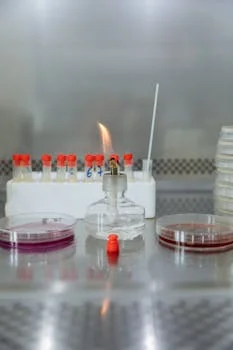
Selecting the right technology depends on hospital size, wastewater composition, and compliance requirements. For Panama's decentralized context, modular and containerized systems offer the best combination of performance and practicality.
The compact hospital wastewater treatment system with ozone disinfection uses multi-stage filtration combined with ozone disinfection (99%+ kill rate) without chemical dosing, eliminating secondary pollution. For larger hospitals, the fully automated underground sewage treatment for hospitals (WSZ Series) employs A/O biological contact oxidation plus sedimentation and disinfection for capacities of 1–80 m³/h. For facilities requiring supplemental disinfection, a Chlorine Dioxide (ClO₂) Generator provides high-purity on-site disinfection compliant with EPA and EU standards. For specialized applications like labs or dialysis units, a DAF System effectively removes FOG, suspended solids, and colloidal matter.
An emerging best practice is to use a combination of these technologies in a treatment train. For example, a common configuration for a mid-sized Panamanian hospital might start with a screen and equalization tank to handle flow variations, followed by a DAF unit to remove fats and solids from kitchen and laundry waste. An anaerobic/anoxic (A/O) bioreactor then breaks down the organic load, before a final polishing stage with ozone ensures the destruction of any remaining pathogens and trace pharmaceuticals. This multi-barrier approach is crucial for guaranteeing consistent compliance.
| Technology | Best For | Disinfection Efficacy | Footprint |
|---|---|---|---|
| Compact medical wastewater system (Ozone) | Small to medium clinics (1-20 m³/day) | 4-log virus reduction, destroys pharmaceuticals | 0.5-2.0 m² |
| WSZ Series (A/O + Disinfection) | Large hospitals (up to 80 m³/h) | Meets EU/EPA standards for coliform removal | Underground installation |
| ClO₂ Generator | Supplemental disinfection | Effective against Cryptosporidium | 1-2 m² |
| DAF System | Labs, dialysis units | Removes 95%+ FOG and suspended solids | 3-10 m² |
Panama's Regulatory Standards and Environmental Compliance
While Panama lacks centralized hospital-specific effluent regulations, facilities must comply with discharge limits enforced by Caja de Seguro Social (CSS) and the Ministry of Health.
Typical required effluent parameters include: BOD < 30 mg/L, COD < 100 mg/L, TSS < 30 mg/L, and fecal coliforms < 1,000 MPN/100mL. New hospital construction or expansions typically require an Environmental Impact Assessment (EIA) that includes wastewater management plans. Implementing systems that meet international standards like the EU Urban Waste Water Directive 91/271/EEC and EPA guidelines provides assurance of compliance with current and future Panamanian regulations. The complete EIA guide for hospital wastewater projects provides detailed guidance on navigating these requirements.
Beyond national guidelines, local municipalities (distritos and corregimientos) may have additional ordinances governing water discharge into local rivers or sewer systems. For example, facilities near sensitive ecological areas like the Panama Canal watershed may face stricter scrutiny and lower discharge limits for nutrients like nitrogen and phosphorus to prevent algal blooms. Proactive monitoring and maintaining detailed logs of effluent quality, chemical usage, and system maintenance are essential for demonstrating compliance during surprise inspections by the Ministerio de Salud (MINSA).
Cost, Installation, and ROI for Hospital Systems in Panama
Recent tender data reveals budget expectations: the Ezequiel Abadia hospital maintenance tender at $11,800 indicates operational costs for small-scale systems, while capital investment ranges reflect advanced treatment capabilities.
For a compact system (5 m³/day capacity), costs range from $18,500–$26,000 FOB, with delivered and installed prices in Panama between $28,000–$42,000. Larger systems like the WSZ-10 (10 m³/day) cost $38,000–$52,000 installed but offer a 60% smaller footprint than conventional plants. Modular containerized systems for rapid deployment reduce civil works by 70% and cut deployment time to 4–6 weeks. The ROI calculation is significant: automated systems reduce labor costs by 90%, and chemical-free operation in ozone-based systems cuts OPEX by 35% compared to chlorine-based alternatives.
When budgeting, facility managers must account for more than just the equipment. Site preparation, including excavation for underground tanks or the creation of a reinforced concrete pad for containerized units, can represent 10-15% of the total project cost. Import duties and taxes for equipment shipped to Panama can add another 7-12% to the FOB price. However, the long-term operational savings are substantial. A fully automated compact system, for instance, may only require a quarterly maintenance check by a trained technician, versus the daily manual dosing and monitoring needed for a simpler, chemical-dependent system, leading to significant labor savings over a 5-year period.
| System Type | Capacity (m³/day) | Installed Cost (USD) | Key Benefit |
|---|---|---|---|
| Compact medical wastewater system | 5 | $28,000–$42,000 | Zero chemical OPEX, minimal footprint |
| WSZ-10 | 10 | $38,000–$52,000 | Full biological treatment, underground |
| Containerized MBR | 20 | $75,000–$110,000 | Highest effluent quality, rapid deployment |
Detailed ROI calculations for underground sewage treatment systems provide additional financial analysis for hospital administrators.
Frequently Asked Questions
How is hospital wastewater treated in Panama?
Due to decentralized infrastructure, hospitals typically use onsite systems combining biological treatment with advanced disinfection (ozone or ClO₂) to handle pharmaceuticals and pathogens. The specific process train is often tailored to the facility's size and specialty, with larger hospitals employing multi-stage systems that include equalization, biological reactors, and advanced oxidation.
What is the cost of a hospital wastewater treatment plant in Panama?
For 5–10 m³/day systems, installed costs typically range from $28,000–$42,000, with larger facilities requiring investments of $75,000–$110,000 for containerized solutions. These figures are inclusive of delivery, installation, and commissioning but can vary based on site-specific challenges like difficult terrain or the need for extensive civil works.
Does Panama have strict hospital wastewater regulations?
While national standards are not specifically tailored to medical wastewater, enforcement through CSS and EIA requirements mandates compliance with discharge limits (BOD < 30 mg/L, fecal coliforms < 1,000 MPN/100mL). There is a growing regulatory trend towards stricter controls, making advanced treatment a wise long-term investment.
Can small clinics use compact treatment systems?
Yes — systems fit in 0.5 m² and handle 1–5 m³/day with fully automated operation, making them ideal for small clinics, dental offices, and outpatient surgery centers where space is at a premium and specialized staff for operation are unavailable.
Is ozone better than chlorine for hospital effluent?
Yes — ozone leaves no toxic residuals, effectively destroys pharmaceutical compounds, and avoids disinfection byproducts (DBPs). It is also more effective against a broader spectrum of viruses and protozoa. Comparative analysis of disinfection technologies provides detailed technical comparison.