What Is an Environmental Impact Assessment for Wastewater Projects?
An Environmental Impact Assessment (EIA) is a formal, structured process mandated to identify, predict, and evaluate the potential ecological, social, and health effects of a proposed wastewater infrastructure project. Conducted under frameworks like the World Bank’s Operational Directive 4.01 and the EU’s EIA Directive 2011/92/EU, it is distinct from a general environmental review by its predictive, quantitative, and legally prescribed nature. For wastewater projects, the scope extends beyond effluent quality to encompass a full lifecycle view, including air emissions from construction and operation, sludge management pathways, noise pollution, land use changes, and cumulative impacts on receiving water bodies. The process is methodical, involving key stages: screening to determine if an EIA is required, scoping to define the assessment boundaries, detailed impact analysis, development of mitigation measures, reporting, regulatory review, and long-term monitoring.
Why EIA Matters for Industrial and Municipal Wastewater Systems
An EIA serves as a critical risk mitigation and optimization tool for project managers and engineers. Unassessed projects face a high probability of regulatory rejection, costly public opposition, and forced retrofits; for instance, a plant designed without considering sludge disposal can incur millions in unplanned dewatering and transportation costs. The EIA process quantifies high-impact phases, such as construction, which accounts for 12–18% of a plant’s total lifecycle CO₂ emissions. This data-driven approach directly informs sustainable design, enabling engineers to optimize for energy efficiency by selecting high-efficiency blowers, minimize chemical consumption through smart process control, and reduce sludge volume via anaerobic digestion—decisions that lower operational expenses and ensure long-term regulatory and social license to operate.
Effective EIA implementation can lead to more sustainable and cost-effective wastewater treatment solutions.
Step-by-Step EIA Process for Wastewater Treatment Projects
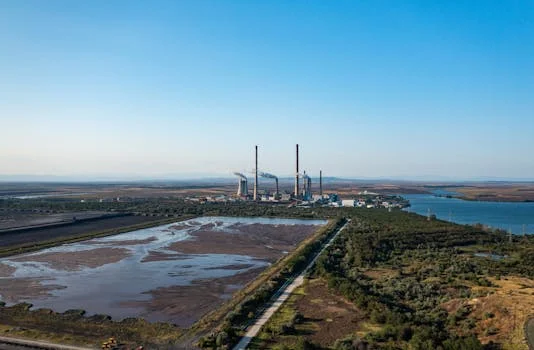
A wastewater-specific EIA follows a rigorous, phased workflow to ensure no significant impact is overlooked.
Step 1: Screening
The first step determines if a full EIA is legally required. Triggers typically include project scale (e.g., capacity exceeding 1,000 m³/day in many jurisdictions), location within or near environmentally sensitive areas (protected wetlands, aquifer recharge zones), or specific project types like treating hazardous industrial effluent.
Step 2: Scoping
This phase defines the boundaries of the study. Key impact areas for wastewater projects are effluent quality parameters (COD, BOD, TSS, NH₃-N, heavy metals), greenhouse gas emissions (CH₄ from anaerobic processes, N₂O from nitrification/denitrification), energy consumption (kWh/m³), chemical usage, biosolids generation, and odour.
Step 3: Baseline Study
Engineers collect pre-project data on existing conditions, including background water quality in the receiving body, ambient air quality, biodiversity surveys, and socio-economic indicators of surrounding communities.
Step 4: Impact Prediction
Using modelling tools like SimaPro or GaBi, consultants simulate the project’s emissions, resource consumption, and effluent discharges over a typical 20-year operational lifecycle to predict the magnitude of change from the baseline.
Step 5: Mitigation Measures
For every significant adverse impact, the EIA must propose engineered solutions. This includes specifying energy-efficient equipment, integrating renewable energy sources like solar, designing advanced odor control scrubbers, and planning for sludge valorization through digestion.
Life Cycle Assessment: Measuring True Environmental Footprint
Life Cycle Assessment (LCA) provides the quantitative, cradle-to-grave methodology that powers a modern EIA. It evaluates all environmental impacts from raw material extraction for construction, through decades of operation and maintenance, to final decommissioning and site restoration. The functional unit for comparison is standardized, typically 1 m³ of treated effluent compliant with local discharge standards. The Southern Tehran WWTP study, using SimaPro 9.4.0.2, demonstrated LCA’s power by quantifying impacts across 18 categories, including global warming potential, freshwater eutrophication, and human toxicity. This allows for an apples-to-apples comparison of technology choices beyond mere CapEx. For a deeper technical comparison of two common technologies, see our guide to compare MBR and CAS systems on effluent quality, energy use, and footprint.
| Impact Category | Unit | Conventional Activated Sludge (CAS) | Membrane Bioreactor (MBR) | Source |
|---|---|---|---|---|
| Global Warming Potential (GWP) | kg CO₂-eq/m³ | 0.6 - 0.9 | 0.8 - 1.2 | SimaPro LCA Studies |
| Freshwater Eutrophication | kg P-eq/m³ | 0.0005 - 0.001 | 0.0002 - 0.0005 | SimaPro LCA Studies |
| Energy Demand | kWh/m³ | 0.5 - 0.8 | 0.7 - 1.1 | HydropureWater Field Data |
Technology Comparison: Environmental Impact by Treatment Type

The choice of core treatment technology is the single greatest determinant of a project's environmental footprint. Each technology presents a distinct profile of trade-offs between energy consumption, chemical use, effluent quality, and sludge production.
Membrane Bioreactor (MBR) systems excel at producing high-quality effluent (<1 μm filtration, TSS <5 mg/L, turbidity <0.2 NTU) with a 60% smaller footprint, making them ideal for water reuse applications. However, this comes with a 20–30% higher energy demand than Conventional Activated Sludge (CAS), primarily from membrane scouring and filtration.
Conventional Activated Sludge (CAS) remains the workhorse for municipal applications due to its lower energy profile. Its primary environmental drawback is a larger physical footprint and less consistent effluent quality, particularly for nutrient removal, which can increase the eutrophication potential of discharged water.
Dissolved Air Flotation (DAF) is highly effective for industrial wastewater pre-treatment, removing 90–95% of FOG (Fats, Oils, Grease) and TSS. Its main environmental impact stems from chemical consumption, typically requiring 10–50 mg/L of coagulants and flocculants, which contributes to sludge production and embodied chemical manufacturing impacts. A high-efficiency DAF system for FOG and TSS removal in industrial wastewater can optimize chemical dosing to mitigate this.
Anaerobic Digestion, often paired with other technologies, is a net environmental positive. It reduces biosolids volume by 40–60%, destroying volatile solids and capturing biogas (250–350 m³/ton VS destroyed) that can be used to generate renewable energy, offsetting a plant’s grid power consumption and reducing its net carbon footprint.
| Technology | Carbon Footprint (kg CO₂-eq/m³) | Energy Use (kWh/m³) | Key Effluent Quality | Best Application |
|---|---|---|---|---|
| Conventional Activated Sludge (CAS) | 0.6 - 0.9 | 0.5 - 0.8 | BOD < 20 mg/L, TSS < 30 mg/L | Municipal WWTP, large scale |
| Membrane Bioreactor (MBR) | 0.8 - 1.2 | 0.7 - 1.1 | BOD < 5 mg/L, TSS < 2 mg/L | Water reuse, space-constrained sites |
| Sequencing Batch Reactor (SBR) | 0.7 - 1.0 | 0.6 - 0.9 | BOD < 15 mg/L, TN < 10 mg/L | Nutrient removal, variable flow |
| DAF (Pre-Treatment) | 0.1 - 0.3* | 0.05 - 0.15 | FOG >95% removal, TSS >90% removal | Industrial wastewater, food & beverage |
*Footprint primarily from chemical production. Operational energy is low.
Compliance and Regulatory Alignment in EIA Reporting
EIA reports must conclusively demonstrate that the project will comply with all relevant local and international discharge standards. This requires aligning predicted effluent quality with stringent numerical limits. Key regulations include the US EPA’s NPDES program, the EU Urban Wastewater Treatment Directive (91/271/EEC), China’s GB 18918-2002 Class 1A standards, and country-specific limits like Nigeria’s NESREA (e.g., COD ≤ 50 mg/L, TSS ≤ 30 mg/L). The EIA must show the selected technology meets or exceeds Best Practicable Technology (BPT), Best Conventional Technology (BCT), and ultimately Best Available Technology (BAT) standards for the specific industrial sector.
The EIA must outline a robust environmental management and monitoring plan (EMMP) that includes quarterly effluent sampling, real-time monitoring of parameters like pH, dissolved oxygen, and turbidity, and reporting protocols to ensure ongoing compliance. For a detailed breakdown of US requirements, our 2025 EPA discharge limits and technologies to meet BPT/BCT/BAT standards provides a comprehensive reference.
Frequently Asked Questions
What is included in a wastewater project EIA report?
A complete EIA report includes the project description and scope, comprehensive baseline environmental data, a detailed impact prediction and assessment, a chapter on proposed mitigation measures for all significant impacts, an environmental management and monitoring plan (EMMP), and a summary of public consultation activities.
How long does an EIA take for a medium-scale WWTP?
For a medium-scale plant (e.g., 10,000-50,000 m³/day), the entire EIA process typically takes 3–6 months.
Can EIA help reduce project costs?
Yes. By identifying potential environmental constraints and compliance risks during the design phase, an EIA helps avoid costly redesigns, construction delays, and post-commissioning retrofits.
Is LCA mandatory in EIA for wastewater projects?
While not universally mandated by all national laws, a full LCA is increasingly required by international financiers like the World Bank.
What software is used for wastewater LCA?
Specialized LCA software like SimaPro, GaBi, and OpenLCA are the industry standards.
Related Equipment
- MBR system with 0.1 μm filtration and 60% smaller footprint — view specifications, capacity range, and technical data
Need a customized solution? Request a free quote with your specific flow rate and pollutant parameters.