Why Hospital Wastewater in Jazan Requires Specialized Treatment
Hospital effluent in Jazan’s arid climate is 20-30% more concentrated than in temperate regions, demanding robust treatment for safe discharge or reuse. The region’s major projects, like the Aramco Jazan Refinery complex, treat 40 MLD of wastewater, with 10,000 m³/day reused for irrigation, setting a high benchmark for water reclamation. Hospital effluents introduce a complex contaminant profile—including antibiotics, cytotoxic drugs, and multidrug-resistant (MDR) bacteria—that conventional municipal systems are not designed to handle. Proximity to industrial zones necessitates co-compliance with stringent standards from Saudi Aramco (SAFCO) and the Saudi Public Consortium for Water and Wastewater (SPCR), making specialized treatment not just an operational choice but a regulatory imperative. For a detailed overview of these regulations, see our guide on Saudi Arabia wastewater compliance standards for 2025.
The high salinity of Jazan's groundwater, often exceeding 2,000 mg/L TDS, can complicate treatment processes and must be factored into system design. The extreme heat also accelerates the degradation of certain pharmaceutical compounds into more stable and sometimes more toxic metabolites, adding another layer of complexity to the contaminant load. This unique combination of climatic, industrial, and regulatory pressures creates a scenario where off-the-shelf solutions are insufficient, and a customized, multi-barrier treatment approach is essential for environmental protection and public health.
Core Challenges: Antibiotics, MDR Bacteria & Compliance
Hospital wastewater contains MDR pathogen concentrations 100-1000 times higher than domestic sewage, posing significant treatment challenges. Conventional Anaerobic-Oxic (A/O) processes remove only 30–60% of antibiotic residues, leaving effluent non-compliant for environmental discharge or reuse. The SPCR mandates a strict <1 CFU/100mL for total coliforms and <1 mg/L for residual chlorine, while EU Urban Waste Water Directive 91/271/EEC is often referenced as a best-practice benchmark for pathogen inactivation in Gulf Cooperation Council (GCC) hospital projects. This regulatory landscape requires systems capable of advanced disinfection and micropollutant removal, such as our compact hospital wastewater system with ozone disinfection, which is engineered to meet these exacting standards.
Beyond antibiotics, other micropollutants like nonsteroidal anti-inflammatory drugs (e.g., ibuprofen, diclofenac) and X-ray contrast media are highly persistent. These substances can disrupt biological treatment processes and harm aquatic ecosystems even at low concentrations (ng/L to µg/L). Regular monitoring for these specific compounds is a prudent operational practice to ensure comprehensive treatment efficacy and avoid potential regulatory scrutiny in the future.
Proven Treatment Technologies for Hospital Effluent
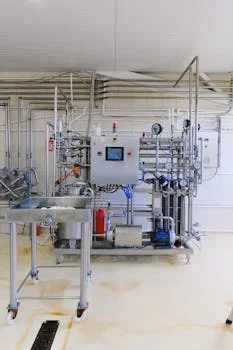
Building on the need for effective treatment solutions, Membrane Bioreactor (MBR) technology, utilizing 0.1 μm PVDF membranes, achieves >99% removal of total suspended solids (TSS) and pathogens, producing effluent suitable for direct reuse in irrigation or cooling towers. For smaller facilities or satellite clinics, automated A/O-based systems effectively handle flows from 1–80 m³/h with a smaller footprint than traditional activated sludge. Dissolved Air Flotation (DAF) is a critical pretreatment step in Jazan, efficiently removing fats, oils, and greases (FOG) from surgical and kitchen waste—a common challenge in hospital effluent. Finally, chlorine dioxide (ClO₂) disinfection provides a 99.9% kill rate for MDR bacteria without forming toxic trihalomethanes (THMs), unlike chlorine, making it the superior choice for final effluent polishing.
An emerging best practice is the integration of Advanced Oxidation Processes (AOPs) as a tertiary step. AOPs, utilizing ozone (O₃) or ultraviolet (UV) light combined with hydrogen peroxide (H₂O₂), are highly effective at breaking down the molecular structure of complex pharmaceutical residues and endocrine-disrupting compounds that survive biological treatment. This technology is increasingly being specified for new hospital projects in the GCC aiming for the highest levels of water reuse and environmental stewardship.
| Technology | Key Function | Performance Metric | Best For |
|---|---|---|---|
| MBR (DF Series) | Biological treatment & solid separation | >99% TSS, >99.9% pathogen removal | Reuse applications, large hospitals |
| A/O (WSZ Series) | Carbon & ammonia removal | 85-92% COD, 80-90% BOD removal | Small to medium clinics, budget-conscious projects |
| DAF | FOG & colloidal solids removal | 95% FOG, 90% TSS reduction | Pretreatment for labs, kitchens, surgical centers |
| ClO₂ Generator | Pathogen disinfection | 99.9% bacteria inactivation, no THMs | Final disinfection for SPCR/EU compliance |
Learn more about the specifications of our high-efficiency MBR system for hospital reuse projects.
Technology Comparison: MBR vs A/O vs DAF + Disinfection
Selecting the right technology hinges on balancing effluent quality goals with capital and operational expenditures. MBR systems offer the highest effluent quality in the smallest footprint—60% smaller than conventional A/O plants—but carry a higher operational cost from membrane replacement, approximately $15,000 annually for a 100 m³/day unit. Conventional A/O systems, such as the WSZ series, present a 30% lower capital cost but require secondary clarification and more land, making them less ideal for space-constrained urban hospitals in Jazan. A hybrid approach combining DAF pretreatment with MBR and ClO₂ disinfection is optimal for hospitals with labs or surgical units, achieving 95% FOG and >99% TSS and pathogen removal. This configuration ensures compliance with the most stringent benchmarks, including WHO and EPA guidelines for wastewater reuse.
When evaluating technology options, it is crucial to consider the skill level required for operation and maintenance. MBR systems require trained personnel for membrane cleaning and integrity testing, whereas A/O systems demand more attention to the biological health of the sludge. Automated systems with remote monitoring capabilities can mitigate these challenges, providing real-time data on key parameters like dissolved oxygen, pH, and transmembrane pressure, allowing for proactive maintenance and reducing the risk of compliance violations.
| Parameter | MBR + ClO₂ | A/O + Chlorine | DAF + MBR + ClO₂ (Hybrid) |
|---|---|---|---|
| Footprint (m² per 100 m³/day) | 40-50 | 100-120 | 50-60 |
| CAPEX Estimate | High | Medium | Highest |
| OPEX ($/m³ treated) | 0.45 - 0.55 | 0.30 - 0.40 | 0.50 - 0.65 |
| Antibiotic Removal Efficiency | 85-95% | 30-60% | 90-98% |
| Reuse Quality Output | Excellent (Irrigation, Cooling) | Fair (Restricted Irrigation) | Excellent (Unrestricted Reuse) |
For technical details on our disinfection systems, review our chlorine dioxide generator specifications.
System Sizing and Cost for Jazan Hospitals
System sizing is critical for achieving compliance and ROI. Capital costs scale with flow rate and complexity, while operational costs are significantly influenced by Jazan's high ambient temperatures, which increase energy consumption for aeration. A key sizing tip is to base design on peak flow rates, which can be 3-5 times the average daily flow, rather than average flows to prevent hydraulic overload during high-usage periods.
| Hospital Scale | Estimated Flow (m³/day) | Recommended System | Installed CAPEX Range (USD) | Estimated OPEX ($/m³) |
|---|---|---|---|---|
| Small (50 beds) | 20 | WSZ-2 or compact medical wastewater system | $45,000 – $60,000 | 0.35 - 0.45 |
| Medium (200 beds) | 80 | MBR + ClO₂ | $180,000 – $250,000 | 0.45 - 0.55 |
| Large (500+ beds) | 200+ | Hybrid (DAF+MBR+ClO₂) | $500,000+ | 0.55 - 0.70 |
Energy consumption is a key OPEX driver: MBR systems average 1.8 kWh/m³, while A/O systems consume approximately 1.1 kWh/m³. However, the value of reclaimed water provides a compelling ROI. At a conservative valuation of $0.50/m³ for irrigation-grade water, a medium hospital reusing 80 m³/day can generate ~$14,600 annually, leading to a full ROI on the treatment system within 3-5 years. Incorporating energy-efficient components like variable frequency drives (VFDs) on blowers and pumps can reduce energy consumption by up to 25%, significantly improving long-term operational economics. For a detailed breakdown of disinfection costs, see our 2025 guide to chlorine dioxide generator pricing and ROI.
Frequently Asked Questions
Do hospitals treat wastewater?
Yes, hospitals must treat their wastewater on-site or pre-treat it before discharge to municipal sewers. This is mandatory to remove pathogens, pharmaceutical residues, and chemical contaminants that municipal plants cannot effectively process, ensuring compliance with local and international standards.
What is the cost of hospital wastewater treatment in Jazan?
Capital costs range from $45,000 for a 50-bed clinic to over $500,000 for a large hospital. Operational costs are typically $0.35–$0.70 per cubic meter treated, influenced by system type, energy rates, and required chemical consumption for disinfection.
How to remove antibiotic-resistant bacteria from hospital effluent?
Advanced disinfection using ozone or chlorine dioxide (ClO₂) is required. ClO₂ generators achieve a >99.9% inactivation rate for multidrug-resistant bacteria without creating harmful disinfection by-products.
What is the best disinfection method for hospital wastewater in Saudi Arabia?
Chlorine dioxide (ClO₂) is considered best-in-class due to its high efficacy against a broad spectrum of pathogens, lack of THM formation, and ability to provide a residual disinfectant effect in the water distribution system.
Can treated hospital water be reused in Jazan?
Yes, with the appropriate advanced treatment train. Effluent treated by MBR followed by ClO₂ or ozone disinfection meets SPCR and SAFCO standards for unrestricted irrigation, a critical strategy for water conservation in Jazan’s arid climate.
Further Reading
Explore these in-depth articles on related wastewater treatment topics: