Saudi Arabia requires treated wastewater to meet reuse-specific effluent limits set by the Ministry of Environment, Water and Agriculture (MEWA). Industrial wastewater compliance saudi arabia mewa starts with three duties: match the reuse class, hold the plant license, and keep inspection records. An industrial wastewater disposal system in saudi arabia must match the intended reuse class before equipment is ordered. A wastewater management system in saudi arabia is required where no public sewer can receive the flow.
The Water Law, Royal Decree D/159 of 2 July 2020, allows tertiary-treated water for most non-potable uses. The same law allows secondary-treated water for restricted irrigation, industry, mining, and construction when safety conditions are met. MEWA Decision 1513516 of 30 December 2025 approves the updated treated-wastewater standards. Umm Al-Qura issue 5140, dated 16 January 2026, assigns monitoring to the Saudi Water Authority and the Saudi Irrigation Organization.
Industrial Wastewater Compliance Saudi Arabia MEWA
Saudi plants comply when effluent matches the MEWA reuse class, the license is in force, and records are ready. Tertiary treatment means filtration and purification after secondary treatment. Secondary-treated water may serve restricted irrigation, industry, mining, and construction when ministry conditions are met. Decision 1513516, issued on 30 December 2025, approves the updated treated-wastewater standards.
Water Law Articles 23 and 25 are the use rules. Article 23 bars tertiary-treated wastewater from drinking, household use, and food industries. Article 25 is the secondary-treated door for restricted irrigation, industry, mining, and construction. Operators who need get an overview of industrial waste discharge process in saudi arabia should lock the reuse class before mapping BOD, TSS, pathogens, and oil and grease.
National reuse rules long pushed tertiary polishing for wastewater regardless of source or volume. Private facilities that build an on-site plant without a license face the SR 10,000 penalty in the Executive Regulations (Section 24), plus shutdown risk if effluent fails the assigned limits. According to the MEWA Water Law, Article 68 now allows a fine not exceeding 20 million riyals for each violation, so the older SR 10,000 figure is background, not the current ceiling. Most plants we size for Saudi industrial sites still treat the license file as a design deliverable, not a paperwork step after commissioning.
saudi arabia industrial wastewater permit process
The Saudi Arabia industrial wastewater permit process is a sequence, not a single stamp. Start by naming the reuse or the discharge route, because that choice sets the limit table. Where no sewer exists, Water Law Article 28 requires an Authority-licensed treatment plant before the facility can be licensed or supplied with water. Article 29 tells the owner to connect if a network exists, and to build a plant if it does not.
NCEC, called the Center in the aqueous-media regulations, permits discharge of treated wastewater into environmental media. The Center must decide a complete application within 30 working days, with an extra 10 working days if needed. A discharge permit validity does not exceed six months. Industrial wastewater treatment plants, and industrial sites that run their own treatment units, must monitor the discharge and keep the data for at least 5 years.
Emergency tanks are part of that permit story. Article 7 of the aqueous-media regulations requires containment equal to 36 hours of wastewater treated at the facility, lined so it does not leak. On license packs we review, the tank volume is the line most often left off the drawing. Teams comparing regional permit styles can review the sibling note on the Industrial Waste Discharge Permit South Africa: 2026 Limits for contrast, then return to MEWA and the Authority for Saudi filings.
Use this order on a foreign-owned industrial site. Classify the intended reuse before any equipment bid. Submit an engineering design that shows the train meeting the assigned class under the MEWA design basis. Apply for the private treatment plant license, install SCADA and sampling points, then report lab results. Skipping the class decision is the usual reason a later drawing set gets sent back.
mewa reuse class effluent limits for industry
MEWA reuse class effluent limits for industry follow the end use, not a single plant-wide cap. This guide's planning row keeps industrial BOD ≤ 20 mg/L, TSS ≤ 30 mg/L, and oil and grease below 5 mg/L, with pH 6-9. Article 11 of the older reuse regulations did not publish that row. It required a license and left quality to the competent ministry, and it banned treated sewage water in the food industry.
For agricultural irrigation, this guide sets BOD ≤ 10 mg/L, TSS ≤ 10 mg/L, and fecal coliform ≤ 1,000 MPN/100mL. Executive Regulations Section 17 tied agricultural use to the secondary or tertiary table, plus a salinity table. Secondary Table 2 uses a monthly average BOD5 of 40 mg/L and TSS of 40 mg/L, with fecal coliform at 1,000 cells per 100 ml. Tertiary Table 3 uses a monthly average BOD5 of 10 mg/L and TSS of 10 mg/L.
Buyers who type effluent disposal standards in sa usually need both the reuse class and the discharge appendix. Tertiary Table 3 also caps fecal coliform at 2.2 per 100 ml as a weekly figure, and at 23 per 100 ml in any sample. The weekly average for BOD5 and for TSS must not exceed 15 mg/L. Free chlorine is listed at 0.5 mg/L, and not less than 0.2 mg/L where chlorine is the sanitizer.

The table below summarizes key effluent quality standards for various treated sewage reuse classes in Saudi Arabia. Keep every cell as a planning screen. It is not a substitute for the standards attachment approved on 30 December 2025.
| Reuse Application | BOD (mg/L) | TSS (mg/L) | Fecal Coliform (MPN/100mL) | Key Additional Parameters |
|---|---|---|---|---|
| Agricultural Irrigation | ≤ 10 | ≤ 10 | ≤ 1,000 | pH 6-9, Turbidity ≤ 5 NTU |
| Industrial Reuse | ≤ 20 | ≤ 30 | No Specific Limit* | Oil & Grease < 5 mg/L, pH 6-9 (*Process-dependent) |
| Aquifer Recharge | ≤ 5 | ≤ 5 | No Detectable | Turbidity < 2 NTU, Nitrate < 10 mg/L, No Viruses |
| Recreational Use | ≤ 10 | ≤ 10 | ≤ 200 | Odorless, Clear, Chlorine Residual ≤ 0.5 mg/L |
| Fish Farming | ≤ 5 | ≤ 5 | ≤ 100 | Dissolved Oxygen ≥ 5 mg/L, Ammonia < 1 mg/L |
*Note: Industrial reuse standards can vary significantly based on the specific industrial process and end-use requirements. This table provides general guidelines.
Aquifer recharge in this guide is the tightest row: turbidity below 2 NTU, nitrate below 10 mg/L, and no detectable pathogens. Recreational use calls for odorless, clear water with chlorine residual ≤ 0.5 mg/L. Fish farming in the same table needs dissolved oxygen ≥ 5 mg/L and ammonia < 1 mg/L. The fetched reuse tables instead list turbidity at 5 NTU and ammonia-N at 5.0 mg/L, so confirm which document the permit cites.
Designers who track the industrial waste discharge process in saudi arabia should lock these limits before selecting membranes, filters, or disinfection. The sibling numeric tables are in Saudi Arabia Industrial Effluent Limits 2026: Standards, Tab. Water Law Article 75 repealed Royal Decree M/6 and its implementing regulations, and Decision 1513516 repeals prior decisions that conflict with the update. Pull the attached update before you freeze a number that appears only in the guide table.
saudi arabia tertiary wastewater treatment standards 2026
Saudi Arabia tertiary wastewater treatment standards 2026 rest on the Water Law definition and on Decision 1513516, published 16 January 2026. Tertiary treatment is filtration and purification, or any other process, after secondary treatment. Secondary treatment is sedimentation, disinfection, or another process after biological treatment. Most plants we size for reuse still install filtration and a disinfectant even when a secondary case looks open on paper.
NCEC Appendix 4 separates the train into levels. Level C, secondary treatment, removes most solids and BOD by biology, chemicals, or ponds. Level E, disinfection, targets bacteria and viruses with ultraviolet radiation or chlorination. A reuse project that stops at Level C will miss the tertiary definition in the Water Law.
Restricted irrigation in the older text had to stay at least 50 meters from wells and public drinking-water tanks. Sprinkler irrigation of restricted-irrigation crops had to keep a 60 meter gap from public places, and irrigation had to stop when the wind rose. Those distances still matter on a shared industrial estate even if the parent regulations were later repealed. Measure them on the plot plan, not only in the process description.
Industrial Wastewater Disposal Fit
An industrial wastewater disposal system in saudi arabia is accepted when filtration and disinfection after secondary biology meet the reuse class MEWA assigned to the site. Typical trains use multimedia sand filters, membrane bioreactors, or ultrafiltration, then chlorine dioxide or ultraviolet disinfection. MBR packages that combine biology with <1 μm membrane separation are common where irrigation or industrial reuse limits are tight. Such MBR systems that meet tertiary treatment standards for reuse reduce footprint while holding low TSS and turbidity.
For residual control, on-site ClO₂ generators for reliable disinfection compliance limit byproduct formation relative to free chlorine alone. Design Guide Section 3-19 requires SCADA for continuous pH, flow, and residual disinfectant logging used in NCEC reporting. Keep the residual inside the permit band: the reuse note is not less than 0.2 mg/L when chlorine is used, and the guide's recreational cap is chlorine residual ≤ 0.5 mg/L. Plants we commission in the Kingdom lose more audits on missing SCADA tags than on the filter specification.
Are PFAS listed in the Saudi tables used here?
The MEWA reuse tables and the aqueous-media appendices fetched for this update do not publish a national PFAS number. Industrial sites that suspect fluorinated process chemicals should sample influent and effluent and confirm any project permit condition with NCEC before startup. Do not claim compliance from BOD or TSS data alone. A separate note covers pfas in saudi arabia.
How do RO plants support Saudi reuse projects?
Reverse osmosis plants support Saudi reuse when TDS, chloride, or hardness must fall below the process or irrigation target after clarification and disinfection. RO is a polishing step, not a substitute for biological BOD removal or the pathogen control a MEWA reuse class requires. Projects that pair MBR or ultrafiltration with RO should size reject handling under the same license as the main plant. Prove the blended effluent against the assigned reuse row before startup.
Sludge Management and Disposal Rules
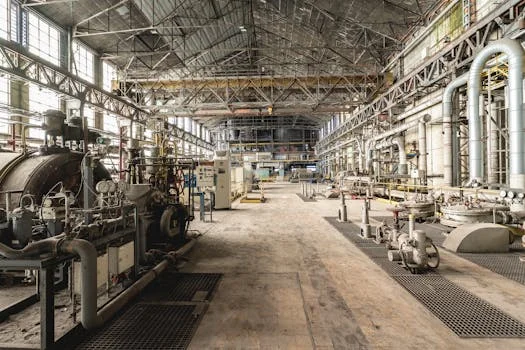
Executive Regulations Section 18 and Table 7 require agricultural biosolids to hold helminth ova below 1 per 4 grams of total solids. They must also meet the heavy-metal caps in Table 6, and Table 7 caps Salmonella at 3 per 4 g of dried substance and fecal coliform at 1,000 per 1 g. Industrial sludge with higher loads often needs thermal drying or combustion per Design Guide Sections 3-13–3-15. Land application versus landfill turns on pathogen count, metals, and stability after dewatering.
Table 6 caps in sludge include lead at 840 mg/kg, cadmium at 85 mg/kg, and nickel at 420 mg/kg, with separate soil cumulative limits. Tertiary treated water in Table 3 is a different matrix: intestinal worm eggs at 1 living egg per liter, not per 4 grams of solids. Do not copy the biosolids number onto the liquid permit, or the reverse. Cake samples and effluent samples answer different questions.
Technologies like plate-frame filter presses cut sludge volume before drying or haul-off. Operators comparing the full industrial waste treatment process in saudi arabia should budget solids handling in the same capital package as liquid treatment, not as a later add-on. Most sludge bids we see under-price polymer and cake disposal relative to the press itself. Dewater first, then pick the route from the metals and pathogen report.
industrial wastewater treatment plant license saudi arabia
An industrial wastewater treatment plant license saudi arabia filing has to exist before construction, not after the first effluent test. Water Law Article 21 says sanitary or industrial wastewater may not be transported, collected, disposed of, or discharged without a service provision license. Article 28 requires the licensed plant where no sewage network exists. Article 29 requires the owner to build that plant if a connection is not available.
The older Chapter Two path asked for a construction license, an approved design, and a final license after startup. Private-plant operators had to test BOD, COD, TSS, TDS, and pH once a week, and fecal coliform twice a week, at an approved laboratory. Those implementing regulations were repealed by Water Law Article 75. Keep the weekly habit if your permit is silent, because a quarterly file alone can look thin against that older record rule.
Public plants under the same older article tested BOD twice a week and kept flow and raw-sewage lab records for at least 3 years, with other lab results for at least 5 years. NCEC now asks industrial dischargers to keep monitoring data for at least 5 years, and it may add another 5 years. Records that die with a laptop will not survive that window. Export the SCADA historian on a set schedule.
This guide's compliance sequence is still the practical order.
- Step 1: Classify intended reuse. Name agricultural irrigation, industrial process water, aquifer recharge, or recreation before design starts. The class sets the effluent row.
- Step 2: Submit the engineering design to MEWA. Show how the train meets the assigned class, including tertiary steps where that class requires them, against the approved design guide.
- Step 3: Apply for the treatment plant license. File the private treatment plant license through the Saudi Water Authority e-service. MEWA technical review still sits on that path.
- Step 4: Install SCADA and sampling points. Log pH, flow, and residual disinfectant as Design Guide Section 3-19 requires. Add Chapter Four sampling points for inspection.
- Step 5: Report third-party lab results. Run quarterly tests at an accredited laboratory and submit them to NCEC. Add the weekly tests if the permit still cites the older private-plant schedule.
mewa decision 1513516 industrial discharge compliance
MEWA Decision 1513516 industrial discharge compliance is the 30 December 2025 decision that approves the update and repeals conflicting earlier decisions. Clause Second tells the Saudi Water Authority and the Saudi Irrigation Organization to monitor the updated standards, each inside its mandate. It cites Ministerial Decision 433552/1/1442 of 25 February 2021, which adopted standards for water types. The numeric attachment was not in the gazette summary fetched here, so do not invent a new limit from the title alone.
Discharge to the environment is a different table from reuse. NCEC Appendix 3, for soil or land, sets a 30-day BOD5 average of 25 mg/L with a sample maximum of 40 mg/L, and TSS of 35 mg/L with a sample maximum of 50 mg/L. Surface water in the same appendix uses BOD5 of 15 mg/L, with a sample maximum of 20 mg/L, and TSS of 25 mg/L, with a sample maximum of 40 mg/L. Coastal and marine Appendix 2 uses a 30-day BOD5 of 10 mg/L, sample maximum 25 mg/L, and TSS of 25 mg/L, sample maximum 40 mg/L.
Appendix 3 lists oil and grease at 0 mg/L for soil or land and 5 mg/L for surface water, on a sample basis. Total coliform over 30 days is 2,000 MPN/100 ml for soil or land and 1,000 MPN/100 ml for surface water. Viable nematode ova are capped at 1 per liter for both. pH is 6-8.4, and free chlorine is 0.1-0.5 mg/L.
Engineers who search mewa environmental standard waste are looking at this MEWA standards pack, not a separate solid-waste code. Failure to meet treated-wastewater standards before discharge draws an NCEC fine from 10,000 to 5,000,000 Saudi riyals, plus a duty to stop the discharge and repair the damage. Discharge into environmental media without the Article 8 permit can draw from 50,000 to 20,000,000 Saudi riyals. Prohibited untreated discharge can draw from 10,000 to 20,000,000 Saudi riyals.
Appendix 3 also sets nitrate-nitrogen at 15 mg/L for soil or land and 10 mg/L for surface water, both as 30-day averages. Ammoniacal nitrogen is 5 mg/L on soil or land and 1.9 mg/L on surface water. Coastal Appendix 2 lists ammoniacal nitrogen at 1.9 mg/L, nitrate-nitrogen at 10 mg/L, and dissolved oxygen at a sample minimum of 2.0 mg/L. Those rows govern a permitted outfall. They do not replace a tighter reuse class if the water is sold or reused.
Selection Checklist and Cost Drivers
Plant engineers should confirm seven items before freezing the equipment list. Check the reuse class and the BOD, TSS, and pathogen targets, then the Authority and MEWA license path. Confirm tertiary filtration plus disinfection, SCADA and sampling points, and the quarterly third-party lab plan. Add the sludge pathogen and metals route, and brine handling if RO is added.
Capex usually tracks membrane area, disinfection redundancy, and solids drying. Opex tracks power, chemicals, membrane replacement, and lab frequency. The 36-hour emergency tank and five-year data archive are easy to miss in a budget that only prices the bioreactor. Most cost gaps we see on Saudi bids sit in sludge cake haulage and in spare membrane sets, not in the civil works.
Who this is for: EPC contractors and industrial owners building or upgrading on-site plants for irrigation, process reuse, or licensed discharge in Saudi Arabia.
Who should look elsewhere: Potable-water or food-process schemes that need drinking-water rules rather than treated-sewage reuse tables.
Next step: Classify the reuse class, pull the matching effluent row, and align the drawings with the Authority license and NCEC sampling. Where that class is already fixed, send the duty through a packaged MBR, chlorine dioxide, and dewatering inquiry.
Frequently Asked Questions
What treatment level does Saudi Arabia require for wastewater?
Most schemes still design tertiary filtration and disinfection when the reuse class is tight. The Water Law defines tertiary treatment as filtration and purification, or another process, after secondary treatment. Article 23 bars tertiary-treated wastewater from drinking, household use, and food industries, and allows other uses after safety checks. Article 25 allows secondary-treated water for restricted irrigation, industry, mining, and construction when ministry conditions are met.
Can treated wastewater feed industrial cooling towers?
Yes, when the assigned industrial reuse limits and the tower specification are both met. This guide's industrial row keeps TSS at or below 30 mg/L and oil and grease below 5 mg/L, with pH 6-9. Article 11 of the older reuse regulations left industrial quality to the competent ministry and banned food-industry use. Makeup often needs hardness polishing beyond that screen. Check the permit and the tower metallurgy before connection.
What are the penalties for non-compliant discharge or an unlicensed plant?
Constructing a private sewage treatment plant without a license carried SR 10,000 under Executive Regulations Table 8, item 34, with a duty to obtain a conforming license. The Water Law repealed that parent statute and Article 68 now allows a fine not exceeding 20 million riyals, activity suspension up to one year, or license revocation. NCEC can fine failure to meet discharge standards from 10,000 to 5,000,000 Saudi riyals. Keep SCADA logs and lab reports ready for inspection.
Is industrial sludge allowed on agricultural land?
Only when biosolids meet helminth ova at 1 per 4 g of dried solids and the heavy-metal limits tied to Executive Regulations Section 18. Table 7 also caps Salmonella at 3 per 4 g and fecal coliform at 1,000 per 1 g of dried substance. Most industrial sludge fails those screens and needs thermal drying, combustion, or secure landfill per Design Guide Sections 3-13–3-15. Dewater first, then choose the route from the metals and pathogen results.
Do I need a license for an on-site industrial treatment plant?
Yes. Water Law Article 28 requires an Authority-licensed plant for urban or industrial wastewater where no sewage network exists, and Article 29 requires the owner to build that plant if connection is unavailable. The older Chapter Two license path ran through the ministry before construction and again after startup. Operating without the license was the SR 10,000 Table 8 case, and the Water Law penalty range is now far higher. Submit design drawings that name the reuse class before startup.