Why Food Plants Specify Containerized Wastewater Treatment
Containerized wastewater treatment packages DAF, MBR or A/O trains for food effluent that typically runs 1,000–5,000 mg/L COD and 500–2,000 mg/L BOD, far above municipal sewage (EPA 2024 industrial benchmarks). High FOG from meat and dairy, plus Clean Water Act fines that can exceed $50,000 per day, drive plants toward modular capacity that matches seasonal peaks.
Seasonal lines amplify hydraulic risk. A vegetable canning plant may see harvest-season flow about ten times its annual average. Most plants we size for seasonal food duty run at the lower end of the catalog range day to day, then add a second train when harvest or kill-floor peaks arrive. Expansion that once took months of civil work can ship in weeks and connect on a prepared pad.
How Packaged Trains Treat Food Plant Effluent
Packaged food-effluent systems most often combine dissolved air flotation (DAF), membrane bioreactor (MBR), or anoxic/oxic (A/O) biology inside ISO containers sized to the measured waste profile. Engineers select the train from daily and peak flow, pH, temperature, and the mix of organic load, FOG and nutrients. Hybrid trains are common: DAF upfront protects biology from fat shock, then MBR or A/O finishes BOD and nutrients.
Selection starts with a lab or composite characterization of the facility’s wastewater, including diurnal peaks from clean-in-place (CIP) dumps.
Dissolved Air Flotation (DAF): This is the primary physical-chemical step for high-solids, high-FOG streams. A high-efficiency DAF system for FOG and TSS removal dissolves air under pressure and releases micro-bubbles into the flotation tank. Bubbles attach to solids and FOG, which float for mechanical skimming. Ferric chloride or aluminum sulfate is often dosed upstream to break emulsions before flotation.
Membrane Bioreactor (MBR): An MBR pairs activated sludge with membrane filtration so secondary clarifiers are not required. A compact MBR system with 0.1 μm PVDF membrane filtration for reuse retains biomass at high mixed-liquor concentrations and yields low-turbidity permeate suitable for reuse. Membranes are air-scoured and periodically back-pulsed with permeate to hold flux and limit irreversible fouling.
Anoxic/Oxic (A/O): This biological sequence targets nutrient removal. The anoxic zone supports denitrification of nitrate to nitrogen gas; the oxic zone removes BOD and drives nitrification. Internal mixed-liquor recirculation returns nitrate-rich liquor to the anoxic zone. Most beverage and produce plants we commission on A/O run stable when influent strength changes gradually rather than in sudden FOG spikes.
| Technology | Primary Mechanism | Flow Range (m³/h) | Key Removal Efficiency |
|---|---|---|---|
| Dissolved Air Flotation (DAF) | Physical-Chemical Separation | 4 - 300 | 92-97% TSS & FOG |
| Membrane Bioreactor (MBR) | Biological + Membrane Filtration | 20 - 150 | >98% COD, <5 NTU Turbidity |
| Anoxic/Oxic (A/O) | Biological Nutrient Removal | 1 - 80 | 85-90% BOD |
Performance Comparison: DAF vs MBR vs A/O for Food Processing
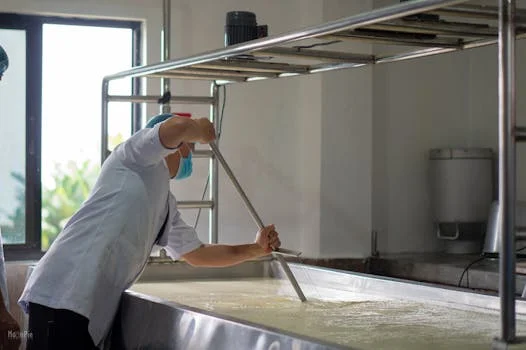
Technology choice for food effluent rests on waste strength, available footprint, and whether the plant needs discharge compliance or reuse-quality water. A DAF-plus-MBR or DAF-plus-A/O hybrid is often the safest layout when kill floors or dairy separators dump intermittent fat loads onto biology.
DAF Systems excel as primary treatment. They reach about 95% FOG removal at a hydraulic retention time of 5–15 minutes, which fits slaughterhouses, rendering plants, and dairies. DAF alone is not a complete secondary plant; it protects downstream biology from shock. Performance tracks coagulant dose and pH control for floc strength.
MBR Systems deliver the highest packaged effluent quality in the smallest footprint. At about 98% COD removal they support irrigation or cooling-tower makeup. The integrated layout typically needs a 60% smaller footprint than conventional activated sludge. Energy for membrane scouring is higher, and plants must budget CIP chemistry plus membrane integrity checks to avoid irreversible fouling.
A/O Systems remain the workhorse for automated biological treatment. At 85–90% BOD removal they suit low-to-medium strength streams such as vegetable wash water or beverage rinse. Energy use and operating complexity sit below MBR, which keeps lifetime cost low when discharge—not reuse—is the goal.
| Parameter | DAF | MBR | A/O |
|---|---|---|---|
| Best For Sector | Meat, Dairy, Rendering | All Sectors (Space Constrained) | Produce, Beverages |
| FOG Removal | 95% | >95% (with pre-treatment) | Varies |
| Footprint | Medium | Smallest | Largest |
| Automation Level | Medium | High | High |
| Final Effluent Quality | Requires Secondary Treatment | Reuse Quality (<10 mg/L COD) | Discharge Compliance |
Where does a screw press fit in food wastewater plants?
A screw press for food processing sludge sits after DAF float or biological waste activated sludge, not as a substitute for liquid-phase treatment. Typical duty is to raise cake dryness so haul-off volume falls, cutting disposal cost on meat, dairy and produce solids. Specify screen aperture, polymer dose and cake solids target against the measured sludge total solids; undersized presses flood conveyors during harvest peaks.
Cost, Installation, and ROI: What Food Processors Actually Pay
CAPEX for containerized wastewater treatment covers the unit, freight, installation and commissioning. Lead times beat civil-built plants: most systems ship in 6–10 weeks and install in 3–7 days when the pad and utilities are ready. Soft costs for prolonged construction management can reach about 30% of a traditional build budget; short install windows cut that exposure.
When finance teams compare the cost of stp for food processing plants, they should separate equipment CAPEX from sewer surcharges, water purchase and sludge haul. Those OPEX lines often dominate payback on high-FOG sites.
| System Type | CAPEX Range (USD) | Typical Flow Capacity (m³/h) | Key OPEX Drivers |
|---|---|---|---|
| DAF System | $80,000 - $450,000 | 10 - 100 | Coagulant/Flocculant consumption |
| MBR System | $120,000 - $700,000 | 20 - 150 | Energy, Membrane Replacement (5-8 yrs) |
| A/O System | $50,000 - $250,000 | 5 - 80 | Energy (low), Sludge Disposal |
ROI is not only avoided fines. MBR reuse can offset freshwater purchase with payback under three years on some sites. A/O often posts the lowest lifetime cost because it avoids membranes and uses relatively simple aeration. DAF pays back by cutting POTW FOG/TSS surcharges and by preventing biological upsets that idle production for days.
What limits apply to food processing effluent?
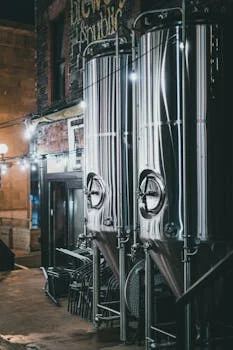
Food processing effluent limits depend on discharge route—POTW versus surface water—and on the destination country’s permit table. For direct discharge under the EU Urban Waste Water Treatment Directive (UWWTD), plants still design to <25 mg/L BOD, <120 mg/L COD and <35 mg/L TSS. Those figures remain the common secondary-treatment benchmarks cited for urban and agro-food discharges.
According to EUR-Lex (2025 summary), Directive (EU) 2024/3019 will replace Directive 91/271/EEC from 1 August 2027. The recast tightens collection thresholds, strengthens nutrient rules and adds micropollutant (quaternary) duties phased through 2045. Multi-year CAPEX plans should track that timeline, not only today’s Annex I numbers.
Reuse schemes for irrigation commonly tighten further to <10 NTU turbidity and <50 mg/L COD. U.S. POTWs often set industrial FOG near 100 mg/L plus site-specific TSS and BOD surcharges. MBR trains and well-run DAF+A/O trains are sized to hold those limits under CIP peaks. Systems aligned with U.S. EPA 40 CFR 403 pretreatment rules, the EU UWWTD framework, and China’s GB 8978-1996 discharge classes give global brands one engineering baseline across sites.
Hygiene programs sit beside the wastewater train. Plants that document chemical use for organic certification should keep the same change-control file for coagulants, CIP acids and membrane cleaners. Coordinate disinfection planning with haccp safety systems for food processing plants so permit and food-safety records stay consistent.
Selection checklist before you freeze the P&ID
- Measure peak-hour and peak-day flow during CIP and production changeovers, not only daily average.
- Split FOG, TSS, COD/BOD and nutrients; FOG above roughly municipal norms usually needs DAF first.
- Decide discharge vs reuse; reuse drives MBR or tertiary polishing cost.
- Confirm pad power (kW), chemical storage and sludge haul route before the container ships.
- Budget membrane replacement at 5–8 years for MBR and polymer/coagulant unit rates for DAF.
- Match automation to staffing: PLC remote monitoring vs on-site operator hours per week.
- Align permit language with local POTW or direct-discharge tables before factory acceptance test.
Who this is for / Who should look elsewhere / Next step
This guide is for plant engineers, EPC contractors and procurement managers sizing 1–300 m³/h food or beverage effluent packages. Look elsewhere if you only need municipal sewage without FOG, or if you require a full civil WWTP above container hydraulic limits. For a duty-specific train layout and budget band, request a packaged system quote with your flow and COD data.
Frequently Asked Questions
What is the lifespan of a containerized wastewater system?
With annual maintenance, the structural container and core mechanical items typically last 15–20 years. MBR membranes usually need replacement on a 5–8 year cycle. Pumps and blowers often require overhaul or replacement every 5–10 years, depending on runtime hours and preventive maintenance discipline at the site.
Can containerized plants handle high-salinity food wastewater?
Yes, when materials and process steps are specified for salt. Duplex stainless steel or FRP wetted parts plus upstream solids control are common on pickle brine or seafood streams. Many of those plants add reverse osmosis polishing after biology when dissolved salts must meet discharge or reuse limits that biology alone cannot reach.
Are containerized systems suitable for organic certification?
Yes, because certification follows final effluent quality and disposal or reuse method, not the brand of treatment hardware. The system must meet the local discharge or reuse standard that the certifier accepts. Document every cleaning agent and coagulant so only approved chemicals remain in an organically certified operation.
How fast can a system be deployed?
Order-to-operation typically takes 8–12 weeks when the site is ready. Units usually ship in 6–10 weeks, then install and commission in 3–7 days. That schedule assumes a level concrete pad, power and water connections, and effluent piping already stubbed for connection.
Do these systems require an operator?
Fully automated models such as WSZ and compact medical wastewater system use PLC controls and remote monitoring, so a dedicated full-time operator is usually unnecessary. Plant staff can cover visual checks, chemical levels and skimmings in a few hours per week after short training on the packaged controls.
Further Reading
Explore these in-depth articles on related wastewater treatment topics: