Industrial Wastewater Treatment USA: Scope and Regulation
Industrial wastewater treatment USA covers process, wash, and cooling discharges from manufacturing, food, chemicals, pharmaceuticals, and metal finishing. Typical pollutants include BOD, COD, TSS, FOG, metals, and PFAS. Direct dischargers need NPDES permits; POTW dischargers follow pretreatment rules. EPA sets technology-based limits for over 50 industrial categories.
Industrial wastewater treatment USA decisions turn on discharge path, categorical limits, and treatment-train cost. Facilities that map those factors early avoid overbuilt systems and enforcement risk.
EPA Compliance Framework: NPDES, Pretreatment, and Sector Rules
The NPDES permit program sets enforceable technology-based and water-quality-based limits for facilities that discharge to waters of the United States. Technology-based limits use Best Available Technology (BAT) or Best Conventional Technology (BCT) drawn from EPA Effluent Guidelines that apply to 59 specific industrial categories. Facilities that discharge to a POTW fall under the National Pretreatment Program, and Significant Industrial Users must meet categorical pretreatment standards plus local limits.
Earlier guidance often cited civil penalties near $60,118 per day, per violation. According to 40 CFR Part 19, the Clean Water Act judicial civil penalty under 33 U.S.C. 1319(d) is $68,445 per day for penalties assessed on or after January 8, 2025 (EPA, 2025). Criminal penalties still apply for negligent or knowing violations. For a detailed breakdown of EPA compliance requirements, see our dedicated guide on EPA compliance requirements.
The following table outlines key regulatory drivers by industry sector.
| Industry Sector | Primary Regulations | Key Pollutants Regulated |
|---|---|---|
| Food & Beverage Processing | 40 CFR Part 408 (Seafood), Part 432 (Meat & Poultry) | BOD, TSS, FOG, Nitrogen |
| Pharmaceutical Manufacturing | 40 CFR Part 439 | BOD, COD, TSS, Specific Organics |
| Metal Finishing | 40 CFR Part 433 | Cadmium, Chromium, Copper, Nickel, Zinc, Cyanide |
| Organic Chemicals, Plastics & Synthetic Fibers | 40 CFR Part 414 | COD, TSS, Toxic Pollutants |
Mapping your SIC/NAICS processes to the correct 40 CFR part is the first compliance step. Wrong category selection leads to incorrect monitoring, reporting, and treatment design.
Core Industrial Wastewater Treatment Technologies and Performance Data
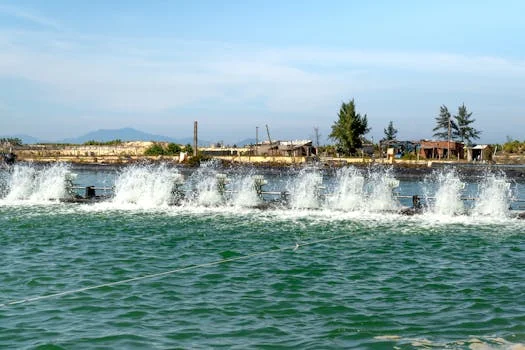
Dissolved Air Flotation (DAF) removes suspended solids and FOG at 90–98% when influent FOG and TSS loads are high, as in food processing. A high-efficiency DAF system, such as HydropureWater's, can handle flows from 4 to 300 m³/h (17 to 1,320 GPM). Membrane Bioreactor (MBR) trains produce effluent turbidity below 1 NTU and near-zero TSS when reuse or strict BOD limits apply. Compact MBR units, such as the DF series, offer membrane areas from 80 to 225 m².
Automated chemical dosing and lamella clarifiers cut reagent use and footprint when solids loads vary by shift. Technology choice should follow measured influent data and the specific permit or pretreatment limits, not a generic plant template.
| Technology | Primary Function | Typical Removal Efficiency | Ideal For |
|---|---|---|---|
| Dissolved Air Flotation (DAF) | TSS & FOG Removal | 90–98% | Food Processing, Metalworking |
| Membrane Bioreactor (MBR) | BOD Removal & Clarification | >95% BOD, >99.9% TSS | Pharmaceuticals, Reuse Applications |
| Lamella Clarifier | Solids Sedimentation | 85–95% TSS | High-Flow, Space-Constrained Sites |
| Chemical Precipitation | Metal Removal | >99% (Metals) | Metal Finishing, Electronics |
Choosing the Right System: Decision Framework by Industry
Treatment trains should match the dominant pollutants and the compliance or reuse goal for that sector. Food and beverage plants typically need screening, equalization, and DAF before biological polishing. Pharmaceutical sites often rely on neutralization plus MBR, then RO when COD or zero-liquid-discharge targets apply. Metal finishing needs pH-controlled chemical precipitation, clarification, filtration, and filter-press dewatering.
Low-flow or remote facilities under 20 m³/h (88 GPM) often use packaged plants for POTW pretreatment. A one-size train raises both CAPEX and non-compliance risk when waste strength swings with production.
| Industry | Recommended Treatment Train | Key Compliance Goal |
|---|---|---|
| Food & Beverage | Screening → Equalization → DAF → MBR → Disinfection | BOD, TSS, FOG Removal; Reuse |
| Pharmaceutical | Neutralization → MBR → RO → Reuse | COD Removal, Zero Liquid Discharge |
| Metal Finishing | Chemical Precipitation → Lamella Clarifier → Filtration → Filter Press | Heavy Metals Removal, Sludge Dewatering |
| General Manufacturing (Low Flow) | Packaged Plant (e.g., WSZ Series) | POTW Pretreatment Standards |
How much do industrial MBR systems cost?
Industrial MBR capital cost usually falls inside the broader system CAPEX band of $50,000 to $1,000,000+, depending on flow rate, membrane area, and whether RO reuse is included. Operating cost is driven by membrane cleaning chemicals, aeration energy, and sludge handling. Plants that need turbidity below 1 NTU or reuse water commonly justify MBR over conventional clarification despite higher membrane replacement spend.
When do package treatment plants make sense?
Package treatment plants fit remote or low-flow sites under about 20 m³/h (88 GPM) that must meet POTW pretreatment standards without a custom civil works package. They shorten installation time and reduce field construction risk when influent is relatively stable. Sites with high FOG, heavy metals, or wide COD swings still need upstream specialty unit processes before any package biological stage.
Costs, ROI, and Operational Efficiency
Capital expenditure for industrial systems ranges from $50,000 to $1,000,000+ based on flow and technology complexity. Automated dosing can cut reagent costs by about 25% versus manual control when influent load varies by shift. An MBR plus RO train can reduce freshwater procurement costs by 60–80% where reuse is permitted and local water prices are high.
| Cost Factor | Low End | High End | Notes |
|---|---|---|---|
| System CAPEX | $50,000 | $1,000,000+ | Dependent on flow rate and technology |
| Chemical OPEX (per m³) | $0.15 | $1.50 | Automation reduces costs by 20-30% |
| Sludge Disposal (per m³) | $5.00 | $20.00 | Dewatering minimizes volume |
| Freshwater Savings via Reuse | 60% | 80% | Major ROI driver in arid regions |
For pricing detail by unit process, see our guides on DAF system pricing and reverse osmosis cost structures.
Use this selection checklist before you freeze CAPEX. Confirm direct versus indirect discharge. Identify the correct 40 CFR categorical standard. Measure BOD, COD, TSS, FOG, and metals at peak production. Size equalization for the worst daily swing. Compare DAF, MBR, precipitation, and package options against permit limits. Include sludge disposal and chemical OPEX in the ROI model. Plan reuse only where local rules allow non-potable use.
Who this is for: US plant engineers, EPC contractors, and procurement teams sizing pretreatment or end-of-pipe systems. Who should look elsewhere: municipal-only projects with no industrial categorical limits. Next step: share flow, pollutant data, and discharge path so a treatment train can be scoped against your permit.
Frequently Asked Questions
What is the National Pretreatment Program?
The National Pretreatment Program requires industrial users that discharge to POTWs to control pollutants before they enter the sewer. Significant Industrial Users must meet categorical standards, local limits, and reporting rules under 40 CFR Part 403. The goal is to protect worker safety, sewer infrastructure, and POTW biological processes from shock loads, metals, and toxic organics that the municipal plant was not designed to treat.
How much does industrial wastewater treatment cost in the USA?
Total treatment costs typically range from $2 to $8 per cubic meter ($0.0076 to $0.030 per gallon), depending on waste complexity and local sludge fees. CAPEX alone spans about $50,000 to $1,000,000+ for packaged to multi-stage trains. Chemical OPEX of $0.15–$1.50 per m³ and sludge disposal of $5–$20 per m³ often dominate lifecycle cost, so automation and dewatering usually repay faster than oversized civil works.
Which industries are most regulated under NPDES?
Food processing, chemical manufacturing, metal finishing, petroleum refining, and pharmaceutical production face the densest mix of categorical limits and monitoring. These sectors generate high BOD, metals, or priority pollutants that trigger both technology-based and water-quality-based permit conditions. Indirect dischargers in the same sectors still face pretreatment standards even when they never hold a direct NPDES permit.
Can industrial wastewater be reused?
Yes. Advanced trains that combine MBR, reverse osmosis, and disinfection can produce water suitable for many non-potable uses when local rules allow. Reuse can cut freshwater purchase by 60–80% in arid or high-tariff regions, provided reject brine and cleaning wastes still meet discharge or hauling limits. Always confirm end-use quality targets before locking membrane and disinfection design.
What is the role of DAF in industrial treatment?
DAF uses micro-bubbles to float TSS and FOG to the surface for skimming, typically removing 90–98% of those pollutants in food and metalworking streams. It is usually the first physical-chemical stage after screening and equalization when grease would foul downstream biology. Correct air-solids ratio and chemical conditioning determine whether DAF meets pretreatment limits without a larger clarifier footprint.
Further Reading
Explore these in-depth articles on related wastewater treatment topics: