What changes when Texas Instruments acquires an Indian plant?
When Texas Instruments acquires a plant in India, wastewater obligations do not transfer automatically merely because ownership changes. The buyer must identify the site and transaction, review the applicable environmental consent, municipal sewer or pretreatment requirements, existing monitoring and exceedance records, and any proposed production or chemical changes. Each requirement must then be classified as unchanged, requiring an ownership filing or modification, requiring a new consent, or needing written sewer-authority confirmation. For semiconductor-related operations, wastewater should also be evaluated stream by stream, since cleaning, chemical, metals-bearing, organic, and rinse-water streams can require different treatment. No responsible compliance conclusion is possible without the permit holder, site location, applicable consent, wastewater profile, and intended post-closing operation.
The public transaction record does not establish the facts needed for an Indian plant. PR Newswire reported on April 4, 2026, that Texas Instruments agreed to acquire Silicon Labs for $231.00 per share in an all-cash transaction with an approximate total enterprise value of $7.5 billion. The announcement also refers to leveraging Texas Instruments’ internal manufacturing capacity and reshoring manufacturing, but it does not identify an Indian plant being acquired or assign wastewater obligations to one. That transaction should therefore be treated as a corporate fact, not as evidence of an Indian site transfer.
The Texas Instruments plant acquisition wastewater framework separates ownership, authorization, wastewater characterization, treatment, and compliance responsibility. The same separation is necessary in India. Before choosing an approval path, the transaction team must establish the seller and buyer legal entities, whether the deal is an asset or share acquisition, the plant location, the current consent holder, the receiving sewer authority, the production plan, and any chemical or process changes.
It must also determine whether production will be expanded, reduced, transferred, or reshored. That answer changes the wastewater profile, the applicable consent conditions, pretreatment requirements, and the treatment capacity needed after closing. The essential diligence request is therefore specific: the applicable consent, permit number, permit holder, site jurisdiction, wastewater inventory, and proposed operating change.
Build the India acquisition compliance register
One row must be created for every authorization, because a single environmental consent does not capture every pre-closing or post-closing obligation. The register should connect the legal action to one named owner and one dated evidence requirement. The framework is useful within the Indian plant acquisition wastewater requirements, but every entry must still be populated from site documents and current authority correspondence.
| Authorization or obligation | Transaction action | Required evidence |
|---|---|---|
| Current environmental consent with no operational change | Confirm continuation, permittee identity, reporting contacts, and compliance calendar | Issued consent, current holder details, and written authority confirmation where required |
| Change-of-control wastewater permit requirement | Submit the applicable transfer or ownership-change filing | Filed application, approval, or agency acknowledgment |
| Consent affected by production, chemical, stream, or discharge-route changes | Modify the affected conditions and technical basis | Issued modification and effective operating conditions |
| No existing authorization for the regulated activity | Obtain a new consent before the activity begins | Issued authorization and associated monitoring plan |
| Industrial user pretreatment agreement | Confirm classification, limits, monitoring, and slug controls with the receiving sewer authority | Executed approval, agreement, or written sewer-authority confirmation |
| Off-site waste, sludge, or contaminated-residue disposal | Verify the approved route and contractual chain of custody | Waste characterization, contracts, manifests, and disposal records |
For each row, record the authorization type, issuing authority, holder, site, receiving sewer authority, conditions, current status, transfer mechanism, reporting party, sampling responsibility, reporting deadlines, financial assurance, and evidence of approval. The four-way action framework is not an India transfer rule: it is a diligence structure based on the supplied Texas acquisition benchmark. Sewer approval must remain a separate action because the municipal authority may impose different prerequisites, limits, monitoring duties, and prohibited-discharge controls.
The diligence file should contain discharge-monitoring reports, wastewater-characterization studies, industrial-user pretreatment approvals, enforcement correspondence, chemical inventories, process-change plans, residual-waste contracts, and pending capital projects. A purchase order, management assumption, or acquisition forecast is not compliance evidence. Filed or issued approvals, written authority confirmation where needed, and a verified compliance calendar are the required outputs.
An optional 90-day diligence cadence can organize document requests, sampling, authority meetings, and engineering studies; it is not a statutory deadline. Each unresolved item must become a pre-closing condition, post-closing covenant, indemnity, holdback, or priced capital risk. This approach is consistent with the Merck India acquisition wastewater compliance and treatment guide.
Establish the site-specific wastewater baseline
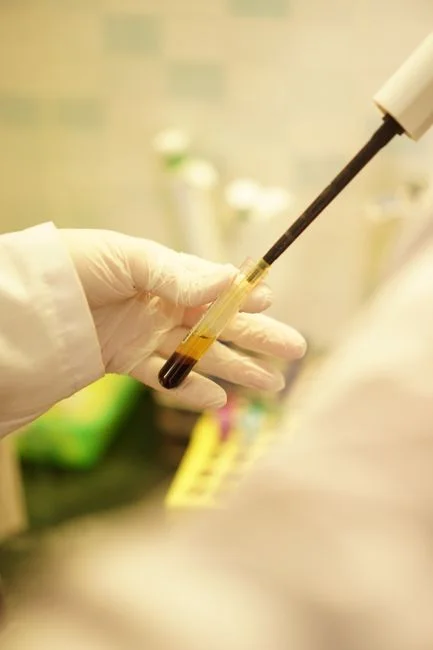
Semiconductor wastewater cannot be represented reliably by one plant-wide average because the treatment consequences differ by stream. A defensible baseline links each generation point to its destination, treatment step, chemical use, flow, and representative analysis. TMAH-containing wastewater, cleaning chemicals, metals-bearing streams, organic streams, and general rinse water should remain separately identified until their effects on treatment and reuse are understood.
| Baseline record | Required information | Decision supported |
|---|---|---|
| Source-by-source inventory | Generation point, destination, treatment unit, chemical use, flow, and analytical result | Stream segregation and treatment-train boundaries |
| Representative analytical data | Sample date, laboratory method, operating condition, and production campaign | Pollutant profile and source-specific loading |
| Flow and batch records | Flow-meter data, batch dumps, peak flow, variability, and mass loading | Hydraulic and contaminant capacity |
| Process-change plan | Product mix, production forecast, chemical substitutions, and expansion or contraction | Change-of-control and consent-modification assessment |
| Residue records | Characterization, contracts, manifests, and approved disposal route | Legal custody and disposal risk |
Samples should represent relevant production campaigns and operating conditions. Sewer-discharge streams must be separated from off-site waste streams because approval to discharge one does not establish approval to send the other to a particular destination. The request set should also include chemical-use records, treatment operating logs, production mix, peak-flow information, and pollutant mass loading.
The baseline must be reconciled with the post-closing plan. The supplied Texas benchmark notes that the Silicon Labs reshoring objective does not quantify the wastewater effect of an acquired site. For an Indian transaction, the buyer must model product mix, campaign changes, chemical substitutions, and any expansion or contraction in wastewater generation. See the DAF versus clarifier selection for semiconductor wastewater for the related need to preserve stream-specific design data.
Unresolved sampling disputes, exceedances, corrective actions, pending permit amendments, and treatment constraints should be elevated immediately. They affect legal exposure, operating continuity, treatment capital, and valuation; they are not routine data-room omissions.
Determine which regulatory approvals must change
The applicable action cannot be selected from a generic description of an acquisition. For every authorization, counsel must test the legal holder, site identity, asset or share structure, and proposed operating change against the current site-specific rules. The competent Indian environmental authority and the receiving municipal sewer authority must confirm the conclusion; the supplied research does not establish a universal India transfer requirement.
| Decision test | Likely legal path | Closing evidence |
|---|---|---|
| Same holder, same site, same permitted activity, and no relevant condition change | Current authorization with no regulatory change | Current consent, confirmation of reporting continuity, and updated contacts and calendar |
| Rule or consent requires notice when the legal holder changes | Change-of-control filing or transfer | Filed documents and agency acknowledgment or approval |
| Production, chemicals, wastewater characteristics, treatment, or discharge route changes | Consent modification | Issued modification with revised technical and monitoring conditions |
| Authorized activity, discharge route, or receiving system is not covered by the current consent | New authorization before regulated activity | Effective issued consent |
| Sewer classification, discharge quality, or slug loading changes | Industrial-user agreement modification or new approval | Executed agreement or written sewer-authority decision |
Consent review should cover discharge routes, production capacity, restricted or prohibited substances, monitoring, reporting, recordkeeping, emergency controls, sludge or residual disposal, and financial assurance. The buyer must then confirm whether it will assume the consent, submit an ownership-change document, modify it, or seek a fresh authorization. This sequence is consistent with the transaction logic in the Shell plant acquisition wastewater requirements, without importing Texas rules into India.
Separately, the sewer authority must determine the facility’s industrial-user classification and applicable local limits. The review should address prohibited discharges, pretreatment monitoring, sampling duties, reporting periods, and slug-loading controls. Added wastes, changed production, or changed discharge characteristics may require further review even where the environmental consent remains valid.
Environmental authorization, sewer authorization, and off-site waste-management duties are different obligations. Compliance under one does not prove that a residue has an approved disposal route or that the receiving sewer will accept a changed flow. Legal, environmental, operations, procurement, EHS, and the plant manager should therefore receive separately assigned actions, each with a dated evidence requirement. Where continued operation depends on approval, agency or sewer-authority confirmation should be a pre-closing condition.
Test inherited liabilities and treatment capacity
Historical wastewater compliance and installed treatment capability determine whether the buyer can continue operating within the existing legal and operating envelope. The audit should test permit conditions, pretreatment limits, monitoring reports, inspection findings, deviations, corrective actions, pending capital projects, and compliance with the equipment’s established operating conditions. Historical exceedances may change the price, require remediation, or constrain the post-closing production plan.
Existing treatment assets require a separate technical review. The assessment should address condition, hydraulic capacity, redundancy, controls integration, utility requirements, operator capability, maintenance history, and compatibility with the proposed wastewater profile. Retained equipment, tie-ins, commissioning requirements, and performance tests must be documented rather than assumed.
The capacity comparison must reconcile verified contaminant loading, peak and batch flows, permit requirements, the future production plan, and installed treatment capacity. Each gap needs a trigger, responsible owner, decision date, and treatment in the purchase agreement or capital plan. MBR membrane bioreactor design criteria can inform the technical review, but the supplied research does not establish a design for an unnamed Indian plant.
Equipment suitability must rest on verified feed data rather than a catalog range. A supplier should provide site-specific performance guarantees, permit compatibility, residual-waste routes, controls scope, utility demand, footprint, operator requirements, and lifecycle-cost disclosure. Pilot or treatability evidence should be obtained where the waste is variable or the proposed duty is outside demonstrated operating history.
Where water reuse is an objective, the wastewater train, water-recovery train, and final discharge route must be integrated in one mass-and-energy balance. Sewer-discharge compliance alone does not establish suitability for semiconductor reuse.
Select treatment technologies from verified objectives
Treatment should be selected by verified contaminant and objective, not by a generic equipment category. Soluble salts, suspended solids, colloids, oil and grease, FOG, VOC behavior, pH, nutrients, biodegradability, toxicity, required water purity, and sludge characteristics create different design constraints. For semiconductor operations, the source streams must remain traceable through each treatment and residual-handling step.
| Verified objective | Indicative equipment boundary from supplied research | Evidence required before selection |
|---|---|---|
| Remove oil, grease, FOG, suspended solids, or colloidal matter | The listed industrial DAF system has a 4–300 m³/h range across 13 standard models | Verified source flow, batch variation, settleability, emulsions, oil content, solids loading, pilot evidence, and guaranteed site performance |
| Provide biological treatment and high-quality separation | The listed MBR system has a 10–2,000 m³/day range, submerged PVDF membranes, and filtration below 1 μm | Biodegradability, toxicity, nutrients, solids, effluent specification, reuse requirement, pilot evidence, and controls integration |
| Produce semiconductor process-water quality | The listed industrial RO system states recovery rates up to 95% | Feed chemistry, required permeate specification, recovery target, pretreatment needs, guarantees, and integration with the wastewater train |
| Control an affected VOC wastewater stream | Texas 30 TAC Section 115.140 screening example: 10,000 ppmw VOC, or at least 1,000 ppmw at 10 liters per minute, with specified controls in the cited Texas areas | Current Indian site-specific legal review, VOC concentration, flow, annual loading, storage and transfer controls, and treatment performance |
The DAF and MBR figures are selection boundaries, not approved designs. The industrial DAF wastewater treatment option should be evaluated against verified flow and contaminant data. The MBR membrane bioreactor system should be evaluated only after site-specific biodegradability, toxicity, nutrient, solids, effluent, and reuse data are available. The stated RO recovery is likewise a product claim, not proof of site performance.
The Texas VOC values are examples from the supplied Texas benchmark, not Indian limits. The benchmark cites screening thresholds of 10,000 ppmw VOC, or at least 1,000 ppmw at 10 liters per minute, together with 90% VOC reduction by weight and less than 1,000 ppmw for the specified Texas areas. The buyer should use those examples to structure the Indian inquiry, not to infer an Indian standard.
For VOC streams, review storage, handling, transfer, treatment, and final discharge as one system. Where a reuse objective exists, evaluate capture, recovery, residual handling, and product-water quality separately. The associated mining-metals discharge and sewer-limit guide provides a useful process for connecting discharge controls with source characterization, while the applicable Indian requirements must come from the site’s current consent and regulator.
Convert the due diligence into closing conditions
Wastewater diligence becomes transaction risk only when each unresolved item has an owner, a decision point, and a contractual or operational consequence. Before closing, obtain the complete authorization register, wastewater inventory, representative analytical records, flow data, permit and sewer agreements, monitoring reports, exceedances, sampling disputes, chemical and process changes, residual-waste contracts, and capital-project list.
| Timing | Required action | Evidence of completion |
|---|---|---|
| Before closing | Complete the authorization register, baseline characterization, liability review, and capacity gap analysis; complete required transfer, modification, or new-application steps | Issued approvals or required written confirmations, complete analytical file, and a verified compliance calendar |
| At closing | Resolve or contractually allocate exceedances, permit gaps, sampling disputes, treatment shortfalls, and required capital | Conditions, covenants, indemnities, holdback, or capital allowances recorded in the purchase agreement |
| After closing | Update contacts, procedures, monitoring systems, and reporting responsibilities; maintain controlled change logs | Verified monitoring records, corrective-action records, and a register of permit, production, analytical, equipment, and treatment changes |
Updated permit contacts, procedures, monitoring systems, and reporting responsibilities should be ready for the post-closing operating model. Unresolved exceedances and sampling disputes should be visible in the purchase agreement rather than buried in assumptions. A closing condition is appropriate where continued operation depends on an approval; a covenant may be appropriate where the residual action is permitted after closing but remains tightly owned and dated.
After closing, the plant should maintain one controlled change log covering consent changes, production changes, analytical deviations, equipment changes, treatment performance, monitoring records, and corrective actions. A management assumption that permits should transfer is not compliance evidence, and an equipment purchase order does not demonstrate permit or reuse compliance. The acquisition wastewater requirements and closing checklist provides a related decision structure, but the final outcome still depends on the Indian site record.
The final rule is straightforward: do not infer authorization from ownership, and do not order treatment equipment until the site-specific legal baseline, wastewater characterization, and operating forecast are verified.
Frequently Asked Questions
Does the wastewater permit automatically transfer when Texas Instruments acquires an Indian plant?
No automatic conclusion should be drawn from ownership. The action depends on the site, consent holder, applicable change-of-control rule, and proposed operating change. Obtain the current consent and seek written confirmation from the competent environmental authority and receiving sewer authority on whether a transfer, ownership filing, modification, new application, or unchanged authorization applies.
What should a buyer request when budgeting treatment costs?
Request a site-specific cost basis rather than a catalog-price estimate: verified peak and batch flows, pollutant mass loading, required effluent or reuse quality, pretreatment needs, permit and sewer requirements, utilities, residual disposal, installation scope, commissioning, and performance guarantees. Pilot evidence should be included where treatment behavior is uncertain. No reliable price can be stated without these inputs and the current authorization record.
How should DAF, MBR, or RO be sized for semiconductor wastewater?
Size from verified source data, not a single plant average. The selection must reflect peak and batch flows, contaminant loading, biodegradability, toxicity, nutrients, solids, required water quality, recovery target, and pretreatment requirements. Preserve separate data for TMAH-containing, cleaning-chemical, metals-bearing, organic, and rinse-water streams. The published equipment ranges are selection boundaries, not an approved plant design.
What should be checked before selecting a treatment supplier?
Require site-specific performance guarantees, permit compatibility, controls integration, utility and footprint data, operator capability requirements, residual-waste routing, commissioning and testing obligations, and lifecycle-cost disclosure. The supplier should identify the feed data and pilot evidence behind every guarantee. A product name or catalog range does not establish compliance with the plant’s consent or sewer requirements.
How should unresolved wastewater risk be allocated in the acquisition?
Convert each unresolved item into a defined closing condition, covenant, indemnity, holdback, or capital allowance as appropriate. Unresolved exceedances, sampling disputes, missing approvals, treatment-capacity shortfalls, and required treatment capital have different legal consequences and should not be combined into one generic indemnity. The allocation should reflect whether the issue threatens closing, continued operation, future expansion, or reuse.