
What Changes When Texas Instruments Acquires the Plant?
A change in corporate ownership does not by itself establish which wastewater approvals will transfer, require modification, or need a new application after Texas Instruments acquires a Texas plant. The buyer must review the facility-specific permits, sewer approvals, wastewater profile, treatment records and regulatory correspondence with the relevant authorities. Texas Instruments’ acquisition announcement for Silicon Labs describes 300mm wafer fab facilities, internal assembly and test capabilities and a stated objective of reshoring manufacturing, but it does not identify a particular acquired Texas plant or establish that plant’s wastewater permit status. Accordingly, ownership, authorization, characterization, treatment and compliance responsibility must be treated as separate wastewater due diligence for a Texas plant acquisition workstreams rather than one transfer decision.
The first question is who holds each authorization. A permit may remain associated with the facility while naming a particular corporate permittee, or the applicable rule may require a transfer or ownership-change filing. The buyer should not assume that changing the parent company leaves every obligation untouched, nor assume that every authorization follows the asset automatically. The current permit and permit-support documents should be requested before closing, including applicable Texas acquisition approval records for comparison with other transaction structures.
The diligence file should also contain discharge monitoring reports, wastewater characterization studies, industrial-user pretreatment approvals, enforcement correspondence, chemical inventories, process-change plans and residual-waste contracts. A 2012 Texas Wesleyan Law Review article may provide historical context for ownership and liability questions, but it is not evidence of current wastewater authorization requirements. The transaction team needs current, site-specific confirmation from TCEQ and the receiving sewer authority. Without the permit holder, permit number, site jurisdiction and proposed operating change, no responsible adviser can determine the legal outcome for an unnamed plant.
Build the Wastewater Due-Diligence File
A defensible treatment decision starts with a stream-by-stream inventory rather than an averaged plant analysis. Each process area, generation point, destination and treatment unit should be linked to the chemicals used, flow and representative analytical results. This is particularly important for semiconductor operations, where cleaning and rinse streams can have materially different compositions. A stream containing TMAH requires source-specific evaluation; the supplied research does not provide a discharge limit for TMAH, so the buyer must obtain the applicable permit condition or sewer limit rather than infer one. The approach is detailed in this semiconductor TMAH wastewater treatment design.
| Due-diligence source | Evidence to request | Decision supported |
|---|---|---|
| Process and wastewater drawings | Generation points, segregation, flow routes, treatment units and discharge points | Stream segregation and treatment-train boundaries |
| Representative analytical data | Dates, laboratory methods, operating conditions and production campaign associated with each sample | Pollutant profile and source-specific loading |
| Operational records | Flow meter data, batch dumps, chemical use, production mix and treatment operating logs | Peak flow, variability and mass loading |
| Regulatory records | Permits, pretreatment agreements, monitoring reports, exceedances, correspondence and capital projects | Authorization path and compliance risk |
| Residual-waste records | Sludge and off-site waste characterization, contracts, manifests and disposal routes | Residue-management responsibility |
Representative samples must represent the relevant production campaign and operating condition, and sewer-discharge streams should be distinguished from off-site-waste streams. Reconcile production forecasts, product mix and reshoring plans with wastewater generation and treatment capacity. Texas Instruments’ Silicon Labs announcement states that reshoring manufacturing from external foundries by leveraging its internal manufacturing capacity is a transaction objective; it does not quantify any acquired site’s wastewater effect.
Identify pending treatment projects, permit amendments, sampling disputes, exceedances, corrective actions and commitments made to TCEQ or the sewer authority. An optional planning horizon of 90 days or longer can organize data-room requests and agency meetings, but it is not a statutory deadline. Unresolved evidence gaps should become explicit procurement conditions rather than assumptions embedded in a capital estimate.
Map Each Permit and Approval to a Post-Closing Action
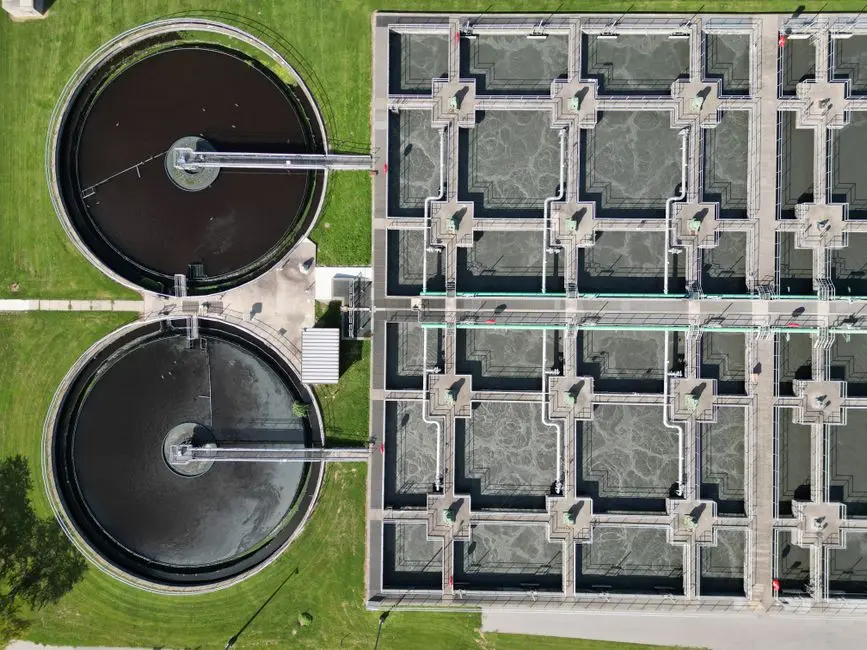
Wastewater authorization must be mapped as a set of regulatory actions, not reduced to a single “permit transfer” checkbox. A current permit, a permit requiring modification, a new authorization, an ownership-change filing and a sewer consent or industrial-user agreement can have different prerequisites and responsible parties. The exact action depends on the permit language, permit-holder identity, site jurisdiction and proposed operating change.
| Authorization status | Required buyer action | Evidence of completion |
|---|---|---|
| Current authorization with no change | Confirm permittee requirements, reporting party and post-closing contacts | Written authority confirmation and updated compliance calendar |
| Transfer or ownership-change filing required | Submit the required administrative action and obtain confirmation | Filed application, approval or agency acknowledgment |
| Modification required | Revise the affected permit terms and supporting technical basis | Approved modification covering the proposed operation |
| New authorization required | Confirm applicability and complete the application before the regulated activity | Issued authorization and effective conditions |
| Sewer approval or industrial-user agreement | Verify local limits, monitoring, prohibited discharges and slug controls with the sewer authority | Executed approval, permit or agreement |
For each authorization, identify the responsible corporate and operating entities, reporting party, sampling responsibility, reporting deadlines and any financial-assurance requirement. Review whether expanded production, a new wastewater stream, a new chemical, a changed treatment process or a new discharge route requires modification or supplemental review. Also verify how the receiving authority classifies the facility as an industrial user and whether local limits, prohibited discharges, pretreatment monitoring and slug-loading controls apply.
Assign each action to legal, environmental, operations, procurement, EHS or the plant manager, with a dated evidence requirement. Agency or sewer-authority confirmation should be a pre-closing condition where continued operation depends on it. This article does not determine the legal outcome for an unnamed plant; that determination requires the permit holder, permit number, site jurisdiction and proposed operating change.
Characterize the Wastewater Before Selecting Treatment
Treatment should be selected by contaminant and objective, not by a generic equipment category. Soluble salts and process-water purity, suspended solids, colloids, oil and grease, FOG, VOC, pH, nutrients and sludge characteristics create different design constraints. For a semiconductor plant, keep TMAH-containing wastewater, cleaning chemicals, metals-bearing streams, organic streams and general rinse water separate until their individual effects on treatment and reuse are understood.
The U.S. EPA’s 30 TAC Section 115.140 excerpt identifies an affected VOC wastewater stream as a VOC wastewater stream from an affected source category with VOC concentration at or above 10,000 ppmw, or at least 1,000 ppmw with a flow rate at or above 10 liters per minute, or 2.64 gallons per minute, determined under Section 115.148. These are screening triggers, not a substitute for source-category and site-specific review.
| Treatment objective | Data required before selection | Applicable evaluation |
|---|---|---|
| Remove solids, oil, grease, FOG or colloids | Source flow, batch variation, settleability, emulsions, oil content and solids loading | Evaluate an industrial DAF pretreatment system against verified site data |
| Provide biological treatment and high-quality separation | Biodegradability, toxicity, nutrients, suspended solids and required effluent quality | Evaluate an integrated MBR wastewater treatment system with site-specific pilot evidence |
| Produce semiconductor process-water quality | Feed chemistry, required permeate specification, recovery target and pretreatment needs | Evaluate an industrial RO water purification system against process requirements |
| Meet applicable VOC controls | VOC concentration, flow, annual loading and exemption basis | Test against 30 TAC Sections 115.140, 115.142 and 115.148 |
For facilities in the Beaumont/Port Arthur area and after December 31, 2002 in the Houston/Galveston area, the EPA excerpt states that Section 115.142 requires 90% VOC reduction by weight and reduction to less than 1,000 ppmw. Reuse criteria must be evaluated separately: discharge compliance does not establish that the treated water is suitable for semiconductor reuse. Require site-specific pilot, treatability or vendor performance data rather than inferring performance from a catalog.
Assess Texas VOC Wastewater Controls
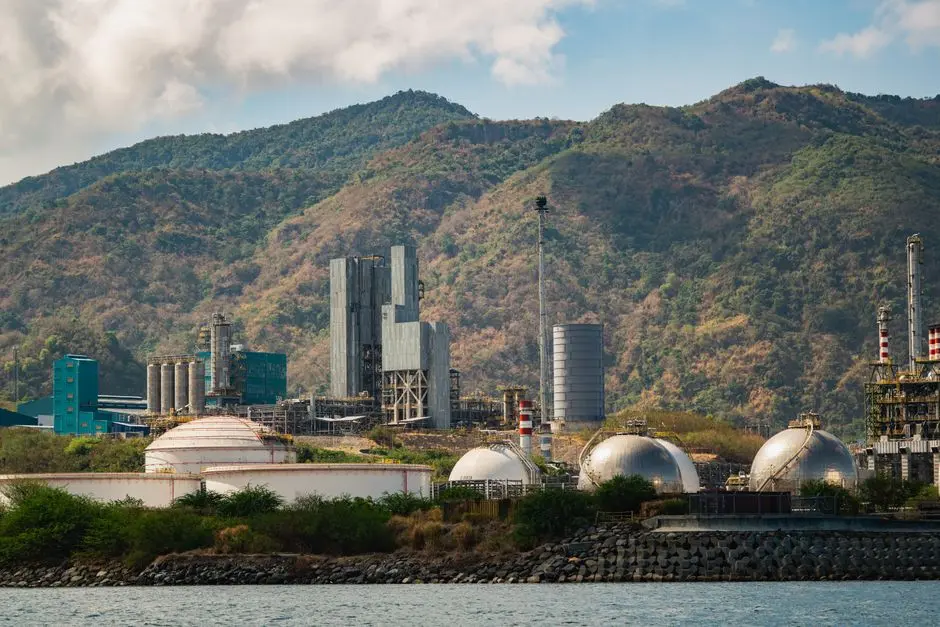
Affected VOC wastewater streams must be evaluated under 30 TAC Chapter 115 even when the water is ultimately discharged to a sewer. The U.S. EPA’s Texas SIP excerpt, supplied without a publication date, defines the screening thresholds in Section 115.140 and extends controls to storage, handling, transfer and treatment components containing an affected stream. The acquisition should therefore examine the complete wastewater system, not only the final discharge point.
For the Beaumont/Port Arthur area and after December 31, 2002 in the Houston/Galveston area, the Section 115.142 endpoint is 90% reduction by weight and less than 1,000 ppmw VOC. A properly operated biotreatment unit must maintain average aeration-basin suspended biomass of at least 1.0 kg/m3, measured as total suspended solids, according to the EPA excerpt. Combined streams require careful accounting because the required removal amount cannot be less than that needed to treat each individual affected stream under the cited provision.
Section 115.147 provides annual-loading exemptions in the EPA excerpt: a plant with annual VOC loading of no more than 10 Mg, or 11.03 tons, is exempt from Section 115.142. For a plant above that loading, combined exempted streams may not exceed 10 Mg, or 11.03 tons. Section 115.148 requires determination of wastewater characteristics, while Section 115.910 provides a route for an approved alternate means of control when reductions are demonstrated to be substantially equivalent.
The persistence rule is material to transaction diligence. Under the EPA excerpt, once a component becomes subject, it remains subject unless and until the specified controlled-emissions level is restored through an authorized reduction project. Complete and current records must demonstrate stream characteristics, compliance and any claimed exemption. These controls should be considered in the broader chip fab wastewater resource recovery decision because VOC capture, reuse and residual handling can affect the overall mass balance.
Convert Due-Diligence Findings into a Treatment Decision
Final equipment selection should follow from verified objectives. If biological treatment and high-quality separation are required, compare the MBR system’s submerged PVDF membrane format and stated sub-1-micrometer filtration capability with the site’s required effluent and reuse specifications. If oil, grease, FOG, suspended solids or colloidal matter require removal, evaluate the DAF system’s stated 4–300 m3/h range and 13 standard models against verified flow and contaminant data. If semiconductor process-water purity is required, evaluate the industrial RO system’s stated recovery rate of up to 95% against the required recovery, permeate quality and pretreatment conditions.
| Decision | Required evidence | Procurement condition |
|---|---|---|
| Modify existing treatment | Existing equipment condition, hydraulic profile, process data and permit compatibility | Define retained equipment, tie-ins and performance tests |
| Add pretreatment | Verified contaminant loading, peak and batch flows, and disposal route | Base sizing on site data and pilot results |
| Add biological treatment or MBR | Biodegradability, toxicity, nutrients, solids and effluent specification | Require demonstrated effluent performance and operating envelope |
| Add RO or reuse | Feed chemistry, required permeate quality, recovery target and pretreatment | Define permeate guarantees and integration with the wastewater train |
| Defer investment | Documented permit, production and capacity gap | State the trigger, responsible owner and decision date |
Where reuse is an objective, integrate the wastewater train, water-recovery train and discharge train in one mass-and-energy balance. Final selection should depend on site-specific pilot data, guaranteed performance, permit compatibility, utilities, footprint, operator capability, residual-waste routes, controls integration and lifecycle cost. Catalog flow ranges and product claims are selection boundaries, not an approved process design or permit determination.
Close the Transaction with a Wastewater Compliance Checklist
Before closing, confirm every permit action, complete the wastewater inventory, resolve analytical gaps, identify TCEQ and sewer-authority approvals, and establish performance criteria for treatment suppliers. Assign custody of monitoring data, chain-of-custody records, inspection findings, deviations, corrective actions and residual-waste documentation. Any unresolved exceedance, sampling dispute or proposed process change should have an identified owner, closing status and agency action.
| Stage | Required actions | Completion evidence |
|---|---|---|
| Before closing | Verify permit status, wastewater profile, sewer requirements, treatment gaps and capital projects | Completed diligence register and written authority confirmations where required |
| At closing | Complete required transfers or authorizations; update contacts, procedures and monitoring systems | Filed or issued approvals and updated compliance calendar |
| After closing | Audit permit conditions, pretreatment limits, applicable 30 TAC controls, monitoring, records and operating envelopes | Documented audit findings and assigned corrective actions |
| Ongoing | Track permit changes, production changes, analytical deviations and treatment performance | Controlled change log and verified monitoring records |
Each action should be tracked to written agency or sewer-authority confirmation where confirmation is required. A management assumption that the permits “should transfer” is not compliance evidence, and an equipment purchase order is not evidence that the treatment train satisfies the site’s permit or reuse specification.
Frequently Asked Questions
Does TI’s ownership automatically change the plant’s wastewater permits?
No automatic conclusion can be drawn from TI’s ownership alone. For each authorization, the buyer must determine whether the current permit remains with the facility, requires an ownership-change filing or transfer, needs modification because of planned operations, or requires a new application. TCEQ and the receiving sewer authority must confirm the site-specific action, and the permit holder, permit number, jurisdiction and proposed operating change must be known before the buyer can determine the result.
What wastewater data should the buyer request before closing?
Request a complete wastewater inventory, representative analytical records, flow data, permits, pretreatment agreements, monitoring reports, exceedances, sampling disputes, chemical and process changes, sludge records, residual-waste contracts and pending capital projects. Samples should identify their date, method, operating condition and production campaign. For semiconductor streams, preserve source-specific data for TMAH, cleaning chemicals, metals, organics and rinse water rather than relying on one averaged result.
How large a treatment system is needed after the acquisition?
The published DAF, MBR and RO flow ranges are selection boundaries, not a recommendation for an unnamed plant. Final sizing requires verified peak and batch flows, pollutant and mass loading, required water quality, recovery target, treatment objectives and permit conditions. A supplier should base the guarantee on those site inputs and, where appropriate, pilot results. An acquisition forecast alone is insufficient for equipment sizing.
What is the compliance risk of changing wastewater treatment during the transaction?
The risk depends on the specific permit, pretreatment requirements, applicable 30 TAC provisions and proposed change. A replacement system can alter flow, emissions, monitoring, residual-waste handling, reuse quality or operating records without curing every existing deficiency. Compare the proposed train with permit conditions, the Section 115.140 VOC screening thresholds, applicable control requirements, treatment records and sewer limits before committing to equipment. Where the change affects an authorization, obtain the required agency action rather than relying on a vendor compliance statement.
Does semiconductor wastewater qualify for reuse?
Reuse depends on the receiving process specification, not simply on the wastewater’s origin or the availability of a treatment technology. Discharge-compliant water may still require additional treatment to meet semiconductor process-water quality. The buyer should define the required permeate or reuse quality, recovery objective, chemistry, pretreatment requirements, operating reliability and residual-management route, then verify them through site-specific data and performance testing. The semiconductor TMAH wastewater treatment design should be read as an input to that engineering review, not as a universal reuse guarantee.
Related Equipment
- industrial DAF pretreatment system — specifications, capacity range, and technical data