Why Chip Fabs Are Racing to Recover Wastewater: Water Scarcity, Costs, and Compliance
A single semiconductor chip fab consumes 5–10 million gallons of freshwater daily (IEEE 2024), with up to 70% lost as UPW reject or local scrubber wastewater. Global water scarcity intensifies the semiconductor industry's dual challenge: securing reliable water sources for expansion and managing the escalating costs of hazardous waste disposal. The infrastructure for hazardous-waste treatment in the United States has contracted significantly, shrinking from approximately 30,000 facilities in the 1980s to fewer than 900 today (Subgeni LLC). This contraction has driven a 40% increase in trucking and off-site treatment fees over the last five years, forcing facility managers to pivot from "treatment for discharge" to "treatment for recovery."
Regulatory pressures accelerate this transition. The Taiwan Science Park targets a 65% water reuse rate for all tenants, while the EU Industrial Emissions Directive (2010/75/EU) has tightened Total Dissolved Solids (TDS) and heavy metal discharge limits, making traditional end-of-pipe treatment financially unsustainable. For a standard 35,000 m³/day fab, the combined impact of freshwater procurement and discharge fees can exceed $3.7M annually. Water costs average $2.5M/year, while disposal fees for high-TDS or metal-laden streams add another $1.2M/year. Implementing a resource recovery system is a critical strategy for cost control and supply chain resilience.
The financial justification for chip fab wastewater resource recovery is driven by the reclamation of high-value materials. Beyond water reuse, modern hybrid systems can isolate and recover critical materials such as copper and gallium from the effluent. By shifting the perspective of wastewater from a liability to a secondary resource stream, fabs can offset 30–50% of their annual operating expenses through material sales and avoided disposal costs.
Chip Fab Wastewater Streams: What’s in Your Effluent and Why It Matters
The chemical composition of fab effluent varies drastically between UPW reject and scrubber streams, requiring distinct segregation strategies to maximize recovery efficiency. Identifying the specific contaminant profile of each stream is the first step in designing a system that prevents membrane fouling and maximizes the purity of recovered materials. Ultrapure water (UPW) reject streams represent the highest volume (60–70% of total use) and are characterized by low TDS but high volumes of dissolved oxygen and silica, making them ideal candidates for polishing and immediate reuse in cooling towers or as UPW feed.
In contrast, local scrubber waste and Chemical Mechanical Planarization (CMP) streams are highly complex. Scrubber waste typically contains fluoride concentrations exceeding 50 ppm, alongside fine silica particulates that pose a severe risk of biological and inorganic fouling (Veolia Singapore data). CMP wastewater is laden with abrasive particles, oxidizing agents, and heavy metals like copper (Cu), gallium (Ga), and arsenic (As). These streams require robust pretreatment to remove suspended solids and neutralize pH before entering membrane-based recovery stages.
The table below outlines the typical characteristics of primary fab wastewater streams and their recovery potential:
| Wastewater Stream | Flow Rate (% of Total) | Key Contaminants | Recovery Potential |
|---|---|---|---|
| UPW Reject | 60–70% | Silica, Dissolved Oxygen, Low TDS | High (Reuse as UPW Feed/Cooling) |
| Local Scrubber Waste | 15–20% | Fluoride (>50 ppm), Silica, Nitrates | Moderate (Requires F- removal) |
| CMP Wastewater | 5–10% | Copper, Gallium, TSS, Abrasives | High (Metal Reclamation) |
| Cooling Tower Blowdown | 5–8% | High TDS, Scaling Salts (Ca, Mg) | Moderate (Requires Softening) |
Understanding these profiles allows engineers to implement silicon wafer wastewater treatment design specs that prioritize the segregation of high-value streams. For instance, separating copper-laden CMP waste from general organic waste ensures that electrochemical recovery systems can operate at peak efficiency without interference from competing ions.
Hybrid ZLD Systems for Chip Fabs: Engineering Specs and Recovery Rates
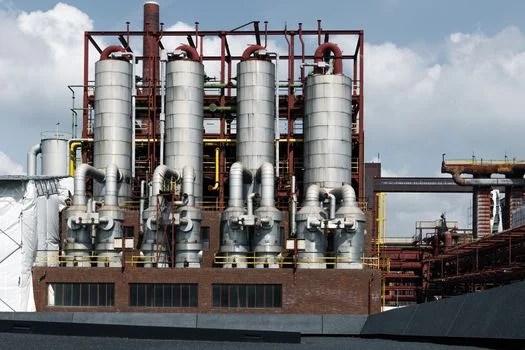
Hybrid Zero Liquid Discharge (ZLD) systems for semiconductor facilities must integrate physical, biological, and electrochemical stages to achieve 95% water recovery while protecting sensitive membrane infrastructure. The process typically begins with Dissolved Air Flotation (DAF) as a primary pretreatment. A high-efficiency DAF system for silica and fluoride removal (such as HydropureWater) utilizes micro-bubbles to lift 90–95% of Total Suspended Solids (TSS) and up to 80% of silica to the surface for removal. This stage is critical for preventing the "glass-like" scaling of downstream Reverse Osmosis (RO) membranes.
Following DAF, an Integrated Membrane Bioreactor (MBR) is employed to handle organic loads and residual fine solids. An MBR system for low-TSS effluent suitable for RO feed achieves Chemical Oxygen Demand (COD) levels of <5 mg/L and TSS of <1 mg/L. This high-quality filtrate allows for higher flux rates in the RO stage. The RO system itself must be configured for high recovery, often utilizing a multi-stage array with inter-stage booster pumps to overcome osmotic pressure. A high-recovery RO system for UPW reject and scrubber wastewater can achieve 85–95% recovery when paired with advanced antiscalant dosing tailored to the specific fluoride and silica concentrations of the fab.
The final stage for metal-rich streams involves electrochemical separation. This technology uses electrowinning to recover 99.8% of copper and up to 95% of gallium from RO concentrate. The remaining brine is then processed through a mechanical vapor recompression (MVR) evaporator to achieve true ZLD. The table below provides technical specifications for these integrated technologies:
| Technology | Contaminant Removal | Recovery Rate | Energy Use (kWh/m³) | Footprint |
|---|---|---|---|---|
| DAF | 95% TSS, 80% Silica | 98% (Water) | 0.15 - 0.30 | Medium |
| MBR System | >99% COD/BOD | 95% (Water) | 0.60 - 1.00 | Compact |
| High-Recovery RO | 99% TDS, Ions | 85 - 95% (Water) | 1.20 - 2.50 | Medium |
| Electrochemical | 99.8% Cu, 95% Ga | N/A (Material) | 2.00 - 4.00 | Compact |
For facility managers designing these systems, adhering to third-generation semiconductor wastewater treatment specs ensures that the system can handle the variable influent flows typical of high-volume chip manufacturing without frequent membrane cleaning cycles.
Cost Breakdown and ROI: How Much Does a Chip Fab ZLD System Cost?
Capital expenditure for a 35,000 m³/day resource recovery system typically ranges from $10M to $15M, depending on the concentration of heavy metals and the required purity of the recovered water. While the initial investment is significant, the ROI is driven by three primary factors: reduced freshwater purchase costs, the market value of reclaimed metals, and the total elimination of hazardous waste disposal fees. In a standard configuration, the DAF unit accounts for approximately $1.2M, the MBR system $3M, and the high-recovery RO array $4M. The remaining budget is allocated to electrochemical separation units and MVR evaporators for brine management.
Operating expenses (OpEx) for these hybrid systems generally fall between $0.80 and $1.20 per cubic meter of treated water. This includes energy consumption ($0.40/m³), chemical dosing for pH adjustment and antiscalants ($0.20/m³), and routine maintenance and labor ($0.20/m³). When compared to the rising costs of municipal water (averaging $1.50–$2.00/m³ in semiconductor hubs) and disposal fees (which can exceed $5.00/m³ for hazardous streams), the OpEx of a recovery system is significantly lower than the "business as usual" model.
The following table illustrates the ROI model for different fab capacities based on current market data (HydropureWater field data, 2025):
| System Capacity | Estimated CapEx | Annual OpEx | Annual Savings* | Payback Period |
|---|---|---|---|---|
| 10,000 m³/day | $4.5M - $6M | $0.4M | $1.8M | 3.3 Years |
| 20,000 m³/day | $7.5M - $10M | $0.75M | $3.2M | 3.1 Years |
| 35,000 m³/day | $12M - $15M | $1.1M | $6.2M | 2.5 Years |
*Annual Savings includes water reuse ($3.2M), metal recovery ($1.8M), and avoided disposal fees ($1.2M) for the 35,000 m³/day model.
Payback periods are shortest for larger fabs due to economies of scale in membrane systems and the higher volume of recoverable precious metals. Most facilities achieve a full return on investment within 2.5 to 3.5 years, making ZLD recovery projects highly attractive for capital budget approvals.
Choosing the Right Recovery Technology for Your Fab’s Wastewater
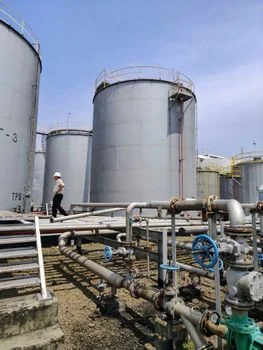
Selecting the optimal recovery technology depends primarily on the silica-to-fluoride ratio and the presence of complexing agents in the waste stream. For local scrubber waste, which is notoriously high in fluoride and silica, the recommended framework is a combination of DAF, lamella clarification, and RO. The DAF stage removes the bulk of the silica particulates that would otherwise foul the RO membranes within days. If the fluoride concentration is above 50 ppm, a calcium-based precipitation stage may be required prior to the DAF to reduce the ionic load on the RO system.
For UPW reject streams, which are relatively clean but high in volume, a simplified MBR-to-RO flow is often sufficient. The MBR acts as a "polisher" to remove any trace organics or biological growth that may have occurred in storage tanks, ensuring the RO feed water has a Silt Density Index (SDI) of <3. In contrast, cooling tower blowdown recovery requires a focus on hardness removal. In these cases, a softening stage (chemical precipitation or ion exchange) must precede the RO to prevent calcium carbonate and sulfate scaling