Why Calcium Fluoride Precipitation Dominates Industrial Fluoride Treatment
Calcium fluoride (CaF₂) precipitation removes >95% of fluoride from industrial wastewater, meeting effluent limits of <15 mg/L. Optimal conditions include a Ca:F molar ratio of 0.55–0.7, pH 6–8, and 30–60 min reaction time. For semiconductor wastewater (5,000 ppm fluoride), a 200 GPM system reduces fluoride to <17 ppm, with chemical costs of ~$0.50/m³ and sludge disposal costs of $150–$300/ton. Calcite-assisted precipitation achieves 96.2% removal at 2 g/L dosage, while fluidized bed reactors recover high-purity CaF₂ crystals for reuse.
Fluoride toxicity is a critical regulatory driver, with the World Health Organization (WHO) and EPA setting drinking water limits at 1.5 mg/L to prevent dental and skeletal fluorosis. In industrial settings, discharge limits typically range from 8 mg/L to 15 mg/L. While alternative technologies exist, they often fail at scale. Adsorption using activated alumina or bone char suffers from limited capacity and complex media regeneration cycles. Reverse Osmosis (RO) provides high rejection rates but generates a concentrated brine stream that is difficult to treat and requires significant energy input. Electrocoagulation, while effective for small flows, is plagued by electrode fouling and scaling in high-fluoride environments.
Calcium fluoride precipitation remains the industrial standard due to its chemical simplicity, low reagent costs, and ability to handle massive flow rates (200+ GPM). By leveraging the low solubility product of fluorite (CaF₂), engineers can achieve consistent compliance in high-load environments such as semiconductor fabrication (HF/BOE etching), smelting, glass manufacturing, and phosphate fertilizer production. For facilities targeting circular economy goals, advanced fluoride recovery techniques for semiconductor wastewater allow for the transformation of waste streams into industrial-grade calcium fluoride crystals.
Chemistry and Reaction Kinetics of CaF₂ Precipitation
The precipitation of fluoride ions using calcium salts is governed by the solubility product constant (Ksp) of CaF₂, which is 3.9 × 10⁻¹¹ at 25°C. The primary chemical reaction is Ca²⁺ + 2F⁻ → CaF₂(s). Under ideal conditions, the theoretical residual fluoride concentration is approximately 8 mg/L, though real-world industrial wastewater often contains complexing agents or competing ions that necessitate over-dosing of calcium to reach target limits.
Reaction kinetics are heavily influenced by the supersaturation ratio (S), defined as ([Ca²⁺][F⁻]²/Ksp). When S > 100, the system enters a regime of rapid primary nucleation, resulting in a high number of very small particles that are difficult to settle. Conversely, maintaining S < 10 through controlled dosing or the use of seed crystals (such as in a Fluidized Bed Reactor) promotes crystal growth over new nucleation. This produces larger, denser particles with superior settling characteristics. Mixing intensity is equally critical; an oscillation rate of 160 r/min or an upflow velocity of 0.5–1.0 m/s is required to ensure uniform reactant distribution and prevent the short-circuiting of untreated fluoride (HydropureWater field data, 2025).
| Parameter | Value / Specification | Impact on Performance |
|---|---|---|
| Solubility Product (Ksp) | 3.9 × 10⁻¹¹ (at 25°C) | Determines the theoretical limit of fluoride removal. |
| Optimal pH Range | 6.0 – 8.0 | Below pH 6, HF formation increases solubility; above pH 8, CaCO₃ competes for Ca²⁺. |
| Supersaturation Ratio (S) | 10 – 100 | Higher S leads to fine pin-floc; lower S leads to large, settleable crystals. |
| Mixing Intensity | 160 r/min (G-value ~150 s⁻¹) | Prevents localized concentration gradients and ensures complete reaction. |
Optimal Process Parameters for >95% Fluoride Removal

Achieving >95% removal efficiency requires precise control over the Ca:F molar ratio, which typically ranges from 0.55 to 0.70. While the stoichiometric ratio is 0.5, an excess of calcium is required to drive the reaction to completion in the presence of competing anions like sulfates or phosphates. However, excessive over-dosing must be avoided as it significantly increases the volume of sludge generated and can lead to post-precipitation scaling in downstream piping.
The pH of the reaction tank must be strictly maintained between 6.0 and 8.0. At a pH lower than 6, fluoride ions associate with hydrogen to form hydrofluoric acid (HF), which is highly soluble and will not precipitate. In semiconductor applications, where influent fluoride can reach 5,000 ppm, a PLC-controlled chemical dosing for precise Ca:F ratio and pH adjustment is essential to handle the rapid fluctuations in acidity. Residence time (HRT) varies by system type: batch systems typically require 30–60 minutes for reaction and flocculation, while continuous Fluidized Bed Reactors (FBR) may operate with an HRT of 5 hours to allow for sufficient crystal growth on the seed bed.
| Design Parameter | Standard Range | Semiconductor Spec (5,000 ppm F-) |
|---|---|---|
| Ca:F Molar Ratio | 0.55 – 0.65 | 0.70 (due to complexing agents) |
| Operating pH | 7.0 – 8.0 | 6.5 – 7.5 |
| Reaction Time | 30 – 120 min | 60 min (minimum) |
| Settling Rate | 0.3 – 0.8 m/h | 0.5 – 1.0 m/h (with calcite aid) |
| Effluent Target | <15 mg/L | <10 mg/L |
Calcium Sources Compared: Lime vs. Calcite vs. CaCl₂
Selecting the appropriate calcium source is a trade-off between chemical cost, sludge volume, and reaction speed. Calcium chloride (CaCl₂) is the most reactive source and is preferred in semiconductor "fab" environments because it dissolves instantly and does not significantly alter the pH of the wastewater. However, it is the most expensive option, with 2025 market prices ranging from $0.80 to $1.20/kg. the chloride ions added to the stream can increase the corrosivity of the effluent.
Hydrated lime (Ca(OH)₂) is the most common choice for large-scale smelting and mining operations due to its low cost ($0.10–$0.20/kg). Lime serves a dual purpose as both a calcium source and a neutralizing agent. The drawback of lime is its tendency to produce a voluminous, "fluffy" sludge that settles slowly and is difficult to dewater. Calcite (CaCO₃) is an emerging alternative that, when activated with dilute hydrochloric acid, produces a very dense sludge. Research indicates that calcite-assisted systems can achieve 96.2% removal while reducing the footprint of the compact lamella clarifiers for CaF₂ sludge separation at 0.5–1.0 m/h loading rates.
| Calcium Source | Relative Cost | Reactivity | Sludge Density | Best Use Case |
|---|---|---|---|---|
| Calcium Chloride (CaCl₂) | High ($$$) | Very Fast | Low | Semiconductor, High-Flow Fabs |
| Hydrated Lime (Ca(OH)₂) | Low ($) | Moderate | Very Low | Smelting, Fertilizer Plants |
| Calcite (CaCO₃) | Medium ($$) | Slow* | High | Facilities with limited space |
*Requires HCl activation for optimal performance.
Batch vs. Continuous Systems: Which Fits Your Throughput?

Batch treatment systems are the preferred choice for facilities with flow rates below 50 m³/h or those dealing with highly variable fluoride concentrations. A typical batch cycle involves filling the reaction tank, dosing calcium and coagulants, a 30-minute reaction phase, and a 2-hour settling phase before the supernatant is discharged. This "fill-and-draw" method ensures that no water leaves the system until compliance is verified by lab analysis, providing a significant safety margin for plant managers.
Continuous flow systems are required for high-volume applications, such as a 200 GPM semiconductor facility. These systems utilize inline static mixers or multi-stage stirred-tank reactors followed by a clarifier. Fluidized Bed Reactors (FBR) represent the pinnacle of continuous treatment; by maintaining a bed of silica sand or fluorite seeds in a fluidized state, the CaF₂ precipitates directly onto the seeds. This reduces sludge volume by 50–70% and produces a dryable, granular product. For continuous systems, sizing the clarifier is the most critical engineering step; a surface loading rate of 0.5–1.0 m/h is standard for CaF₂ precipitates to prevent floc carryover into the effluent.
| Feature | Batch System | Continuous (Clarifier) | Continuous (FBR) |
|---|---|---|---|
| Flow Capacity | <50 m³/h | 50 – 500+ m³/h | 20 – 200 m³/h |
| Operational Complexity | Low | Moderate | High |
| Sludge Volume | High | Moderate | Very Low (Granular) |
| CapEx | $100k – $200k | $250k – $450k | $500k+ |
Sludge Handling: Dewatering, Disposal, and Recovery Options
Calcium fluoride sludge typically exits the clarifier at 2–5% solids, necessitating mechanical dewatering to reduce disposal volumes. The sludge is largely inorganic and non-hazardous in many jurisdictions, but its high moisture retention makes it heavy and expensive to transport. Utilizing filter presses achieving 30–40% solids in CaF₂ sludge for cost-effective disposal is the industry standard. This transition from a liquid sludge to a "dry" cake can reduce disposal costs by up to 60%.
For facilities generating high-purity sludge (>90% CaF₂), recovery is a viable economic strategy. In a case study of a major semiconductor manufacturer, the installation of an FBR system allowed for the recovery of 99% pure CaF₂ crystals. These crystals were sold to the glass and ceramic industries for $50–$100/ton, effectively turning a waste disposal cost into a minor revenue stream. When selecting equipment, engineers must consult a guide on how to select the right filter press for CaF₂ sludge dewatering to ensure the plate configuration can handle the abrasive nature of calcium-based solids.
2025 Cost Breakdown: CapEx, OPEX, and Chemical Consumption
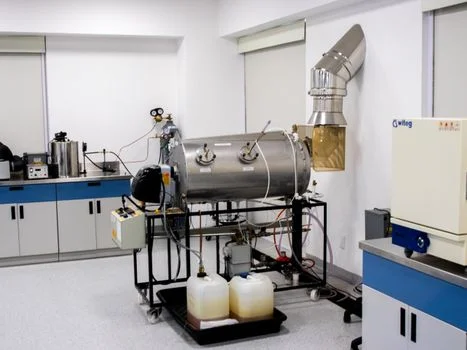
Budgeting for a fluoride treatment system requires a detailed analysis of both the initial capital expenditure (CapEx) and the ongoing operational expenses (OPEX). For a 200 GPM (approx. 45 m³/h) continuous treatment system, CapEx typically ranges from $250,000 to $400,000. This includes the reaction tanks, PLC-controlled chemical dosing for precise Ca:F ratio and pH adjustment, a lamella clarifier, and the control architecture.
OPEX is dominated by chemical consumption, which accounts for roughly 60% of the total operating cost. In a semiconductor application with 5,000 ppm influent fluoride, the chemical cost is approximately $0.50/m³. Sludge disposal accounts for an additional 20%, while energy (pumps and mixers) and labor make up the remaining 20%. While FBR systems have a higher CapEx, their lower sludge disposal costs and the potential for crystal resale often result in a 3-to-5-year payback period compared to traditional lime-precipitation systems.
| Cost Category | Estimated Value (200 GPM System) | % of Total OPEX |
|---|---|---|
| Chemicals (CaCl₂, NaOH, Polymer) | $0.30 – $0.50 per m³ | 60% |
| Sludge Disposal ($200/ton) | $0.10 – $0.15 per m³ | 20% |
| Energy (0.5 – 1.0 kWh/m³) | $0.05 – $0.08 per m³ | 10% |
| Maintenance & Labor | $0.05 – $0.07 per m³ | 10% |
Compliance Checklist: Meeting Global Fluoride Discharge Limits
Environmental compliance is not just about the final effluent number; it requires rigorous documentation of process parameters to satisfy regulatory audits. Most global standards, including the US EPA’s 40 CFR Part 415 and the EU’s Directive 2010/75/EU, require effluent fluoride to be below 15 mg/L. However, stricter regional limits in China (GB 8978-1996) and Japan often push this limit down to 8–10 mg/L.
| Region / Standard | Limit (mg/L) | Required Monitoring |
|---|---|---|
| USA (EPA 40 CFR 415) | <15.0 | Daily composite sampling |
| European Union (IED) | <15.0 | Continuous pH, weekly F- analysis |
| China (GB 8978-1996) | <10.0 | Online fluoride analyzers required |
| Japan (Water Pollution Act) | <8.0 | Strict daily logbooks |
To ensure zero-risk compliance, facilities should implement online fluoride analyzers ($15,000–$25,000) that provide real-time feedback to the dosing pumps. maintaining a log of the Ca:F ratio and sludge settling rates is essential for troubleshooting during an EPA or local environmental bureau inspection.
Frequently Asked Questions
Why does my system’s fluoride removal efficiency drop below 90%?
The most common cause is a pH excursion. If the pH drops below 6.0, calcium fluoride becomes significantly more soluble. Alternatively, check the Ca:F molar ratio; if competing ions like phosphate are present, you may need to increase the ratio from 0.55 to 0.75. Finally, verify that the mixing intensity is sufficient (160 r/min) to prevent "dead zones" in the reaction tank.
Can I reuse CaF₂ sludge in other industrial processes?
Yes, provided the purity is >95%. This is difficult to achieve with standard lime precipitation but is the standard output for Fluidized Bed Reactors (FBR). High-purity CaF₂ crystals are used in the manufacture of glass, ceramics, and as a flux in steelmaking. Resale value typically ranges from $50 to $100 per ton.
What is the best calcium source for a high-flow semiconductor fab?
Calcium chloride (CaCl₂) is generally preferred for high-flow fabs because of its high solubility and rapid reaction kinetics. It allows for smaller reaction tanks and more precise control via automated dosing systems, although it carries a higher chemical price point than lime.
How do I reduce the volume of sludge my system generates?
Switching from lime to a more concentrated calcium source like CaCl₂ reduces the total mass of solids added. Additionally, implementing a secondary dewatering step using a plate-and-frame filter press can increase solids content from 5% to 40%, drastically reducing the weight and volume of waste for disposal.
What is the maximum fluoride concentration this method can handle?
Calcium fluoride precipitation can handle influent concentrations as high as 5,000 ppm (common in semiconductor etching). However, at these levels, a two-stage precipitation process is often recommended: a first stage to bring fluoride down to 100–200 ppm, and a second polishing stage to reach the <15 mg/L limit.