Semiconductor fabs consume 5–10 million gallons of freshwater daily. About 38% of US sites sit in high-water-stress regions per earlier WRI Aqueduct summaries. Water reuse systems recover 60–95% of wastewater and cut intake and discharge volume. Key loads—TDS, Cu, Ni, As, and fluoride—need MBR (99% TSS removal at design flux) or RO (95%+ TDS rejection under controlled SDI). Zero-liquid-discharge (ZLD) hybrids can reach 98–99.5% recovery at roughly 3–5× the CAPEX of standard reuse. This guide covers engineering specs, recovery rates, and a decision framework for chip fab water reuse sizing.
Why Chip Fabs Face Water Stress and Tighter Discharge Limits
Chip fabs in water-stressed basins face continuity risk when municipal supply cannot guarantee 5–10 MGD for a modern campus. Earlier summaries placed about 38% of US sites in high or extremely high stress using WRI Aqueduct data. According to Lepawsky (2024) using WRI Aqueduct scenarios, at least 40% of existing semiconductor facilities worldwide are projected to sit in high- or extremely high water-stress basins by 2030–2040. Phoenix and Austin already compete with residential demand for the same basins.
Discharge pressure is rising in sensitive watersheds. Many permits now target TSS below 10 mg/L and COD toward <50 mg/L. Local heavy-metal caps often hold copper at <0.5 mg/L and nickel at <0.1 mg/L. California and Arizona permits increasingly ask for net-zero aquifer impact, which pushes aggressive reuse or ZLD. In high-stress hubs, combined water and sewer rates rise about 5–10% per year. A Phoenix fab may pay about $5.20 per 1,000 gallons, versus about $1.80 in parts of Oregon. That spread drives ROI for treatment upgrades. Major producers have pledged 30–50% freshwater cuts by 2030 to protect capacity and ESG targets.
| Fab Location | Water Stress Level | Estimated Water/Sewer Rate (per 1,000 gal) | 2025 Regulatory Trend |
|---|---|---|---|
| Phoenix, AZ | Extremely High | $5.20 | Mandatory Reuse / ZLD Incentives |
| Austin, TX | High | $4.85 | Strict Heavy Metal Limits (Cu <0.5 mg/L) |
| Dallas, TX | High | $4.10 | TDS Discharge Penalties |
| Albuquerque, NM | Extremely High | $3.90 | Aquifer Recharge Requirements |
| Hillsboro, OR | Low-Medium | $1.80 | COD/TSS Compliance Focus |
Chip Fab Wastewater Characteristics: Contaminants and Treatment Challenges
Semiconductor fabs generate distinct streams—CMP, etching, rinsing, and scrubber blowdown—each needing targeted pretreatment for TDS and metals. CMP wastewater is hard to polish because nano abrasives and dissolved metals often run 100–300 gpm with TDS of 500–2,000 mg/L. Etch and clean tools add fluoride and ammonia that conventional biology alone rarely meets. Most plants we size for combined rinse-plus-CMP trains start with equalization before any membrane step.
Recovery creates a concentration effect. As permeate returns to the fab, brine TDS and metals climb. Copper often forms stable complexes with organic acids, so simple hydroxide precipitation fails. Fluoride needs precise chemical dosing for semiconductor wastewater pretreatment at pH 10–11 with calcium hydroxide. Without effective heavy metal removal in semiconductor wastewater, metals foul RO modules or trip permit limits.
| Contaminant | Typical Concentration (mg/L) | Source in Fab Process | Treatment Difficulty |
|---|---|---|---|
| TSS | 200–1,000 | CMP Slurry, Grinding | Low (Filtration/MBR) |
| COD | 100–500 | Solvents, Photoresist | Medium (Advanced Oxidation) |
| Copper (Cu) | 5–50 | CMP, Electroplating | High (Complexed ions) |
| Nickel (Ni) | 1–10 | Plating, Under-bump metallurgy | High (pH sensitivity) |
| Fluoride (F⁻) | 100–800 | Etching, Cleaning | Medium (Precipitation) |
| Ammonia (NH₄⁺) | 50–200 | Cleaning solutions | Medium (Stripping/Biological) |
| TDS | 500–2,500 | Blowdown, General process | High (Requires RO/ZLD) |
| TOC | 20–100 | Organics, IPA | Medium (Carbon/UV) |
| Arsenic (As) | 0.1–2.0 | Doping, Ion implantation | High (Strict limits) |
| Silica (SiO₂) | 50–150 | CMP slurry, Glass substrates | High (Membrane fouling) |
Chip Fab Water Reuse Technologies: Specs and Recovery Rates
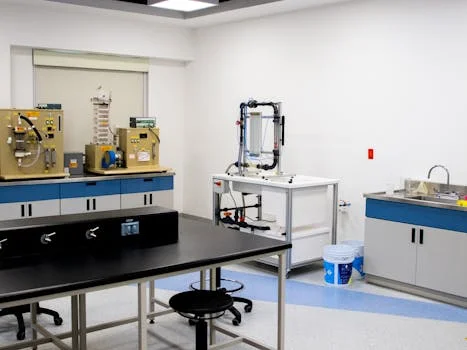
Integrated MBR plus RO trains for chip fabs typically recover 60–95% of treated flow when pretreatment holds SDI and silica in check. For a 500 m³/day MBR stage, common specs call for submerged PVDF membranes at 15–25 LMH with about 0.1 μm pores. That setup delivers about 99% TSS removal before RO. An MBR Membrane Bioreactor Wastewater Treatment System is often the preferred biological barrier when organics and fines travel together.
RO carries most TDS rejection. To limit silica fouling, keep feed SDI <3 and dose polyacrylic antiscalants. Brackish RO systems for semiconductor water reuse usually run 75–85% recovery. When higher recovery is required, FO–NF hybrids use a draw solution at low pressure to move water, cutting energy versus high-pressure RO on high-TDS brine.
| Technology | Recovery Rate | TDS Rejection | Metal Removal | OPEX ($/1k gal) | Primary Limitation |
|---|---|---|---|---|---|
| MBR | 85–95% | N/A | >99% (Particulate) | $0.15–$0.30 | No dissolved salt removal |
| RO | 75–85% | 95–99.5% | >98% (Dissolved) | $0.40–$0.80 | Silica/Organic fouling |
| FO-NF Hybrid | 90–95% | >99% | >99% | $0.60–$1.20 | Draw solution management |
| DAF | 95% | N/A | 80–90% | $0.10–$0.20 | High chemical demand |
| Chem-Precip | N/A | N/A | >95% | $0.25–$0.50 | Sludge generation |
In a typical 500 m³/day MBR train for fab reuse, flow moves from equalization through a 1 mm screen into an aerobic tank with submerged PVDF modules. Air scour limits cake while supplying oxygen for COD reduction. Permeate then goes to an intermediate tank for pH trim before RO. MBR energy often lands at 0.3–0.6 kWh/m³ under normal organic loads, which keeps it economical as RO pretreatment.
What Limits ZLD Reclaim Recovery Scaling in Fabs?
ZLD reclaim recovery scaling in semiconductor fabs is limited by silica solubility, complexed metals, thermal energy, and brine salt handling—not by membrane surface area alone. Standard reuse stops near 60–85% recovery. High-recovery RO or FO–NF can push toward 95%. True ZLD with crystallization reaches 98–99.5% but typically costs 3–5× more CAPEX than reuse-only trains. Invest when discharge is banned, water is extremely scarce, or ESG rules demand near-closed loops.
A workable ZLD system design for semiconductor fabs usually follows four stages: chemical softening and clarification, high-recovery membranes, brine concentration, then crystallization. Crystallizers often consume 50–100 kWh/m³ of feed to that stage. They convert the last ~1% of brine into dry salts such as NaCl or CaF₂. For a large Arizona fab, avoided water and sewer fees can exceed $1 million per year and support a 5–7 year payback on the premium CAPEX.
What challenges limit semiconductor ZLD recovery?
Semiconductor ZLD recovery is constrained by silica near ~120 mg/L at 25°C, organic photoresist fouling, fluoride sludge volume, and MVR or crystallizer energy. Scaling beyond about 95% membrane recovery usually needs thermal steps. Draw-solution management in FO–NF hybrids adds another operating burden. Space for evaporators is also a hard constraint on brownfield fabs.
| Decision Factor | Standard Water Reuse | Zero-Liquid-Discharge (ZLD) |
|---|---|---|
| Recovery Goal | 60–85% | 98–99.5% |
| CAPEX (1,000 gpm) | $3M – $6M | $12M – $25M |
| OPEX (per 1,000 gal) | $0.40 – $1.00 | $2.50 – $5.00 |
| Regulatory Driver | Discharge Compliance | No-Discharge Permit / Scarcity |
| Space Requirement | Moderate | High (Thermal footprint) |
Selection checklist before locking ZLD scope:
- Confirm sewer or aquifer permit allows liquid discharge at all.
- Measure silica, fluoride, and complexed Cu/Ni on each segregated stream.
- Compare OPEX at local water/sewer rates versus thermal kWh.
- Verify footprint for concentrator and crystallizer trains.
- Pilot antiscalant and softening chemistry for 30–60 days.
- Decide reuse quality target: cooling/scrubber versus UPW makeup.
Cost Breakdown and ROI for Chip Fab Reuse Systems
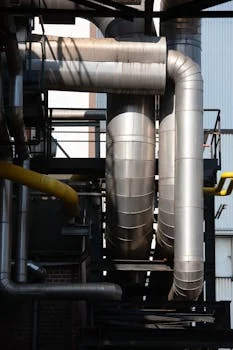
CAPEX for a 1,000 gpm chip fab reuse plant typically lands between $5 million and $10 million, depending on contaminant complexity and target recovery. Drivers include membrane count, 24/7 automation, and civil works for tanks. A detailed cost breakdown for chip fab wastewater systems shows membrane replacement and energy often make up nearly 60% of long-term OPEX. Pairing RO with a well-tuned MBR Membrane Bioreactor Wastewater Treatment System usually lowers fouling risk versus RO alone.
| System Size (gpm) | Estimated CAPEX Range | Annual OPEX (Estimated) | Primary Cost Driver |
|---|---|---|---|
| 100 gpm | $750,000 – $1.5M | $80,000 – $150,000 | Automation & Dosing |
| 500 gpm | $3M – $5M | $300,000 – $550,000 | Membrane Modules |
| 1,000 gpm | $6M – $11M | $650,000 – $1.2M | Energy & Pretreatment |
| 2,000 gpm | $12M – $20M | $1.5M – $2.5M | Civil Works & Footprint |
Payback (years) = Total CAPEX / [(Annual Water Savings × Water Cost) + (Annual Discharge Savings × Sewer Rate) − Annual OPEX]. Example: a 500 gpm system in Phoenix at about $3.5M CAPEX and $5.20/1k gal water/sewer, with 80% recovery, can save roughly $1.1M per year in water costs. After about $400k OPEX, net savings near $700k imply about a 5-year payback. Watch silica-driven membrane replacement (often 2× frequency) and crystallizer scaling on ZLD trains.
Who This Is For and Next Step
This framework fits fab facility engineers, EPC process leads, and procurement managers comparing reuse versus ZLD under local water stress. It is less useful for tool-level UPW polishing alone or for municipal plants without semiconductor chemistry. If you need a recovery and CAPEX screen for your flow and contaminant profile, request a chip fab reuse system quote with influent data and permit limits.
Frequently Asked Questions
What is the typical recovery rate for a semiconductor water reuse system?
Standard semiconductor water reuse systems typically recover 60–85% of treated wastewater under stable pretreatment. High-recovery RO or FO–NF hybrids can raise recovery toward 95% when silica and organics stay controlled. Full ZLD with thermal crystallization reaches about 99% by eliminating the final brine. Choose the step-up only when discharge bans or water prices justify the energy premium.
How do you handle high fluoride levels in fab wastewater?
Fluoride is usually precipitated with calcium hydroxide or calcium chloride at pH 10–11 to form CaF₂ solids for settling or filtration. Plant dosing often runs 100–300 mg/L Ca(OH)₂ toward operational targets near <20 mg/L F. For direct semiconductor dischargers, 40 CFR Part 469 BAT sets fluoride at 32.0 mg/L maximum for any one day and 17.4 mg/L as a 30-day average (eCFR Part 469).
What are the energy requirements for ZLD in a chip fab?
ZLD energy is dominated by thermal concentration and crystallization. Standard RO reuse often uses about 1.5–3 kWh/m³, while a crystallizer stage can require 50–100 kWh/m³ of brine fed to that unit. Mechanical vapor recompression lowers steam demand but ZLD still runs roughly 10–20× more energy-intensive than MBR-based reuse. Budget power and heat rejection early in layout.
Can reclaimed wastewater be used for Ultrapure Water (UPW) production?
Most fabs still send reclaimed water to cooling towers, scrubbers, and irrigation to protect wafer yield. Closed-loop return to UPW is growing in Arizona and Taiwan as FO and multi-pass RO mature. According to Lepawsky (2024), industry reclamation claims can reach about 98% in advanced systems, yet deployment remains uneven. Risk review of TOC, silica, and ionic spikes is mandatory before UPW makeup.
What is the main cause of membrane fouling in fab wastewater?
Silica and organic photoresists are the dominant RO foulants in fab reuse trains. Silica can precipitate when concentration exceeds solubility, typically near 120 mg/L at 25°C without antiscalant control. Manage fouling with specialized antiscalants, pH adjustment, or intermediate softening. Keeping feed SDI <3 before RO preserves flux and membrane life.
Related Equipment
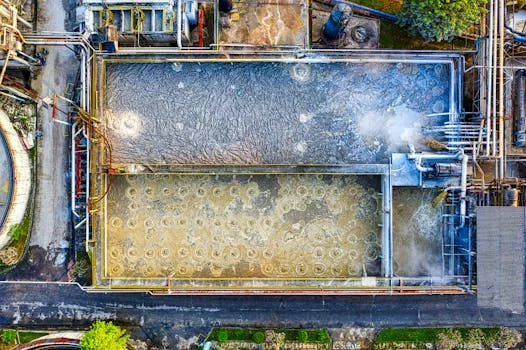
The following HydropureWater products are engineered for the wastewater challenges discussed above:
- MBR systems for chip fab water reuse — view specifications, capacity range, and technical data
Need a customized solution? Request a free quote with your specific flow rate and pollutant parameters.