A CMP wastewater system treats copper (commonly designed to <2.07 ppm), silica nanoparticles (50–250 nm), hydrogen peroxide (100–1,000 ppm), and benzotriazole (BTA) from slurry rinse streams. On-site electrochemical copper recovery (99%+ removal) and crossflow filtration (95% TSS reduction) typically cut unit cost to $0.36–$0.85/gal versus off-site disposal at $2.10–$3.50/gal (2025 benchmark ranges). CHIPS Act funding discussions often prioritize reclaim trains targeting >85% water recovery. Process engineers must neutralize oxidizers, crash silica colloids, then recover dissolved copper before RO polishing.
Why fabs need a CMP wastewater system
Semiconductor CMP wastewater treatment recovers copper and silica on site, targets copper near 2.07 ppm, and supports 85–95% reclaim when RO polishing is included. Off-site disposal for 5 million gal/year can exceed $10 million; integrated trains typically pay back in 1.8–3.5 years at $0.36–$0.85/gal versus $2.10–$3.50/gal hauled.
Chemical Mechanical Polishing is among the most water-intensive wet steps in a fab. A standard production line often consumes about 3,500 gallons per week of slurry and rinse water. The resulting matrix mixes dissolved metals, abrasive nanoparticles, and oxidizers that overload simple batch neutralization.
Most plants we size for copper CMP run near the lower end of the 1–10 ppm copper band until BTA spikes. Hauling that stream off site has climbed to a 2025 benchmark of $2.10–$3.50 per gallon once transport and hazardous-waste surcharges stack up. According to US EPA eCFR 40 CFR Part 469 Subpart A (Semiconductor), federal categorical limits cover total toxic organics (TTO 1.37 mg/L max day), fluoride (32.0 mg/L max day / 17.4 mg/L 30-day average under BAT), and pH 6.0–9.0—not copper. Earlier industry briefs often cited a 2.07 ppm copper figure as if it were a Part 469 limit; plant copper targets near 2.07 ppm still drive CMP train design and local pretreatment agreements.
For hybrid process layouts that push 99% contaminant removal across segregated CMP drains, see the sibling chip fab CMP wastewater treatment blueprint. Compact package plants such as the Underground Package Sewage Treatment Plant (WSZ Series) can handle non-CMP sanitary or utility wastewater on the same campus without expanding the high-purity reclaim footprint.
| Cost Category | Off-Site Disposal (2025) | On-Site Treatment (2025) | Savings Potential |
|---|---|---|---|
| Treatment Cost (per gallon) | $2.10 – $3.50 | $0.36 – $0.85 | ~80% Reduction |
| Compliance Risk | High (Transport liability) | Low (Direct control) | N/A |
| Water Recovery Rate | 0% | 85% – 95% | Significant ROI |
| Labor Requirement | Low (Loading only) | Moderate (Automated) | Offset by ROI |
CMP Wastewater Contaminant Profile: Engineering Specs and Treatment Challenges
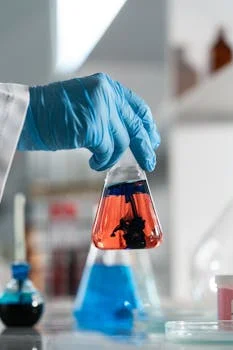
CMP slurry stability hinges on zeta potential: silica nanoparticles at 50–250 nm stay suspended near neutral pH. Drop pH below 3.0 and those particles crash out, then scale piping and membranes within hours. Hydrogen peroxide at 100–1,000 ppm oxidizes ion-exchange resins and can redissolve metal hydroxides during precipitation.
Copper removal gets harder when BTA (typically 10–50 ppm) chelates Cu ions. Those complexes ignore standard coagulants until advanced oxidation or a controlled electrochemical potential breaks the ligand. For kinetics and electrode sizing detail, use the detailed copper removal engineering specs. Sequence the chemistry: quench oxidizers first, destabilize colloids second, then capture dissolved metals.
| Contaminant | Concentration Range | Particle Size / Form | Primary Treatment Challenge |
|---|---|---|---|
| Copper (Cu) | 1 – 10 ppm | Dissolved / BTA-complexed | Complex stability; <2.07 ppm limit |
| Silica (SiO2) | 500 – 2,500 ppm | 50 – 250 nm (Colloidal) | Membrane fouling; pH sensitivity |
| Hydrogen Peroxide | 100 – 1,000 ppm | Dissolved Oxidizer | Degrades RO membranes and IX resins |
| Benzotriazole (BTA) | 10 – 50 ppm | Organic Complexant | Recalcitrant; high TOC contribution |
Treatment Technology Comparison: Removal Efficiencies, Footprint, and Chemical Usage
Technology choice follows the fab’s reuse and copper-recovery goals. Electrochemical cells often lead on copper-heavy CMP drains because they reach 99%+ Cu removal in a 10–20 m² skid. They plate copper as metal instead of generating large hydroxide sludge volumes, which shrinks hazardous secondary waste.
For solids, DAF systems for CMP silica removal suit high-volume streams. Crossflow filtration still delivers 95%+ TSS reduction without flocculant ions that later load the reclaim loop. When the target is ultra-pure reclaim, RO systems for CMP water reuse polish last—only after H2O2 and silica are tightly controlled so flux does not collapse.
| Technology | Copper Removal (%) | Silica Removal (%) | Footprint (m²) | CAPEX Range (USD) |
|---|---|---|---|---|
| Electrochemical | 99%+ | N/A | 10 – 20 | $250K – $600K |
| Crossflow Filtration | N/A | 95% – 98% | 5 – 15 | $150K – $400K |
| Chemical Precipitation | 80% – 90% | 70% – 85% | 30 – 50 | $100K – $300K |
| Photoelectrochemical | N/A (BTA focused) | N/A | 50 – 100 | $400K – $800K |
Process Flow Design: Integrated Treatment Trains for CMP Wastewater
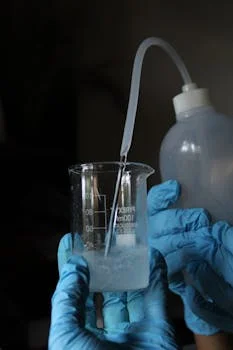
An integrated CMP treatment train is a staged set of unit operations that protect downstream membranes and electrodes. Start with catalytic H2O2 destruction—manganese dioxide packed beds or a dedicated reductant dose—then apply automated pH adjustment for CMP wastewater to crash silica colloids before solids removal.
The core sequence most fabs lock in looks like this:
- Peroxide Destruction: Catalytic packed bed or sodium bisulfite dosing to reduce H2O2 to <1 ppm.
- Colloidal Destabilization: pH adjustment to 2.5–3.5 in a reaction tank to facilitate silica precipitation.
- Primary Clarification: Crossflow filtration or DAF to remove the bulk of the abrasive particles and suspended solids.
- Copper Recovery: Electrochemical cells or selective ion exchange to pull dissolved copper below the 2.07 ppm threshold.
- Advanced Oxidation (AOP): UV/H2O2 or Ozone systems to degrade BTA and other organic additives.
- Tertiary Polishing: Reverse Osmosis for total dissolved solids (TDS) removal, enabling water reuse. For more on these stages, see the guide on tertiary treatment options for CMP reuse.
Integrated CMP Treatment Process Flow (Conceptual):
[Influent] --> (Catalytic H2O2 Removal) --> (Acidic pH Adjustment) --> (Crossflow Filter/DAF) --> (Electrochemical Cu Cell) --> (UV-AOP) --> (RO Unit) --> [Reclaim/Discharge]
Cost-Benefit Analysis: On-Site vs. Off-Site CMP Wastewater Treatment
Procurement teams justify on-site treatment with payback math, not slogans. CAPEX for a 100 m³/day train typically lands between $500,000 and $1.2 million, while OPEX drops sharply versus haul-away. Off-site disposal for a fab producing 5 million gallons of CMP wastewater annually can cost upwards of $12 million. On-site power, membranes, electrodes, and maintenance usually sit near $0.50 per gallon, or about $2.5 million per year at that volume.
CHIPS Act cost-share language can cover up to about 30% of qualified water-sustainability infrastructure on new fabs. Add recovered copper scrap ($15K–$40K/year in the table below) and avoided city-water intake, and most trains still clear full payback inside 3 years under the stated ranges.
| Economic Metric | Off-Site Disposal | On-Site Treatment Train |
|---|---|---|
| Annual OPEX (5M Gal) | $10.5M – $17.5M | $1.8M – $4.25M |
| Estimated CAPEX | $0 | $500K – $2.0M |
| Copper Recovery Value | $0 (Lost) | $15K – $40K / year |
| Payback Period | N/A | 1.8 – 3.5 Years |
What is 20-year TCO for semiconductor UPW?
Twenty-year total cost of ownership for semiconductor UPW is dominated by energy, membrane replacement, resin regeneration, and make-up water—not the initial skid price. When CMP reclaim feeds the UPW loop at 85–95% recovery, make-up volume and sewer surcharges fall enough that the reclaim CAPEX often offsets itself inside the first payback window above. Model TCO with measured kWh/m³, CIP chemical use, and electrode life at your actual silica and H2O2 peaks.
What flow margin should a UPW reclaim loop include?
UPW reclaim loops serving expanding fabs should carry roughly 20–30% flow margin above today’s CMP peak rinse rate. That headroom covers new polishers, weekend batch dumps, and temporary bypass when a filter train is in CIP. Undersizing the crossflow or RO stage forces either discharge spikes or offline haul-away the first time tool count rises.
Compliance Checklist: CHIPS Act, EPA, and Global Discharge Standards
EHS managers must map federal categorical rules, local POTW permits, and funding conditions before locking equipment. According to US EPA eCFR (Part 469 Subpart A), semiconductor categorical limits emphasize TTO, fluoride, and pH; copper is controlled through local limits and design targets such as <2.07 ppm used throughout this guide. EU IED/BAT programs often push copper below 0.5 ppm. CHIPS-related funding reviews commonly look for a clear path to about 85% water reuse on new large fabs. For a full regulatory map, use the global CMP wastewater discharge standards.
Selection checklist before you issue an RFQ:
- Confirm local copper, TSS, and fluoride permit numbers in writing.
- Measure peak H2O2 and BTA during tool dumps, not only daily averages.
- Decide reclaim quality (cooling vs. UPW make-up) before sizing RO.
- Budget electrode and membrane replacement in year-1 OPEX.
- Require online Cu, pH, ORP, and TMP with alarm setpoints.
- Plan acid/alkaline CIP and peroxide quench redundancy.
- Document water-recovery math if CHIPS cost-share is in play.
| Contaminant / Metric | EPA (USA) | EU (IED/BAT) | Taiwan (EPA) | CHIPS Act Requirement |
|---|---|---|---|---|
| Copper (Cu) | < 2.07 ppm | < 0.5 ppm | < 1.0 ppm | On-site recovery preferred |
| TSS | < 50 ppm | < 30 ppm | < 20 ppm | Monitoring required |
| Water Reuse Rate | N/A | Encouraged | > 70% | > 85% for funding |
| BTA Monitoring | Not Required | Required | Optional | Required for reuse |
Troubleshooting Common CMP Wastewater Treatment Failures
Silica scaling remains the most common failure mode on CMP reclaim membranes. Flux drops and TMP spikes when pH drifts back toward neutral after the crash stage and silica re-stabilizes on the membrane. Redundant pH probes plus scheduled acid CIP cycles stop most of those events.
Copper breakthrough above a 2.07 ppm design target usually means saturated electrochemical cells or a BTA spike that keeps Cu dissolved. Check residual H2O2 first—peroxide above about 1 ppm competes at the cathode and cuts plating efficiency. If peroxide is already low, raise UV-AOP dose until BTA oxidation frees the metal for recovery.
Troubleshooting Decision Branch:
1. Is Effluent Copper High? --> Check H2O2 concentration. If >1 ppm, check catalytic bed. If H2O2 is low, check UV-AOP intensity for BTA degradation.
2. Is Membrane Flux Low? --> Check pH of influent. If pH >4, adjust acid dosing. If pH is correct, perform an alkaline CIP (Clean-In-Place) to remove organic fouling or an acid CIP for silica scale.
Who this is for / Next step
This guide is for process, EHS, and procurement teams sizing on-site CMP reclaim with copper recovery. It is not a substitute for municipal-only package plants or fabs that already meet local copper limits with simple precipitation. If you need a duty-specced train sized to your slurry recipe and reclaim target, request a CMP wastewater treatment quote with flow, Cu/SiO2/H2O2 peaks, and discharge limits attached.
Frequently Asked Questions
How does the CHIPS Act affect wastewater treatment for new fabs?
CHIPS-related sustainability reviews prioritize circular water systems and often look for about 85% water recovery on funded projects. That push favors on-site CMP trains with solids removal, metal recovery, and RO reclaim instead of once-through discharge. Exact cost-share terms vary by program notice, so confirm the current funding checklist before freezing CAPEX. Document recovery math with metered reclaim versus make-up flows.
Why is hydrogen peroxide a problem in CMP wastewater treatment?
Hydrogen peroxide attacks polymer chains in RO membranes and ion-exchange resins at the 100–1,000 ppm levels common in CMP rinses. It also steals electrons at electrochemical cathodes and can redissolve metal hydroxides in precipitation reactors. Destroy H2O2 to <1 ppm before membranes, resins, or copper cells. Catalytic beds or bisulfite dosing are the usual first stage.
Can BTA be removed without advanced oxidation?
Activated carbon can adsorb some BTA, but it is inefficient at the 10–50 ppm levels typical in CMP streams. Advanced oxidation—UV/H2O2 or photoelectrochemical oxidation—breaks the triazole ring, mineralizes TOC, and frees complexed copper for recovery. Without that step, copper often bypasses electrochemical or IX stages while still complexed.
What minimum data does a UPW piping specification need?
A semiconductor UPW piping specification needs design flow and peak factor, material (usually PVDF or equivalent), operating pressure and temperature, TOC/resistivity targets, dead-leg limits, and clean/passivate procedures. Add expansion margin and valve/instrument lists tied to the reclaim return quality from the CMP train. Missing peak-flow or material data is the fastest way to undersize loops and invite contamination.
How do confined-space-free cleaning costs compare?
Confined-space-free tank and sump cleaning usually costs less per event than traditional confined-entry cleaning once you count permits, rescue teams, and downtime. Traditional entry can look cheaper on a contractor line item yet lose shifts when a CMP sump must stay offline. For CMP solids tanks, automated spray or pump-out designs cut both labor exposure and lost polish time.