Semiconductor fab wastewater discharge standards 2026 still set some of the strictest industrial effluent numbers in manufacturing. Typical planning limits track fluoride below 10 mg/L in the EU and below 15 mg/L in China. US copper permits often sit near 0.5 mg/L, with PFAS near 70 ppt in the US or 0.1 μg/L on the EU sum. Fabs segregate acid, fluoride, CMP, solvent, and brine, then apply precipitation, membranes, or Zero Liquid Discharge (ZLD).
System budgets commonly range from $2M–$15M for ZLD trains, depending on fab size and recovery target. Companion limit tables are in Wafer Fab Wastewater Discharge Standards 2026: Global Limits.
Semiconductor Fab Wastewater Discharge Standards 2026
Semiconductor effluent limits in 2026 still split by receiver. EU planning often uses fluoride at 10 mg/L and copper at 0.5 mg/L. Many Asia-Pacific permits list fluoride at 15 mg/L. US copper permits often sit near 0.5 mg/L. PFAS planning still cites 70 ppt, while US drinking-water MCLs are now tighter. Design the train to the written consent.
Segregated treatment is required for acids, fluorides, metals, CMP slurries, solvents, and brines because blended streams interfere chemically. CMP particles often measure below 0.1 μm, so sedimentation alone fails. Raw etch fluoride can exceed 1,000 mg/L against 10–15 mg/L discharge targets. PFAS polishing to about 70 ppt needs tertiary GAC or ion exchange.
Unlike ordinary industrial effluent, fab wastewater carries ultrafine silica and ceria from CMP that need microfiltration or DAF systems for CMP wastewater pretreatment. Contaminant spikes also track tool cycles; a single blended plant rarely holds every daily permit sample. Most plants we size for mid-volume fabs therefore keep CMP and fluoride drains on separate headers before any common sump.
Etch tools that use hydrofluoric acid drive the fluoride load. Hitting a 10 mg/L discharge limit usually needs two-stage calcium hydroxide precipitation at pH 8.5–9.2 with tight precision chemical dosing for wastewater treatment compliance. Isopropyl alcohol (IPA) and related solvents raise COD and often need Macro Porous Polymer Sorption (MPPS) or dedicated biological polishing before municipal discharge. Operators who under-dose lime to cut sludge usually miss the second-stage polish target on peak etch days.
Regulatory pressure stacks on that chemistry. Taiwan still lists fluoride at 15 mg/L in many cases, while EU IED BAT conclusions push many sites toward 10 mg/L. PFAS adds a tertiary polishing tier: US EPA Method 537.1 supports targets as low as 70 ppt for listed acids. When fabs also track dimethylamine (dma) in wafer fab wasterwater discharge, keep that amine-bearing stream out of the fluoride reactor so complexation does not blunt precipitation.
wafer fab fluoride discharge limit by country
Wafer fab fluoride discharge limit by country still spans 10 mg/L in many EU plans, 15 mg/L in the China and Taiwan rows, and 20 mg/L in the US row of the table below. Global semiconductor wastewater limits for 2026 still show lower heavy-metal caps and the first enforceable PFAS thresholds across major hubs. Multi-site operators usually design to the strictest corporate limit so one process train can travel. The table below consolidates the same region-by-region limits used for current fab engineering reviews.
| Region | Contaminant | Discharge Limit | Key Regulation | Compliance Deadline |
|---|---|---|---|---|
| United States | PFAS (PFOA/PFOS) Copper Fluoride |
70 ppt 0.5 mg/L 20 mg/L |
EPA NPDES / Clean Water Act | 2025-2026 (State dependent) |
| European Union | Fluoride Copper PFAS (Total) |
10 mg/L 0.5 mg/L 0.1 μg/L |
IED 2010/75/EU (BAT Conclusions) | Enforced (Ongoing) |
| China | Fluoride Ammonia Nitrogen Total Phosphorus |
15 mg/L 25 mg/L 1.0 mg/L |
GB 31573-2015 (Electronic Industry) | 2025 Update Pending |
| Taiwan | Fluoride Copper TSS |
15 mg/L 1.0 mg/L 30 mg/L |
EPA Effluent Standards | Enforced |
| South Korea | COD TSS Fluoride |
40 mg/L 10 mg/L 15 mg/L |
Water Environment Conservation Act | 2025 (New Fabs) |
In the US, states such as California and Arizona increasingly apply 70 ppt PFAS expectations where fabs discharge near sensitive groundwater. EU BAT language goes beyond a number and points to the technology class used to hit it. China’s GB 31573-2015 remains the electronics-industry benchmark, while Special Protection Areas in the Yangtze River Delta often cut ammonia and phosphorus limits roughly in half. Designing to EU BAT fluoride and copper caps usually covers Taiwan, Korea, and most Chinese general zones.
For EU country overlays such as industrial wastewater discharge limits – hungary, confirm local permit text before freezing CAPEX. Earlier planning tables still show China at fluoride 15 mg/L under the GB 31573-2015 label. The second consultation draft on mee.gov.cn, Emission standard of pollutants for electrical industry, is a different text and still carries a blank standard number. In that draft Table 1, the semiconductor-device column lists fluoride at 10 mg/L on direct discharge and 20 mg/L on indirect discharge.
Ammonia nitrogen in the same draft column is 10 mg/L direct and 40 mg/L indirect, with total phosphorus at 1.0 mg/L direct. Table 2 special limits in that draft tighten semiconductor direct discharge to fluoride 8.0 mg/L and ammonia nitrogen 8.0 mg/L. Draft Table 3 sets a 12-inch wafer benchmark effluent of 11 m³ per wafer, 8-inch at 6.0 m³ per wafer, and 6-inch and below at 3.2 m³ per wafer. Most plants we size in the Yangtze delta still wait for the consent to name the in-force standard before those draft numbers enter CAPEX.
What Are CPCB Effluent Discharge Standards?
CPCB effluent discharge standards are India’s national industrial effluent framework administered by the Central Pollution Control Board and enforced through state boards and CETP acceptance rules. They are not a single semiconductor-only number set. Electronics and fab clusters must still meet the applicable CPCB schedule plus any tighter local CETP or consent-to-operate limits. Most plants we audit in India design to the stricter of corporate fluoride and copper targets and the local CPCB package.
Compared with the EU 10 mg/L fluoride BAT planning value or China’s GB 31573-2015 fluoride limit of 15 mg/L, Indian projects still need site-specific consent language before equipment freeze. Buyers searching broader wastewater effluent discharge standards should treat CPCB, NMBM municipal quality rules, and EU IED BAT as separate permit families.
How Do Water Discharge Standards Differ?
Water discharge standards differ by receiving works and authority, not by a single global table. Direct river permits, CETP acceptance limits, and on-site reuse specs can diverge for the same fab chemistry. Keep the decision tied to the actual receiver: river discharge, CETP, or internal reuse. Copying an EU BAT fluoride number into an Indian CETP permit package without local consent review is a common design failure.
cmp wastewater treatment for semiconductor fab
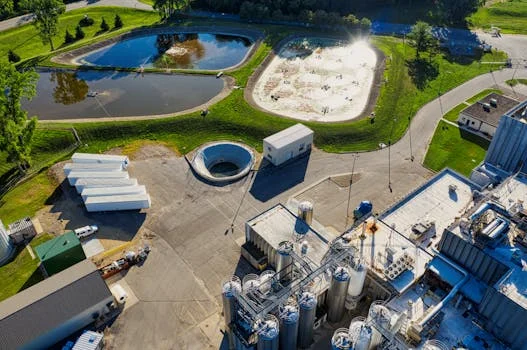
CMP wastewater treatment for semiconductor fab starts with segregation, because silica and ceria particles often measure below 0.1 μm and sedimentation alone fails. Isolate high-fluoride etch waste so metals do not complex and escape precipitation. High-salinity brines increasingly go through how industrial RO systems achieve 99.5% contaminant removal before reuse or evaporators. The table below keeps the same technology, efficiency, and cost bands used for 2025–2026 fab planning.
| Contaminant Stream | Treatment Technology | Removal Efficiency | CAPEX Range | OPEX Range |
|---|---|---|---|---|
| Fluoride Waste | Two-stage Ca(OH)2 Precipitation | 95% - 98% | $500k - $2M | $0.80 - $1.50/m³ |
| CMP Wastewater | Electrocoagulation + UF | >99% TSS | $1M - $3M | $0.50 - $1.20/m³ |
| Heavy Metals (Cu, Ni) | Ion Exchange (IX) | >99.5% | $300k - $800k | $2.00 - $5.00/m³ |
| Organic Solvents | Advanced Oxidation (AOP) | 90% COD | $1M - $4M | $1.50 - $3.50/m³ |
| High-Salinity Brine | RO + Evaporation (ZLD) | 99.9% | $5M - $15M | $2.00 - $5.00/m³ |
| PFAS | GAC or Specialized Resins | >90% | $500k - $1.5M | $2.00 - $6.00/m³ |
To hold fluoride below 10 mg/L, fabs deploy chemical dosing for fluoride and heavy metal precipitation with continuous pH control. Local reuse permits below 2 mg/L fluoride usually add activated alumina or specialty ion-exchange polish. CMP colloidal silica needs coagulant plus ultrafiltration so clarified water can feed RO systems for high-salinity wastewater treatment without rapid fouling. Most plants we size for CMP silica hold the coagulant dose at the low end until UF pressure starts to climb.
Zero Liquid Discharge Versus Partial Water Reuse
Zero Liquid Discharge versus partial reuse is mainly a water-scarcity and permit-risk choice. In Arizona or Taiwan, new fabs often treat ZLD as the default path. ZLD converts wastewater into reuse-grade water plus solid salt cake, removing liquid discharge risk, but CAPEX sits far above standard discharge. Use the matrix below with the same recovery and unit-cost bands from recent fab studies.
| System Type | Water Recovery | CAPEX ($/m³) | Regulatory Benefit | Best Use Case |
|---|---|---|---|---|
| Standard Discharge | 0% | $1,500 - $3,000 | Low (Permit dependent) | Regions with abundant water |
| Partial Reuse | 70% - 85% | $4,000 - $7,000 | Moderate (Reduced volume) | Fabs with cooling tower demand |
| ZLD System | 95% - 98% | $12,000 - $25,000 | High (Zero permit risk) | Water-scarce or high-regulation zones |
TSMC’s advanced facilities report over 95% water recovery with full ZLD. Initial investment exceeded $10M, with payback inside five years from raw-water savings and avoided fluoride fines. Fabs that stop short of ZLD often use MBR systems for water reuse in semiconductor fabs on organic-heavy drains for cooling or scrubber make-up. Published ZLD systems for semiconductor fabs: cost and performance data show the compliance gap between conventional discharge and ZLD narrowing as PFAS and fluoride limits tighten.
For recovery-focused scopes, compare against a dedicated wafer fab wastewater water reuse package before locking evaporator duty. Planning bands for mid-to-large fabs still read $5M–$15M CAPEX and about $2–$5/m³ OPEX. Most plants we size for cooling-tower makeup stop near partial reuse unless the permit forbids a liquid outfall.
pfas limits in semiconductor fab effluent 2026
PFAS limits in semiconductor fab effluent 2026 are still not one global outfall number, and the 70 ppt figure in the US row is a planning benchmark rather than the drinking-water MCL. According to US EPA, a rule proposed on May 18, 2026 upholds the 2024 drinking-water MCLs of 4.0 ppt for PFOA and 4.0 ppt for PFOS. The proposal would let some public water systems comply by April 2031, and it does not change those 4.0 ppt MCLs.
Under the proposal, a system at or above 12 ppt would take short-term steps to cut exposure during any exemption. EPA also says it is proposing a separate rescission for PFHxS, PFNA, HFPO-DA, and the hazard-index mixture. None of these drinking-water numbers is a national semiconductor effluent limit. Keep the table’s 70 ppt US planning figure until the state permit writes a different outfall cap.
According to the OECD European Union PFAS note, current as of March 2026, the recast Drinking Water Directive sets 0.10 μg/L for the sum of 20 PFAS and 0.50 μg/L for PFAS Total. Member States had to meet those tap values by January 2026. The 0.1 μg/L cell in the EU row matches that sum-of-20 value, not the 0.50 μg/L PFAS Total value. The same note says a surface-water update, expected to enter into force in April 2026, would set 0.0044 μg/L for the sum of 25 PFAS, including TFA, plus 0.077 μg/kg in biota.
Directive 2024/1785 requires industrial installations to monitor and report PFAS, and it does not publish one fab-wide effluent number. The recast Urban Wastewater Treatment Directive entered into force on 1 January 2025. That duty applies where the discharge can affect a drinking-water abstraction.
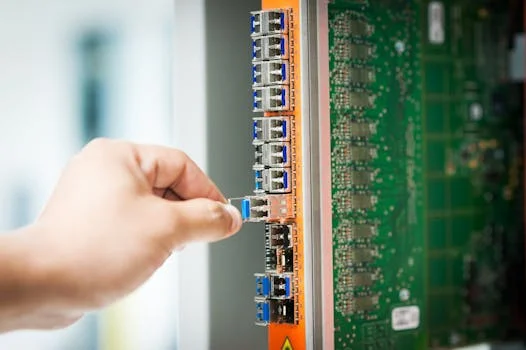
PFAS enter fab wastewater from photoresists, anti-reflective coatings, and etch surfactants. According to the Semiconductor Industry Association (SIA) 2023 survey cited in earlier industry briefings, raw PFAS can range from low parts per billion to high parts per trillion. Because these compounds resist natural degradation, permit programs are moving from monitoring to enforcement. EPA Method 537.1 remains the common lab method for 14–29 listed PFAS, while some buyers now request Total Organic Fluorine (TOF) to catch precursors.
PFAS polishing usually sits after primary fluoride removal. Granular activated carbon (GAC) typically delivers about 90% removal for long-chain PFOA/PFOS. Short-chain PFAS in newer resists often need high-affinity ion-exchange resins or AOP. AOP can exceed 99% removal, yet OPEX can reach $20/m³, so plants reserve it for concentrated side streams.
Intel’s PFAS reduction program, which invested over $5M in GAC and resin systems, is a public benchmark for cutting discharge mass by 90% or more. Most plants we commission place the carbon or resin bed after the fluoride clarifier so calcium sludge does not blind the media on the first etch campaign.
ammonia nitrogen removal in wafer fab wastewater
Ammonia nitrogen removal in wafer fab wastewater often becomes the second bottleneck after fluoride, and China’s planning row still lists 25 mg/L. When stripper and CMP rinse loads climb, the fluoride clarifier will not carry that load. Pair the global limit table with a dedicated wafer fab ammonia-nitrogen treatment train.
The MEE consultation draft cited above lists 10 mg/L direct and 40 mg/L indirect for the semiconductor column, against the table’s 25 mg/L planning value. Most plants we size for stripper waste add a dedicated ammonia step before any common biological polish.
Compliance Checklist for Fab Wastewater Upgrades
A seven-point compliance checklist keeps an operating fab aligned with semiconductor wastewater limits before the next permit renewal.
- Stream Characterization: Audit all six major waste streams. Use ASTM D7979 or EPA 537.1 to baseline PFAS and fluoride.
- Gap Analysis: Compare results to regional caps (fluoride <10 mg/L for EU sites; <15 mg/L for many Asia-Pacific sites).
- Pretreatment Optimization: Treat CMP wastewater with DAF systems for CMP wastewater pretreatment before blending so membranes do not foul.
- Chemical Dosing Calibration: Confirm chemical dosing for fluoride and heavy metal precipitation uses dual-stage reactors to hit <10 mg/L fluoride.
- Technology Selection: Check whether RO or MBR trains need High-Recovery RO upgrades for reuse or ZLD duty.
- PFAS Mitigation Plan: Add GAC or IX polish if PFAS exceed 70 ppt. Plan spent-media disposal under emerging hazardous-waste rules.
- Real-time Monitoring: Install online TOC and fluoride analyzers to catch upsets before a permit exceedance.
If your scope is a full wafer-fab discharge redesign rather than a single unit upgrade, freeze fluoride, ammonia, and reuse decisions against the same regional limit table before buying equipment.
Who This Is For and Next Step
Process, EHS, and facilities engineers sizing fluoride, CMP, PFAS, or ZLD upgrades are the readers this page is built for. Municipal plants without electronics chemistry, and buyers who want one universal legal opinion, should look elsewhere because permits stay site-specific. Gather three months of stream data and mark the strictest regional limit that applies. Then request a semiconductor wastewater compliance quote with fluoride, copper, and PFAS targets attached.
Frequently Asked Questions
Frequently asked questions here cover stringency, ZLD cost, PFAS technology, reuse, and penalties.
What are the most stringent semiconductor wastewater discharge standards in 2026?
The European Union’s Industrial Emissions Directive remains the strictest common planning package for fluoride below 10 mg/L and copper below 0.5 mg/L. Many global fabs still design PFAS against the US EPA 70 ppt PFOA/PFOS figure in the table above. According to US EPA, drinking-water MCLs stay at 4.0 ppt each for PFOA and PFOS, and that tap limit is not an automatic outfall cap. State and CETP rules can undercut either number, so freeze the written consent.
How much does a ZLD system cost for a semiconductor fab?
Mid-to-large fab ZLD CAPEX typically ranges from $5M to $15M, with OPEX about $2–$5 per cubic meter treated. Most water-stressed sites see payback in 3–7 years from raw-water savings and lower discharge risk. Unit CAPEX in planning tables often lands between $12,000 and $25,000 per m³/d of capacity. Partial reuse at 70%–85% recovery stays cheaper when a discharge permit is still available.
What treatment technology is best for removing PFAS from semiconductor wastewater?
Granular activated carbon is usually the most cost-effective first polish for long-chain PFAS, delivering about 90% removal for PFOA/PFOS. Short-chain PFAS or ppt-level permits typically need specialized ion-exchange resins. AOP can exceed 99% removal, yet OPEX can reach $20/m³, so plants reserve it for concentrated side streams. Place PFAS treatment after fluoride precipitation so calcium sludge does not blind the carbon or resin. Spent media handling belongs in the OPEX model from day one.
Can semiconductor wastewater be reused in fab processes?
Yes. Pairing MBR systems for water reuse in semiconductor fabs with RO can reclaim water for cooling towers and scrubbers. Full ZLD trains that recover 95%–98% can polish further toward ultrapure make-up for non-critical duty, or wafer cleaning with extra polish. Keep solvent and fluoride streams segregated or reuse quality collapses. Match recovery targets to the partial-reuse band of 70%–85% before buying evaporators. Most plants we size for scrubber make-up stop once silica and fluoride are inside the cooling-water spec.
What are the penalties for non-compliance with semiconductor wastewater discharge standards?
Penalties can include daily fines up to $50,000/day in the US, production caps, and potential officer liability. Lost “Green Fab” certifications and weaker ESG scores often cost more than the fine itself through customer audits. Most plants we support treat a single chronic exceedance as a board-level risk, not a routine NOV. Continuous fluoride and TOC monitoring is cheaper than negotiating after a reportable spill.