A prefabricated wastewater plant is a factory-built, modular treatment system assembled on site from skid-mounted or containerized units. Compared with site-built plants, installation time often falls by up to 50% when foundations and utilities are ready. Typical trains combine screening, DAF, MBR or equivalent biological stages, and disinfection, with TSS removal of 92-97% and COD reduction of 85-95% under design loading. Prefabricated wastewater plants serve industrial sites, small municipalities, and remote camps that need predictable schedules and compact footprints.
What Is a Modular Prefabricated Plant?
A prefabricated wastewater plant is a factory-engineered modular WWTP delivered as skids or containers for rapid field assembly. Classic package units commonly treat about 0.01–0.25 MGD (38–950 m³/d), while industrial skid trains scale higher. Factory fabrication cuts weather delay and civil scope. Field work is mainly foundations, piping, and commissioning.
According to the US EPA Package Plants Fact Sheet (EPA 832-F-00-016), package plants are pre-manufactured facilities used for small communities or individual properties, commonly treating flows between 0.01 and 0.25 MGD. Common process types include extended aeration, sequencing batch reactors (SBR), and oxidation ditches. Modern industrial modular plants add DAF, MBR, and chemical dosing skids to the same delivery model.
Core modules usually include:
- DAF units for TSS/FOG removal: Dissolved Air Flotation creates micro-bubbles that float solids and grease for skimming.
- MBR membranes for near-reuse-quality effluent: Membrane bioreactors pair activated sludge with membrane filtration for low turbidity effluent.
- Automatic chemical dosing systems for pH adjustment: PLC dosing supports coagulation, nutrient control, and neutralization.
- Plate-and-frame filter presses for sludge dewatering: Presses cut sludge volume and hauling cost.
- Rotary mechanical bar screens: Screens remove coarse debris before pumps and membranes.
A typical flow path is Influent → Screening → Primary Treatment (for example DAF) → Secondary Treatment (for example MBR) → Disinfection → Effluent Discharge. Modules arrive pre-tested, which shortens wet commissioning compared with field-fabricated tanks.
How Modular Treatment Trains Work
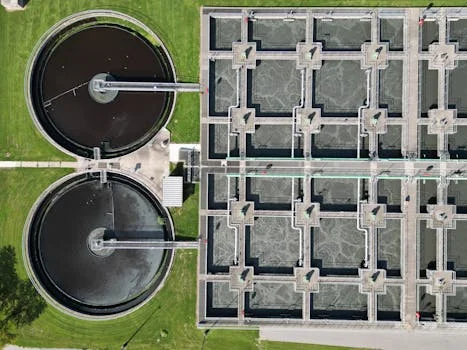
Modular wastewater treatment trains remove solids, organics, and pathogens through sequenced physical, chemical, and biological stages. Each skid is sized for a defined duty so effluent quality stays within permit limits when influent stays inside the design envelope.
- Step 1: Screening and Pretreatment: Rotary mechanical bar screens, such as HydropureWater’s GX Series, remove rags, plastics, and coarse debris. Fine screening commonly achieves a 20-35% reduction in suspended solids under typical municipal influent conditions, protecting pumps and membranes from clogging and abrasion.
- Step 2: Primary Treatment: After screening, primary treatment targets TSS, FOG, and free oil. A DAF system for high-efficiency TSS and FOG removal injects microscopic air bubbles that attach to particles and float them for skimming. DAF modules typically remove 92-97% of TSS, FOG, and oil/grease. HydropureWater’s DAF systems handle flow rates from 4–300 m³/h, reducing influent TSS up to 5,000 mg/L to an effluent concentration of less than 50 mg/L.
- Step 3: Secondary Treatment: Biological polishing often uses an Integrated MBR system for near-reuse-quality effluent. Submerged PVDF membranes at 0.1 μm pore size combine with activated sludge to remove dissolved organics and nutrients. This stage typically achieves COD removal of 85-95%, BOD removal of 95-98%, and about a 60% smaller footprint than conventional activated sludge with separate clarifiers. Effluent is often suitable for direct discharge or non-potable reuse when disinfection follows.
- Step 4: Disinfection: Pathogen control commonly uses chlorine dioxide generators, such as HydropureWater’s, or ozone. These methods achieve 99%+ pathogen kill rates when dose and contact time meet design values, supporting EPA- and WHO-aligned discharge or reuse goals. Upstream pH and coagulant control often rely on a PLC-controlled chemical dosing for wastewater treatment skid.
| Treatment Stage | Primary Function | Key Technology (HydropureWater Example) | Typical Performance Metric |
|---|---|---|---|
| Screening & Pretreatment | Remove large solids, protect equipment | Rotary Mechanical Bar Screens (GX Series) | 20-35% TSS reduction |
| Primary Treatment | Remove TSS, FOG, oil/grease | Dissolved Air Flotation | 92-97% TSS, FOG removal; influent TSS up to 5,000 mg/L reduced to <50 mg/L |
| Secondary Treatment | Remove dissolved organics, nutrients | Integrated MBR System | 85-95% COD removal; 95-98% BOD removal; 60% smaller footprint |
| Disinfection | Eliminate pathogens | Chlorine Dioxide Generators | 99%+ pathogen kill rate |
Prefabricated vs Site-Built Comparison
Modular plants typically require 30-50% less physical footprint than comparable site-built systems when MBR or other compact bioreactors replace separate aeration and clarifier tanks. Site-built layouts need more land for tanks, galleries, and civil corridors. Compact skids therefore suit constrained industrial parcels and urban edge sites.
Installation and commissioning often finish in 4-12 weeks after civil pads and utilities are ready. Factory modules arrive tested, so field work focuses on setting, connecting, and proving performance. Site-built plants commonly need 6-18 months for excavation, concrete, tank erection, and piping before stable operation.
Removal performance matches or exceeds many conventional trains when DAF and MBR modules are correctly loaded. DAF stages reach 92-97% TSS removal, while MBR stages deliver 85-95% COD removal and 95-98% BOD removal under design conditions. Those metrics matter for tight permits and reuse targets.
Modular MBR systems consume 10-20% less energy than conventional activated sludge systems when aeration, membrane scour, and pumping are optimized for the smaller hydraulic footprint (per HydropureWater’s MBR product specs). Phased expansion is simpler: add DAF or MBR modules as flow grows instead of oversizing civil works on day one.
| Engineering Metric | Prefabricated Wastewater Plant | Site-Built Wastewater Plant | Advantage |
|---|---|---|---|
| Footprint Requirement | 30-50% less space (e.g., MBR systems) | Larger footprint for separate tanks & clarifiers | Prefabricated (compact design) |
| Installation Time | 4-12 weeks (rapid assembly) | 6-18 months (extensive civil works) | Prefabricated (speed) |
| TSS Removal Rate | 92-97% (with DAF) | 90-95% (conventional primary) | Prefabricated (higher efficiency) |
| COD Removal Rate | 85-95% (with MBR) | 80-90% (conventional secondary) | Prefabricated (higher efficiency) |
| Energy Consumption | 10-20% lower (MBR vs conventional AS) | Higher due to less optimized aeration & pumping | Prefabricated (OPEX savings) |
| Scalability | Phased expansion by adding modules | Requires upfront overdesign or costly retrofits | Prefabricated (flexibility) |
Cost Breakdown for Prefabricated Wastewater Plants
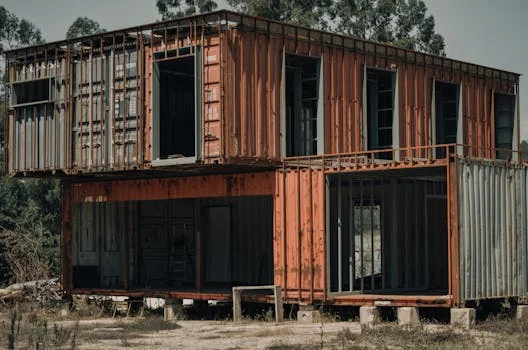
Modular plants often show 10-30% lower CAPEX for capacities under 500 m³/h than custom site-built facilities, mainly from standardized fabrication and less on-site labor. Earlier project ranges used about $50,000–$2M for modular CAPEX versus $100,000–$5M for comparable site-built scope, depending on complexity and capacity. Manufacturer 2026 equipment-only list prices for standard package plants commonly span about $20,000–$50,000 at 10–50 m³/d, $50,000–$130,000 at 50–200 m³/d, and $130,000–$350,000 at 200–1,000 m³/d before civil works, shipping, and installation (Weilan manufacturer data).
Installation costs for modular plants are often 40-60% lower. Typical installation bands of $20,000–$100,000 for modular trains compare with $50,000–$250,000 for site-built builds that need more concrete, piping, and craft labor. Modules that arrive pre-assembled and pre-tested shrink field hours when access and craneage are adequate.
OPEX savings follow from energy and staffing. Modular MBR designs that cut electricity 10-20% versus conventional activated sludge can save roughly $5,000–$20,000 per year for a medium plant at about $0.10/kWh, with further labor reduction from automation and remote monitoring. For a 100 m³/h plant, payback often falls in 3-5 years for modular options versus 7-10 years for site-built alternatives under those energy and labor assumptions.
| Cost Category | Prefabricated Wastewater Plant (Typical Range) | Site-Built Wastewater Plant (Typical Range) | Key Cost Driver/Savings |
|---|---|---|---|
| Capital Expenditure (CAPEX) | $50,000 – $2M (for <500 m³/h) | $100,000 – $5M | Standardized manufacturing, reduced engineering |
| Installation Costs | $20,000 – $100,000 (40-60% less) | $50,000 – $250,000 | Minimal civil works, rapid assembly |
| Annual Operational Expenditure (OPEX) | Lower energy (e.g., $5,000–$20,000/year savings for MBR); reduced labor | Higher energy; more manual labor often required | Optimized design, automation |
| Return on Investment (ROI) | 3-5 years (e.g., 100 m³/h plant) | 7-10 years (e.g., 100 m³/h plant) | Faster deployment, lower ongoing costs |
Are Package Plants Suited to Western Australia?
Package wastewater treatment plants suit Western Australia projects when sites are remote, labor is scarce, and schedules cannot absorb 6-18 months of heavy civil works. Mining camps, highway facilities, and small coastal towns often need containerized or skid trains that ship complete and commission in weeks after pads and power are ready. Hot climate, variable occupancy, and long haul distances favor factory QA and modular spares over large poured-in-place tank farms.
Engineers should still size for peak occupancy, salinity, and local discharge or reuse rules rather than copy a temperate-climate datasheet. Equalization, screening duty, and disinfection contact time need local water-quality data. Where groundwater protection or reuse is required, MBR or tertiary filtration modules should be specified at tender, not added after startup.
How Do Package Sewerage Plants Perform?
Package sewerage treatment plants deliver secondary-quality effluent when loading, aeration, and sludge wasting stay inside design limits. According to the US EPA Package Plants Fact Sheet, well-operated extended aeration units typically hold effluent BOD and TSS below 30 mg/L. Some plants reach below 15 mg/L BOD and below 10 mg/L TSS. SBR package units often match that carbonaceous performance when cycle times fit the diurnal flow pattern.
Industrial modular plants that add DAF and MBR stages report 92-97% TSS removal and 85-95% COD removal under design influent strength. Performance falls when grease, toxicity, or hydraulic peaks bypass equalization. Daily operator checks on DO, MLSS, and screenings still matter even on automated skids.
When to Choose a Prefabricated Plant
Select a modular plant when several of the following conditions apply. Treat the list as a procurement checklist, not a marketing scorecard.
- Timeline: Need operation in under 6 months, with install and commissioning in 4-12 weeks after civil readiness.
- Budget certainty: Prefer fixed factory scope over open-ended site labor and weather risk.
- Footprint: Need about 30-50% less land than a conventional tank farm.
- Effluent quality: Need near-reuse effluent via MBR-class filtration (0.1 μm class membranes) plus disinfection.
- Growth: Expect flow increases that favor adding modules instead of rebuilding civil works.
- Site access: Can accept truck/crane delivery of containers or skids to a prepared pad.
- Staffing: Want PLC automation and remote alarms to limit continuous operator hours.
Who this is for: plant engineers, EPC contractors, and procurement managers sizing industrial or small municipal trains under about 500 m³/h who need schedule certainty. Who should look elsewhere: very large municipal works that need custom hydraulics, deep nutrient polishing trains, or sites where crane access for containers is impossible. Next step: gather average/peak flow, BOD/COD/TSS/FOG, and permit limits, then Request a free quote with those parameters.
Frequently Asked Questions
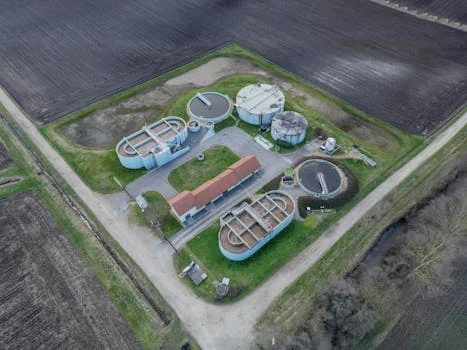
Can prefabricated plants handle high BOD loads?
Yes. MBR-based modular plants handle high BOD loads, with 95-98% removal reported for influent concentrations up to 1,000 mg/L (per HydropureWater’s MBR product specs). Upstream DAF pretreatment helps when FOG or TSS would overload the bioreactor. Keep HRT, aeration capacity, and sludge wasting matched to the peak organic load.
Are prefabricated plants suitable for industrial wastewater?
Yes. Modular plants serve food processing, textiles, petrochemicals, and pharmaceuticals when modules match the pollutant profile. DAF-centered trains commonly remove 92-97% of TSS and FOG; metals or specialty organics need dedicated process steps. Always pilot or bench-test unusual wastes before freezing the skid list.
What’s the lifespan of a prefabricated plant?
A well-maintained modular plant typically lasts 15-25 years. Stainless steel tanks, coated carbon steel, or FRP shells, plus PVDF membranes under correct cleaning, drive that range. Membrane replacement and coating maintenance are normal mid-life costs, not signs of early failure.
Can prefabricated plants be customized for specific contaminants?
Yes. Modular layouts accept nitrate removal, phosphorus precipitation, or metals polishing as add-on skids. Customization often adds about 10-20% to equipment cost while aligning effluent with local permits. Freeze the contaminant list and limits before fabrication to avoid field rework.
How do prefabricated plants compare to extended aeration systems?
Modular MBR plants typically use about 60% less footprint and 10-20% less energy than conventional extended aeration with separate clarifiers, while matching or beating effluent solids and organics. Classic extended aeration package plants remain valid for small domestic flows when land is available and reuse is not required. Choose MBR when permits or reuse demand tighter turbidity control.