
A plate frame filter press separates solids from liquids by pressure-driven surface filtration. In plate & frame filter press dewatering, slurry is pumped into chambers formed by alternating plates and frames at pressures up to 16 bar. Filtrate passes the cloth while solids form a compact cake. Plants commonly report 98%+ solids capture and cake moisture as low as 20–30% under the sludge and pressure conditions used in EPA 2024 sludge dewatering benchmarks cited in field sizing work.
Filtration rate follows Darcy’s Law, Q = ΔP × A / (μ × R), so throughput rises with pressure (ΔP) and area (A) and falls as viscosity (μ) and cake-plus-cloth resistance (R) rise. Practical design ranges for industrial and municipal service include filtration area 1–500 m², cycle time 1–4 hours, and cake thickness 20–40 mm. Those three numbers set chamber count, pump duty, and dry-solids production for municipal sludge, mining tailings, and food-processing wastewater.
How a Plate Frame Filter Press Works Under Load
A plate frame filter press fills sealed chambers between plates with slurry, then uses 6–16 bar pressure to drive filtrate through the cloth and leave a solids cake. Municipal sludge often reaches 20–30% cake moisture near 6 bar and 15–25% near 12 bar when chemistry is stable. Cycle times of 1–4 hours and 20–40 mm cake thickness set shift tonnage.
Most plants we size for sticky biological sludge start at the lower end of that pressure band, then raise ΔP only after filtrate clarity shows an even cake. Compared with gravity settlers or a lamella clarifier working principle train that thickens but rarely produces haul-ready cake, the press cuts water mass before disposal. Upstream trains built on an mbr working principle still need dedicated dewatering when waste sludge leaves the membrane tank.
How Pressure and Resistance Govern Plate Frame Filter Press Efficiency
Plate frame filter press efficiency is governed by Darcy's Law: Q = ΔP * A / (μ * R). The applied pressure, ΔP, drives liquid through the growing cake and the cloth. Typical operating pressures range from 6 to 16 bar. Higher sustained pressure usually yields lower cake moisture when the sludge can transmit stress without extruding past the cloth. As solids accumulate, cake resistance R rises, so the feed pump must hold or increase ΔP to keep a usable filtration rate. Without adequate pressure, filtrate flow collapses and the cake stays wet.
| Sludge Type | Typical Cake Moisture Content (%) | Applied Pressure (bar) |
|---|---|---|
| Municipal Sludge | 20–30% | 6 |
| Municipal Sludge | 15–25% | 12 |
| Industrial Sludge (e.g., Mining Tailings) | 30–40% | 8 |
(Data sourced from EPA 2024 sludge dewatering benchmarks and HydropureWater field data)
Viscosity also limits rate. Food-plant wastewater rich in fats, oils, and greases (FOG) resists flow even before a thick cake forms and can blind the cloth. Engineers often start at a moderated pressure and use pre-treatment chemical dosing systems to cut viscosity and raise filterability before full-pressure filtration.
Plate & Frame Filter Press Dewatering Cycle: Slurry to Dry Cake

Plate & frame filter press dewatering runs as a fixed cycle, not a continuous belt. Chamber filling comes first: slurry is pumped into the closed plate pack at feed rates typically 2 to 4 m³/h per chamber, limited by slurry rheology and pump capacity. Filtration follows as the feed pump ramps toward about 10 bar, forcing filtrate through the cloth while solids build as cake. Most of the water leaves in this phase.
When filtrate flow falls below the plant set point, cake compression holds 10–15 bar for about 10–15 minutes to expel residual moisture. Cake discharge then opens the pack so dewatered cake drops by gravity; shifting may be manual, hydraulic, or fully automatic. Cloth cleaning finishes the cycle with filtrate backwash or mechanical wash so the next fill starts on an open cloth. Frame thickness of 20–40 mm sets cake mass per cycle and helps push total cycle time into the 1–4 hour band.
Process flow: feed pump → plate-frame chambers → filter cloth retains solids as cake → filtrate exits for reuse or return → pack opens → cake discharge → cloth clean.
Manual vs. Hydraulic vs. Automatic Filter Presses: CapEx, OPEX, and Throughput Trade-Offs
Filter press model choice is a CapEx, OPEX, labor, and throughput trade-off, not a single preferred label. Manual presses with screw-jack or simple closure usually cost about $10,000 to $50,000. They need operators for plate shifting and cake drop, so OPEX often runs $5–$15 per ton of dry solids at only 5–20 m³/h throughput. Hydraulic presses raise CapEx to about $50,000–$150,000, cut labor, and move throughput into roughly 20–100 m³/h with OPEX near $3–$10/ton. Automatic PLC-controlled presses sit at $150,000–$300,000+, deliver about 100–200+ m³/h, and often hold OPEX at $1–$5/ton with minimal labor.
| Model Type | CapEx ($) | OPEX ($/ton dry solids) | Throughput (m³/h) | Labor | Maintenance | Energy Consumption (kWh/ton dry solids) |
|---|---|---|---|---|---|---|
| Manual | 10K–50K | 5–15 | 5–20 | High | Low | N/A (labor intensive) |
| Hydraulic | 50K–150K | 3–10 | 20–100 | Medium | Medium | 5–10 |
| Automatic (PLC-Controlled) | 150K–300K+ | 1–5 | 100–200+ | Low | Medium-High | 2–5 |
(Data based on DOE 2023 efficiency standards and industry benchmarks)
What Does a 2000-Gallon Filter Press Cost?
A 2000-gallon (about 7.6 m³) plate and frame filter press usually lands in the hydraulic to entry-automatic CapEx band when filtration area and automation match that chamber volume. Using the table ranges above, expect roughly $50,000–$150,000 for hydraulic builds and $150,000+ when PLC plate shifting and cloth wash are included. Final price tracks plate count, design pressure (6–16 bar), materials, and whether the scope includes the feed pump and polymer system. Always size from dry-solids load and cycle time, not gallon volume alone.
What Is Typical Plate and Frame Filter Area?
Typical plate and frame filter area for industrial sludge service spans about 1–500 m² of cloth area, set by daily sludge volume and target cycle count. A common field rule is 1 m² of filtration area for every 0.5 to 1 m³/h of slurry throughput when cake thickness is 20–40 mm and cycle time is 1–4 hours. Small pilot or batch plants sit near the low end; municipal and mining packs fill the mid-to-high end. Chamber presses use the same area logic even when labels differ from “plate and frame.”
5 Common Filter Press Failures and How to Fix Them
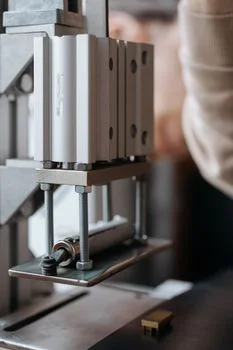
Filter press downtime usually traces to five repeatable failure modes. Blinding occurs when fine solids or oil and grease plug the cloth and cut filtrate flow; fix it with coagulant or flocculant pretreatment, or switch to a hydrophobic polypropylene cloth that sheds oils. Uneven cake formation often means misaligned plates or uneven hydraulic pressure—reseat plates, recalibrate the ram, and clear anything that blocks uniform closure.
Seal leakage between plates and frames usually means worn gaskets or excessive pressure. Gaskets typically last 500–1,000 cycles before replacement. If leaks appear only at peak pressure, drop operating pressure by about 10% while you inspect sealing faces. Slow filtration without full blinding points to high slurry viscosity or insufficient ΔP. For a full maintenance sequence beyond these five fixes, use the plant’s plate and frame filter press troubleshooting protocol.
How to Select the Right Plate Frame Filter Press: A 6-Step Framework
Plate frame filter press selection starts with measured sludge data, not catalog horsepower. Record solids concentration (typically 1–10% w/w), particle size distribution in the micron range, and viscosity in centipoise (cP). Calculate required throughput from daily sludge volume and the solids-capture target near 98%+. Set the cake moisture target next—lower moisture needs more pressure, longer compression, or both.
Match filtration area to throughput with about 1 m² per 0.5 to 1 m³/h as a starting point, then choose manual, hydraulic, or automatic hardware from CapEx limits and available labor. Finish by checking local discharge and landfill rules for cake solids and filtrate quality. FOG-heavy plants can also cross-check application notes such as the filter press for animal feed wastewater guide. A Plate and Frame Filter Press for Sludge Dewatering data sheet helps confirm plate size, design pressure, and automation options against that checklist.
Selection checklist
- Feed solids 1–10% w/w and measured viscosity (cP)
- Target cake moisture and minimum 98%+ solids capture
- Required throughput (m³/h) and cycles per day
- Filtration area using ~1 m² per 0.5–1 m³/h
- Design pressure band 6–16 bar and cloth material
- Labor model: manual, hydraulic, or PLC automatic
- Filtrate return path and cake handling limits
Who This Is For / Who Should Look Elsewhere / Next Step
This guide is for plant engineers, EPC leads, and procurement teams comparing chamber-press dewatering against belt presses or screw presses on CapEx, cake dryness, and labor. Look elsewhere if you only need clarification or thickening with no cake haul target. Screw press filter press options can fit lower-solids, continuous-duty streams where 20–30% cake moisture is not required. When feed solids, target moisture, and preferred automation are known, request a sized quote with flow, % solids, and disposal limits so chamber volume and pressure class can be checked against your duty.
Frequently Asked Questions
What is the difference between a plate frame filter press and a belt press?
Plate frame presses use 6–16 bar pressure to reach about 98%+ solids capture and often 20–30% cake moisture on municipal sludge, so they suit high-solids dewatering before haul-off. Belt presses rely on gravity and low pressure, typically delivering about 85–90% capture with 70–80% moisture, which fits lower-solids streams that prioritize continuous throughput over the driest cake.
How often should filter cloths be replaced?
Filter cloth life depends on cloth material, sludge abrasiveness, and wash discipline. Polypropylene cloths commonly last about 500–1,000 cycles in industrial wastewater service when blinding and mechanical damage are controlled. Replace cloths sooner if filtrate quality drops, cycle time stretches, or wash nozzles no longer restore open flow between cycles.
What does a chamber press filter mean on a datasheet?
A chamber press filter is the same family as a recessed-plate or plate-and-frame pack: sealed chambers form between plates, slurry fills them, and pressure drives filtrate through the cloth. Naming varies by vendor, but sizing still uses filtration area, cake thickness of 20–40 mm, and cycle time of 1–4 hours. Confirm design pressure and plate shifting method rather than relying on the marketing name alone.
When should a plant choose a screw press instead?
A screw press filter press is usually better when the plant needs continuous low-labor dewatering of lower-solids sludge and can accept wetter cake than a 6–16 bar plate pack produces. Plate frame units win when disposal cost tracks cake moisture into the 20–30% band and batch cycles of 1–4 hours fit the shift plan. Compare OPEX per ton dry solids, not nameplate flow alone.
How do I estimate filtration area for my sludge volume?
Start from daily slurry volume, target cycles per day, and the rule of about 1 m² of filtration area per 0.5 to 1 m³/h of throughput at 20–40 mm cake thickness. Adjust upward for high-viscosity or FOG-rich feeds that slow filtration even at 10 bar. Validate the estimate with a pilot chamber or lab filter leaf test before freezing CapEx.