Third-generation semiconductor wastewater treatment design for GaN/SiC fabs must handle fluoride at 800–1,200 mg/L, TMAH at 50–300 mg/L, and Cu, Ni, and As loads exceeding conventional discharge limits by 10–50×. Hybrid DAF-MBR-AOP-RO trains reclaim over 95% of process water at this duty.
Third-Generation Semiconductor Wastewater Treatment Design: The 2026 Baseline
Hybrid ZLD trains for GaN and SiC fabs sequence DAF, MBR, AOP, and high-recovery RO to reclaim more than 95% of process water. A 50 m³/h system typically costs about $2.1M in CapEx and pays back in roughly 3.2 years. Pretreatment must hold fluoride below 8 mg/L before membranes see the flow.
GaN, with a direct band gap of 3.4 eV at 300 K (Wikipedia), and SiC together define the wide-bandgap materials buyers now call third-generation semiconductors. The wafer chemistry that makes these devices valuable also makes their wastewater harder than silicon-line effluent. Legacy silicon lines usually see fluoride at 50–200 mg/L. GaN/SiC etch and grind chemistry pushes hydrofluoric acid and slurry solids far higher, so calcium fluoride scales standard RO and can drop recovery below 70% without staged pretreatment.
TMAH from develop and etch steps adds a second problem. Wikipedia notes TMAH "is used as a basic solvent in the development of acidic photoresists in the photolithography process," and it "affects nerves and muscles, causing difficulties in breathing, muscular paralysis and possibly death" — with evidence that "poisoning and even death can occur through skin-contact with low concentration solutions of TMAH." TMAH also inhibits nitrifiers, so conventional activated sludge alone rarely finishes the job. CMP waste adds copper, nickel, and arsenic that need tight pH windows — copper precipitation is most reliable near pH 8.5–9.0 when dosing is automated.
According to US EPA (40 CFR Part 469), semiconductor wastewater commonly carries fluoride, arsenic, and organics, generated by "etching, cleaning, degreasing, cutting and grinding." EPA's detailed study of the category, completed in 2022, concluded the data reviewed "does not demonstrate a need to revise the existing regulation at this time," so many fabs still design beyond that baseline for water scarcity and local reclaim targets. A 50 m³/h GaN fab in Taiwan fouled RO every 72 hours on precipitation-plus-sand filtration. After adding a DAF system for fluoride and TSS removal in semiconductor wastewater, colloidal solids fell about 60%, uptime rose about 25%, and CIP chemical use dropped.
GaN SiC Fab Hybrid ZLD Process Flow: Five Stages in Order
Hybrid ZLD for GaN/SiC wastewater removes solids and fluoride first, then organics, then salts, so the final brine evaporator sees a stable, low-fouling feed. Most plants we size for 20–100 m³/h run each stage at the conservative end of the flux and HRT ranges below until pilot data confirm higher rates.
Step 1: DAF pretreatment. Microbubbles of 30–50 μm lift flocculated CaF2 and CMP fines. A DAF system for fluoride and TSS removal in semiconductor wastewater typically removes 92–97% TSS at surface loadings of 5–10 m³/m²·h, which is more reliable than settling for light SiC grind solids.
Step 2: MBR for TMAH and COD. DF series PVDF flat sheet MBR modules for TMAH and COD removal hold high biomass behind 0.1 μm membranes and target effluent COD below 50 mg/L at flux 15–25 L/m²·h and HRT 12–18 h. Energy draw is often 10–20× lower than older cross-flow MBRs on the same duty.
Step 3: AOP for residual organics. UV/ozone with H2O2 at 50–100 mg/L and 30–60 min contact finishes refractory COD. At about 500 mg/L influent COD, 97% removal is a realistic design target when ozone is dosed near 1.5–2.0 mg/mg COD.
Step 4: High-recovery RO. High-recovery RO systems for semiconductor wastewater reuse using pulse-flow or similar high-pressure layouts can reach 95–99% recovery when feed fluoride and silica are controlled. Brine salinity near 20% and specific energy near 2.1 kWh/m³ are common planning values for this duty.
Step 5: MVR brine concentration. The last ~1% liquid goes to MVR or a crystallizer. For a 10 m³/h brine stream, MVR CapEx near $1.2M often beats steam crystallizers on long-run OPEX when electricity is stable. For a broader view of stage sequencing outside fabs, see wastewater treatment process steps applied to industrial trains.
| Process Stage | Equipment Type | Key Parameter/Sizing Rule | Removal Efficiency |
|---|---|---|---|
| Pretreatment | DAF | Surface Loading: 5-10 m³/m²·h | 95% TSS / 90% F- (as CaF2) |
| Biological | DF Series MBR | Flux: 15-25 L/m²·h; HRT: 12-18h | 85-95% TMAH & COD |
| Oxidation | UV/Ozone AOP | O3 Dosage: 1.5-2.0 mg/mg COD | 97% Refractory Organics |
| Desalination | High-Recovery RO | Recovery: 95-99%; Pressure: <1,200 psi | 99.5% TDS Removal |
High Fluoride TMAH Wastewater Treatment System Design: Managing Variable Chemistry
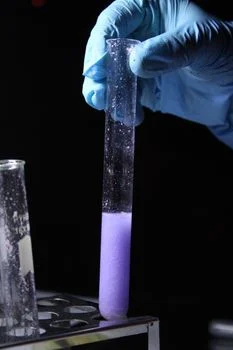
Variable waste chemistry from etch, CMP, and develop bays forces separate capture lines before a shared ZLD backbone. Fluoride removal still starts with Ca(OH)2 precipitation. Bulk fluoride falls at pH 10–11, but pH above 11 raises CaCO3 scaling risk on later membranes. A two-stage train plus PLC-controlled chemical dosing for fluoride precipitation and pH adjustment holds residual fluoride in the single-digit mg/L range before RO.
Near-ZLD membrane feeds need both fluoride and dissolved silica controlled. According to Lv et al. (Desalination, 2024), in-situ crystal nucleation pretreatment can bring F− below 8.0 mg/L and dissolved silica below 6.0 mg/L, which aligns with the fluoride target in the table below. Membrane ZLD reviews likewise flag fouling, scaling, and brine energy as the main barriers to stable high recovery (Panagopoulos & Michailidis, Membranes, 2025).
MBR alone often reaches about 85% TMAH removal at 50–300 mg/L influent. Pairing AOP with MBR can push combined removal near 98% at 200 mg/L influent TMAH and keep RO feed COD below 50 mg/L. Copper responds well to sulfide precipitation or chelating ion exchange at pH 8–9 (about 95% when sulfide is controlled). Nickel and arsenic polishing resins work best near pH 6–7 after fluoride precipitation. Copper-heavy etch streams share lessons with Printed Circuit Board Wastewater Treatment Design: 2026 Hybrid ZLD Systems.
| Pollutant | Influent Range (mg/L) | Best Available Technology (BAT) | Target Effluent (mg/L) |
|---|---|---|---|
| Fluoride (F-) | 800 - 1,200 | Two-stage Chemical Ppt + DAF | < 8.0 |
| TMAH | 50 - 300 | AOP + MBR (DF Series) | < 2.0 |
| Copper (Cu) | 10 - 50 | Chelating Ion Exchange | < 0.1 |
| Arsenic (As) | 1 - 5 | Selective Adsorption/Resin | < 0.01 |
| COD | 300 - 800 | Hybrid MBR + AOP | < 30.0 |
What Limits Semiconductor ZLD Reclaim Recovery?
Semiconductor ZLD reclaim recovery is limited by CaF2 and silica scaling, osmotic pressure at high brine salinity, and organic fouling from TMAH-derived nutrients. Conventional RO in fabs often stalls at 85–90% recovery. At roughly 20% brine salinity, osmotic pressure can exceed 1,200 psi and stress standard spiral-wound elements.
Pulse-Flow RO for Fluoride Scale Prevention at 95–99% Recovery
Pulse-flow RO interrupts concentration polarization with intermittent high-velocity flush, which is why many 2026 fab specs push toward 95–99% recovery when pretreatment is solid. Polyacrylic acid antiscalant at 2–5 mg/L is preferred over phosphate formulas that feed biofouling. CIP uses citric acid at pH 2–3 for fluoride scale and NaOH at pH 11–12 for organics, typically every 1–2 weeks on fluoride-heavy trains.
A 30 m³/h high-recovery RO systems for semiconductor wastewater reuse at a Korean SiC site cut membrane replacement cost about 45% after moving from three-stage RO to pulse-flow with PAA dosing. With post-pretreatment fluoride near 900 mg/L, permeate stayed below 5 mg/L fluoride and served cooling-tower make-up. Related silicon-line benchmarks appear in the wafer fab wastewater treatment design benchmarks.
Semiconductor ZLD CapEx OPEX Payback 2026: The Numbers
A 50 m³/h full ZLD train sized for GaN/SiC duty carries about $2.1M CapEx. That split is roughly $250K DAF, $400K MBR, $300K AOP, $500K high-recovery RO, $600K MVR, and $50K for civil works plus PLC integration. Annual OPEX near $320K is dominated by energy ($120K at $0.10/kWh) and chemicals ($80K), with maintenance about $90K.
Savings stack from reuse water at about $0.50/m³, lower sludge haul at about $0.30/m³, and avoided discharge fees near $0.20/m³. That mix can save about $450K per year and pay back in 3.2 years. A 20% rise in purchased water cost shortens payback to about 2.7 years. Leasing at 8–12% APR over five years is common when finance prefers OpEx alignment. Buyers benchmarking costs across industries can compare the Industrial Wastewater Treatment in Faridabad: 2026 Specs & Costs model. Silicon IC compliance paths are summarized in the IC wastewater treatment design specs for silicon fabs.
| Cost Component | Estimated Value (USD) | Notes/Assumptions |
|---|---|---|
| Total CapEx | $2,100,000 | 50 m³/h capacity, full ZLD train |
| Annual Energy | $120,000 | Based on $0.10/kWh; MVR is largest consumer |
| Annual Chemicals | $80,000 | Includes Ca(OH)2, PAA, and AOP reagents |
| Annual Maintenance | $90,000 | Membrane replacement and labor |
| Annual Savings | $450,000 | Water reuse + avoided discharge fees |
| Payback Period | 3.2 Years | ROI benchmark for 2026 fab expansions |
Selection checklist before you freeze the P&ID
- Measure peak fluoride, TMAH, silica, and Cu/Ni/As on each bay drain, not only the combined sump.
- Confirm DAF surface loading stays within 5–10 m³/m²·h at peak CMP solids.
- Set MBR HRT at 12–18 h until TMAH-acclimated sludge data exist.
- Require RO feed fluoride and silica low enough for the stated recovery (target F− <8 mg/L where near-ZLD is the goal).
- Budget CIP every 1–2 weeks and PAA at 2–5 mg/L on fluoride-heavy concentrates.
- Size MVR on the true 1% brine rate after RO recovery is proven, not on nameplate flow.
- Model payback with local water and sludge unit costs, not generic averages.
Who This Is For / Next Step
This train fits GaN/SiC and mixed third-gen fabs chasing >95% reclaim under tight fluoride and TMAH loads. Plants that only dilute low-fluoride silicon rinse water may not need full MVR. If you are matching equipment to a measured influent matrix, send flow, fluoride, TMAH, and metal data through our request-quote form for a hybrid ZLD sizing review.
Frequently Asked Questions
What fluoride level can a hybrid ZLD train handle?
Hybrid ZLD trains for GaN/SiC duty are commonly designed for influent fluoride up to 1,200 mg/L. Two-stage lime precipitation plus DAF should cut fluoride to the low tens of mg/L before membranes, and near-ZLD literature targets below 8.0 mg/L F− entering high-recovery RO to limit CaF2 scale.
Why is TMAH hard to remove from fab wastewater?
TMAH resists ordinary activated sludge and slows nitrifiers, so single-stage biology often stalls near 85% removal. AOP breaks residual organics while a high-biomass MBR finishes the fragments, and the combined train can reach about 98% removal at roughly 200 mg/L influent when solids and pH are controlled upstream.
How does pulse-flow RO raise reclaim recovery?
Pulse-flow RO uses intermittent high-shear flush to disturb the salt boundary layer on the membrane. That allows stable operation toward 95–99% recovery and brine salinities near 20%, above the 85–90% wall typical of continuous spiral-wound RO on fluoride- and silica-rich fab concentrates.
What are the CaF2 silica scaling RO recovery semiconductor limits?
CaF2 and silica scaling set the practical RO recovery ceiling for semiconductor reclaim near 85–90% on conventional spiral-wound elements. Fluoride above roughly 8 mg/L and dissolved silica above 6 mg/L in the RO feed drive scale that routine CIP cannot fully reverse. Pulse-flow flush with PAA antiscalant at 2–5 mg/L holds stable recovery at 95–99% when pretreatment keeps both below those thresholds.
What footprint does a 50 m³/h third-gen ZLD need?
A packaged hybrid ZLD at 50 m³/h usually needs about 120 m² for DAF, MBR tanks, AOP skids, RO, and MVR when skids are arranged for brownfield install. Exact area rises if equalization or spare membrane trains are mandated by fab uptime rules.
What data should pilot testing collect before full ZLD design?
Pilot programs for third-generation semiconductor wastewater treatment design should log bay-by-bay peak fluoride, TMAH, silica, and Cu/Ni/As, plus the diurnal flow pattern over at least two weeks. Verify that two-stage precipitation plus DAF holds fluoride in the single-digit mg/L range at peak CMP solids, and confirm MBR flux at the low end of 15–25 L/m²·h with TMAH-acclimated sludge before membranes are ordered.
Do 2026 fab designs go beyond current EPA fab rules?
Yes, most do. US EPA still regulates semiconductor discharges under 40 CFR Part 469 (Electrical and Electronic Components), and its 2022 detailed study of the E&EC category — which EPA says "does not demonstrate a need to revise the existing regulation at this time" — left the rule unchanged. Many 2026 fab designs still add ZLD and TMAH-focused stages to meet water-reuse goals and stricter local limits than the federal baseline alone requires.