
Why an Indian acquisition is a wastewater inheritance, not a clean slate
When a multinational pharmaceutical company acquires a plant in India, the site inherits the full Indian environmental consent regime: Consent to Establish (CTE) and Consent to Operate (CTO) from the relevant State Pollution Control Board (SPCB) under the Water (Prevention and Control of Pollution) Act 1974 and Air (Prevention and Control of Pollution) Act 1981, registration under Extended Producer Responsibility (EPR) frameworks, and applicability of the EIA Notification 2006 (as amended 2020) where project thresholds are crossed. Effluent must meet pharma-specific discharge limits under Schedule VI of the Environment (Protection) Rules 1986, and several state governments (Maharashtra, Gujarat, Telangana, Karnataka, Tamil Nadu) now require new and expanded pharma plants to operate at zero liquid discharge (ZLD). A corporate Water Stewardship policy overlays additional reuse and water-risk commitments onto these legal minima.
Consents under Section 25 of the Water Act 1974 and Section 21 of the Air Act 1981 are issued to the "occupier" — the person or entity actually in control of the plant. A change in ownership does not transfer the permit like a contract assignment; the acquiring entity must file a fresh application to the relevant SPCB (GPCB in Gujarat, MPCB in Maharashtra, TSPCB in Telangana, KSPCB in Karnataka, TNPCB in Tamil Nadu) before commissioning under the new name. Where the acquisition involves a product mix change, capacity expansion, or a new process water source, EIA Notification 2006 thresholds must be re-evaluated — Category A projects clear with the Ministry of Environment, Forest and Climate Change (MoEFCC), Category B with the State Environment Impact Assessment Authority. EPR obligations under the Plastic Waste Management Rules 2016 (as amended) and the Hazardous and Other Wastes (Management and Transboundary Movement) Rules 2016 attach to API manufacturing through used solvents, spill residues, and ETP sludge classified as hazardous waste. Merck's publicly stated May 2026 Water Stewardship policy and the company's Annual Report 2024 E3 water disclosure (per reports.merckgroup.com) act as a corporate overlay that constrains the asset even where local statute is silent — a dimension no legacy Indian consent will reflect.
The Indian regulatory stack Merck must clear before commissioning
Four sequential clearances gate the legal operation of any Indian pharma manufacturing site, and all four must be sequenced relative to deal close.
- Consent to Establish (CTE) — issued by the relevant SPCB under Section 25 of the Water Act and Section 21 of the Air Act before construction or expansion. Typical validity is 5 years (varies by state; MPCB commonly issues 5-year CTEs, TSPCB 3 years).
- Consent to Operate (CTO) — issued post-construction but pre-commissioning. Validity is typically 1–5 years depending on the SPCB and the product risk profile. Renewal applications are typically filed 60–120 days before expiry.
- Environmental Clearance (EC) — required under EIA Notification 2006 (as amended 2020) only if the project crosses thresholds for Category A or B. Most formulation and small-to-mid-scale API projects fall outside EC; bulk drug projects above defined investment and area thresholds do not.
- Hazardous Waste authorisation — under the Hazardous and Other Wastes (Management and Transboundary Movement) Rules 2016, required for any unit generating, storing, transporting, or disposing of hazardous waste, including used solvents, distillation residues, and ETP sludge above threshold quantities.
CPCB sets national effluent standards and coordinates between SPCBs; the SPCB remains the day-to-day regulator and consent authority. Any change in product mix, capacity, raw material, or process water source triggers a fresh application — and an M&A is treated as a "change in product mix" event by most SPCBs, even where the product portfolio is unchanged. The risk for an acquirer is binary: file under the new entity name, or operate under a consent that names the seller and risk an enforcement action at the next SPCB inspection.
| Clearance | Statute | Authority | Typical Validity | Trigger in M&A |
|---|---|---|---|---|
| Consent to Establish (CTE) | Water Act 1974 s.25; Air Act 1981 s.21 | SPCB (GPCB, MPCB, TSPCB, KSPCB, TNPCB) | 3–5 years | Name change; capacity change |
| Consent to Operate (CTO) | Water Act 1974 s.25; Air Act 1981 s.21 | SPCB | 1–5 years | Name change; product mix change |
| Environmental Clearance (EC) | EIA Notification 2006 (amended 2020) | MoEFCC (Cat A) / SEIAA (Cat B) | Project life + operating period | Capacity expansion crossing threshold; new product |
| Hazardous Waste Authorisation | HW Rules 2016 | SPCB | 5 years | Any change in waste quantity or type |
Pharma effluent limits Merck must meet: Schedule VI and state additions

Schedule VI of the Environment (Protection) Rules 1986 sets the pharma-sector effluent limits for discharge into inland surface water (Column A) and public sewers (Column B). The standard parameter set covers pH (5.5–9.0, both columns), total suspended solids (100 mg/L Column A; 600 mg/L Column B), total dissolved solids (2100 mg/L Column A — a frequent binding constraint for Indian pharma), chemical oxygen demand (250 mg/L Column A), biochemical oxygen demand (30 mg/L Column A), oil & grease (10 mg/L Column A), residual chlorine (1 mg/L Column A), and specific toxicity parameters including heavy metals, cyanide, sulphide, and phenolic compounds where applicable. Several SPCBs layer additional constraints on top of Schedule VI — for example, GPCB mandates TDS ceilings tighter than the Schedule VI value for new units in certain industrial estates, and antibiotic residue limits appear in state-specific orders for formulations manufacturing beta-lactams or other scheduled actives. For ZLD-designated states, the relevant "limit" for liquid effluent to environment is effectively zero, which forces the design toward maximum recycle and concentrates the design effort on brine management rather than effluent polishing.
| Parameter | Schedule VI — Inland Surface Water (Column A) | Schedule VI — Public Sewer (Column B) | Typical Driver in API Effluent |
|---|---|---|---|
| pH | 5.5–9.0 | 5.5–9.0 | Acid/alkali wash streams |
| Total Suspended Solids (TSS) | 100 mg/L | 600 mg/L | Biological floc carryover |
| Total Dissolved Solids (TDS) | 2100 mg/L | 2100 mg/L | Salts from API synthesis; often binding |
| Chemical Oxygen Demand (COD) | 250 mg/L | 1000 mg/L | Solvents, process residues |
| Biochemical Oxygen Demand (BOD₃ at 27°C) | 30 mg/L | 350 mg/L | Fermentation, mother liquor |
| Oil & Grease | 10 mg/L | 20 mg/L | Process lubricants, utility oils |
| Residual Chlorine | 1 mg/L | — | Disinfection of cooling tower bleed |
Where the design basis for a new acquisition involves APIs with high TDS mother liquors or fermentation broths, the Schedule VI TDS ceiling of 2100 mg/L becomes the binding constraint long before COD or BOD, and pushes the design toward RO with brine concentration — a ZLD prerequisite.
Zero Liquid Discharge mandates: where the regulator forces a different design
Several Indian states now require new and expanded pharmaceutical manufacturing to operate at zero liquid discharge, and the specific thresholds and effective dates vary by SPCB order and must be re-verified at diligence. The states most commonly cited for active or near-active pharma ZLD or near-ZLD directives are Gujarat, Maharashtra, Telangana, Karnataka, Tamil Nadu, and parts of Himachal Pradesh and Sikkim — wording on applicability depends on investment size, water source, and proximity to notified industrial estates. Operationally, ZLD means the RO reject stream is fed to mechanical vapour recompression (MVR) or multiple-effect evaporators followed by an agitated thin-film dryer (ATFD) or crystallizer to recover salts as a solid by-product. Merck's corporate water targets act as a secondary driver that often pushes a site toward ZLD even in states that technically permit discharge, particularly where the catchment is water-stressed — a fact that an industrial RO system for pharma water reuse sized for 70–85% recovery typically cannot meet without downstream brine concentration. The capital and energy implication is non-trivial: a 1–5 m³/h MVR/ATFD train is the single largest line item in any Indian pharma ZLD retrofit, and the operating cost is dominated by steam or electrical energy for vapor recompression.
A treatment train that fits a Merck-style API or formulation site in India
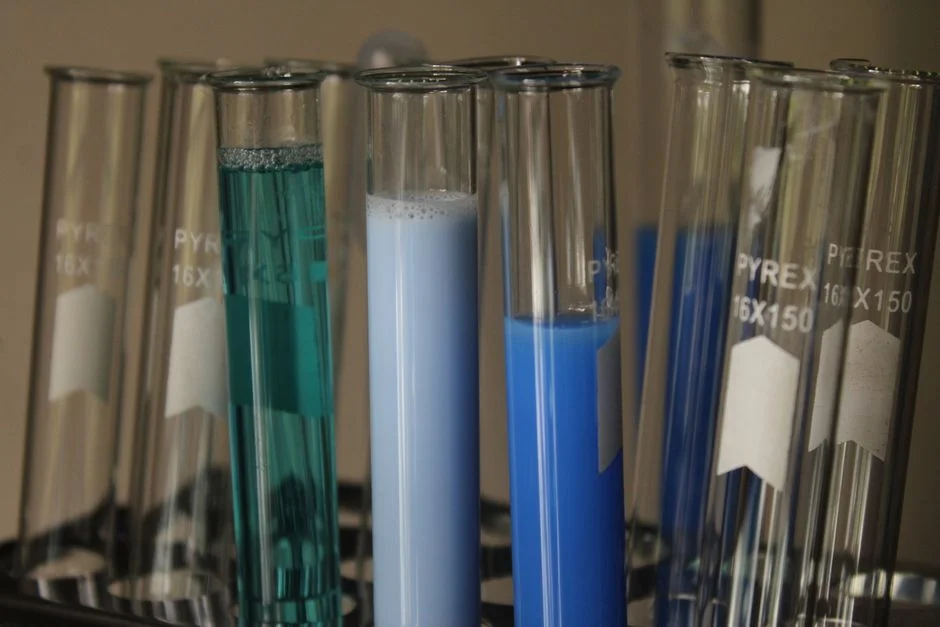
The unit operations sequence for a typical Indian pharma ZLD plant runs: equalisation and neutralisation → primary clarification via a dissolved air flotation clarifier for pharma primary treatment or lamella settler → biological treatment in an MBR system for pharma secondary biological treatment or sequencing batch reactor → tertiary polishing (activated carbon + sand filter) → an industrial RO system for pharma water reuse → evaporator/MVR with ATFD for brine concentration, and condensate polishing for boiler-feed or cooling-tower make-up reuse. Each step earns its place against a specific API or formulation effluent characteristic: DAF handles oil & grease and floating suspended solids from wash streams, MBR provides the mixed liquor suspended solids (typically 8,000–12,000 mg/L) needed to absorb variable organic loading and produce a low-SS permeate for RO, and the RO removes the dissolved salts that drive Schedule VI TDS non-compliance. The evaporator/ATFD is the single largest OPEX line in any Indian pharma ZLD plant, and drives the trade-off between recycle and discharge. Sludge handling is the forgotten half of compliance — a plate-and-frame filter press for pharma sludge dewatering or decanter produces a cake typically sent to a Treatment, Storage and Disposal Facility (TSDF), and that disposal chain is its own consent under the Hazardous and Other Wastes Rules 2016. Comparable high-strength COD removal process design is detailed in our high-strength COD removal process design guide, and ZLD cost data is benchmarked in our ZLD process design and cost data reference.
| Stage | Unit Operation | Design Role | Typical Driver |
|---|---|---|---|
| Primary | Equalisation + neutralisation + DAF | Flow / pH damping; oil & grease removal | Variable batch discharge; solvent traces |
| Secondary | MBR or SBR | COD/BOD reduction; biomass retention | Recalcitrant organics; shock loadings |
| Tertiary | Sand filter + activated carbon | SS polishing; residual organics | RO membrane protection |
| Reuse | RO (75–85% recovery) | TDS reduction; permeate reuse | Schedule VI TDS compliance |
| ZLD brine | MVR / multi-effect evaporator + ATFD | Concentrate to solid salt | ZLD mandate; Merck water targets |
| Sludge | Plate-and-frame filter press / decanter | Cake to TSDF | Hazardous Waste Rules 2016 |
From due diligence to commissioning: the 90-day post-close action list
Five immediate steps convert the regulatory map into a working compliance position after deal close. (1) File for fresh CTE and CTO in the acquiring entity's name with the relevant SPCB, with the existing consents cited as historical reference — typical approval runs 60–120 days depending on the state. (2) Commission an independent effluent characterisation study covering at least three production campaigns and the existing ETP's inlet and outlet, because legacy data tends to under-report TDS and antibiotic residue. (3) Benchmark the existing ETP against Schedule VI and the most current SPCB order for the state, and quantify the CAPEX gap to meet either discharge limits or ZLD. (4) Identify ZLD feasibility — including brine volume, energy availability, and TSDF proximity — because in Gujarat, Maharashtra, Telangana, Karnataka, and Tamil Nadu the question is no longer "whether" but "by when." (5) Upgrade the metering and monitoring stack — flow, pH, conductivity, COD, and TSS on the outlet at minimum, with online TOC on the RO permeate if reuse is to be claimed in Merck's E3 disclosure. The practical timing risk is a CTO renewal window that falls inside the integration period, and the common mistake is inheriting an ETP sized for a product mix that no longer exists. Within the first reporting cycle the site's water performance flows into Merck's E3 disclosure and Water Stewardship commitments, so the monitoring stack must be upgraded to corporate standard before the first cycle closes. Sizing of replacement water treatment valves, instruments, and media typically follows from the characterisation study, and feeds directly into the engineering procurement cycle. For benchmarking against a comparable regulated discharge regime, see our food processing wastewater compliance benchmark.
Frequently Asked Questions
Which Indian regulator handles pharmaceutical wastewater discharge?
The relevant State Pollution Control Board (SPCB) issues Consents to Establish and Consents to Operate under the Water Act 1974 and the Air Act 1981, and is the day-to-day enforcement authority. Examples: GPCB in Gujarat, MPCB in Maharashtra, TSPCB in Telangana, KSPCB in Karnataka, TNPCB in Tamil Nadu. The Central Pollution Control Board (CPCB) sets national standards under the Environment (Protection) Act 1986, including Schedule VI for pharma effluent.
Does acquiring a plant require a new Environmental Clearance under EIA Notification 2006?
Not always. A change in ownership alone does not require a fresh Environmental Clearance if the project category, capacity, and product mix are unchanged. However, any expansion that crosses Category A or Category B thresholds — including capacity increase, new product, or change in manufacturing process — triggers a fresh EC application. Most formulation and small-to-mid-scale API projects fall outside EC thresholds; bulk drug projects above defined investment and area thresholds do not.
What effluent parameters from Schedule VI typically drive the design of an API plant ETP?
For most API plants, total dissolved solids (2100 mg/L ceiling under Schedule VI Column A) and chemical oxygen demand (250 mg/L) are the binding constraints, followed by residual chlorine (1 mg/L) and pH (5.5–9.0). For high-TDS mother liquors, RO plus brine concentration is essentially mandatory; for low-TDS but high-COD fermentation broths, MBR or SBR with adequate hydraulic retention time carries the design.
Which Indian states currently require ZLD for pharmaceutical plants?
Gujarat, Maharashtra, Telangana, Karnataka, and Tamil Nadu are the most commonly cited states with active or near-active ZLD or near-ZLD directives for new and expanded pharma plants. Parts of Himachal Pradesh and Sikkim apply similar requirements. The exact threshold (capacity, water source, location within a notified industrial estate) varies by SPCB order and must be re-verified at the time of acquisition.
How does Merck's Water Stewardship policy affect a newly acquired Indian asset?
Per Merck's May 2026 Water Stewardship policy and Annual Report 2024 E3 water disclosure, the acquired site is brought into Merck's corporate water reporting, water-risk assessment, and reuse targets from the first reporting cycle after close. In practice, this means the ETP and reuse train must be capable of producing the data quality and reuse rates the corporate standard demands, even where the local SPCB only requires compliance with Schedule VI.