Why Landfill Leachate Is the Hardest COD/BOD Stream in a Plant
Landfill leachate carries more than 400 monitored parameters, with COD typically ranging 5,000–60,000 mg/L, NH3-N 500–3,000 mg/L, plus heavy metals, colour bodies, and odour compounds (Öman & Junestedt 2008, as cited in the Springer 2024 electrocoagulation study). A single reactor cannot do this job — the design pivot is leachate age, which the BOD5/COD ratio exposes directly. Young leachate (<5 years, ratio >0.5) is dominated by volatile fatty acids and degrades biologically; intermediate leachate (5–10 years, ratio 0.2–0.5) carries emerging humic and fulvic acids; stabilised/old leachate (>10 years, ratio <0.1) is essentially refractory humic substances that biology alone will not break (Bingöl classification, Springer 2024). Above 0.3, biology works; below 0.1, biology stalls and physico-chemical or membrane polishing becomes mandatory. This reframing — characterise first, then choose a unit process — is the step that prevents most CAPEX write-downs on leachate trains, because a vendor reference plant built for a 0.5 ratio will underperform on a 0.08 ratio every time.
Influent Characterisation: COD, BOD, and the Numbers That Drive Equipment Sizing
The first table to put in any design basis is the influent band. Typical landfill leachate spans COD 5,000–60,000 mg/L, BOD5 500–25,000 mg/L, NH4+-N 500–3,000 mg/L, pH 6.5–8.5, TSS 200–2,000 mg/L, and conductivity 10,000–25,000 µS/cm. The Bingöl sanitary landfill used in the Springer 2024 electrocoagulation study was explicitly classified as intermediate aged, which is why its 87% COD removal and BOD5/COD lift to 0.64 in the EC effluent is a real data point and not a marketing claim. The BOD5/COD ratio slides predictably with age: ~0.7 (young) → 0.2–0.5 (intermediate) → <0.1 (old), and each band drives a different train (Aboudi et al. 2023, aerobic treatment chapter).
| Parameter | Young (<5 yr) | Intermediate (5–10 yr) | Old/Stabilised (>10 yr) |
|---|---|---|---|
| COD (mg/L) | 20,000–60,000 | 5,000–20,000 | 500–5,000 |
| BOD5 (mg/L) | 10,000–25,000 | 1,500–10,000 | 50–500 |
| BOD5/COD | >0.5 | 0.2–0.5 | <0.1 |
| NH4+-N (mg/L) | 500–2,000 | 800–3,000 | 200–1,000 |
| Conductivity (µS/cm) | 10,000–20,000 | 15,000–25,000 | 10,000–18,000 |
| Dominant organics | VFAs, simple sugars | Humic + fulvic acids emerging | Refractory humic substances |
| Train implication | Biology alone sufficient | Biology + EC/Fenton polish | Biology + EC/Fenton + RO |
The hidden trap in the table is the refractory COD column: humic and fulvic acids pass BOD5 because BOD5 only measures biodegradable organics, but they still register as COD and on UV254. A leachate that reads "low BOD5" can still carry 3,000 mg/L of COD that the regulator will count. That distinction is the single most common error in old-leachate bids.
The Three Building Blocks: Biological, Physico-Chemical, and Membrane Treatment
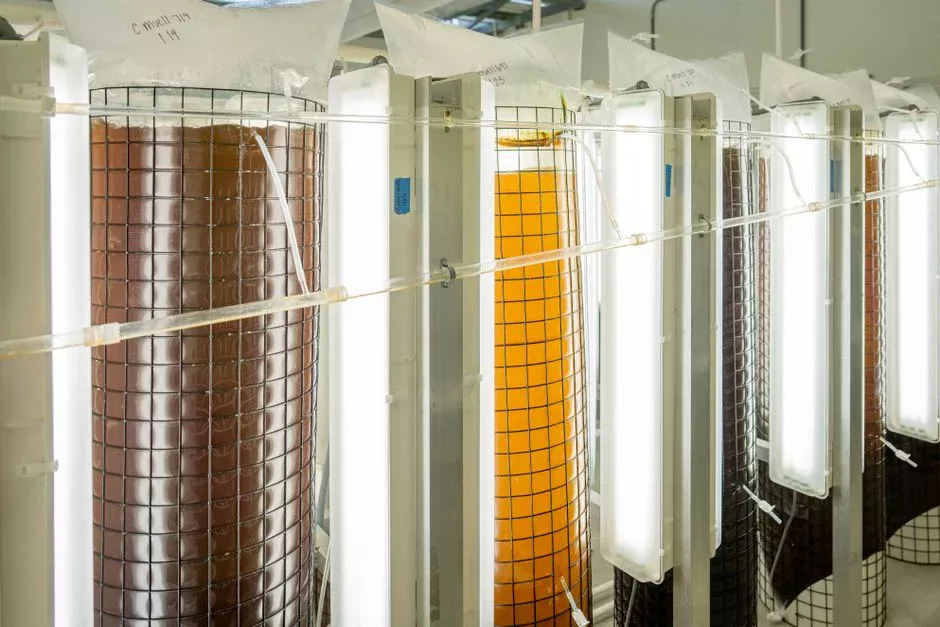
The three technology families each attack a different fraction of the influent table, and a working train uses them in series. Biological treatment — specifically a two-stage anoxic/oxic MBR — is the workhorse. The Liu et al. 81-day pilot of an A/O-A/O-MBR at reflux ratio 150% reported 85.6% COD, 99.3% NH4+-N, and 80.7% TN removal, with the second-stage A/O alone carrying 78.88 g/d of COD capacity and 11.74 g/d of TN capacity. Physico-chemical treatment — electrocoagulation in the Springer 2024 cell (Al anode, stainless steel cathode, 40 min, pH 5, 10 mM NaCl) — delivered 87% COD and 62% turbidity removal, and lifted BOD5/COD to 0.64 in the effluent because the cell coagulated the refractory humic fraction that biology could not touch. Membrane treatment — plate-and-frame RO — is the absolute separation barrier that polishes the train to reuse or strict direct-discharge quality, with up to 26% lower pump power than comparable plate-and-frame systems (PCI Membranes).
The standard train runs equalisation → screening or dissolved air flotation system for oil and TSS stripping → two-stage A/O-MBR using a HydropureWater MBR membrane bioreactor system with DF series PVDF flat sheet MBR modules → electrocoagulation or Fenton polish (only for intermediate and old leachate) → HydropureWater industrial RO system for sites with reuse or strict direct-discharge limits. Equalisation matters because raw leachate arrives with a COD swing of 3:1 across a week, and a swing that wide will stall nitrifiers in any biological stage.
COD and BOD Removal Efficiency by Technology: 2026 Comparison
The comparison matrix below is the section to lift into a design basis. Numbers marked "pilot" come from peer-reviewed pilots at the indicated scale; numbers marked "vendor" are full-scale reference plant claims and should be treated as upper-bound unless the vendor provides a performance guarantee bond.
| Technology | COD removal | BOD5 effluent | NH4+-N removal | Best BOD5/COD band | Footprint | Energy (kWh/m³) | CAPEX ($/m³·d) | OPEX ($/m³) | Data basis |
|---|---|---|---|---|---|---|---|---|---|
| Two-stage A/O-MBR | 85.6% | 100–250 mg/L | 99.3% | >0.2 | Compact (membrane replaces clarifier) | 1.8–3.0 | $400–$900 | $0.25–$0.55 | Pilot: Liu et al. 81-day run |
| SBR (sequencing batch) | 70–85% | 150–400 mg/L | 80–95% | >0.3 | Medium (batch basins) | 1.2–2.0 | $300–$700 | $0.20–$0.45 | Full-scale vendor |
| Electrocoagulation (Al/SS, pH 5) | 87% | 85.75 mg/L (BOD5/COD 0.64) | 33% | 0.05–0.5 | Small (cell + settler) | 1.5–3.5 | $50–$150 | $0.10–$0.30 (electrode wear) | Pilot: Bingöl, Springer 2024 |
| Fenton oxidation | 60–80% | 60–200 mg/L | 10–30% | <0.2 (refractory) | Medium (reactor + Fenton sludge) | 0.8–1.5 (excl. H2O2) | $80–$200 | $0.15–$0.40 (reagent) | Full-scale vendor |
| Plate-and-frame RO | 95–99% (rejection) | <5 mg/L (permeate) | 95–99% (rejection) | Any, after upstream polish | Containerised, modular | 1.0–2.5 (26% saving vs comparable plate-and-frame) | $250–$600 add-on | $0.20–$0.50 (membrane replacement dominated) | Vendor: PCI Membranes |
One line that clients misread: RO alone does not destroy COD — it transfers it into a concentrate stream at roughly 15–25% of the feed volume, and that concentrate still needs management (evaporation, further RO, or thermal destruction). Biology breaks COD; RO polishes what biology misses.
Decision Framework: Which Train for Which Leachate in 2026
The BOD5/COD ratio is the design pivot, and four rules cover the field.
- Rule 1 — BOD5/COD >0.5 (young): A/O-MBR alone usually suffices; expect COD effluent 100–250 mg/L and NH4+-N <15 mg/L if alkalinity and temperature are sized correctly. No RO required unless the site has a reuse contract.
- Rule 2 — BOD5/COD 0.1–0.5 (intermediate): A/O-MBR plus electrocoagulation or Fenton polish. The Bingöl intermediate case (Springer 2024) is the verified reference: EC achieved 87% COD reduction and lifted BOD5/COD from <0.5 to 0.64, meaning the EC effluent is once again biodegradable and can be partially recycled upstream of the MBR.
- Rule 3 — BOD5/COD <0.1 (old): Physico-chemical step is mandatory, and plate-and-frame RO after it is the only realistic path to direct-discharge or reuse limits. NF is a cheaper alternative if the local permit allows higher COD in the permeate.
- Rule 4 — NH4+-N >1,500 mg/L: Confirm nitrification kinetics and temperature before sizing aeration. The Liu et al. pilot hit 99.3% NH4+-N at R=150%, so biological nitrification is feasible at high loadings if HRT, SRT, and alkalinity are designed for — but winter temperatures below 10 °C will halve the nitrification rate and need a covered or heated tank.
Compliance and Cost Reality Check: 2026 Limits, CAPEX, and OPEX
Typical direct-discharge limits that drive RO inclusion sit at COD ≤100 mg/L, BOD5 ≤20–30 mg/L, and NH4+-N ≤10–15 mg/L. Engineers specifying for China should verify against GB 16889-2024, for the EU against the 1999/31/EC annex, and for the US against 40 CFR 258 plus any state-specific landfill runoff rules — the strictest municipal/industrial permits push COD as low as 50 mg/L, which is essentially RO-only territory. Order-of-magnitude CAPEX for 2026 reads as: MBR skid $400–$900 per m³·d of capacity, plate-and-frame RO add-on $250–$600 per m³·d, and electrocoagulation cell $50–$150 per m³·d. OPEX is dominated by RO membrane replacement and energy (1.5–3.5 kWh/m³ total train), plus sludge handling for the biological stage and electrode wear for the EC cell. The 26% pump-power saving on plate-and-frame RO versus comparable plate-and-frame systems is the single most defensible OPEX lever when procurement pushes back on membrane cost (PCI Membranes). A/O-MBR OPEX is dominated by aeration; the Liu et al. pilot identified R=150% as the optimum, and pushing to R=200% or R=300% wastes blower energy without lifting removal. For a deeper dive into recurring cost, the 2026 RO spare parts and consumables cost breakdown and the 2026 AAO spare parts and consumables OPEX guide put line-item numbers behind these bands, and the broader 2026 wastewater resource recovery outlook covers where struvite, biogas, and water reuse start to offset OPEX at larger plant scales.
Frequently Asked Questions
What BOD5/COD ratio makes landfill leachate treatable by biology alone? Above 0.3, with a two-stage A/O-MBR typically delivering 85.6% COD and 99.3% NH4+-N removal at reflux ratio 150% per the Liu et al. pilot; below 0.1, biology stalls and a physico-chemical or membrane step is required.
Can electrocoagulation replace a biological stage in a leachate train? No — the Springer 2024 Bingöl pilot shows EC at 87% COD removal with a BOD5/COD of 0.64 in the effluent, so EC is a polish or pre-treatment for refractory organics, not a stand-alone COD destroyer for raw leachate.
When is reverse osmosis mandatory for landfill leachate? When the discharge limit is COD ≤100 mg/L, BOD5 ≤20–30 mg/L, or when the site has a reuse contract — old leachate with BOD5/COD <0.1 cannot reach those limits with biology plus physico-chemical steps alone.
What is the single most important influent number for sizing a leachate MBR? BOD5/COD ratio, because it determines whether A/O-MBR alone, A/O-MBR plus EC/Fenton, or A/O-MBR plus EC plus RO is the correct train — influent COD alone does not tell you whether the organics are biodegradable.
How much does a landfill leachate treatment plant cost per cubic metre of capacity in 2026? MBR skid CAPEX runs $400–$900 per m³·d, plate-and-frame RO add-on $250–$600 per m³·d, and electrocoagulation cell $50–$150 per m³·d, with train OPEX typically $0.25–$0.65 per m³ treated once energy, membrane replacement, and sludge handling are included.