Why Rubber Processing Wastewater Is a Hard Nitrogen Stream
Rubber processing wastewater is not a municipal-strength stream. A typical natural-rubber or latex plant discharges 200–800 mg/L NH3-N, 1500–6000 mg/L COD, 300–1500 mg/L suspended solids, and pH 6–9, with sulfide, zinc dithiocarbamate accelerators, and antioxidant residues from rubber additives processing still active after the coagulation step (per the 2019 Malaysian rubber wastewater characterization, ResearchGate 339069183). BOD5/COD ratios fall in the 0.20–0.35 range — a fingerprint of partially refractory organics that the receiving plant must still strip. Untreated discharge drives eutrophication and zinc toxicity in receiving waters, which is why ammonia nitrogen removal in the rubber industry has shifted from an option to a 2026 compliance line item.
The low BOD/N ratio of about 2–4 is the engineering hinge. When carbon is scarce relative to ammonia, heterotrophic assimilation cannot consume the nitrogen load; autotrophic nitrification becomes the dominant removal mechanism, and an external carbon source (methanol, acetate, or hydrolyzed VFAs) is required downstream in the anoxic reactor to push denitrification to completion. This is why mainstream biological nitrogen removal — not zeolite or biosorbent adsorption — is the only economically defensible path for full-scale rubber plants (per the June 2022 review on nitrogen removal, ResearchGate 389120000).
| Parameter | Typical Range (Raw Effluent) | Design Target After Biological Stage |
|---|---|---|
| NH3-N | 200–800 mg/L | <15 mg/L (GB 30485 Class A) |
| COD | 1500–6000 mg/L | <120 mg/L |
| BOD5/COD | 0.20–0.35 | — |
| SS | 300–1500 mg/L | <30 mg/L |
| pH | 6–9 | 7.0–8.5 |
| Temperature | 25–40 °C (tropical plants) | >12 °C (nitrifier limit) |
Pretreatment That Protects the Nitrification Train
Pretreatment is the difference between a stable nitrification train and a 60-day recovery after every additive slip. Three unit operations consistently show up in working rubber wastewater designs: dissolved air flotation (DAF) for suspended solids and oil removal, aluminum-carbon micro-electrolysis for breaking refractory additives, and hydrolytic acidification for shock-load equalization. DAF typically cuts SS by 85–95% on rubber crumb and latex-rich streams, which protects downstream pumps and membranes from fouling. Inline this with a DAF system for suspended solids and oil removal sized at 15–25 m³/m²/h hydraulic loading.
Aluminum-carbon micro-electrolysis is the workhorse step for rubber additives processing wastewater. The Fe-C galvanic cell reduces refractory organics and precipitates inhibitory zinc and sulfide; published data on this configuration (per doc88 p-90954004234122) show BOD/COD improvements of 20–35% and zinc removal above 90% at Fe/C ratios of 1:1 by mass and HRT of 60–90 minutes. Without this step, nitrifier inhibition is common at zinc above 1–2 mg/L.
Hydrolytic acidification then converts the remaining non-biodegradable COD into volatile fatty acids (VFAs) — a free internal carbon source for the downstream anoxic reactor, which can cut external methanol dosing by 30–50% in some full-scale retrofits. Hold the equalization basin at HRT 8–12 hours, pH 5.5–6.5, and temperature above 18 °C to keep acidogens active. Final conditioning before the biological stage should bring pH to 7.5–8.5 (lime or NaOH) and temperature above 12 °C — the operational floor for Nitrosomonas and Nitrobacter activity in any 2026 COD removal technology comparison benchmark.
Nitrification-Denitrification Process Design Parameters
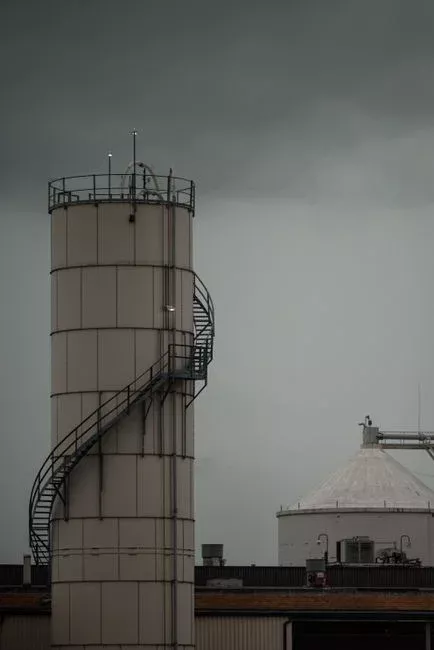
A two-stage nitrification-denitrification train is the default for high-NH3-N rubber streams. The aerobic stage oxidizes ammonia to nitrate; the anoxic stage reduces nitrate to nitrogen gas using the VFA-rich effluent from hydrolytic acidification or dosed methanol. Simultaneous nitrification-denitrification (SND) in a single tank is rarely worth the operational headache above 400 mg/L NH3-N because of DO gradient control and alkalinity budgeting issues.
Design the aerobic reactor for DO 2.0–3.0 mg/L, SRT 15–25 days at 20–30 °C, MLSS 3000–5000 mg/L, pH 7.5–8.5, and an alkalinity/NH3-N ratio of at least 7.1 mg CaCO3 per mg NH3-N oxidized to buffer the 7.14 mg acid produced per mg of ammonia nitrified. Without that buffer, pH crashes below 6.5 and the nitrification rate collapses. The anoxic reactor runs at DO below 0.5 mg/L, HRT 2–6 hours, and a maintained C/N ratio of 4–6 to drive TN below 20 mg/L. Volumetric nitrification rates land at 0.15–0.40 kg NH3-N/m³/day for conventional activated sludge and 0.5–1.0 kg NH3-N/m³/day for MBBR carriers; MBBR/MBR systems can stretch to 1.5–2.0 kg NH3-N/m³/day at controlled DO and temperature.
| Parameter | Aerobic Nitrification | Anoxic Denitrification |
|---|---|---|
| DO | 2.0–3.0 mg/L | <0.5 mg/L |
| HRT | 18–36 h | 2–6 h |
| SRT | 15–25 days | 5–15 days |
| MLSS | 3000–5000 mg/L | 2500–4000 mg/L |
| pH | 7.5–8.5 | 7.0–8.0 |
| Temperature | 20–30 °C | 20–30 °C |
| Volumetric rate | 0.15–0.40 kg NH3-N/m³/d (CAS), 0.5–1.0 (MBBR) | 0.10–0.30 kg NO3-N/m³/d |
Effluent polishing is rarely optional. Ammonia below 15 mg/L satisfies China GB 30485-2020 Class A direct discharge, while Standard B in the Malaysian DOE EQR 2009 framework allows up to 45 mg/L. TN below 20–40 mg/L is the real compliance target in 2026, since most jurisdictions look at TN, not just ammonia, for eutrophication control.
Comparing Five Reactor Options for Rubber Nitrogen Removal
Five reactor configurations dominate full-scale rubber plant designs in 2026: A/O, A2O, SBR, MBBR, and MBR. Each has a defensible niche, and the wrong choice on a 500 m³/day retrofit can add 20–40% to lifetime OPEX. A/O is the lowest-CAPEX path at $0.15–0.30M for 500 m³/day but needs reliable external carbon dosing. A2O adds an anaerobic zone for biological phosphorus removal — useful when zinc/phosphate coexist — and runs 10–15% higher in CAPEX than A/O. SBR trades continuous flow for time-based cycling, which is forgiving on shock loads but demands tight SCADA discipline.
MBBR is the strongest fit for retrofit/limited-footprint projects because there is no sludge recycle and the carriers tolerate influent toxicity from rubber additives. MBR pairs activated sludge with submerged membrane filtration, shrinking the tankage by 50–60% versus CAS and pushing effluent to near-reuse quality (<1 μm filtration, SS below 1 mg/L). The trade-off is membrane CIP cost and aeration energy, which is why an integrated MBR system with PVDF membrane filtration using DF series PVDF flat sheet membrane modules is the typical 2026 spec for high-strength rubber streams.
| Reactor | Typical CAPEX (500 m³/d) | Footprint | Loading (kg NH3-N/m³/d) | Best Fit |
|---|---|---|---|---|
| A/O | $0.15–0.30M | Large | 0.15–0.30 | High C/N, new build, low budget |
| A2O | $0.20–0.40M | Large | 0.15–0.30 | Simultaneous P removal, new build |
| SBR | $0.20–0.35M | Medium | 0.20–0.40 | Batch operations, shock loads |
| MBBR | $0.25–0.45M | Medium | 0.50–1.00 | Retrofit, additive toxicity, limited footprint |
| MBR | $0.45–0.80M | Small (–60% vs CAS) | 0.50–1.50 | Water reuse, tight footprint, P/TN polishing |
Decision rule for 2026: MBBR or MBR for retrofits with limited footprint and toxic-influent risk; A2O for new builds where phosphorus co-removal is on the permit; SBR for batch rubber operations with swing production schedules.
Shortcut Nitrogen Removal: Anammox and Partial Nitritation
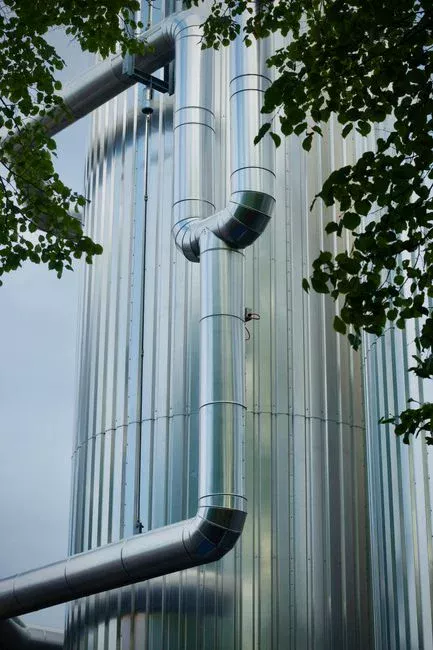
Partial nitritation + anammox (PN/A) is the low-energy frontier for ammonia nitrogen removal in rubber industry sidestreams. The combination cuts aeration energy by up to 60% versus full nitrification-denitrification, per the June 2022 review on nitrogen removal, because only about half the ammonia is oxidized to nitrite before the anammox bacteria consume the rest with nitrite to release N2. Real-world reject-water plants run at 0.5–2.0 kg N/m³/day with aeration demand of 1.0–1.5 kg O2/kg N versus 4.5 kg O2/kg N in conventional nitrification.
PN/A is best applied to streams above 500 mg/L NH3-N and above 25 °C, which describes most reject water, digester liquor, and concentrate from rubber latex operations. Start-up is the catch: anammox bacteria double every 11+ days, so commissioning takes 60–120 days under controlled conditions. Full rubber effluent is still too toxic-laden for mainstream PN/A in 2026, but sidestream polishing — pulling a slipstream of evaporator condensate or dewatering liquor — is a proven 2026 retrofit. The process demands tight DO (0.3–0.5 mg/L) and NH3-N control, which makes an online ammonia analyzer buyer's guide essential reading before specifying instrumentation.
2026 Costs, Compliance, and Instrumentation
A 500 m³/day rubber wastewater nitrogen removal train in 2026 lands at $350K–$1.2M CAPEX, with MBR-equipped designs at the top of the band and A/O at the bottom. OPEX runs $0.18–$0.55 per m³ treated, dominated by aeration (40–55% of OPEX), external carbon dosing for denitrification (15–25%), and sludge handling (10–20%) (HydropureWater field data, 2026). Aeration is the single biggest lever, which is why DO-probe closed-loop control pays back inside 12 months on most rubber plants.
Compliance benchmarks vary by jurisdiction. China GB 30485-2020 sets NH3-N at ≤15 mg/L for direct discharge (Class A) and ≤25 mg/L (Class B). Malaysia DOE EQR 2009 Standard A is 5 mg/L; Standard B is 45 mg/L. EU UWWTD 91/271/EEC holds 15 mg/L for 10k–100k PE plants. Online ammonia analyzers now run $8K–$45K in 2026, and pairing them with a PLC-controlled chemical dosing system for methanol and alkalinity is the standard closed-loop architecture. Operators handling rubber effluent in Malaysia should review the 2026 Malaysia DOE ammonia nitrogen compliance guide to align plant design with current enforcement practice.
| Cost Element | 2026 Range (500 m³/d, USD) | % of OPEX |
|---|---|---|
| Total CAPEX | $350K–$1.2M | — |
| Aeration energy | $0.08–$0.25/m³ | 40–55% |
| External carbon (methanol/VFA) | $0.03–$0.12/m³ | 15–25% |
| Sludge handling | $0.02–$0.10/m³ | 10–20% |
| Membrane CIP (MBR only) | $0.04–$0.15/m³ | 5–10% |
| Online NH3-N analyzer | $8K–$45K CAPEX | — |
Frequently Asked Questions
What influent NH3-N range defines a typical rubber processing wastewater?
Raw effluent lands at 200–800 mg/L NH3-N, with COD 1500–6000 mg/L and BOD5/COD 0.20–0.35 (per the 2019 Malaysian rubber wastewater characterization, ResearchGate 339069183). Above 400 mg/L NH3-N, a two-stage train is mandatory for compliance.
Which reactor configuration is best for high-strength rubber wastewater above 500 mg/L NH3-N?
MBBR or MBR for retrofit/limited-footprint projects, handling 0.5–1.5 kg NH3-N/m³/day with shock-load tolerance. A2O suits new builds where simultaneous biological phosphorus removal is on the permit.
A2O vs MBR for rubber wastewater — how do I choose in 2026?
Pick A2O when phosphorus removal is required and CAPEX is constrained (~$0.20–0.40M for 500 m³/d). Pick MBR when footprint is tight, water reuse is the goal, or effluent ammonia must be polished below 5 mg/L (~$0.45–0.80M for 500 m³/d).
What MBBR carrier media specification is recommended for rubber effluent?
High-density polyethylene carriers, 500–700 m²/m³ protected surface area, 30–60% fill in the aerobic reactor. Operate at F/M 0.10–0.25 kg BOD/kg MLSS/d to maintain the biofilm in the nitrification-favoring regime.
How do I comply with GB 30485-2020 for ammonia nitrogen in rubber wastewater?
Target NH3-N below 15 mg/L and TN below 20 mg/L after the biological train, with online NH3-N monitoring and a PLC-controlled chemical dosing system for methanol and alkalinity trim. Class A direct discharge requires tertiary polishing in most full-scale plants.