Why Hospital Wastewater Demands Specialized Treatment
Hospital wastewater is fundamentally different from domestic sewage. While the volume is relatively modest—typically 400–1,200 liters per bed per day—the composition includes hazardous constituents that are absent from or present at much lower concentrations in municipal wastewater:
- Pathogenic microorganisms: Bacteria (including antibiotic-resistant strains such as MRSA and VRE), viruses (hepatitis B/C, HIV, SARS-CoV-2), parasites, and fungi at concentrations 2–3 orders of magnitude higher than in domestic sewage.
- Pharmaceuticals and their metabolites: Antibiotics, cytotoxic (chemotherapy) drugs, hormones, analgesics, anesthetics, and contrast media—many of which are not removed by conventional biological treatment.
- Chemical disinfectants: Glutaraldehyde, formaldehyde, quaternary ammonium compounds, peracetic acid—used for instrument sterilization and surface disinfection.
- Radioactive isotopes: Iodine-131, technetium-99m, and other radionuclides from nuclear medicine departments.
- Heavy metals: Mercury (from thermometers and dental amalgam—declining but still present), silver (from X-ray processing—also declining with digital imaging), and platinum (from chemotherapy drugs).
The World Health Organization (WHO) classifies hospital wastewater as hazardous waste and recommends on-site treatment before discharge to municipal sewers. Many countries have enacted specific regulations requiring hospitals to treat their wastewater to defined standards before discharge.
Regulatory Framework for Hospital Wastewater
International Standards
There is no single global standard for hospital wastewater, but several frameworks guide national regulations:
- WHO "Safe Management of Wastes from Health-Care Activities" (Blue Book): Recommends on-site treatment with disinfection before discharge. Provides guidance on treatment technology selection based on hospital size and services.
- EU Water Framework Directive + Watch List: Several pharmaceutical compounds (diclofenac, 17-alpha-ethinylestradiol, erythromycin) are on the EU Watch List, driving hospitals toward advanced treatment.
- US EPA: Hospitals discharging to municipal sewers must comply with local pre-treatment ordinances. Some states (e.g., California) have additional pharmaceutical discharge limits.
Common Discharge Limits
| Parameter | Typical Limit (Sewer Discharge) | Typical Limit (Surface Water) |
|---|---|---|
| BOD₅ | 250–300 mg/L | 20–30 mg/L |
| COD | 500–600 mg/L | 60–120 mg/L |
| TSS | 300 mg/L | 20–30 mg/L |
| pH | 6.0–9.0 | 6.5–8.5 |
| Total Coliform | — | 1,000–5,000 MPN/100mL |
| Fecal Coliform | — | 200–500 MPN/100mL |
| Free Chlorine Residual | 0.5 mg/L (max) | <0.1 mg/L |
| AOX (adsorbable organic halides) | 1.0 mg/L | 0.5 mg/L |
Hospital Wastewater Treatment Process Design
Source Segregation: The First Line of Defense
Effective hospital wastewater management begins with source segregation inside the facility:
- Radioactive waste: Wastewater from nuclear medicine departments must be collected in decay tanks with sufficient retention time for short-lived isotopes to decay below clearance levels (typically 10 half-lives). For I-131 (half-life 8 days), this requires 80 days of retention.
- Cytotoxic waste: Wastewater from oncology departments and chemotherapy preparation areas should be collected separately and treated by advanced oxidation or incineration.
- Infectious waste: Wastewater from isolation wards, laboratories, and autopsy rooms may require pre-disinfection at source before entering the general hospital sewer.
- General hospital wastewater: From wards, kitchens, laundry, and administrative areas—treated through the central WWTP.
Integrated Treatment System Design
A modern medical wastewater treatment system integrates multiple treatment stages into a compact, automated package that can be installed in the limited space available at most hospital sites. The typical process train includes:
- Collection and equalization: Underground collection tanks with submersible pumps and level control. Equalization volume sized for 6–8 hours of average daily flow to smooth out peak discharge periods (morning shift change, OR schedule).
- Primary treatment: Fine screening (1–2 mm) to remove solids, followed by sedimentation or DAF for hospitals with significant kitchen/laundry wastewater.
- Biological treatment: Contact oxidation, MBR, or SBR processes to remove BOD, COD, and nutrients.
- Disinfection: The critical step for pathogen inactivation—detailed in the next section.
- Sludge treatment: Thickening, dewatering, and disposal as hazardous waste (in most jurisdictions, hospital WWTP sludge is classified as infectious waste).
Biological Treatment Selection
For hospitals discharging to surface water (requiring high effluent quality), an MBR (Membrane Bioreactor) is the preferred biological treatment technology. The MBR provides several advantages specific to hospital applications:
- Superior pathogen removal: UF membranes (0.04–0.4 µm pore size) physically reject bacteria and most viruses, providing an additional barrier beyond disinfection. Log removal values (LRV) of 4–6 for bacteria and 2–4 for viruses have been documented in hospital MBR installations.
- High effluent quality: TSS < 1 mg/L, turbidity < 0.2 NTU—critical for effective downstream UV or chemical disinfection (turbidity interferes with UV transmittance and chlorine demand).
- Compact footprint: Hospitals rarely have space for conventional secondary clarifiers. The MBR eliminates this requirement, reducing the treatment plant footprint by 40–60%.
- Pharmaceutical removal: Higher MLSS concentrations (8,000–12,000 mg/L) and longer SRT (20–30 days) in MBR systems enhance the biodegradation of some pharmaceutical compounds compared with conventional activated sludge.
Disinfection Technologies for Hospital Wastewater
Chlorine Dioxide (ClO₂)
Chlorine dioxide has emerged as the gold standard for hospital wastewater disinfection, and for good reason. Unlike free chlorine (hypochlorite), ClO₂:
- Does not form trihalomethanes (THMs) or haloacetic acids (HAAs)—the carcinogenic disinfection byproducts that are a major concern with chlorination
- Is effective across a wider pH range (pH 4–10 vs. pH 6–7.5 for free chlorine)
- Has superior virucidal activity—critical for inactivating hepatitis B, norovirus, and other resistant viruses
- Provides a measurable residual for downstream distribution and monitoring
A chlorine dioxide generator produces ClO₂ on-site from sodium chlorite and hydrochloric acid (or sodium hypochlorite). On-site generation eliminates the safety risks associated with transporting and storing compressed chlorine gas. Typical dosing for hospital wastewater is 5–15 mg/L with a contact time of 30–60 minutes, achieving >99.99% (4-log) inactivation of indicator organisms.
UV Disinfection
UV disinfection at 254 nm wavelength provides chemical-free pathogen inactivation. It is particularly effective against chlorine-resistant organisms such as Cryptosporidium and Giardia. However, UV has limitations for hospital wastewater:
- No residual disinfection capacity—organisms can undergo photo-reactivation (DNA repair) after exposure
- Effectiveness is highly dependent on UV transmittance (UVT)—hospital wastewater often contains UV-absorbing compounds (pharmaceuticals, contrast media) that reduce UVT below 60%, requiring higher UV doses
- Suspended solids shield embedded pathogens from UV light—pre-treatment to TSS < 10 mg/L is essential
For these reasons, UV is often used as a secondary disinfection barrier following ClO₂, rather than as the sole disinfection method for hospital wastewater.
Ozone
Ozone (O₃) is the strongest practical disinfectant and also provides effective oxidation of pharmaceutical residues, including cytotoxic drugs, antibiotics, and hormones. Ozone dosing of 5–15 mg/L with 10–20 minutes of contact time achieves excellent pathogen inactivation and significant removal (50–90%) of most micropollutants. However, ozone systems have higher capital and energy costs than ClO₂, and the generation of bromate (from bromide in the influent) must be monitored. Ozone is increasingly specified for large hospitals (>500 beds) or hospital complexes where pharmaceutical discharge is a primary concern.
Pharmaceutical Removal: The Emerging Challenge
Conventional biological treatment removes only 20–60% of most pharmaceutical compounds. For hospitals in jurisdictions with emerging pharmaceutical discharge limits (Switzerland has been a pioneer, mandating 80% micropollutant removal from WWTPs serving >80,000 PE), additional treatment is required:
- Ozonation: 50–90% removal of most pharmaceuticals at 5–10 mg/L O₃ dose
- Granular activated carbon (GAC): 70–95% removal via adsorption; requires periodic replacement or regeneration (typical bed life 6–18 months depending on loading)
- Powdered activated carbon (PAC) + MBR: PAC added directly to the MBR provides both adsorption and bioregeneration, extending carbon life and achieving >80% removal of most target compounds
- Advanced oxidation processes (AOPs): UV/H₂O₂, UV/O₃, or Fenton's reagent for complete mineralization of recalcitrant compounds
Automation and Monitoring
Hospital wastewater treatment plants must operate with minimal operator intervention, as hospitals rarely employ dedicated wastewater operators. Key automation features include:
- PLC-based automatic control with touch-screen HMI
- Online monitoring: pH, turbidity/TSS, chlorine residual, DO, flow rate
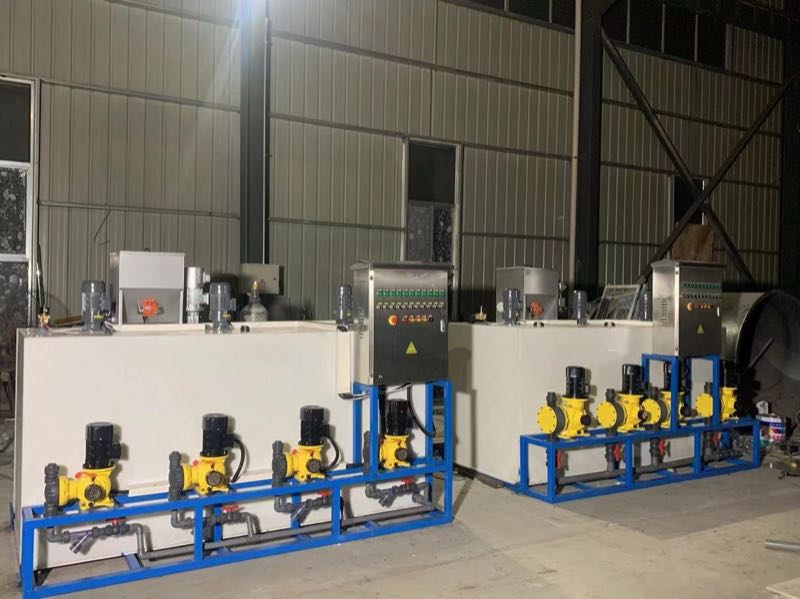
- Automatic chemical dosing based on flow rate and online analyzer feedback
- SMS/email alarms for equipment faults, high/low levels, discharge limit exceedances
- Remote monitoring via 4G/5G modem for off-site technical support
- Automatic sampling and 24-hour composite sample collection for regulatory compliance
Commissioning and Validation Protocol
Hospital wastewater treatment systems require a rigorous commissioning and validation process before being placed into service. Unlike industrial WWTPs where a gradual ramp-up is acceptable, hospital systems must demonstrate reliable pathogen inactivation from day one—any untreated or inadequately treated discharge poses an immediate public health risk. The commissioning protocol should include:
- Hydraulic testing: Pressure testing of all pipes and tanks, leak testing of underground structures, and verification of pump curves against design specifications
- Electrical and control system testing: Point-to-point I/O verification, alarm testing, failover testing (backup power, redundant pumps), and SCADA communication verification
- Biological seeding: Inoculating the biological reactor with activated sludge from a compatible source and allowing 4–8 weeks for biomass acclimation to hospital wastewater characteristics
- Disinfection validation: Challenge testing with indicator organisms (E. coli, MS2 bacteriophage) at design flow and peak flow to verify the required log removal values are achieved
- 30-day performance test: Continuous operation at design flow with daily sampling demonstrating compliance with all discharge parameters—effluent BOD, COD, TSS, pH, chlorine residual, and microbial indicators
All commissioning results should be documented in a formal validation report, which becomes part of the hospital's environmental compliance file and is referenced during regulatory inspections.
Siting and Installation Considerations
Hospital sites are typically constrained environments with specific challenges:
- Space: Underground or semi-underground installation is common to minimize footprint and visual impact. Containerized/package treatment plants can be installed in as little as 50–100 m² for a 200-bed hospital.
- Odor: All process units must be covered with extracted air treated through activated carbon filters or biofilters. Hospitals cannot tolerate any odor nuisance.
- Noise: Blowers and pumps must be acoustically enclosed. Maximum noise level at the hospital boundary is typically <45 dB(A) at night.
- Emergency bypass: A bypass with emergency disinfection (typically sodium hypochlorite) must be provided for maintenance periods.
Frequently Asked Questions
Is on-site treatment mandatory for all hospitals?
Regulations vary by jurisdiction. In many countries (including China, India, Brazil, and several EU member states), on-site treatment with disinfection is mandatory for all hospitals above a certain size (typically 20–50 beds). In the US and UK, hospitals may discharge to municipal sewers if they meet pre-treatment requirements, but the growing focus on antimicrobial resistance and pharmaceutical micropollutants is pushing more facilities toward on-site treatment. Even where not legally required, on-site treatment is considered best practice by the WHO and reduces the hospital's environmental liability.
How does antibiotic resistance relate to hospital wastewater treatment?
Hospitals are hotspots for antibiotic-resistant bacteria (ARB) and antibiotic resistance genes (ARGs). Hospital wastewater contains ARB at concentrations 10–1,000 times higher than municipal sewage, along with sub-inhibitory concentrations of antibiotics that promote the horizontal transfer of resistance genes. Conventional biological treatment can actually increase ARG concentrations through selective pressure. Effective disinfection (ClO₂, ozone, or UV at sufficient dose) followed by membrane filtration is the most reliable approach to reducing ARB/ARG discharge. This is an area of active research, and regulations are expected to tighten significantly in the coming decade.
What is the typical cost of a hospital wastewater treatment system?
For a 200-500 bed hospital generating 200–500 m³/day of wastewater, a complete treatment system (biological treatment + disinfection + sludge handling + automation) typically costs USD 150,000–500,000, depending on the discharge standard, selected technology, and degree of automation. Operating costs range from USD 0.30–0.80 per m³, with chemical costs (primarily disinfectant and membrane replacement) being the largest O&M expense. Larger hospitals (>1,000 beds) may invest USD 800,000–2,000,000 in systems that include pharmaceutical removal capability.
How should hospital wastewater treatment sludge be disposed of?
In most jurisdictions, sludge from hospital WWTPs is classified as infectious or hazardous waste and must be handled accordingly. Disposal options include: (1) on-site or off-site incineration at a licensed hazardous waste facility; (2) autoclaving or chemical disinfection followed by landfill disposal at a sanitary landfill; (3) co-processing in cement kilns (where regulations permit). Under no circumstances should hospital WWTP sludge be used for agricultural land application, composting, or any purpose involving human or animal contact. Proper sludge manifesting and chain-of-custody documentation is essential for regulatory compliance.